HCPCS Code Q4185: Cellesta flowable amnion billing guide
HCPCS Code Q4185: definition and official descriptor HCPCS Code Q4185 is the Lev...

Last Updated: Nov 20, 2026
CCSD code M4410 is the code UK private insurers use for litholapaxy (including cystoscopy), the endoscopic crushing and washout of bladder stones. Cystoscopy at the same session is part of the code, so it is not billed separately.
Let Pabau's smart automation suggest the right codes, reduce claim denials, and keep your practice compliant—effortlessly.
Automate repetitive tasks and focus on what matters most—your patients.
Reduce coding errors and ensure compliance with the latest regulations.
Clean claims, fewer denials, and faster reimbursements.
Powerful insights and reporting to help your practice thrive.
HIPAA compliant SOC 2 certified GDPR-compliant Trusted by 4,000+ clinics worldwide

CCSD code M4410 covers litholapaxy, where a bladder stone is crushed through a cystoscope and the fragments are washed out.
It sits in section 12.3.0 Bladder of the CCSD schedule, the procedure codes UK private insurers and Healthcode work from.
Cystoscopy is part of the code, so a separate cystoscopy code such as M4510 or M4514 isn’t billed with it at the same session.
Endoscopic extraction of a bladder stone is M4420, and open removal is M3900. The operation note decides which code applies.
When an insurer asks for a diagnosis, pair M4410 with ICD-10 N21.0, Calculus in bladder.
CCSD code M4410 is the code UK private insurers use for litholapaxy (including cystoscopy), the endoscopic removal of bladder stones. It comes from the CCSD schedule, the standard set of procedure codes for the UK private healthcare sector.
The surgeon passes a cystoscope through the urethra and confirms the stone. A stone-crushing instrument breaks it into fragments, which are then washed out of the bladder. The cystoscopy is the route in, which is why the code includes it.
CCSD stands for Clinical Coding & Schedule Development. The CCSD Group, made up of representatives from major private healthcare insurers, maintains the schedule. Insurers such as Bupa, AXA Health, Aviva and Vitality work from its codes, and so does the Healthcode billing network.
The CCSD Group updates its schedule over time, so check the edition your insurer works from. Our index of CCSD codes lists the other procedure codes we cover.
The bladder section of the CCSD schedule holds several codes that involve a stone or a cystoscope. The approach, and what the surgeon did once inside the bladder, decides which one applies. Three questions about the stone settle it, as the decision path below shows.
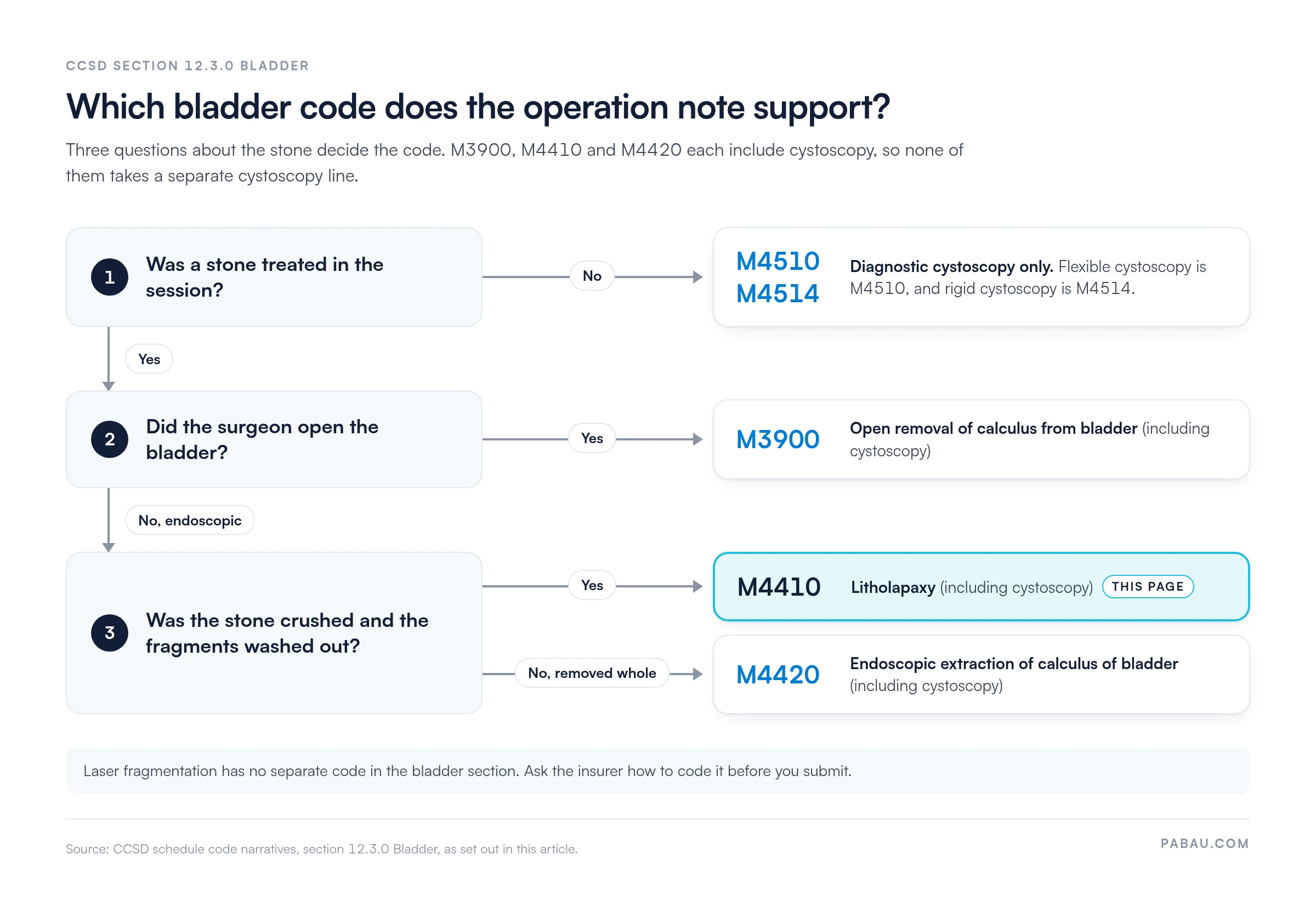
M4410 and M4420 are the easiest pair to confuse, because both are endoscopic and both include cystoscopy. If the note says the stone was crushed and the fragments evacuated, the code is M4410. An open operation on the bladder to remove the stone is billed as CCSD code M3900 instead.
A cystoscopy that found a stone but didn’t treat it is a diagnostic examination. A flexible one is billed as CCSD code M4510, and a rigid one as M4514. The schedule also links M4410 to M4420, M4510 and M4514 through its coding principles. Check those rules before any of them shares a claim with M4410.
The bladder section has no separate code for laser fragmentation of a bladder stone. If the surgeon used a laser, ask the insurer how it wants the case coded before you submit, and keep the answer on file.
A claim for M4410 is only as strong as the operation note behind it. If the note just says “bladder stone removed”, the coder has to guess between litholapaxy, extraction and open removal.
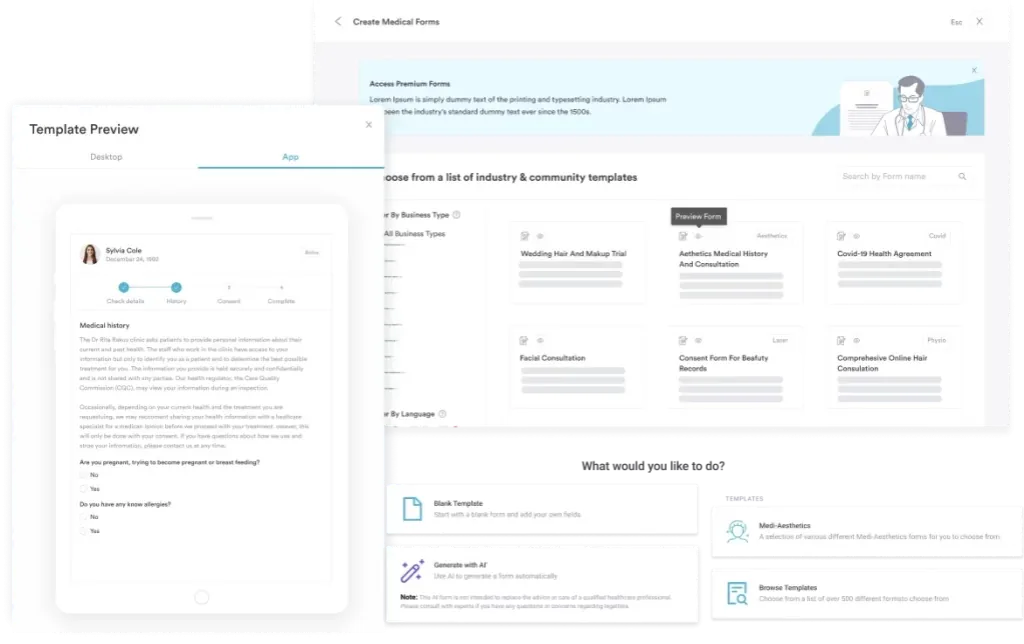
Agree a standard procedure title with your urologists, such as “Cystolitholapaxy, stone crushed and evacuated”. When the title names the technique, whoever codes the claim can tell M4410 from M4420 without reading the whole note.
When an insurer asks for a diagnosis on an M4410 claim, use ICD-10 N21.0, Calculus in bladder. It describes the stone the procedure treats, so the procedure and diagnosis codes tell the same story.
Codes from N20, Calculus of kidney and ureter, describe stones higher up the urinary tract. They don’t support a bladder procedure, so a claim pairing one with M4410 is likely to be queried. Use the diagnosis the surgeon documented rather than a default.
The work starts before the operation. Most UK private insurers want planned surgery approved in advance, and the patient’s policy decides what is covered. Each insurer runs its own pre-authorization process, so confirm the details with the payer before the procedure date.
Once the operation is done, the claim follows the same five steps whichever insurer pays it.
The anesthetist claims a separate fee for the same operation, under each insurer’s rules. Our guide to Bupa CCSD codes explains how Bupa’s procedure list and claim process work.
The slips below are the ones that get a litholapaxy claim queried or rejected, each with its fix.
If a claim is still refused, check the insurer’s current provider manual for its appeal process. Only commit to a deadline you have confirmed there.
In many urology practices, the authorization lives in an email, the operation note sits in another system, and the claim is keyed in by hand. Each handoff is a chance to lose the reference number or add a cystoscopy line the code already covers.
Pabau keeps those steps on the patient record. Its claims management software sends claims electronically through Healthcode and to Bupa. The authorization code, dates and sessions sit on the patient’s case, with a warning when one is missing.
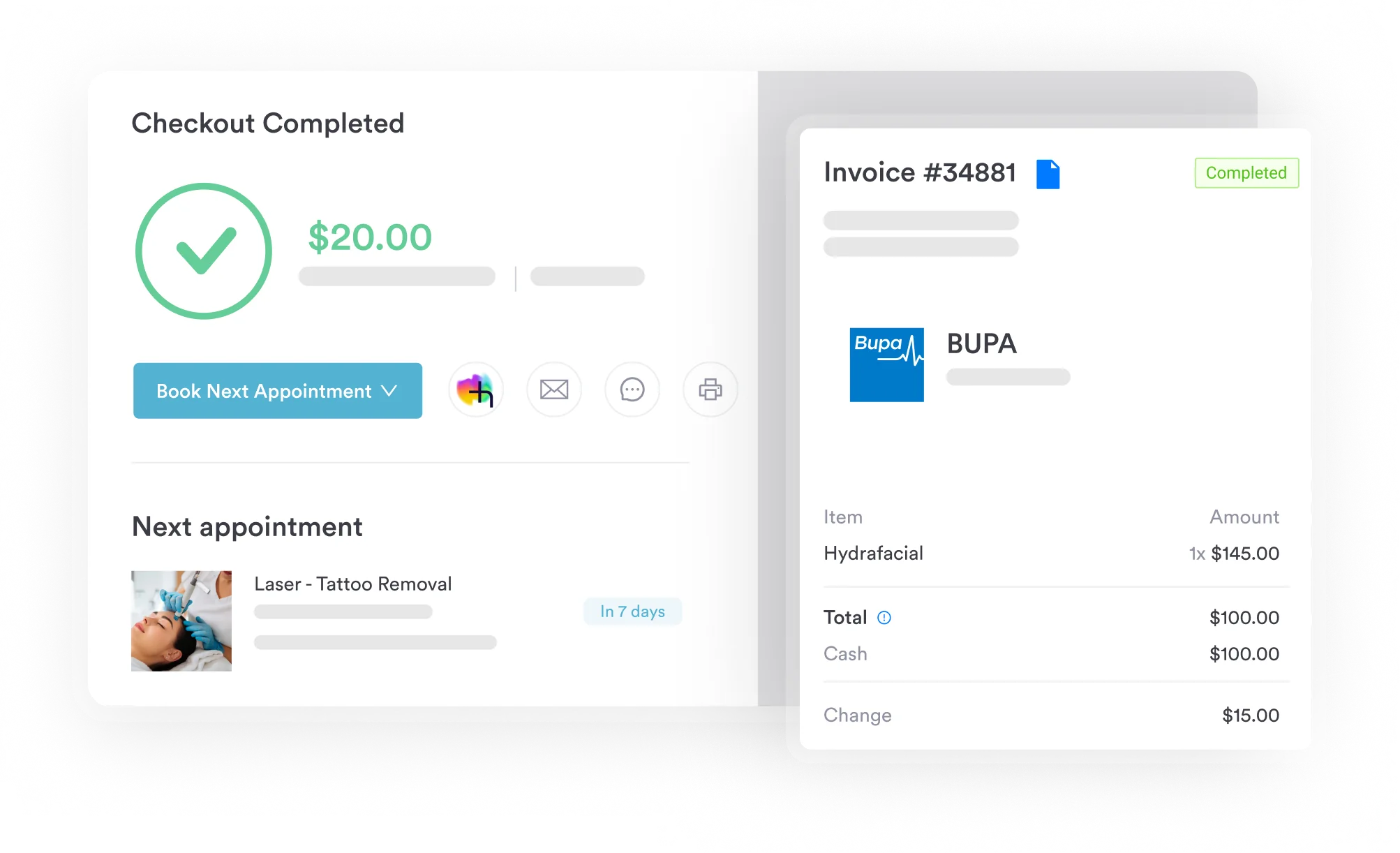
The operation note sits in the same patient record, so the coder checks it against M4410 without switching systems. You get fewer claims bounced for a missing reference, and a clear view of what each insurer still owes.
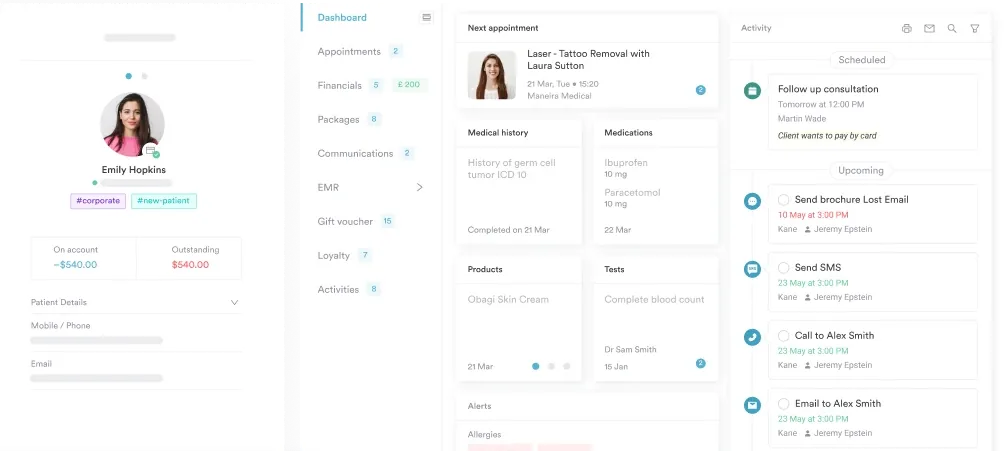

Pabau tracks authorization codes on the patient’s case and sends claims electronically through Healthcode and to Bupa. Your team sees each claim’s status without phoning the insurer.

M4410 is a simple code once the note says the stone was crushed and washed out. Most queries come from a cystoscopy line the code already covers, a vague note or a missing authorization. You can catch all three before the claim leaves.
Agree a standard procedure title with your urologists, and check each insurer’s current schedule before you invoice. Book a demo to see how Pabau tracks authorizations and sends your Healthcode claims from one patient record.

Coding an open bladder stone operation? CCSD code M3900 covers open removal of a calculus from the bladder, with cystoscopy included.
Billing a diagnostic cystoscopy instead? CCSD code M4510 explains the flexible cystoscopy code and when a biopsy is included.
Need a full Bupa CCSD billing reference? Bupa CCSD codes covers Bupa’s procedure list and how its claims work.
Checking Bupa fees before you invoice? Bupa procedure codes and fee schedule walks through Bupa’s recognized codes and fee tiers.
CCSD code M4410 covers litholapaxy (including cystoscopy). The surgeon crushes a bladder stone through a cystoscope and washes the fragments out. It sits in section 12.3.0 Bladder of the CCSD schedule that UK private insurers use.
Not for the same session. The narrative says “including cystoscopy”, so a separate code such as M4510 or M4514 isn’t added alongside it. Check the schedule’s coding principles if a second, separate procedure was done.
Both are endoscopic bladder stone codes that include cystoscopy. M4410 is litholapaxy, where the stone is crushed and the fragments washed out. M4420 is endoscopic extraction of the stone. The operation note decides which one applies.
When an insurer asks for a diagnosis, use ICD-10 N21.0, Calculus in bladder. A kidney or ureteric stone code from N20 doesn’t support a bladder procedure. Use the diagnosis the surgeon documented rather than a default.
Yes. M4410 was created in March 2011 and has no inactive date in the CCSD schedule. Insurers update their own lists on their own timetable, so check the edition your payer works from.
Bupa, AXA Health, Aviva and Vitality all work from CCSD-based schedules, and Healthcode carries claims to insurers electronically. Cover still depends on the patient’s policy, so confirm it with the payer first.