HCPCS Code E0272: Foam rubber mattress billing guide
HCPCS Code E0272: official descriptor and code overview HCPCS Code E0272 is the ...

Last Updated: Nov 6, 2026
M7940 is the CCSD code for internal urethrotomy (including cystoscopy +/- dilation). It covers cutting a urethral stricture under direct vision through an endoscope. Cystoscopy and any dilation at the same operation are part of the code.
UK private medical insurers such as Bupa, AXA Health, Aviva and Vitality use CCSD codes to identify the procedure on a claim. Each insurer sets its own fees, pre-authorisation and bundling rules for M7940.
Let Pabau's smart automation suggest the right codes, reduce claim denials, and keep your practice compliant—effortlessly.
Automate repetitive tasks and focus on what matters most—your patients.
Reduce coding errors and ensure compliance with the latest regulations.
Clean claims, fewer denials, and faster reimbursements.
Powerful insights and reporting to help your practice thrive.
HIPAA compliant SOC 2 certified GDPR-compliant Trusted by 4,000+ clinics worldwide

CCSD code M7940 covers internal urethrotomy, and the cystoscopy and any dilation done at the same operation are part of it
Cystoscopy codes M4510 and M4514 are unacceptable combinations with M7940, and a dilation-only session is coded M7920
Pair M7940 with the most specific urethral stricture code (ICD-10 N35.x) the notes support
CCSD does not set fees, so pre-authorisation, payment and bundling rules for M7940 come from each UK private insurer
Pabau, the practice management platform we build, keeps the operative note, the invoice and the Healthcode claim on one patient record
CCSD Code M7940 is the UK private-sector procedure code for internal urethrotomy. Its official descriptor reads exactly: Internal urethrotomy (including cystoscopy +/- dilation).
The schedule belongs to the Clinical Coding and Schedule Development (CCSD) Group. Also, its members are four UK private medical insurers: Bupa, AXA Health, Aviva and Vitality. In practice, consultants and hospitals put CCSD codes on private claims, which often travel online through Healthcode.
M7940 sits in chapter 12, Urinary system and male reproductive organs, under sub-chapter 12.4.0 Urethra. In fact, the wording in brackets is a note on what the code includes. So cystoscopy, and any dilation done at the same operation, are part of M7940 and are not coded again. The same bracket appears on bladder codes such as CCSD code M4230, endoscopic destruction of a bladder lesion.
In other words, the code describes the surgeon’s procedure only. Meanwhile, the anaesthetist and the hospital send their own accounts to the payer for their part of the same case.
Specifically, internal urethrotomy under M7940 is often performed as direct vision internal urethrotomy (DVIU). The standard technique runs in five stages:
Similarly, laser urethrotomy with holmium or thulium energy follows the same operative steps. Even so, check how the current schedule codes a laser approach, because CCSD updates codes on a regular cycle.
Overall, M7940 fits patients with symptomatic urethral stricture disease where endoscopic treatment is clinically indicated. Primary indications include:
However, M7940 is not the right code for long, obliterative or strictures that keep returning. Instead, those often need urethroplasty, which has its own codes in the same urethra sub-chapter, such as M7361 for complex urethroplasty. For that reason, coding a urethroplasty as M7940 gets the operation wrong and will not pass a payer’s clinical audit. Endoscopic resection of obstructing urethral valves is also outside M7940, because it takes code M7280.
Two other conditions also fall outside M7940. First, bladder neck contracture after prostatectomy or TURP is not an M7940 indication, because CCSD codes bladder neck incision and resection separately. Likewise, meatal narrowing is often treated by meatotomy or meatoplasty, so confirm its code in the schedule rather than defaulting to M7940.
Thus, knowing the edges of M7940 prevents the two most common coding errors. One is coding cystoscopy again, and the other is missing a separate service that should be billed. To help, the table below follows the official descriptor and the codes CCSD lists with it.
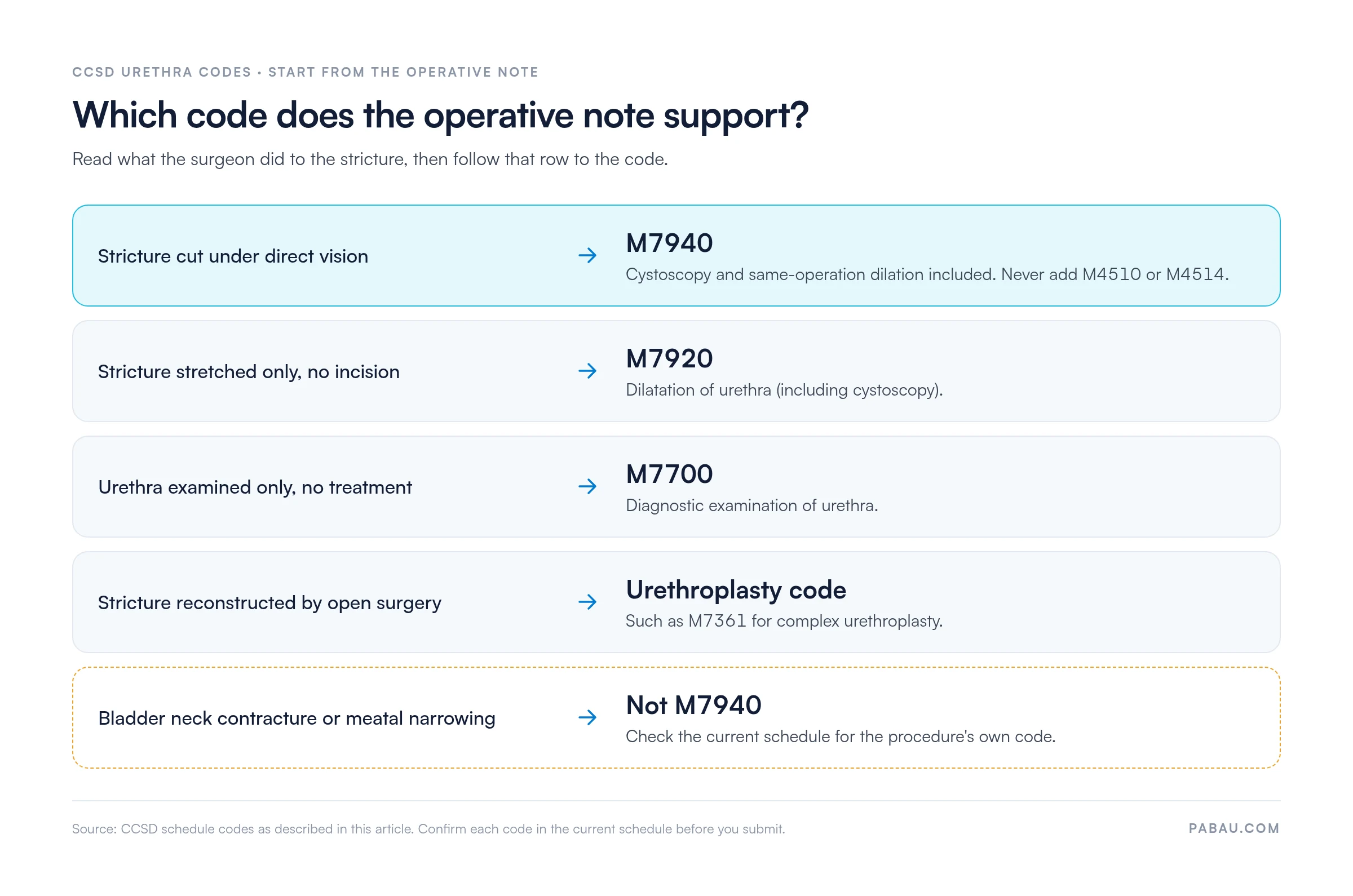
DVIU and urethral dilation both treat urethral stricture, so coders sometimes mix them up. In other words, the deciding question is simple. Was the stricture cut under direct vision, or only stretched?
If the operative note records dilation only, M7920 is the code. Otherwise, billing M7940 for that session claims more than was done, and a payer audit can recover the payment.
Several urinary codes sit close to M7940, so picking the wrong one is a common reason for claim rework. For background, the Bupa CCSD codes guide explains how the schedule is laid out. Also, confirm each code in the current schedule before you submit.
Note that the full schedule sits behind a free login on the CCSD website. Moreover, each code page lists its unacceptable combinations, and CCSD updates the schedule a few times a year. In addition, our CCSD code guides cover other codes in the schedule the same way.
For a quick check, start from what the operative note says the surgeon did to the stricture.
Similarly, most UK private insurers ask for a diagnosis with the procedure code. The UK uses ICD-10 as published by the WHO. The N35 block covers urethral stricture and is therefore the main diagnosis group for M7940. However, a stricture caused by surgery or catheterisation is classified separately, at N99.1.
Therefore, use the most specific N35 code the clinical record supports, because an insurer reviewing the claim looks for that detail. For example, a default N35.9 on a claim whose notes name the cause invites questions.
Before you submit an M7940 claim, read the referral letter and the operative note together. If either one names the cause, use the matching code rather than N35.9. That means N35.0, N35.1 or N35.8, or N99.1 when surgery or a catheter caused the stricture.
An incomplete operative note is a common and easily prevented reason an M7940 claim is questioned. Specifically, payers can ask for the note when they audit a surgical claim. For that reason, keeping the operative note on the patient’s electronic record means it is ready to send when an insurer asks.
The operative note for M7940 should record each of the following:
Thus, a note template with a field for each element keeps every item in the record. By contrast, insurers most often question a brief note that names the operation but leaves out stricture length, scope type or cystoscopic findings.

CCSD does not decide whether M7940 needs pre-authorisation. Instead, that rule belongs to each insurer and to the patient’s policy. Most UK private medical insurance policies ask the member to get authorisation before planned surgery, so check before the theatre list is set.
When the patient or the practice asks the insurer to approve M7940, it helps to have these ready:
However, surgery without an authorisation the policy requires can leave the claim unpaid. Because the payer decides, record the authorisation reference against the case before the procedure date.
M7940 claim problems follow a clear pattern. The table below maps the most common causes to the step that prevents each one. However, exact rejection rules vary between insurers.
Internal urethrotomy often takes place in theatre under general or spinal anaesthesia. However, M7940 on the surgeon’s claim covers the surgeon’s procedure only. As a result, three other accounts can run with it:
Also, each insurer sets its own fee limits for consultants and anaesthetists. In some cases, where a consultant charges more than the payer pays, the patient may owe the difference. For that reason, explain any gap before the procedure date, not after the bill arrives.
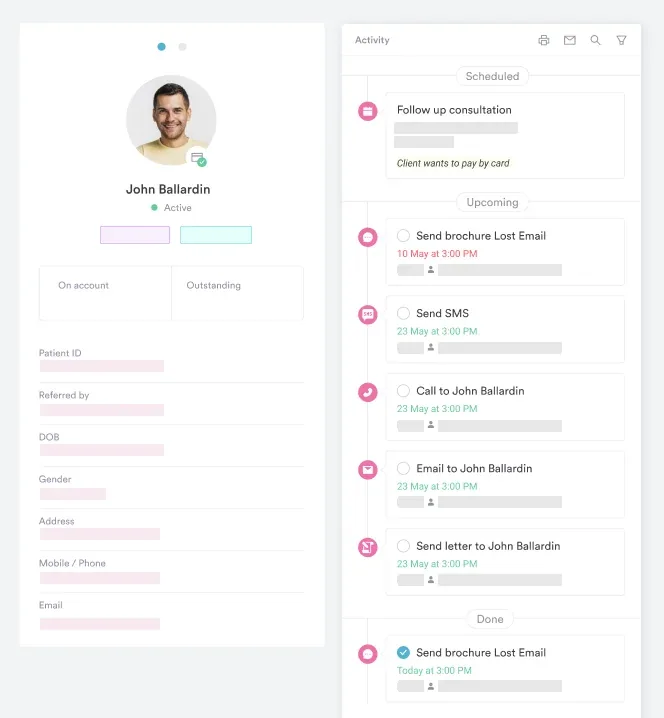
An M7940 claim depends on two records agreeing: the operative note and the claim itself. For that reason, Pabau keeps treatment notes, clinical forms and invoices on the same patient record, so the note behind the code is easy to find.
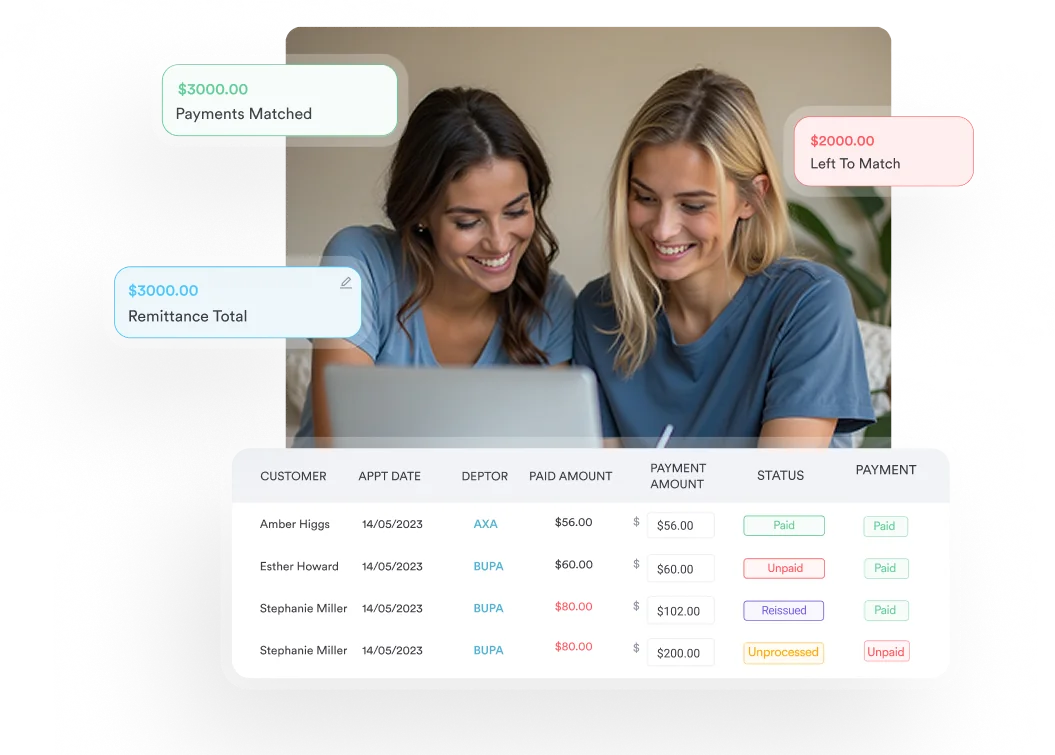
First, Pabau’s claims management raises the claim from the patient invoice and checks it before sending. It then sends private medical insurance claims through Healthcode to insurers such as Bupa, AXA Health and Vitality. In addition, a rejected claim is flagged as needing action, with a link to the field to fix.
Overall, M7940 comes down to reading one bracket closely. Cystoscopy and same-operation dilation sit inside the code, while dilation alone is M7920 and urethroplasty is another code altogether. Once you get that boundary right, most coding questions never start.
However, the rest belongs to the insurer, not to CCSD. Indeed, fees, authorisation and bundling rules differ from one policy to the next. For that reason, practices that check each patient’s policy and keep a complete operative note get paid first. To see how Pabau links the note to the claim, book a demo.
CCSD Code M7940 is the UK private-sector code for internal urethrotomy (including cystoscopy +/- dilation). It covers the surgeon’s endoscopic incision of a urethral stricture, plus any cystoscopy and dilation at the same operation. Anaesthesia and hospital charges are billed separately.
No. The M7940 descriptor includes cystoscopy, so adding a cystoscopy code for the same operation codes it twice. CCSD lists the bladder cystoscopy codes M4510 and M4514 as unacceptable combinations with M7940.
Pair M7940 with the most specific urethral stricture code the notes support, usually from the N35 block. Use N35.0 for post-traumatic stricture, N35.1 for postinfective stricture and N35.8 for other causes, such as lichen sclerosus. A stricture after surgery or catheterisation is N99.1. Keep N35.9 for causes that stay unknown.
It depends on the insurer and the patient’s policy, because CCSD does not set authorisation rules. Most UK private medical insurance policies ask the member to get authorisation before planned surgery. Check the policy and record the authorisation reference before the procedure date.
M7940 covers cutting the stricture under direct vision, and any dilation at the same operation is included. A dilation-only session, with no urethrotomy, is coded M7920. Billing M7940 for a dilation-only session overstates the procedure.
The usual mix-ups are M7920 for dilatation of the urethra and M7700 for a diagnostic urethral examination. Urethroplasty codes such as M7361 sit in the same urethra sub-chapter but cover open reconstruction. Confirm each code in the current CCSD schedule.
The operative note should record stricture site and length, technique, scope type, and the number and position of incisions. It should also record cystoscopic findings, any dilation, catheter details and anaesthetic type. A missing element is a common reason for an insurer query.
Common causes are a cystoscopy code added alongside M7940, missing authorisation and a diagnosis that does not match. Incomplete operative notes and a dilation-only session coded as M7940 also cause problems. Check each one before the claim goes to the insurer.