HCPCS Code L0472: Hyperextension TLSO billing guide
HCPCS code L0472: Official descriptor and device definition HCPCS code L0472 des...

Last Updated: Nov 5, 2026
CCSD code H4680 is the UK private medical insurance code for repair of faecal fistula. A fecal fistula is an abnormal channel that lets stool escape from the bowel, most often through the skin. H4680 pays the surgeon for closing it. The code sits in Chapter 11 of the CCSD schedule, under sub-chapter 11.6.0 Rectum / Anus.
Claims turn on the boundary with anal fistula surgery. The schedule bars H4680 from the same episode as H4430, H5510, H5520 and H5530. Pair it with an ICD-10 diagnosis that names the fistula, and confirm pre-authorization before the list date.
Let Pabau's smart automation suggest the right codes, reduce claim denials, and keep your practice compliant—effortlessly.
Automate repetitive tasks and focus on what matters most—your patients.
Reduce coding errors and ensure compliance with the latest regulations.
Clean claims, fewer denials, and faster reimbursements.
Powerful insights and reporting to help your practice thrive.
HIPAA compliant SOC 2 certified GDPR-compliant Trusted by 4,000+ clinics worldwide

CCSD code H4680 covers surgical repair of a faecal fistula and sits in sub-chapter 11.6.0 Rectum / Anus.
The CCSD schedule bars H4680 from the same episode as H4430, H5510, H5520 and H5530.
Anal fistula surgery has its own codes, so match the code to the tract the surgeon treated.
Pair H4680 with a WHO ICD-10 diagnosis that names the fistula, and keep the operation note consistent with it.
The CCSD Group sets no fees, so check each insurer’s rate and pre-authorization rule before the list date.
CCSD code H4680 is the UK private medical insurance code for repair of faecal fistula. Surgeons use it when they close a channel that leaks stool from the bowel. It sits in Chapter 11 of the CCSD schedule, Abdomen (excluding urinary and reproductive organs).
Within that chapter, H4680 falls under sub-chapter 11.6.0 Rectum / Anus. The code entered the schedule on 20 January 2010. Its descriptor is short, so the operation note does most of the explaining.
The CCSD Group maintains the schedule that Bupa, AXA Health, Aviva and Vitality use. Its code detail sits behind a login, so check the current entry before you bill. The NHS uses OPCS-4 codes instead, and the two systems are not interchangeable.
Neighboring rectal and anal codes each have their own entry in our CCSD guides for consultants.
The CCSD schedule lists four unacceptable combinations with H4680. None of them may sit on the same episode as the repair:
The schedule does not publish a reason for each pairing. Read the rule plainly instead. For one episode, bill H4680 or the other code, never both.
The restriction runs both ways, too. The H4430 entry lists H4680 as unacceptable from its side. Insurers may also apply bundling rules of their own, and a paid pair can be clawed back after an audit.
Several codes near H4680 treat fistulas. They differ in where the tract runs and in how the surgeon dealt with it. Match the code to the operation note, not to the referral letter.
When the note says fistula-in-ano, one of the H55 codes is usually the better fit. A low tract that the surgeon laid open bills under H5510, and a high one under H5520. Check the current schedule entry before you submit, because descriptors can change.
Every CCSD claim carries an ICD-10 diagnosis. UK insurers use the WHO edition, not the US ICD-10-CM. For H4680, the diagnosis should describe the fistula the surgeon repaired.
Code the confirmed diagnosis from the operation note. If the referral said anal fistula but surgery found something else, update the diagnosis before you submit.
Insurers audit claims after payment, and they start with the operation note. For H4680, the note has to show a fistula repair and none of the barred procedures.
The CCSD Group maintains the codes, but it does not set fees or reimbursement. Each insurer decides its own rate, pre-authorization rule and bundling policy for H4680.
Pre-authorization depends on the insurer and on the patient’s policy. Ask for it when the repair is listed, not on the day. Then keep the reference number for the claim.
To check the fee that applies to your practice:
When your fee exceeds the insurer’s rate, the balance becomes a patient shortfall. Explain it at the consultation, before the operation is booked.
Request pre-authorization as soon as the repair is listed. Some insurers will not back-date an approval, even when the clinical case is clear.
An H4680 claim passes through five stages, from listing the repair to submitting the claim. Each stage has one check that heads off a rejection, mapped below.
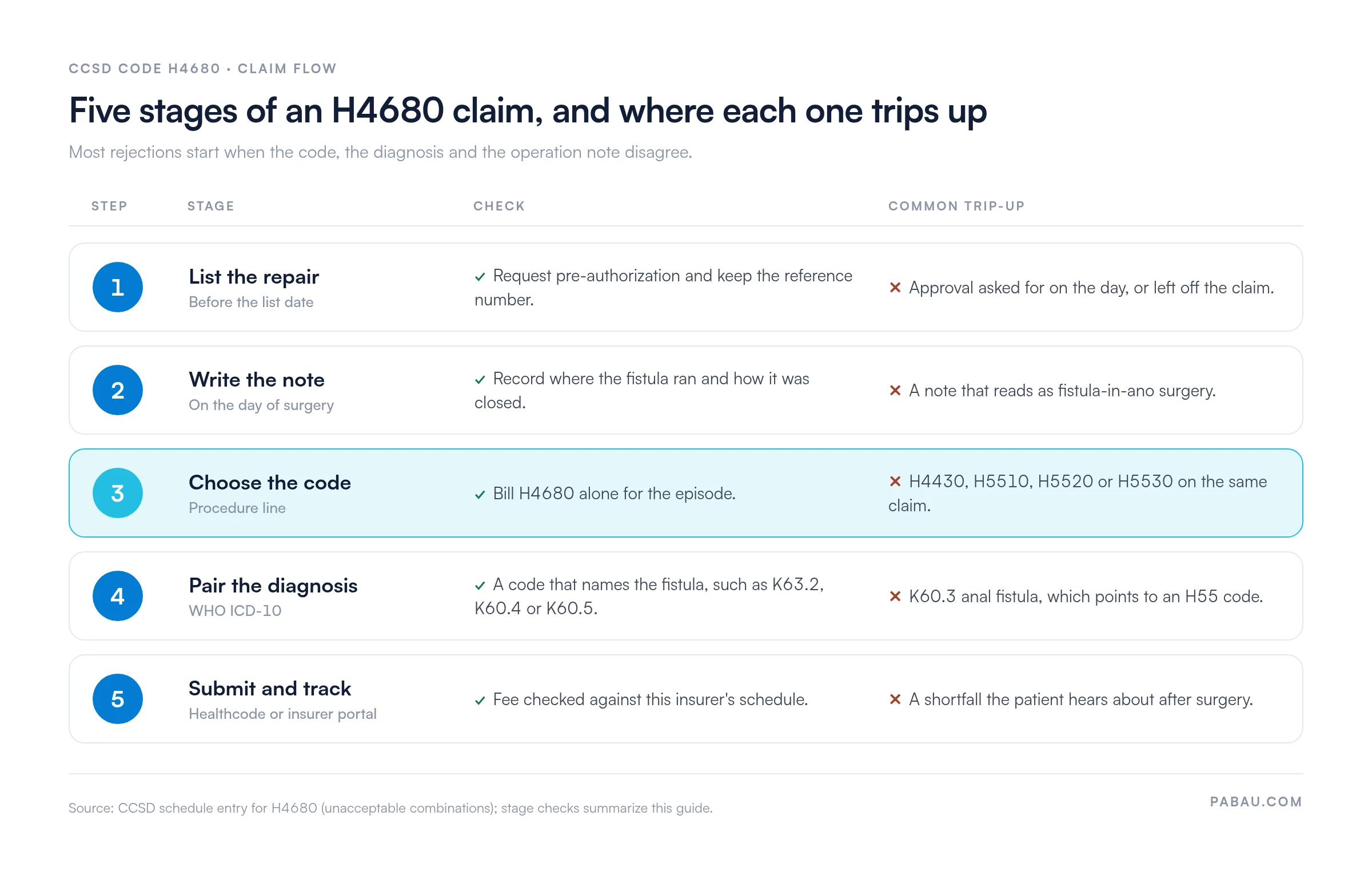
Before you submit, tick each line against the operation note.
Healthcode is the main electronic route for UK private medical insurance claims. Many insurers take claims through it, but confirm your patient’s insurer does before you rely on it.
Rejections on H4680 follow a few patterns. Most come down to the code and the note telling different stories.
To appeal, write to the insurer’s provider team with the claim number and the supporting notes. Appeal windows vary, so check the deadline when the rejection arrives. Our Bupa CCSD codes guide covers Bupa’s own billing rules.
In many consultant practices, a secretary retypes the code and diagnosis into each insurer’s portal. Then someone chases every claim by phone. Each retyped field is another chance of a rejection.
Pabau, the practice management platform we build, integrates with Healthcode. Your team sends the claim straight from the patient record. Its claims management view then shows each submitted claim’s status in one place.
Pabau does not choose the code for you. It keeps the code, the diagnosis and the authorization reference together, so the claim matches the note. The result is fewer retyped claims and quicker answers to insurer queries.
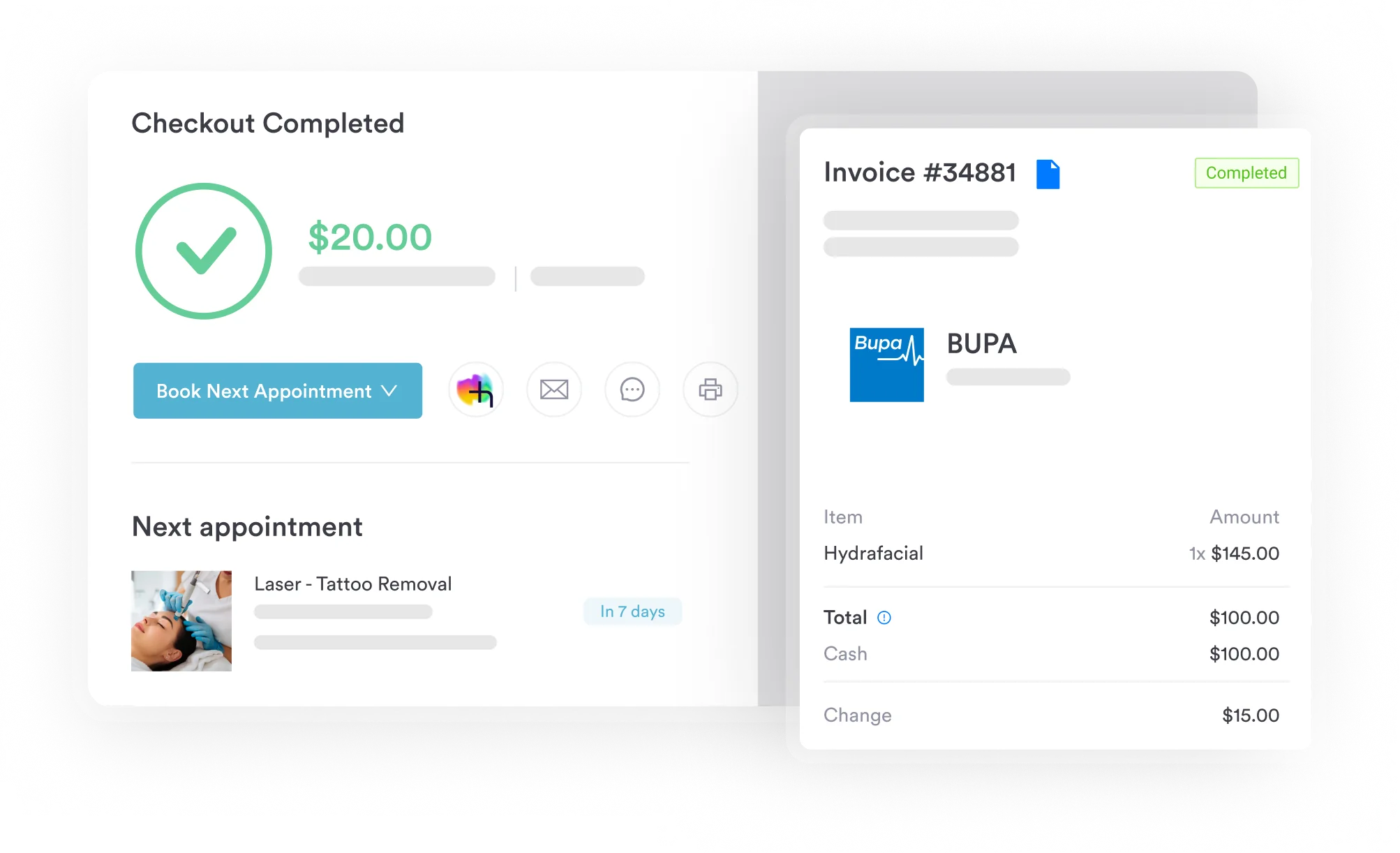

Pabau sends Healthcode claims from the patient record and tracks each claim’s status, so your team answers insurer queries sooner.

Treat H4680 as the code for one operation, closing a fistula that leaks stool. If the tract was fistula-in-ano, an H55 code carries the claim instead.
Claims hold up when the note, the diagnosis and the authorization tell one story. Check all three before the list date, not after a rejection letter arrives. Book a demo to see how Pabau sends Healthcode claims and tracks them for your practice.

Did the surgeon only examine the rectum? CCSD code H4430 explains when an examination under anesthesia bills on its own.
Was the fistula an anal one after all? CCSD code H5520 covers laying open of a high anal fistula and its claim rules.
Did the fistula reach the bladder? CCSD code M3720 walks through billing a vesicocolic fistula repair.
Looking for other CCSD codes? CCSD guides for consultants collects code-by-code billing guides for UK private practice.
Billing Bupa patients? Bupa CCSD codes guide covers Bupa’s procedure code framework for private practitioners.
A fecal fistula is an abnormal channel that lets stool escape from the bowel, most often through the skin. CCSD code H4680 bills its surgical repair.
Use a WHO ICD-10 code that names the fistula, such as K63.2, K60.4 or K60.5. A K60.3 anal fistula diagnosis usually points to an H55 code instead.
No. Laying open a low or high anal fistula bills as H5510 or H5520, and plug closure bills as H5530. None of them may share an episode with H4680.
No. H4430 is an unacceptable combination with H4680. Bill the repair on its own, and record the examination findings in the operation note.
Each insurer sets its own rate. The CCSD Group maintains the codes but sets no fees, so check the insurer’s schedule before you quote the patient.
No. H4680 covers the surgeon’s fee for the repair. The hospital bills theater, bed and nursing charges separately, and the anesthetist bills their own fee.
No. CCSD codes are for UK private medical insurance claims. The NHS records operations with OPCS-4 codes, and the two systems are not interchangeable.