

HCPCS Code E0272: Foam rubber mattress billing guide
HCPCS Code E0272: official descriptor and code overview HCPCS Code E0272 is the ...

Last Updated: Nov 6, 2026
G0400 is the CCSD code for open excision of lesion of oesophagus. It covers removal of a discrete oesophageal lesion, such as a leiomyoma, through a thoracotomy or laparotomy, with the oesophageal wall repaired afterwards.
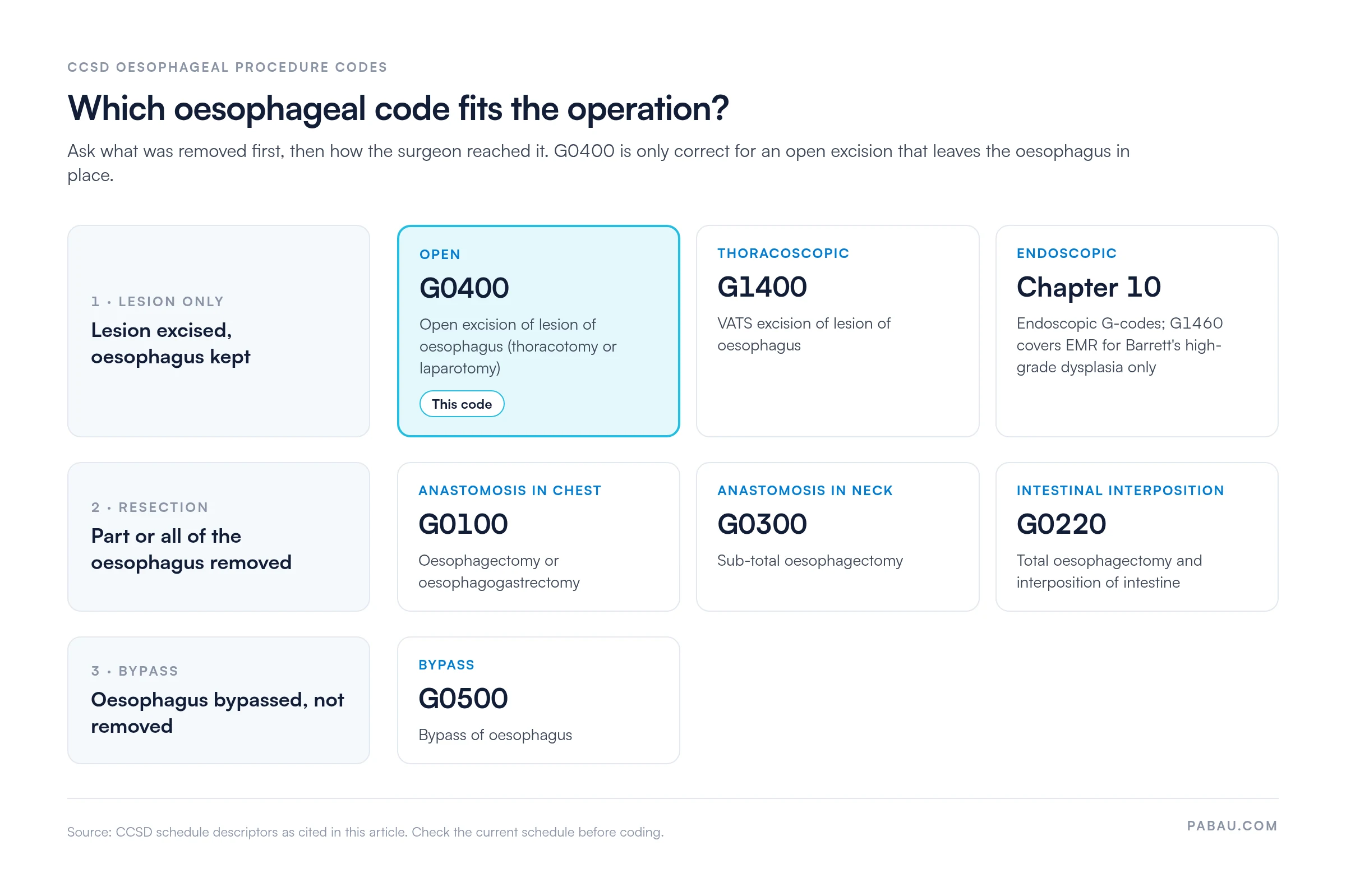
G0400 sits in chapter 8 of the CCSD schedule, Thorax and intra-thoracic organs. Thoracoscopic (VATS) excision is coded G1400, and removing part or all of the oesophagus is coded as an oesophagectomy, such as G0100, G0300 or G0220.
Let Pabau's smart automation suggest the right codes, reduce claim denials, and keep your practice compliant—effortlessly.
Automate repetitive tasks and focus on what matters most—your patients.
Reduce coding errors and ensure compliance with the latest regulations.
Clean claims, fewer denials, and faster reimbursements.
Powerful insights and reporting to help your practice thrive.
HIPAA compliant SOC 2 certified GDPR-compliant Trusted by 4,000+ clinics worldwide

CCSD Code G0400 covers open excision of a lesion of the oesophagus and sits in CCSD chapter 8, Thorax and intra-thoracic organs.
The operative note must confirm an open approach. A VATS excision is coded G1400, and resecting part of the oesophagus is an oesophagectomy code.
Insurers generally require pre-authorisation for major elective surgery such as G0400, so confirm the requirements with each insurer before the procedure date.
CCSD assigns G0400 a complexity band rather than a fee, and each insurer sets its own fee.
Pabau, the practice management platform we build, keeps authorisation references and operative documents in the patient file, ready for CCSD-coded invoices.
CCSD Code G0400 is the code for open excision of a lesion of the oesophagus. It sits in chapter 8 of the CCSD schedule, “Thorax and intra-thoracic organs”, within the oesophagus section. Endoscopic oesophageal procedures, such as G4410 and G6500, sit separately in chapter 10.
The official descriptor is precise: open excision of lesion of oesophagus. Confirm both elements, open approach and excision (as opposed to biopsy, drainage, or ablation), before you apply this code. Procedures carried out thoracoscopically or endoscopically, or where the intent was biopsy rather than full excision, fall under different CCSD codes.
The Clinical Coding and Schedule Development group maintains CCSD, and UK private medical insurers use it across PMI billing. The CCSD Technical Guide (October 2025) sets out the business rules governing code selection and unbundling across the schedule. The anaesthetist bills anaesthesia separately, so leave it off the G0400 line. Every code in the schedule is listed in our searchable CCSD code directory.
Open excision of an oesophageal lesion is a major thoracic or upper GI surgical procedure performed under general anaesthesia. In each case, the operating surgeon selects the approach based on lesion location along the oesophagus.
Once access is established, the surgeon identifies the lesion under direct vision, dissects it from surrounding tissue, and excises it with clear margins. The surgeon sends the specimen for histopathology. Then the surgeon repairs the oesophageal wall and closes it in layers. If the operation becomes a segmental resection with anastomosis or an interposition graft, it is an oesophagectomy and falls outside G0400.
This is clearly an open procedure. Therefore, CCSD Code G0400 does not apply when a thoracoscopic, laparoscopic, or endoscopic (transoral) technique is used. The operative note must state the approach taken, as insurer clinical reviewers flag any mismatch between the code and the documented technique.
Open oesophageal lesion excision is indicated when a lesion cannot be safely or completely removed by endoscopic means. Its size, depth, or histological risk can also make open access the right standard of care.
Below are the most common diagnoses driving G0400 claims, with their relevant ICD-10 codes.
Leiomyoma is the most common benign oesophageal tumour requiring open excision. Leiomyomas arise from the muscularis propria, so endoscopic mucosal resection cannot remove them fully without leaving tumour in the muscle layer. Open enucleation is the accepted standard when size or location makes endoscopic removal unsafe.
Selecting CCSD Code G0400 correctly requires ruling out the neighbouring oesophageal procedure codes. In practice, common causes of miscoding include a thoracoscopic or endoscopic route billed as open, and an oesophagectomy billed as a lesion excision.
In short, the route and the extent of removal decide the code. G1400 applies for thoracoscopic (VATS) excision of the same lesion. Sub-total oesophagectomy G0300 and total oesophagectomy G0220 are separate codes. The chart below lays out that decision in the order a coder should ask it.
CCSD descriptors and numbering change over time. Confirm neighbouring codes against the current schedule or an insurer’s own list, such as the Bupa CCSD procedure codes.
Documentation for G0400 serves two purposes: confirming the code is correct, and satisfying the insurer’s medical necessity review. UK PMI clinical reviewers often pend or reject claims that arrive without the full documentation set.
A complete G0400 claim pack needs each of these on file or attached at submission. Store them in a patient record the billing team can reach:
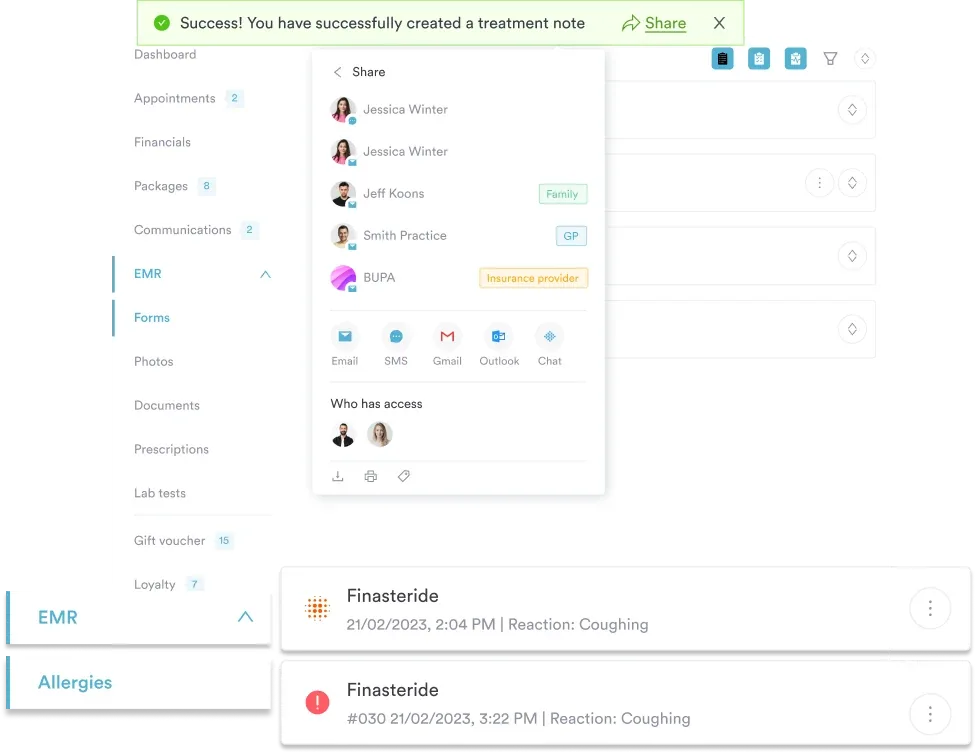
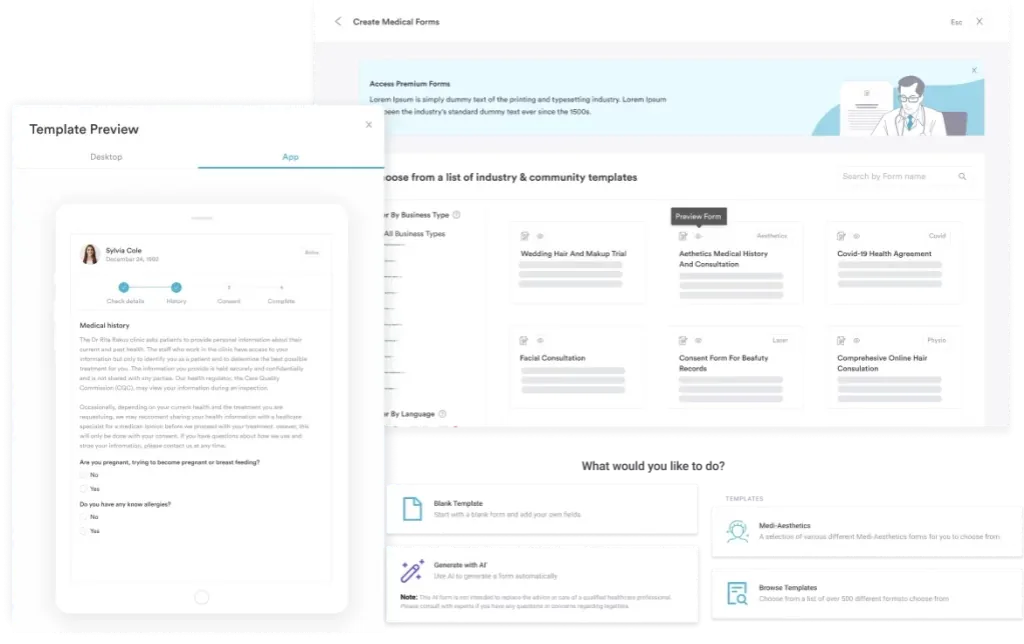
Notably, the operative note is the most closely checked document. Phrasing such as “lesion removed” without specifying the surgical approach is not enough. A note that reads “right thoracotomy performed, oesophageal leiomyoma identified and enucleated by open dissection” satisfies the standard. Digital operative record forms with structured fields for approach, technique, and specimen disposition reduce the risk of unclear documentation reaching the billing team.
Ask the consultant to note the approach explicitly in the final operative dictation before it is transcribed, not as an amendment afterwards. Insurers can and do request the original dictation timestamp when investigating approach-related disputes.
Insurers generally require pre-authorisation for major elective surgery such as open oesophageal excision, so confirm with each insurer before the procedure date. Operating without a valid authorisation reference gives the insurer grounds to reduce the benefit or reject the claim.
However, insurer requirements vary in their specifics. The table below summarises what four UK PMIs typically request for a G0400 pre-authorisation. Insurers update their policies regularly, so verify requirements directly with them.
In addition, complex cases, or those needing clinical review, take more time to authorise. Request authorisation before booking the procedure date, not on the day of admission.
A correctly structured G0400 claim follows this sequence. Skipping a step, particularly the documentation checks, is where most preventable rejections start.
Insurers deny G0400 claims for a narrow set of recurring reasons. Each one below comes with the fix that stops it delaying payment.
A common miscoding error on oesophageal lesion claims is billing CCSD Code G0400 when the surgeon used a minimally invasive route. The operative intent is the same and only the route differs. VATS excision G1400 applies for thoracoscopic excision.
Ultimately, the operative note is the final judge. If it describes a thoracotomy or laparotomy incision and direct-vision dissection, G0400 is correct. If it describes thoracoscopic ports and video assistance, G1400 applies instead. There is no endoscopic lesion-excision code in this section; G1460 covers EMR for Barrett’s high-grade dysplasia only.
The second boundary is extent. If a segment of the oesophagus is resected and reconnected, the operation is an oesophagectomy. Sub-total oesophagectomy G0300 and total oesophagectomy G0220 are separate codes, so check the note for an anastomosis before choosing G0400. If the oesophagectomy was completed through thoracoscopic and laparoscopic access, the claim takes G0260 instead.
A third pitfall occurs when a diagnostic OGD is performed immediately before the open excision in the same session. Some billing teams code both procedures. Check each insurer’s unbundling rules before adding a second code to the claim.
CCSD assigns a complexity band (Major 3 in the Bupa schedule); each insurer sets its own fee. As a result, reimbursement depends on the contracted rate between the consultant or hospital and the insurer.
UK private medical insurers apply their own benefit limits and recognition agreements. A consultant not recognised by a specific insurer may find their fee reduced to the insurer’s standard benefit rate. A pre-treatment benefit statement or pre-authorisation confirmation from the insurer sets out the amount it will cover. Consultants should ask patients to obtain one before any elective G0400 procedure.
Specific fee amounts are not quoted here because each insurer’s fee schedule changes and contracted rates vary. Check the current figure in the insurer’s own fee schedule portal; Vitality and Aviva both publish one, linked in the pre-authorisation table above. Those figures reflect each insurer’s benefit limits, not a CCSD rate.
Request an updated recognition letter from each insurer annually, not just at initial recognition. Fee rates and recognition terms can change at contract renewal without direct notification to the consultant.
Surgical billing teams often chase G0400 paperwork across email, a hospital system and a spreadsheet of authorisation numbers. The operative note, histology and pre-authorisation reference rarely arrive together, so claims wait.
Pabau’s claims management tools keep the authorisation reference, operative documents and CCSD-coded invoice in the patient’s file. The billing team sees what is missing before submission, rather than after a rejection.

Pabau helps UK private surgical practices track pre-authorisation references, attach operative documentation, and submit CCSD-coded invoices with fewer manual steps. See how it works for upper GI surgical billing.

G0400 is right for one narrow case: an open operation that removes a lesion and leaves the oesophagus in place. Before coding, read the operative note for two facts, the route and whether any segment was resected. Those two facts send the claim to G0400, G1400 or an oesophagectomy code.
Settle the code and the authorisation before the procedure date, and the claim usually needs no rework. Book a demo to see how Pabau keeps authorisation references and operative notes ready for every CCSD claim.

Working with Bupa on CCSD-coded procedures? Bupa CCSD procedure codes and fee schedule covers the code structure, fee schedule navigation, and submission requirements specific to Bupa recognition.
Coding a bypass closure instead? CCSD code G0640: oesophageal bypass closure explains when the closure code applies and which oesophageal codes it cannot be billed with.
Repairing a ruptured oesophagus? CCSD code G0740: repair of rupture of oesophagus walks through the documentation and claim steps for emergency oesophageal repair.
CCSD Code G0400 covers the open surgical excision of a lesion of the oesophagus. The surgeon reaches the oesophagus through a thoracotomy or laparotomy and removes the lesion under direct vision. It does not cover thoracoscopic or endoscopic procedures, resection of the oesophagus, or biopsy alone.
G0400 covers open surgery only. The descriptor states open excision, so a thoracoscopic (VATS) excision is coded G1400 and endoscopic procedures sit in CCSD chapter 10. The operative note must confirm the open approach for G0400 to be valid.
Common causes include a missing pre-authorisation reference and an operative note that does not confirm the open approach. Others are a VATS excision or oesophagectomy billed as G0400, an ICD-10 code that does not match histopathology, and anaesthesia added to the G0400 line.
Insurers generally require pre-authorisation for major elective surgery such as G0400, so confirm with each insurer. Requests typically include the CCSD code, the ICD-10 diagnosis, the consultant’s name and GMC number, and the planned date. Most also ask for a clinical letter explaining why open surgery is necessary.
G0400 is specific to open excision of a discrete lesion. VATS excision G1400 applies for thoracoscopic excision. Sub-total oesophagectomy G0300 and total oesophagectomy G0220 are separate codes, used when part or all of the oesophagus is removed rather than just the lesion.




