ICD-10 Code V28.01XD: E-bike driver noncollision accident, nontraffic, subsequent encounter
ICD-10 Code V28.01XD: Definition and billable status ICD-10 Code V28.01XD is the...

Last Updated: Oct 20, 2026
Billable Code Specific Code
O87.9 is the billable ICD-10-CM code for venous complication in the puerperium, unspecified.
Yet the documentation reaching the billing desk is often incomplete.
A coder can often confirm a complication occurred without knowing the type. Maybe it's superficial thrombophlebitis, a deep vein thrombosis, or something else entirely.
When the note doesn't say, O87.9 is the correct fallback, per the AAPC ICD-10-CM code reference. The real work is knowing when to stop at O87.9, and when the record supports a more specific O87 code.
Let Pabau's smart automation suggest the right codes, reduce claim denials, and keep your practice compliant—effortlessly.
Automate repetitive tasks and focus on what matters most—your patients.
Reduce coding errors and ensure compliance with the latest regulations.
Clean claims, fewer denials, and faster reimbursements.
Powerful insights and reporting to help your practice thrive.
HIPAA compliant SOC 2 certified GDPR-compliant Trusted by 4,000+ clinics worldwide

ICD-10 Code O87.9 is a billable ICD-10-CM diagnosis code for venous complication in the puerperium, unspecified, valid for FY2026 claims submission.
Use O87.9 only when the clinical record identifies a postpartum venous complication but cannot specify the type. More specific O87 codes, such as O87.0 to O87.4 or O87.8, apply when documentation allows.
Excludes2 notes mean O88 (obstetric embolism) and O22 (venous complications in pregnancy) can be reported alongside O87.9 when both conditions are documented.
Pabau’s claims management dashboard tracks each claim’s status and flags missing insurer details before submission, cutting denials tied to incomplete postpartum billing.
ICD-10 Code O87.9 sits within Chapter 15 of ICD-10-CM, the obstetric chapter covering complications of pregnancy, childbirth, and the puerperium (O00-O9A). The table below captures the core reference data coders need before submitting a claim.
The CDC/NCHS ICD-10-CM web tool confirms the code’s validity for the current fiscal year. Coders should verify the edition each October when the annual update takes effect.
The puerperium is the six-week period (approximately 42 days) following delivery, during which the body undergoes physiological recovery. This definition is embedded in the CMS ICD-10-CM Official Guidelines and shapes exactly which codes apply.
Venous complications cluster in this window for a clear physiological reason. Pregnancy raises fibrinogen and clotting factors, suppresses fibrinolysis, and compresses pelvic veins. Those changes do not resolve instantly at delivery.
Venous stasis, vessel wall trauma from labor, and postpartum immobility all sustain elevated clotting risk through the first six weeks. That is why O87 exists as a distinct category, separate from antepartum venous codes (O22).
Practices that track postpartum recovery more broadly.
Three facts that affect how coders apply the puerperium definition:
Check the date of service against the delivery date before assigning O87.9. Any postpartum venous complication presenting after day 42 falls outside the puerperium window. It should be coded from Chapter 9 using the appropriate circulatory system code, not an obstetric code.
Selecting the right diagnosis code at the correct level of specificity is fundamental to claim integrity across every ICD-10-CM category, and O87 is no exception. Reliable clinical documentation software makes that specificity easier to capture at the point of care.
According to the CMS ICD-10 coding guidelines, coders must assign the most specific code supported by the documentation. O87.9 is not a catch-all; it is a legitimate code for cases where the type of venous complication genuinely cannot be determined.
If the record says “DVT,” use O87.1. If it says “superficial thrombophlebitis,” use O87.0. O87.9 applies when the record says “venous complication” without further specification.
Using digital clinical forms prompts postpartum providers to document venous status, delivery date, and complication type. That reduces how often unspecified codes reach the billing desk. When documentation arrives with sufficient detail, coders can consistently assign a more specific O87 code rather than defaulting to O87.9.
The O87 category carries instructional notes that govern which codes can and cannot be reported alongside O87.9. Misreading these notes is one of the most common sources of claim denial for obstetric venous codes.
O87 and O88 carry an Excludes2 note, not Excludes1, so the two categories are not mutually exclusive. A postpartum patient with a confirmed DVT (O87.1) who later develops a pulmonary embolism also gets a code from O88.2, obstetric thromboembolism. The specific code is O88.23, for a PE occurring in the puerperium.
That differs from O88.1, which covers amniotic fluid embolism, a separate condition entirely. Coders can report both O87.1 and O88.23 on the same claim when the documentation supports each condition separately.
Understanding the full O87 category helps coders distinguish between closely related complications in the puerperium. The table below lists every active subcategory, so you can confirm the right code before you bill.
The decision between O87.9 and its siblings comes down to one question: does the medical record identify the type of venous complication? Use this framework before assigning ICD-10 Code O87.9.
A key distinction coders sometimes miss: O87.8 (“other specified”) and O87.9 (“unspecified”) are not interchangeable. O87.8 applies when the type is specified but does not match any of the named subcategories. O87.9 applies when the type is genuinely unknown. If in doubt, query the attending provider before submitting.
Payers increasingly apply claim edits to unspecified codes, and obstetric venous codes are no exception. Maintaining HIPAA-compliant clinical documentation that clearly supports the assigned code is the coder’s primary defense in a payer audit.
Before you submit a claim with O87.9, confirm the medical record includes at minimum:
Using structured medical forms in the postpartum visit workflow helps capture these elements consistently. When delivery date, visit date, venous status, and provider attestation are built into the form, coders spend less time querying providers. Fewer claims then go out with incomplete documentation.
Before assigning O87.9, send a provider query asking for the specific type of venous complication. Most payers accept a signed addendum to the original note. A query that results in a more specific O87 code improves reimbursement accuracy and reduces the risk of a post-payment audit. Document that the query was sent and the response received.
Coding postpartum venous complications is rarely the hard part. The harder part is bridging the clinical note and the billing system. A coder working from a standalone reference tool has to look up O87.9, switch back to the patient record, and transcribe the code.
Then they enter it again in the billing system. Each handoff creates a chance for a transcription error or a missed update.
Pabau’s claims management software keeps insurer and policy details on the patient record. Once a coder enters O87.9 or any O87 sibling, the claim routes to the right payer without re-entry. A built-in validation check locks submission until required fields, such as membership numbers, are complete.
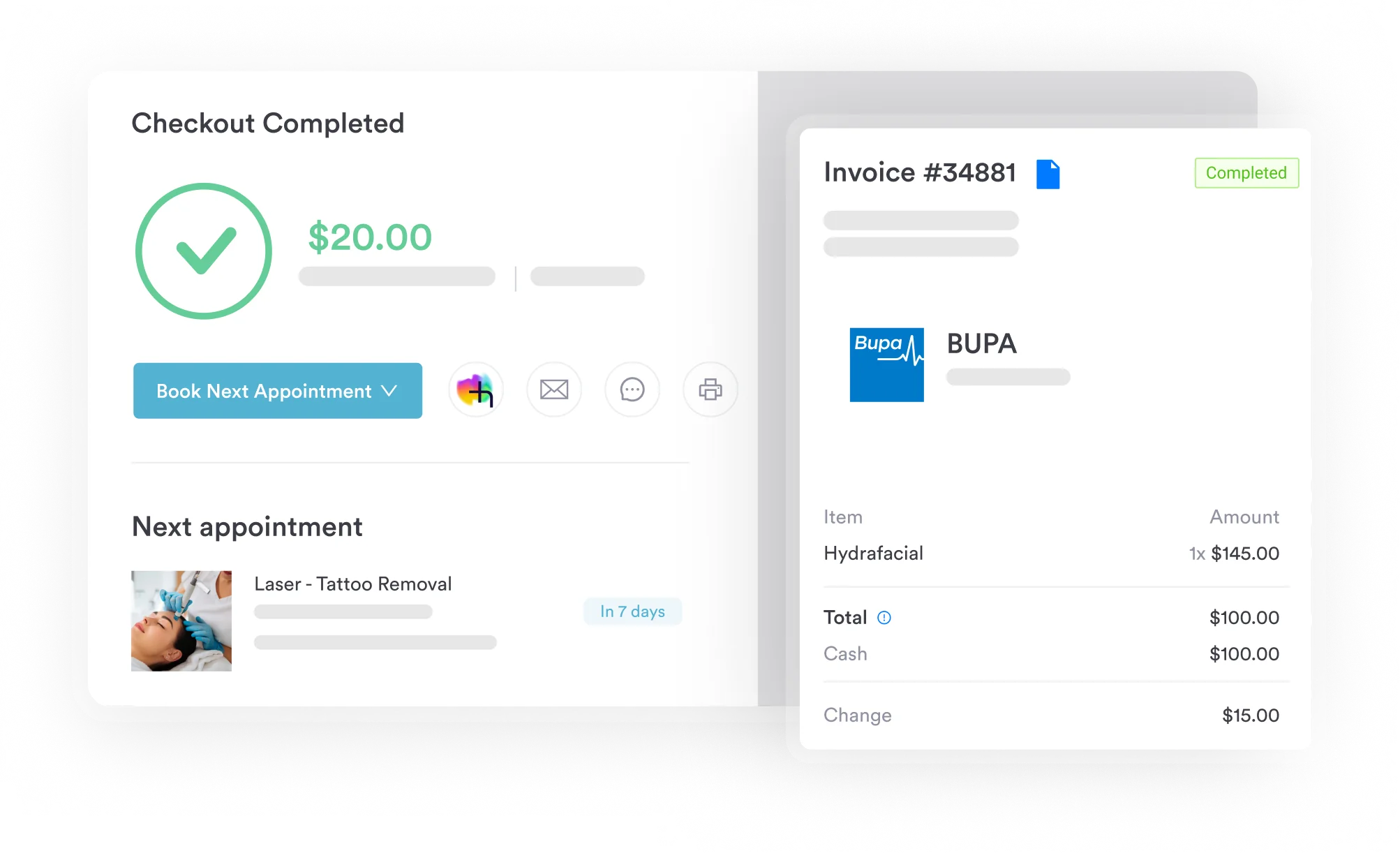
That catches missing details before they turn into a rejection, not after. The OB/GYN EMR software built for women’s health practices supports the full postpartum visit workflow, from delivery documentation through to claim submission.
For practices managing practice software compliance requirements, Pabau keeps the clinical note, insurer details, and claim status together in one record. That makes it simple to pull supporting documentation when a payer questions an unspecified code like O87.9.
Reviewing patient records alongside the claims dashboard in the same system also lowers the risk of coding from an outdated note version.
Practices that use practice management software with integrated coding support consistently report fewer claim rejections tied to code-documentation mismatches. The code and the supporting note live in the same system from the moment of assignment.

Pabau’s claims dashboard keeps insurer details on the patient record and flags missing fields before a claim goes out. See how it supports postpartum visits like those coded with O87.9.

Unspecified codes remain a legitimate part of ICD-10-CM, but they carry audit risk when the documentation doesn’t clearly support the “unspecified” label. For O87.9, the standard is straightforward. The record must confirm a postpartum venous complication within 42 days of delivery, and the type must be genuinely undetermined. The billing process starts at registration, not at the point the coder opens the note. Diagnosis pointers on the claim form link each service line to the diagnosis that justifies it.
When the type is known, use the matching O87 sibling instead. When it isn’t, query the provider before coding, and document that query. A routine medical chart audit catches these mismatches before a payer does.
Pabau’s claims management software keeps insurer details on the patient record and flags missing fields before a claim goes out. That cuts the back-and-forth that leads to errors in postpartum billing. To see how it handles O87.9 and related obstetric codes, book a demo with the Pabau team.

Curious about a different unspecified puerperium code? ICD-10 code O90.9 walks through when this code applies instead of a more specific O87 or O88 category.
Coding a spinal infection instead? ICD-11 FA90 for vertebral infection covers the diagnostic classification for vertebral osteomyelitis, discitis, and other infections of the vertebral column.
Coding a urinary tract infection next? ICD-11 GC08 for UTIs replaces ICD-10’s N39.0 for urinary tract infections when the site is not specified.
Coding a language disorder after stroke? ICD-11 MA80.0 for aphasia classifies aphasia, the acquired language disorder that most often follows a stroke.
Billing a colorectal cancer assay? CCSD code 0002T for Immunoscore covers the UK billing code for the Immunoscore colorectal cancer assay, which usually needs pre-authorization.
No. O87.9 is already a complete, billable code. Chapter 15’s O87 category doesn’t use the seventh-character extension that some other obstetric and injury codes require.
Most practices pair O87.9 with an evaluation and management CPT code, like 99213 or 99214, depending on how complex the visit is.
Yes. O87.9 covers any venous complication in the 42-day puerperium, regardless of delivery mode. Coders add a separate outcome-of-delivery code to show whether the birth was vaginal or cesarean.
None that changes coding. “Puerperium” is the clinical term ICD-10-CM uses for the 42-day window most people call the postpartum period.
Most payers request the supporting note before an outright denial. If the documentation still doesn’t name the type, appeal with a provider addendum rather than resubmitting the same code.
Rarely on its own. Most payers expect it alongside a delivery outcome code and the visit’s E/M code. O87.9 describes a complication, not the full reason for the encounter.