ICD-10 Code Y76.0: Diagnostic obstetric and gynecological devices
ICD-10 Code Y76.0: Definition and billable status ICD-10 Code Y76.0 is a valid, ...

Last Updated: Oct 23, 2026
Billable Code Specific Code
M24.7 is the billable ICD-10-CM code for protrusio acetabuli.
The detail that decides most M24.7 claims is whether the note names a secondary cause.
Let Pabau's smart automation suggest the right codes, reduce claim denials, and keep your practice compliant—effortlessly.
Automate repetitive tasks and focus on what matters most—your patients.
Reduce coding errors and ensure compliance with the latest regulations.
Clean claims, fewer denials, and faster reimbursements.
Powerful insights and reporting to help your practice thrive.
HIPAA compliant SOC 2 certified GDPR-compliant Trusted by 4,000+ clinics worldwide

ICD-10 Code M24.7 is the billable, specific diagnosis code for protrusio acetabuli, valid for fiscal year 2026.
M24.7 carries no laterality subcodes, so coders assign the same code regardless of which hip is affected.
Secondary causes such as rheumatoid arthritis, Paget’s disease, and osteomalacia must be documented and coded alongside M24.7.
Practice management software like Pabau lets clinicians assign ICD-10 codes inside the patient record. That removes the tab-switching between a reference site and a billing system.
M24.7 is a billable, specific ICD-10-CM diagnosis code for protrusio acetabuli. Billable means the code carries enough clinical detail to appear on a claim for reimbursement. According to the CDC/NCHS ICD-10-CM tool, M24.7 is valid for fiscal year 2026, covering October 1, 2025 through September 30, 2026. Verify validity each October 1, when the annual update cycle takes effect.
Unlike many entries in the M24 category, M24.7 does not carry laterality suffixes. There is no M24.71 for the right hip or M24.72 for the left. Fracture codes such as S42.131K carry a laterality digit, and M24.7 does not. The single code covers every presentation, which simplifies assignment but still leaves the note responsible for naming the affected hip.
Knowing the parent-code chain helps when you are answering a documentation audit or appealing a payer denial. M24.7 sits four levels deep in ICD-10-CM, and each level narrows the clinical scope.
The CMS ICD-10 codes page publishes the full tabular list each fiscal year. Check the complete M24 category annually, because adjacent codes occasionally pick up validity changes that a saved favorites list will not show you.
Protrusio acetabuli is a hip joint disorder in which the acetabulum, or hip socket, protrudes medially into the pelvic cavity. The femoral head is displaced inward beyond the ilioischial line. That reduces joint space and restricts range of motion.
The condition presents in two forms. Primary or idiopathic protrusio acetabuli has no identified underlying cause and tends to occur in young women. Secondary protrusio acetabuli develops from a systemic or traumatic process that affects bone integrity.
Secondary causes are more common in practice, and they are where the coding work sits. Each underlying condition has its own ICD-10 code, which must be documented and assigned alongside M24.7.
Clinical presentation drives the documentation. The note has to support M24.7 with objective findings, not a radiology impression alone.
The ICD-10-CM alphabetic index maps several clinical terms to M24.7. Physician notes and orthopedic referrals often use one of these instead of the code description.
None of these terms needs a different code. They all map to M24.7 in the index. When a note uses an eponym like Otto pelvis, confirm the clinical context matches protrusio before assigning, rather than coding from the synonym alone.
Protrusio acetabuli follows the standard musculoskeletal sequencing rules in the ICD-10-CM Official Guidelines for Coding and Reporting, published each year by CMS and NCHS. Whether M24.7 is first-listed or additional depends on the reason for the encounter.
M24.7 needs no seventh character either. Coders working in practice management software with built-in code search can check sequencing as they assign.
Documentation requirement: The physician or qualified provider must confirm the diagnosis in the note. Coders cannot assign M24.7 from imaging findings alone, without a clinical interpretation statement in the record.
Flag any note that references protrusio acetabuli without naming a primary or secondary etiology. Query the provider to document any associated systemic condition. That distinction changes sequencing and can affect medical necessity review for hip arthroplasty.
M24.7 is rarely the only code on the claim. It usually travels with the underlying cause, the presenting symptom, or a related joint condition. The table below covers the companion codes that come up most often.
Run a quarterly audit of claims submitted with M24.7 as the sole diagnosis. Check whether the notes record the presence or absence of a secondary cause. A condition sitting in the problem list but missing from the claim leaves the coding incomplete. That is what triggers medical necessity denials on the associated procedures.
On inpatient claims, M24.7 groups to the general musculoskeletal MS-DRGs 564, 565, and 566. Which one applies depends on whether the record documents a complication or comorbidity, and whether it is major. A procedure changes the picture entirely, so an ICD-10-PCS code for hip replacement moves the stay into a joint replacement group.
Practice management software like Pabau links diagnosis codes straight to the billing workflow through claims management software. That removes the manual step of cross-referencing grouper tables after the clinical note is finalized.
Payer rules vary. Medicare fee-for-service and commercial payers can apply different medical necessity criteria for procedures performed in the context of M24.7. Check the payer’s Local Coverage Determination before submitting claims for hip arthroplasty or an open reduction with M24.7 as the primary diagnosis. Billing compliance asks a narrower question than coding accuracy: can the practice defend this claim on review.
ICD-10-CM is the US adaptation of the WHO’s ICD. Practices billing internationally should confirm the condition maps to an equivalent code in the local adaptation.
ICD-10 coding usually breaks down at the handoff. A clinician finishes a hip assessment, opens a browser tab to look up M24.7, then retypes it into a separate billing field. Every one of those steps invites a transcription error, and each one delays submission.
Hip diagnoses travel across musculoskeletal specialties, so an osteopathy practice software record and a physical therapy EMR both need code search built in. Pabau puts that search inside the clinical note itself.
Clinicians working in structured client records can search by condition name or code, select M24.7, and populate the claim without leaving the record. Patients with comorbidities need several codes, and those can be assigned and sequenced in the same place.
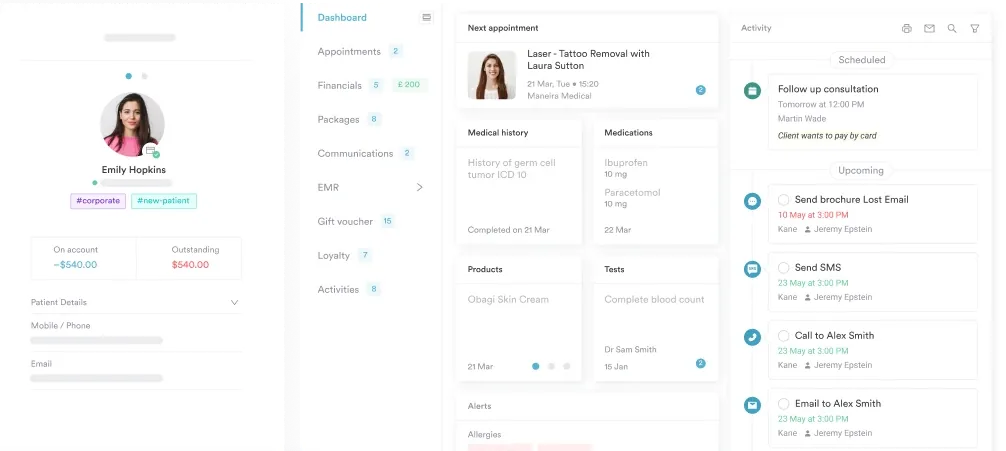
That gives you objective findings to point to when a payer asks what supported M24.7.
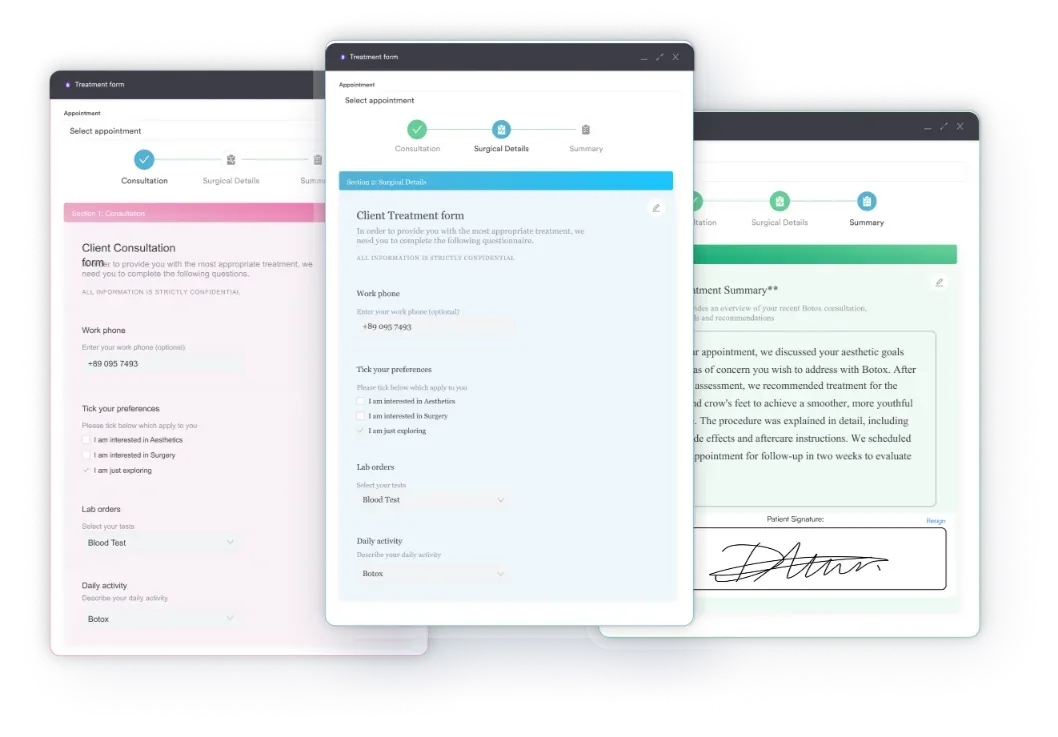

Pabau lets clinicians search and assign ICD-10 codes, including M24.7, inside the patient record. Clean documentation flows straight into billing, so claims leave with every code intact.

M24.7 is an easy code to assign and an easy one to under-document. The code selection is settled the moment the diagnosis is confirmed, so the work sits in the note behind it.
Before you submit, check that the record names the etiology, the affected hip, and the objective findings. Get those three in place and the claim survives review without a provider query or an appeal.
Pabau connects that documentation to the claim, so M24.7 and its companion codes land correctly the first time. Book a demo to see how diagnostic coding works inside the patient record.

Coding a different pregnancy complication? threatened abortion ICD-10 code applies when a patient bleeds before 20 weeks of gestation with a closed cervix and a viable pregnancy.
Need the seventh-character rules in one place? S42.009B shows how encounter type changes the code you submit.
Pairing a diagnosis with a surgical code? 21812 explains what an operative report has to say to support fixation billing.
Need to code a different pregnancy symptom? late vomiting of pregnancy code applies to vomiting after 20 completed weeks of gestation that does not meet hyperemesis gravidarum criteria.
Looking for a code for pregnancy vomiting? vomiting from an underlying condition covers vomiting during pregnancy that an existing disease, not the pregnancy itself, is driving.
ICD-10 Code M24.7 is the billable, specific ICD-10-CM diagnosis code for protrusio acetabuli. That is a hip joint condition in which the acetabulum protrudes medially into the pelvic cavity. The code sits in category M24, within chapter M00-M99, and is valid for fiscal year 2026.
Yes. M24.7 carries enough clinical detail to be used on a claim without a more specific subcode. There are no laterality extensions, so no M24.71 or M24.72 exists. M24.7 applies regardless of which hip is affected.
Yes. M24.7 is valid for FY2026, covering October 1, 2025 through September 30, 2026. ICD-10-CM codes are updated annually on October 1. Verify validity at each annual update using the CDC/NCHS ICD-10-CM tool or the CMS tabular list.
Secondary causes include rheumatoid arthritis (M05 or M06), Paget’s disease of bone (M88), osteomalacia (M83), trauma, and Marfan syndrome (Q87.40). Each carries its own ICD-10 code and must be documented and coded alongside M24.7. The underlying condition is sequenced first when it drives the encounter.
The immediate parent is category M24, Other specific joint derangements. M24 sits within block M20-M25, Other joint disorders, inside chapter M00-M99, Diseases of the Musculoskeletal System and Connective Tissue. M24 also includes codes for loose bodies in joints, contracture of joint, ankylosis, and pathological joint dislocation.
On an inpatient claim without a procedure, M24.7 groups to MS-DRG 564, 565, or 566. Those cover other musculoskeletal and connective tissue diagnoses, split by whether a major complication, a complication, or neither is documented. A hip replacement procedure moves the stay to a joint replacement group instead.