

ICD-10 Code S42.444P: Medial epicondyle fracture, right humerus
ICD-10 Code S42.444P: full descriptor and code validity ICD-10 Code S42.444P car...

Last Updated: Oct 13, 2026
Billable Code Specific Code
L54 is the billable ICD-10-CM code for erythema in diseases classified elsewhere.
The ICD-10 code for erythema depends on what's causing the skin redness - there's no single catch-all code. When erythema appears as a manifestation of a systemic disease documented elsewhere, the code is L54, erythema in diseases classified elsewhere. It's a manifestation code, so you sequence it after the underlying condition, never on its own.
Let Pabau's smart automation suggest the right codes, reduce claim denials, and keep your practice compliant—effortlessly.
Automate repetitive tasks and focus on what matters most—your patients.
Reduce coding errors and ensure compliance with the latest regulations.
Clean claims, fewer denials, and faster reimbursements.
Powerful insights and reporting to help your practice thrive.
HIPAA compliant SOC 2 certified GDPR-compliant Trusted by 4,000+ clinics worldwide

There is no single ICD-10 code for erythema – the correct code depends on the cause, and L54 covers erythema that appears as a manifestation of a systemic disease classified elsewhere.
L54 is billable but cannot be used as a primary diagnosis – the underlying etiology code must always be sequenced first on the claim.
Skipping the ‘code first’ convention is the most common L54 sequencing error, and it causes claim denials at payers that run primary-diagnosis edits.
Pabau’s claims management software flags manifestation codes and prompts coders to attach the required etiology code before submission.
ICD-10 Code L54 is the diagnosis code for erythema in diseases classified elsewhere – a skin-surface redness that arises as a secondary feature of a primary systemic or internal condition rather than as an independent dermatological disorder. Clinicians and coders working in dermatology practice management software encounter this code whenever a patient’s redness cannot be attributed to a primary skin disease. The code sits within the L49-L54 urticaria and erythema block of Chapter XII (Diseases of the skin and subcutaneous tissue, L00-L99) in WHO’s ICD-10 classification. Loop and segment rules in the EDI 837 format decide where a code and its modifiers are carried.
The defining feature of ICD-10 Code L54 is its status as a manifestation code. It describes what the skin looks like, not why. The underlying disease – whether rheumatoid arthritis, systemic lupus erythematosus, or another systemic condition – must be coded separately and placed first on the claim. ICD-10-CM uses a “code first” instruction at L54 precisely to enforce this sequencing requirement.
For reimbursement purposes, ICD-10-CM codes are required for all claims with a date of service on or after October 1, 2015, as confirmed by CMS and the National Center for Health Statistics (NCHS), who jointly maintain the ICD-10-CM code set in the United States.
ICD-10 Code L54 is billable and specific. You can include it on a claim, and payers recognize it as a valid diagnosis code. But there is a critical restriction coders must know before submitting.
L54 is unacceptable as a primary diagnosis. Rhode Island Medicaid’s official list of codes that cannot serve as a principal diagnosis includes L54 explicitly, and this restriction is consistent with CMS coding conventions for all manifestation codes. Submitting a claim with L54 as the first-listed diagnosis will trigger a primary-diagnosis edit at most payers. The claim will deny.
| Code property | Value |
|---|---|
| Official description | Erythema in diseases classified elsewhere |
| ICD-10-CM chapter | L00-L99 (Diseases of the skin and subcutaneous tissue) |
| Block | L49-L54 (Urticaria and erythema) |
| Billable/specific | Yes |
| Acceptable as primary diagnosis | No |
| Coding convention | Code first the underlying disease |
| Effective from | October 1, 2015 (ICD-10-CM implementation) |
Understanding this distinction matters most at claim submission. A well-documented chart that correctly identifies the underlying condition gives the coder everything needed to sequence the claim properly. Poor documentation – notes that describe only the skin finding without specifying the causative disease – leaves the coder unable to assign the required etiology code, which in turn prevents correct submission of ICD-10 Code L54 as a secondary code.
ICD-10-CM uses a convention called “code first” for conditions that represent the manifestation of an underlying etiology. ICD-10 Code L54 carries this instruction in the tabular list. It means the underlying disease must be coded and listed before L54 on every claim or encounter record.
This is not a stylistic preference. The sequencing conventions in ICD-10-CM have direct reimbursement consequences. When the etiology code is missing, the manifestation code has no clinical anchor. Payers running primary-diagnosis logic will reject the encounter or assign it to a lower-severity DRG than the clinical presentation warrants.
A patient with systemic lupus erythematosus (SLE) presents with a distinctive facial erythema. The correct claim sequence is:
The same logic applies when rheumatoid arthritis, diabetes mellitus, or another systemic condition produces erythematous skin changes. The disease driving the erythema always takes the principal diagnosis slot. L54 documents what is visible on the skin, providing a complete clinical picture without displacing the primary diagnostic code.
Coders should also note that digital intake workflows. That documentation upstream makes downstream coding significantly easier.

Run a code-first audit quarterly. Pull all claims where L54 appears and verify that an etiology code is listed first. Any encounter with L54 as the only diagnosis, or as the first diagnosis, represents a sequencing error that needs correction before rebilling.
Coders choosing between L54 and neighboring codes need to understand what differentiates each one. The L49-L54 block covers urticaria and erythema, but the codes within it are not interchangeable. Selecting the wrong code from this group produces a claim that either understates or misstates the clinical presentation.
The ICD-10 manifestation coding patterns that apply to L54 are distinct from those that govern standalone erythema codes, making code selection the most consequential documentation step for this presentation. For a comprehensive search across the full code range, the CDC/NCHS ICD-10-CM web tool provides the official tabular list lookup by fiscal year.
| Code | Description | Key distinction from L54 |
|---|---|---|
| L50 | Urticaria | Hives / wheals – distinct presentation from erythema; several subcategories by cause |
| L52 | Erythema nodosum | Inflammatory panniculitis with tender nodules; coded independently, no “code first” requirement |
| L53.8 | Other specified erythematous conditions | For erythema with a documented primary skin cause that doesn’t map to a more specific code |
| L53.9 | Erythematous condition, unspecified | Use only when cause is genuinely undetermined – avoid as a default |
| L54 | Erythema in diseases classified elsewhere | Manifestation code; underlying systemic disease always coded first |
The critical fork is between L54 and L53.9. L53.9 is appropriate when the cause of erythema is genuinely unknown. L54 is appropriate when the cause is a documented systemic condition coded elsewhere. Using L53.9 as a catch-all when the chart identifies an underlying disease understates the patient’s clinical complexity and may affect MS-DRG assignment.
Several erythema presentations have specific, standalone codes that sit outside the L54 manifestation pattern. When documentation names one of these, code it directly rather than reaching for L54 or L53.9. This is where most “which erythema ICD-10 code do I use” questions get resolved.
| Condition | ICD-10-CM code | Coded as |
|---|---|---|
| Erythema multiforme | L51 (e.g., L51.9 unspecified) | Standalone; subcategories cover Stevens-Johnson syndrome and toxic epidermal necrolysis |
| Erythema nodosum | L52 | Standalone inflammatory panniculitis; no “code first” requirement |
| Erythema migrans (Lyme disease) | A69.20 | Coded from the infectious chapter, not the skin chapter; excluded from the L49-L54 block |
| Erythema toxicum neonatorum | P83.1 | Standalone neonatal code; do not use L53.9 or L54 |
| Erythema in diseases classified elsewhere | L54 | Manifestation code; underlying systemic disease always sequenced first |
The takeaway for coders: reach for L54 only when the erythema is a secondary skin feature of a systemic disease that carries its own code. If the presentation is a named erythema condition in its own right, the specific code above is more accurate and avoids an unnecessary etiology-manifestation pairing.
The chart note must do two things to support ICD-10 Code L54 coding. First, it must document erythema as a distinct finding – not just redness mentioned in passing. Second, it must explicitly link the erythema to a named systemic condition. Notes that describe a “malar rash in context of SLE” or “drug-induced erythema secondary to methotrexate use” provide the causal link coders need. An antibiotic line such as J1580 on the same record makes a drug-related link easier to evidence. Notes that say only “patient has facial redness” do not.
The American Hospital Association (AHA) Coding Clinic advisories reinforce that query-worthy documentation – where the causal relationship between a systemic disease and a skin finding is implied but not stated – should prompt a physician query before coding rather than assumption. Coders should not infer a manifestation relationship without clinical confirmation.
Structured patient record documentation within a practice management system reduces the risk of incomplete notes by guiding clinicians through required fields. When a dermatology or aesthetics clinic uses template-driven visit notes, the documentation needed to support L54 – the underlying disease, the causal relationship, the skin finding description – is captured consistently rather than by memory.
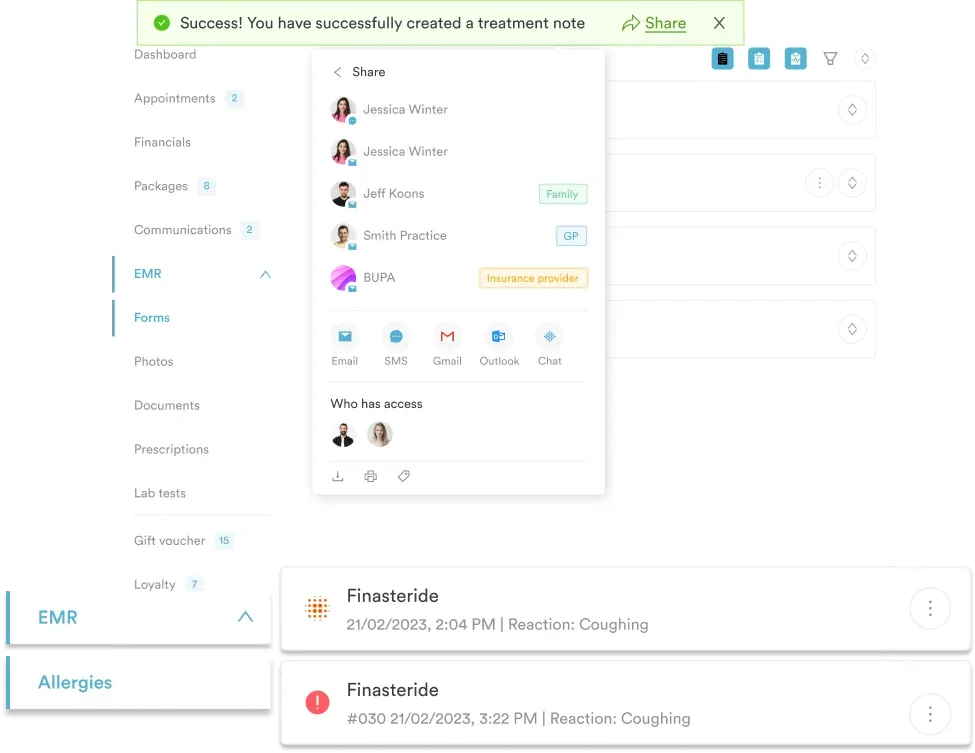

Pabau helps dermatology and aesthetic clinics document diagnoses completely, reducing sequencing errors and claim denials. See how structured clinical notes and built-in coding workflows keep your billing on track.

Any systemic condition capable of producing cutaneous erythema may require L54 as a secondary code. Nutritional causes belong on that list, with E60 sequenced first when zinc deficiency drives the rash. The following are among the most frequently documented in claims data for skin clinic software environments where both dermatological and systemic conditions are managed.
The ICD-10-CM diagnostic code reference hierarchy applies across all manifestation code pairings: the condition with the most significant clinical impact on patient management takes principal diagnosis position, and L54 documents the dermatological manifestation that prompted the skin-focused encounter. Keeping a medical coding cheat sheet on hand for CPT, ICD-10, and HCPCS ranges supports that reference hierarchy at charge entry. HCPCS entries run on their own logic, where L1932 is chosen by the device supplied rather than the diagnosis.
Coders dealing with complex multi-system patients should also cross-reference CMS guidance. The CMS ICD-10-CM update files and coding guidelines are updated annually with October 1 effective dates and include the official list of code-first and use-additional-code pairings.
When multiple systemic conditions could be causing erythema, query the attending clinician to identify which condition is clinically responsible. Do not default to the most recent diagnosis on the problem list. The etiology driving the erythema is the code that goes first.
Getting the etiology-manifestation pair right affects more than clean claims. The etiology code determines MS-DRG assignment in inpatient settings and drives medical necessity review in outpatient dermatology encounters. Submitting L54 with a weak or non-specific etiology code – for example, pairing it with a chronic disease coded as “unspecified” – can result in a lower-complexity DRG or a medical necessity denial even when the claim sequence is technically correct. Drug lines meet the same scrutiny, and J7315 is read against the ophthalmic procedure it supported.
This type of pre-submission edit catches sequencing errors before they reach the payer, reducing denial rates and the cost of rework. Practices using skin condition mapping in clinical practice benefit from having both the presenting skin finding and its systemic cause documented in the same encounter note, which speeds up the coding workflow considerably.
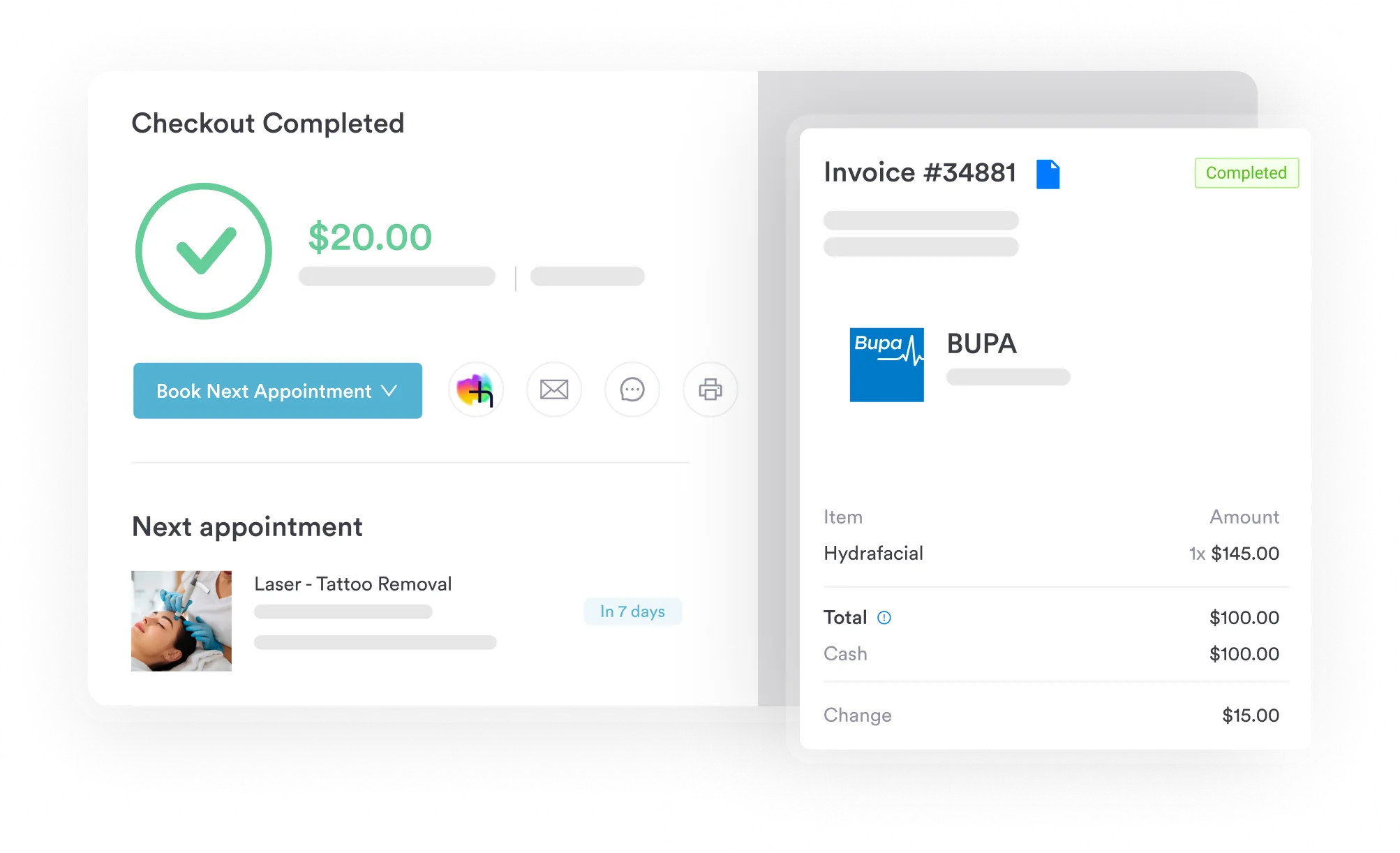
The AAPC Codify ICD-10-CM lookup includes code-first notes and use-additional-code guidance inline, making it a practical verification resource for coders encountering L54 in isolation. Always confirm the pairing against the current fiscal year’s tabular list – code-first instructions can be modified in annual ICD-10-CM updates. Seventh characters sit outside that check, though S24.3XXD still has to name the encounter correctly.
Practices that handle high volumes of dermatology and aesthetics billing can also integrate compliance management workflows to ensure coding policies for manifestation codes are applied consistently across all coders and locations. Consistency matters on per diem lines as well, where H2035 is billed by the hour delivered. Standardized coding policy documentation reduces variance between coders handling the same presentation differently.
ICD-10 Code L54 is specific and billable, but it cannot function on a claim without its etiology code sequenced before it. That single rule – code first the underlying disease – is where most L54 claims fail. Correct documentation upstream, capturing both the systemic condition and its causal link to erythema, is what makes compliant coding possible downstream.
Pabau supports dermatology and aesthetic clinics in building the documentation habits that prevent those failures. From structured clinical notes in patient records to pre-submission code editing in claims management, the platform keeps your coding workflows aligned with ICD-10-CM conventions. To see how it works in practice, book a demo with the Pabau team.

Coding ankylosing spondylitis at C7-T1? Cervicothoracic ankylosing spondylitis code carries an adult diagnosis restriction and applies only to patients aged 15 and older.
Coding ankylosing spondylitis at T12-L1? Thoracolumbar ankylosing spondylitis code is valid for all HIPAA-covered transactions in fiscal year 2026, per CMS guidance.
Coding ankylosing spondylitis in the lumbar spine? Lumbar ankylosing spondylitis code applies when the note names the lumbar spine, and M45.9 is the fallback when no site is recorded.
ICD-10 Code L54 is the diagnosis code for erythema in diseases classified elsewhere — skin redness occurring as a manifestation of an underlying systemic condition, not a primary skin disease. It sits within the L49-L54 urticaria and erythema block of ICD-10-CM Chapter XII.
Yes, L54 is billable and specific, but it cannot be used as a primary diagnosis. The underlying etiology code must always be sequenced first on the claim.
No. L54 is unacceptable as a primary diagnosis under CMS coding conventions and state Medicaid policies. Placing it in the first diagnosis position will typically result in a claim denial.
Systemic lupus erythematosus, rheumatoid arthritis, diabetes mellitus, viral infections, and drug-induced conditions are the most frequent pairings. The etiology code (M, E, B, or T range) always precedes L54 on the claim.
L53.9 applies when the cause of erythema is genuinely unknown. L54 applies when erythema is a documented manifestation of a known systemic condition. Using L53.9 when a causative disease is on the chart understates clinical complexity and can affect DRG assignment.
List the underlying systemic disease code first, then L54 immediately after as the secondary code. The ICD-10-CM tabular list states this explicitly at L54. Never submit L54 without a preceding etiology code.
No. Redness maps to different codes depending on the cause. An undetermined case is usually L53.9, a named condition such as erythema nodosum has its own code (L52), and redness that’s a feature of a systemic disease uses L54 after the underlying condition is sequenced first.
Facial redness with no documented cause is typically reported as L53.9, erythematous condition, unspecified. When it’s a manifestation of a diagnosed systemic disease such as lupus, code that disease first and add L54. Rosacea has its own code (L71) and should not be reported this way.




