ICD-10 Code S42.444P: Medial epicondyle fracture, right humerus
ICD-10 Code S42.444P: full descriptor and code validity ICD-10 Code S42.444P car...

Last Updated: Oct 13, 2026
Billable Code Specific Code
I10 is the billable ICD-10-CM code for essential (primary) hypertension.
In short, ICD-10 code I10 is the diagnosis code for essential (primary) hypertension — that is, persistently high blood pressure with no clear underlying cause. Because most high blood pressure is primary rather than secondary, it is the code clinicians reach for in the large majority of hypertension cases. It also stands alone, without comorbid heart or kidney disease, so it serves as the baseline from which the related I11-I15 combination codes branch out.
The World Health Organization's ICD-10 browser classifies I10 as essential (primary) hypertension — in other words, high blood pressure with no clear secondary cause. When a secondary cause does exist, however (for example, renal artery stenosis or primary aldosteronism), coders move to category I15 instead.
Let Pabau's smart automation suggest the right codes, reduce claim denials, and keep your practice compliant—effortlessly.
Automate repetitive tasks and focus on what matters most—your patients.
Reduce coding errors and ensure compliance with the latest regulations.
Clean claims, fewer denials, and faster reimbursements.
Powerful insights and reporting to help your practice thrive.
HIPAA compliant SOC 2 certified GDPR-compliant Trusted by 4,000+ clinics worldwide

ICD-10 Code I10 is the single billable code for essential (primary) hypertension, covering high blood pressure with no identifiable secondary cause.
I10 does not subcategorize by controlled or uncontrolled status; ICD-10-CM uses one code for all essential hypertension without comorbid heart disease or CKD.
When hypertension co-exists with heart disease, use I11; when co-existing with chronic kidney disease, use I12. Coding I10 alongside these conditions is a documentation error.
Pabau’s claims management software flags hypertension-related coding rules during documentation, reducing I10 claim denials from missing combination codes.
Choosing the correct hypertension code depends entirely on the documented comorbidities. For instance, the American Academy of Family Physicians (AAFP) puts it plainly: ICD-10-CM uses a single code for hypertension when no comorbid heart or kidney disease is documented, and that code is I10.
To begin, use the table below to route hypertension claims to the correct code family. See also related circulatory system diagnosis codes for context on how ICD-10 builds the I00-I99 chapter.
Key rule: ICD-10-CM assumes a causal relationship between hypertension and heart disease (I11), and likewise between hypertension and CKD (I12). As a result, you do not need the physician to spell out causation. So if both conditions appear in the record, the combination code applies.
Review your patient record documentation before submitting any I10 claim. If the encounter note mentions heart failure, CKD, or hypertensive nephropathy anywhere in the record, the coding defaults to the I11-I13 range. Auditors look at the full chart, not just the problem list.
The documentation bar for I10 is lower than for most complex diagnosis codes. Even so, common shortcuts still trigger denials. Payers expect to see clear physician documentation, not just a vital sign reading in the nurse’s note.
More broadly, the same principle applies to ICD-10 coding for comorbid conditions: the diagnosing provider must use language that maps to a billable code. For I10, then, the required documentation elements include:
In practice, GP clinic software workflows that auto-populate the problem list with ICD-10 codes from prior encounters help prevent under-coding. After all, if hypertension is on the active problem list, it should appear on every encounter where it affects care.
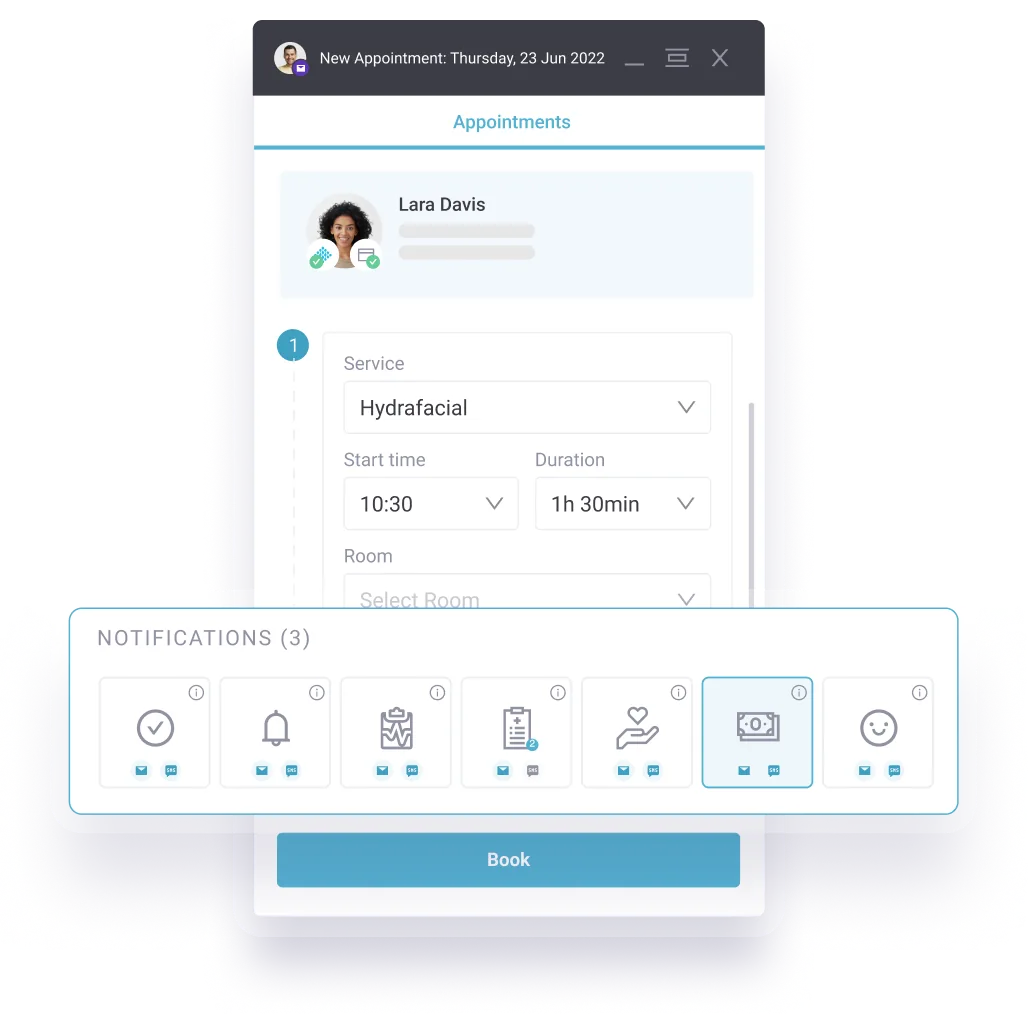

Pabau’s claims management tools flag hypertension comorbidities at the point of documentation, so coders catch I10 vs I11/I12 routing issues before a claim goes out. See how it works in your workflow.

A single high reading is not the same as a hypertension diagnosis, and the two code to different places. Use I10 only when the provider has documented a diagnosis of hypertension. When the chart shows an elevated blood pressure reading but no such diagnosis, the correct code is R03.0 (elevated blood-pressure reading, without diagnosis of hypertension).
Coders lose accuracy in both directions here. Assigning I10 to a single unconfirmed reading overstates the diagnosis, while leaving a patient on R03.0 after the provider has already diagnosed hypertension undercounts a chronic condition that supports ongoing management and chronic care billing. Practice management software like Pabau ties the coded diagnosis to the documented one, so an elevated reading only converts to I10 once the provider records the diagnosis.
The ICD-10-CM Tabular List includes both Type 1 and Type 2 Excludes notes under I10, and the two work very differently. A Type 1 Excludes note is a hard stop: the excluded code must never appear on the same claim as I10. A Type 2 Excludes note, by contrast, simply means the condition is not part of I10, so both codes may be reported together when both are documented. Confusing the two is among the top reasons hypertension claims are returned for correction.
One caveat on terminology: pulmonary hypertension (I27.0, I27.2-) and neonatal hypertension are separate conditions with their own codes, not Excludes notes under I10, so do not substitute I10 for them. As for the notes that are listed, a Type 1 Excludes note carries the official meaning “NOT CODED HERE” – it is not a warning or a suggestion. Therefore, submitting I10 together with the Type 1 pregnancy codes will trigger a claim edit or denial. The Type 2 codes, by contrast, may sit alongside I10 when both conditions are documented. To check the current notes for any code, see the CDC/NCHS ICD-10-CM web tool, updated annually for each fiscal year.
I10 carries no code-first instruction of its own. The combination codes I11-I13, however, do. For example, when hypertension is documented with CKD, the tabular list tells coders to add a code from N18.- to identify the stage of chronic kidney disease. Missing this extra code on an I12.- or I13.- claim can trigger a payer edit. For that reason, it pays to tell I10 encounters apart from combination-code encounters right at the point of documentation.
Run a quarterly audit of hypertension claims using your EHR integration for hypertension tracking: pull all encounters billed with I10 and cross-check for any documented CKD or heart failure in the same record. Catching these after the fact is far more expensive than building the check into your documentation workflow.
Hypertension in pregnancy never codes to I10. The Type 1 Excludes note routes every pregnancy-related case to Chapter 15 (O10-O16) instead, and those codes carry their own sequencing rules.
So a pregnant patient whose essential hypertension predates conception is coded O10, not I10. Gestational hypertension that appears during pregnancy codes to O13, and preeclampsia to O14.
When pre-eclampsia develops on top of pre-existing hypertension, O11 captures both conditions in a single code, so you do not report O10 plus a separate pre-eclampsia code alongside it. Chapter 15 codes take sequencing priority over circulatory-system codes, so the O-code is the principal (first-listed) diagnosis for the pregnancy encounter and I10 stays off the claim entirely. Confirm the trimester-specific O10 and O11 subcodes in the tabular list before submitting, since both require a trimester character.
The move from ICD-9-CM to ICD-10-CM combined several hypertension subcategories into a simpler structure. Even so, practices migrating legacy data or working with older billing records still run into ICD-9 codes in prior authorization crosswalks and in older audits.
ICD-10-CM dropped the malignant, benign, and unspecified breakdown that ICD-9 used under category 401. As a result, all three map to a single code: I10.
The ICD-9 severity split still drives searches for a malignant or accelerated hypertension code, but ICD-10-CM has none. Malignant hypertension, accelerated hypertension, and benign hypertension all map to the same code: I10. There is no separate ICD-10 code for malignant or accelerated hypertension the way ICD-9 offered 401.0. If the record documents end-organ involvement instead (for example hypertensive heart disease or heart failure), route to the relevant I11-I13 combination code rather than trying to add a severity modifier to I10. Coders confirming that heart failure documentation often check the ejection fraction against the normal ejection fraction by age chart. A payer audit samples claims and extrapolates, so one repeated error becomes a large repayment.
The FY2025 ICD-10-CM updates added the I1A subcategory (“Other hypertension”) to the hypertensive diseases range, and it remains valid for FY2026. The most significant addition for coders is I1A.0 – Resistant hypertension.
Resistant hypertension applies when blood pressure stays above goal despite the combined use of three antihypertensive agents at maximally tolerated doses, one of which is a diuretic. By contrast, I10 is the right code when the hypertension does not meet this clinical threshold.
Practices using EHR software for primary care that updated their code tables for FY2025 should verify that I1A.0 now appears in medication-linked coding prompts when multi-drug hypertension regimens are documented. After all, assigning I10 to a clearly resistant hypertension patient is an under-coding error that can affect chronic care management billing.
In short, ICD-10 Code I10 is a fully billable, claim-valid diagnosis code for FY2026. It can appear either as a principal diagnosis on inpatient claims or as a secondary diagnosis on outpatient claims where hypertension affects patient management — for example.
When I10 is the principal inpatient diagnosis, the claim maps to MS-DRG based on whether a major complication or comorbidity (MCC) is present:
These assignments follow the CMS ICD-10-CM/PCS MS-DRG v43.0 Definitions Manual for FY2026. The DRG affects the facility payment amount, so correct I10 coding directly shapes reimbursement integrity for inpatient hypertension admissions. For outpatient and office visits, meanwhile, I10 supports medical necessity for antihypertensive prescriptions, chronic care management (CCM) eligibility, and annual wellness visit coding.
Because hypertension qualifies as a chronic condition, it supports CCM billing under CPT 99490 and its timed variants (99491, 99439, 99487, 99489). In turn, I10 on the active problem list supports CCM eligibility. Practices using direct primary care workflows for hypertension management can also use I10 to support population health reporting and care gap tracking, particularly for HEDIS blood pressure control measures.
For detailed guidance on claims submission processes.
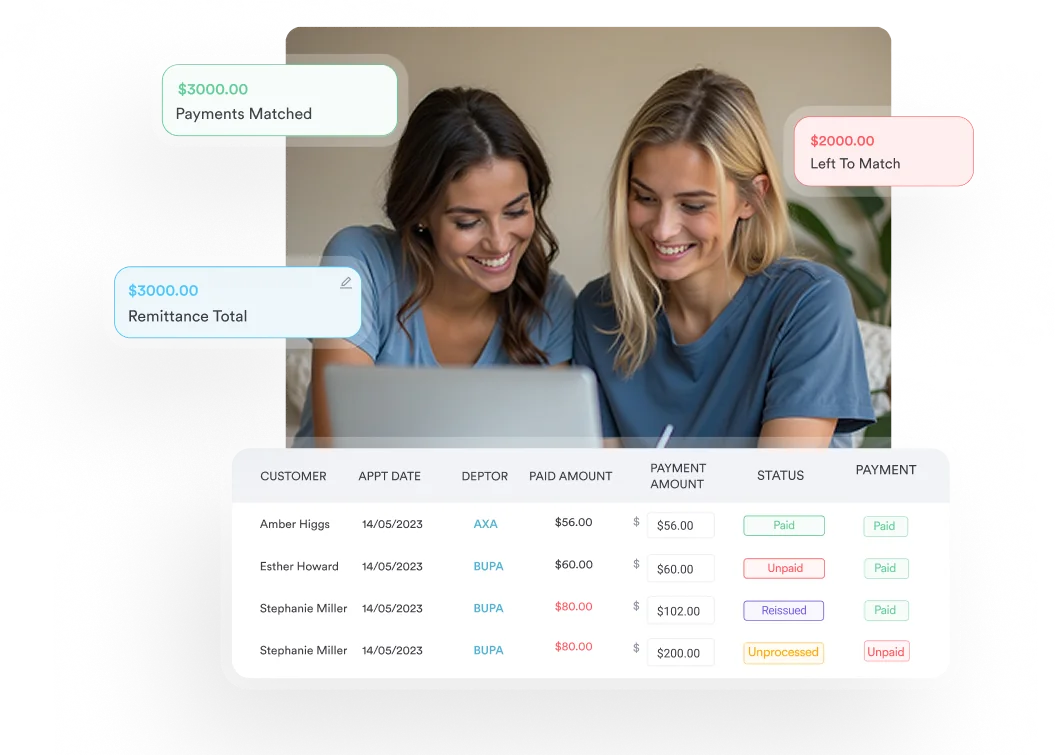
Three audit patterns recur again and again in hypertension coding reviews. Each one represents a type of I10 misuse that payers flag in pre-payment and post-payment audits.
The direct primary care documentation workflow benefits from building these three checks right into the encounter template: a comorbidity screener that flags documented CKD, heart failure, or secondary causes before the coder assigns I10. By comparison, practices relying on manual code lookup are more open to all three error types.
The practice management software you use should surface these clinical flags automatically, connecting documentation to coding logic rather than leaving the connection to manual review.
Most hypertension documentation errors are systematic, not random. For example, practices that code I10 when combination codes apply, or that miss the FY2025 I1A.0 addition for resistant hypertension, are usually working with disconnected documentation and coding tools.
Pabau’s claims management software connects encounter documentation to ICD-10 code selection, surfacing comorbidity flags before a claim goes out. To see how it fits your hypertension coding workflow, book a demo.

Coding situational anxiety without a dedicated code? Situational anxiety coding guide shows how to pick the closest matching code since none is dedicated to it.
ICD-10 Code I10 is the single billable diagnosis code for essential (primary) hypertension, used when a patient has documented high blood pressure with no identifiable secondary cause such as kidney disease, endocrine disorder, or renal artery stenosis. It covers all cases of primary hypertension without comorbid heart disease or chronic kidney disease.
I10 covers essential hypertension alone; I11 covers hypertensive heart disease, used when hypertension co-exists with documented heart disease. ICD-10-CM presumes a causal relationship between hypertension and heart disease, so if both appear in the record, I11 applies automatically, even without explicit documentation of causation.
Yes. I10 is a fully billable, claim-valid ICD-10-CM code for FY2026. It is valid as a principal diagnosis on inpatient claims and as a secondary diagnosis on outpatient claims where hypertension affects patient management.
Yes. ICD-10-CM makes no distinction between controlled and uncontrolled essential hypertension under I10. Both map to the same code. The provider may note blood pressure control status in the record, but it does not change the code assignment.
The ICD-9-CM equivalents are 401.0 (malignant essential hypertension), 401.1 (benign essential hypertension), and 401.9 (unspecified essential hypertension). All three map forward to ICD-10-CM I10, as the malignant/benign/unspecified subclassification was eliminated in ICD-10.
The encounter record must contain a physician’s documented diagnosis of hypertension or a synonym (high blood pressure, systemic arterial hypertension, benign essential hypertension). A vital sign reading alone is insufficient. The record should also document the absence of a secondary cause and the absence of comorbid heart disease or CKD that would require a combination code.
Yes. I10 can serve as the principal (first-listed) diagnosis when essential hypertension is the main reason for the encounter or admission, and as a secondary diagnosis when it affects management alongside another complaint. The exception is a pregnancy-related encounter, where a Chapter 15 O-code takes sequencing priority over I10.
Use R03.0 for an elevated blood-pressure reading when the provider has not documented a diagnosis of hypertension. Only once hypertension is formally diagnosed does the encounter move to I10.