

ICD-10 code S61.201A: Open wound of left index finger without nail damage
ICD-10 code S61.201A covers a left index finger wound of unstated type ICD-10 co...

Last Updated: Oct 16, 2026
Billable Code Specific Code
S82.499Q is the billable ICD-10-CM code for other fracture of shaft of unspecified fibula, subsequent encounter for open fracture type I or II with malunion.
In plain terms, the fibula shaft broke, a small or moderate wound opened the skin, and the bone united out of position. The code is billable, so it can carry a claim on its own.
One word in that descriptor causes most of the errors. Unspecified points at the side of the body, not at the bone. S82.499 always names the fibula, whichever side is involved.
The tables below cover the official description, the code hierarchy, and the full 7th character set for S82.499. They also show which Gustilo types push you to R instead of Q, plus what the note must say before a claim goes out.
Let Pabau's smart automation suggest the right codes, reduce claim denials, and keep your practice compliant—effortlessly.
Automate repetitive tasks and focus on what matters most—your patients.
Reduce coding errors and ensure compliance with the latest regulations.
Clean claims, fewer denials, and faster reimbursements.
Powerful insights and reporting to help your practice thrive.
HIPAA compliant SOC 2 certified GDPR-compliant Trusted by 4,000+ clinics worldwide

S82.499Q covers a fibula shaft fracture that healed crooked after an open type I or II injury, billed at a subsequent encounter
In S82.499, unspecified describes the side, not the bone. The fibula is named, but the left or right is not
The 7th character Q means open type I or II with malunion. Closed malunion takes P, and Gustilo type III malunion takes R
Use S82.499 only when the side is genuinely undocumented. Prefer S82.491Q for the right fibula and S82.492Q for the left
Practice management software like Pabau keeps the note, the code, and the claim on one patient record
ICD-10 Code S82.499Q is a valid, billable ICD-10-CM diagnosis code. According to the CMS ICD-10-CM code files, its full official description is:
The CDC/NCHS ICD-10-CM web tool confirms this code is active for the current fiscal year. Verify that annually, because CMS releases updated code files each October. The same category-to-7th-character path runs through neighboring lower-limb codes such as S72.309N.
S82.499Q sits at the end of a precise hierarchical path within ICD-10-CM Chapter 19 (Injury, Poisoning and Certain Other Consequences of External Causes). Each level narrows the anatomical and clinical specificity.
The “other” designation at S82.49 means the fracture pattern is not one of the named patterns under S82.4. Those named options are transverse (S82.42), oblique (S82.43), spiral (S82.44), comminuted (S82.45), and segmental (S82.46). Work through them before you settle on S82.499Q.
A second trap sits nearby. S82.90 reads “unspecified fracture of unspecified lower leg”, and that code names no bone at all. Reach for it only when the record does not say which bone broke.
Platforms that build ICD-10-CM lookup into the note help here. A physical therapy EMR that searches by keyword surfaces the candidates side by side. The most specific code then wins before the claim leaves.
The 7th character is where most coding errors occur with fibula shaft fracture codes. For S82.499, 16 extensions apply. Each one encodes both the episode of care and the fracture’s healing status. The table below shows the complete set, as defined in the ICD-10-CM Official Guidelines for Coding and Reporting.
Three 7th character errors account for most denials in this code family:
The guidelines define a subsequent encounter narrowly. It is any encounter after active treatment is complete, while the patient receives routine care during healing or recovery. The same qualifier logic separates routine healing from a complication in codes like codes like S72.036E.
Three conditions must all be true before S82.499Q is appropriate. Document each one clearly in the clinical note before submitting the claim.
Orthopedic and sports medicine software platforms that embed ICD-10-CM lookups can surface this code while the note is being written. That timing is what stops the wrong episode-of-care character reaching a repeat visit.
The Gustilo-Anderson system is the reference standard for open fracture classification in orthopedic coding. Wound size and contamination decide the type, and the type decides whether malunion takes Q or R.
Check how the original operative or emergency department note classified the fracture. If it was type IIIA, IIIB, or IIIC, a subsequent encounter with malunion takes S82.499R rather than S82.499Q. When the original Gustilo type is not documented, query the treating physician before selecting Q or R.
Several ICD-10-CM Official Guidelines sections directly affect how S82.499Q is reported. Skipping them is a frequent reason fracture claims get flagged on audit, and the wider rules on medical billing compliance apply on top.
Practice management software like Pabau records the diagnosis code on the encounter itself. The same record then carries through to the claim, so the note and the bill never drift apart.
S82.499Q specifies an unspecified fibula, and that should be a last resort. Use it only when the provider’s documentation does not identify the left or right side. In practice, that is rare on a follow-up visit.
The specific alternatives are S82.491Q for the right fibula and S82.492Q for the left. Both accept the same 7th character extensions. Defaulting to unspecified when the side is documented is under-coding, and it weakens the record for any later audit.
Malunion must be explicitly documented by the treating clinician. Coders cannot infer malunion from imaging reports alone. The clinical note should state that the fracture has healed in a non-anatomic or malaligned position, or use equivalent clinical terminology.
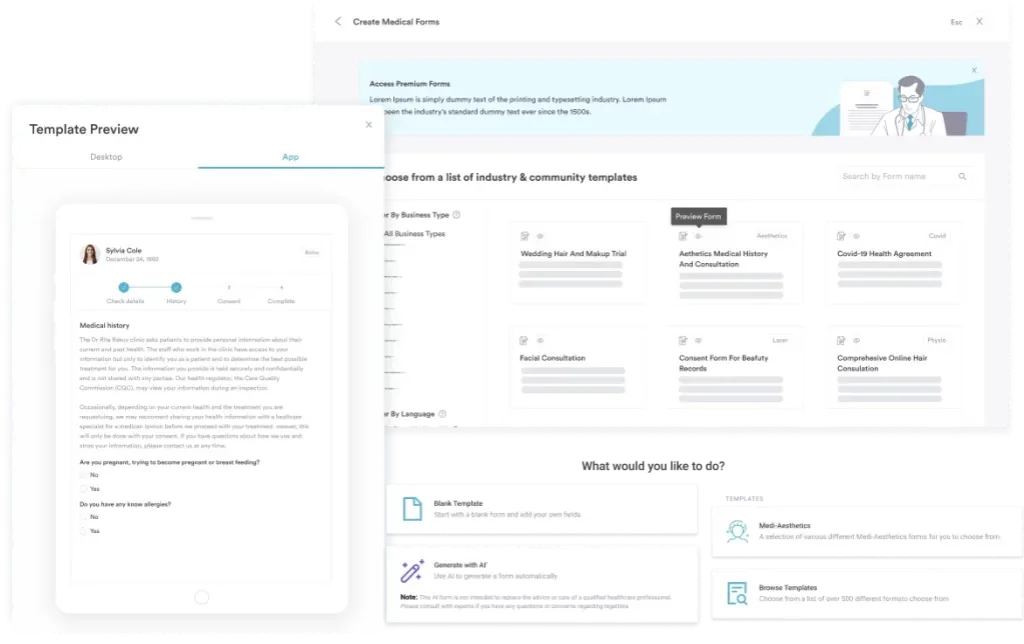
Pabau’s digital clinical forms let practices build structured follow-up templates. Each template can prompt the provider for healing status, the Gustilo type from the original injury, and the side.
This reduces incomplete documentation before claims reach the payer. A medical chart audit tests the same three details, so a template that captures them holds up under review.
S82.499Q should be the principal diagnosis when malunion is the primary reason for the encounter. If the patient is admitted for a related procedure, such as corrective osteotomy, the procedure code drives the inpatient payment group. The malunion code still leads the diagnosis list.
An external cause code from the V, W, X, or Y categories is not required for subsequent encounters. Many payers and trauma registries still expect one for audit completeness. Check the place-of-service code too, since malunion follow-ups usually happen in an outpatient office rather than an inpatient setting.
Run a quarterly audit on every S82.499 claim from the prior 90 days. Check two things on each one. The operative or emergency department note confirms Gustilo type I or II, and the episode qualifier moved off A or B when active treatment ended. Mismatched qualifiers are the top trigger for medical necessity denials on subsequent-encounter fracture claims.
S82.499Q has sibling and parent codes that coders meet in the same fracture management context. Picking the wrong one is a recurring audit finding on fibula shaft fracture claims. The AAPC ICD-10-CM lookup tool lets coders browse the full S82.499 family side by side before finalizing a claim.
Working through a code family this way is a habit worth keeping. Malunion coding turns on the same question in other regions of the body, as S49.109P shows.
The M versus Q distinction matters clinically as well as financially. Nonunion (M) means the bone ends never bridged. Malunion (Q) means the fracture did unite, but in a poor position. Each one leads to different management and different procedural codes if corrective surgery follows.
Templated follow-up notes cut the risk of mixing them up. Patient record documentation in Pabau can prompt the clinician to record healing status at every visit.
Most practices split this work across two systems. The clinician writes the follow-up note in one place, and a biller re-keys the diagnosis into a claim somewhere else. Every re-key is a chance for the wrong 7th character to reach the payer.
Pabau keeps both halves on one patient record. The treatment note, the imaging that confirmed malunion, and the form that captured the side all sit on the same chart. Billing then works from what the clinician actually wrote.
Pabau’s claims management software runs validation checks each time you send a claim, so missing membership numbers or authorization codes surface before submission. US practices submit through Claim.MD and can run real-time eligibility checks. Every claim shows its live status, and payment is recorded against the right invoice in the same dashboard. An authorization request approved for one code does not cover a different code billed on the day. Accounts receivable aging shows which codes are slow to pay long before anyone calls it a denial problem.
Documentation is the other half of the problem, because a coder can only work with what was written down. Pabau Scribe, our AI scribe, drafts the consultation note as the appointment happens. A malunion follow-up note has to confirm union, describe the malalignment, and name the side.
For an orthopedic or physical therapy practice, that means fewer claims returned for missing information. It also means a record that holds up when a payer asks how the malunion was confirmed.
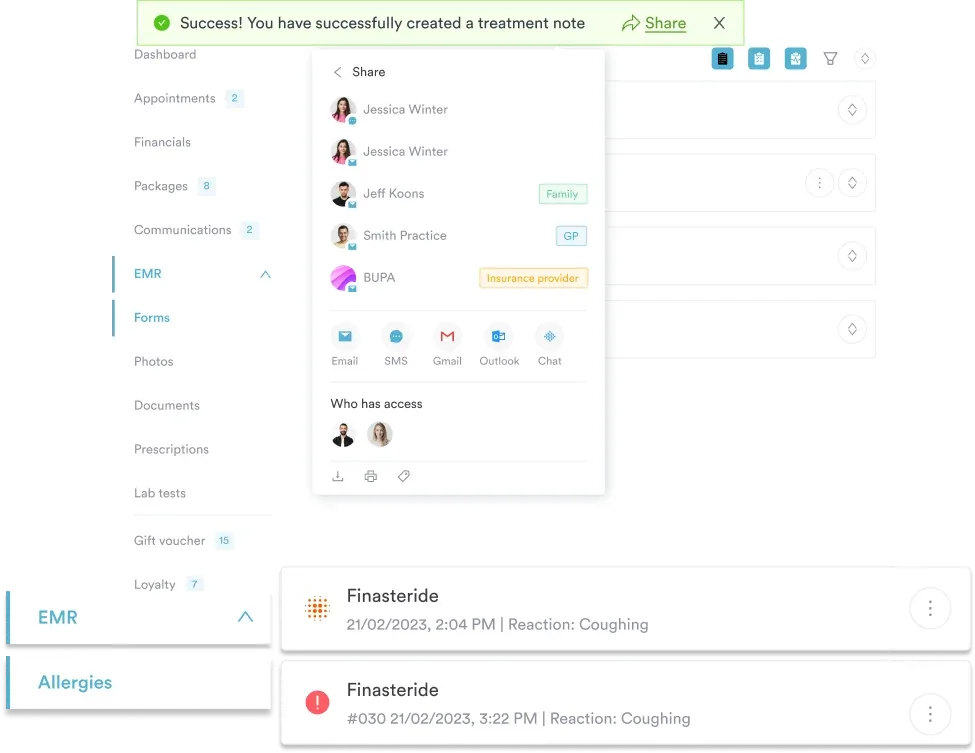

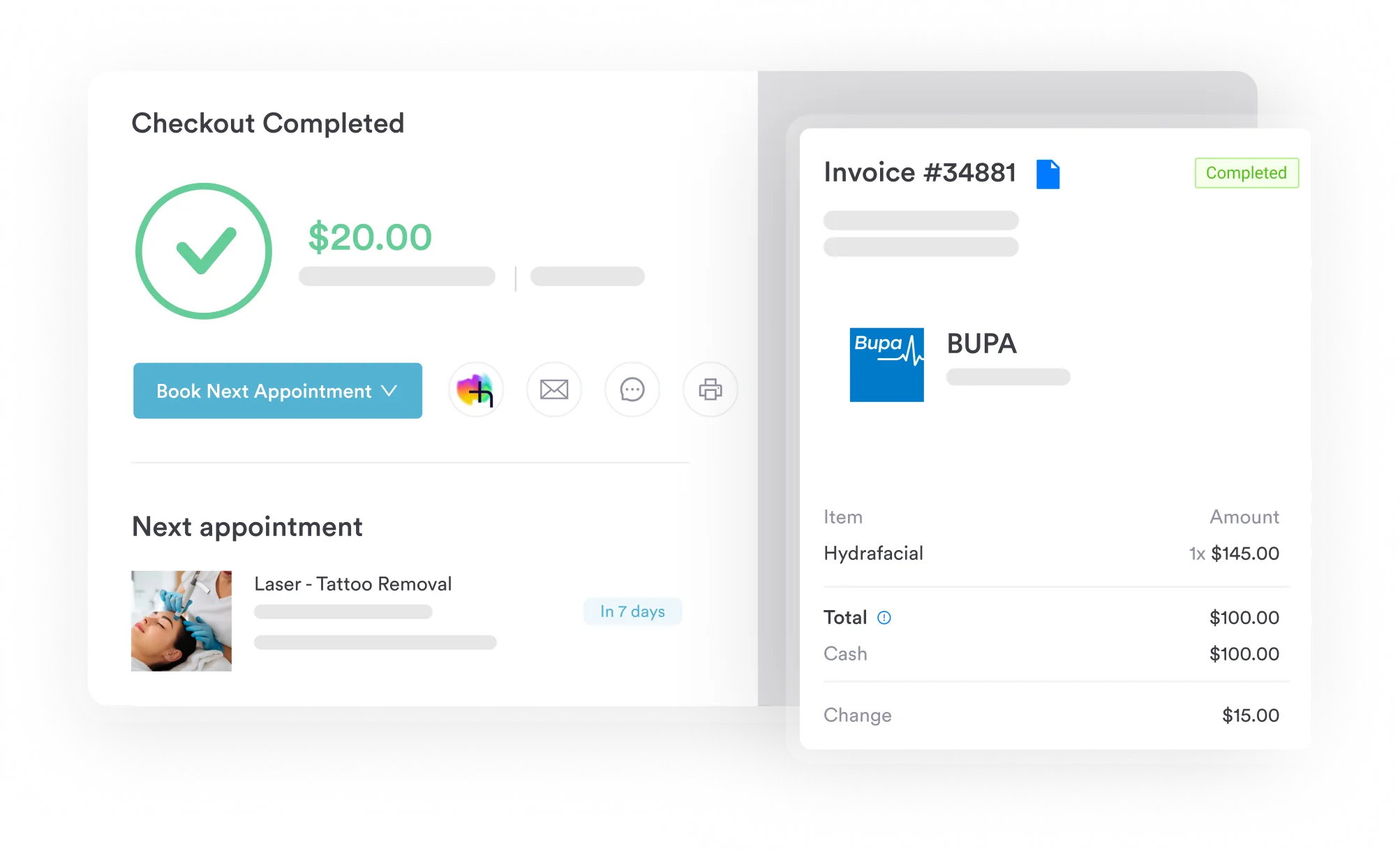
Pabau holds the treatment note, the forms, and the claim on the same patient record. Validation checks run before every submission, so subsequent-encounter claims leave with the detail payers ask for.

S82.499Q rewards the coder who reads the original injury note, not only the follow-up. The Gustilo type and the open-or-closed call were both made months earlier. Those two details decide whether this visit takes P, Q, or R.
Treat unspecified laterality as a prompt rather than a default. If the side appears anywhere in the chart, S82.491Q or S82.492Q makes the stronger claim. Payers read it the same way on review.
What holds all of this together is a record the biller can trust. Practice management software keeps the note, the imaging, and the claim on one chart. To see how your team could document a malunion follow-up and bill it from that record, book a demo.

Billing a chest ultrasound exam? CPT code 76604 billing guide covers the documentation a chest ultrasound needs to avoid claim denials.
Billing a complete abdominal ultrasound? CPT code 76700 billing guide covers the eight structures a complete abdominal ultrasound exam must document.
Billing the surgery that follows a malunion? CPT code 20690 covers external fixation and what the operative note has to support.
Coding a late effect instead of active care? S72.124S shows how the sequela extension changes what the claim reports.
Billing a transvaginal ultrasound exam? CPT code 76830 billing guide covers billing for transvaginal ultrasound exams that evaluate female pelvic organs.
ICD-10 code S82.499Q means “other fracture of shaft of unspecified fibula, subsequent encounter for open fracture type I or II with malunion.” It is billable. Use it when a patient returns for follow-up after an open fibula shaft fracture, type I or II, that healed out of position.
The 7th character Q denotes a subsequent encounter for an open fracture of Gustilo type I or II that has resulted in malunion. It distinguishes this scenario from nonunion (M), delayed healing (H), routine healing (E), and type III open fractures with malunion (R).
S82.499M is used when the fracture has not healed at all (nonunion), meaning bone bridging has failed to occur. S82.499Q is used when the fracture has healed but in a mechanically or cosmetically suboptimal position (malunion). Both require distinct clinical documentation and often different procedural interventions.
Yes, S82.499Q is a valid and billable ICD-10-CM diagnosis code for HIPAA-covered transactions. It is active in the current fiscal year code set per CMS. Verify its active status annually when CMS releases updated ICD-10-CM files each October.
Use S82.499Q only when the provider’s documentation does not identify which fibula was fractured. S82.491Q (right fibula) and S82.492Q (left fibula) are preferred whenever the side is documented. Defaulting to unspecified when the side is known is under-coding.
Start from the base code for the fracture pattern and the side. For another fibula shaft fracture with no side documented, that base is S82.499. Then append the 7th character that matches the original injury. Closed with malunion takes P, open type I or II takes Q, and open type IIIA, IIIB, or IIIC takes R.



