

ICD-10 Code S42.444P: Medial epicondyle fracture, right humerus
ICD-10 Code S42.444P: full descriptor and code validity ICD-10 Code S42.444P car...

Last Updated: Oct 13, 2026
Billable Code Specific Code
E06.5 is the billable ICD-10-CM code for other chronic thyroiditis.
Let Pabau's smart automation suggest the right codes, reduce claim denials, and keep your practice compliant—effortlessly.
Automate repetitive tasks and focus on what matters most—your patients.
Reduce coding errors and ensure compliance with the latest regulations.
Clean claims, fewer denials, and faster reimbursements.
Powerful insights and reporting to help your practice thrive.
HIPAA compliant SOC 2 certified GDPR-compliant Trusted by 4,000+ clinics worldwide

ICD-10 Code E06.5 is a billable FY2026 diagnosis code for other chronic thyroiditis, valid for reimbursement claims dated on or after October 1, 2015.
Do not use E06.5 for Hashimoto’s disease: autoimmune thyroiditis is coded E06.3, a distinct and separate classification.
Fibrous thyroiditis (Riedel’s thyroiditis) and ligneous thyroiditis are included under E06.5 as approximate synonyms.
Pabau’s claims management software helps endocrine and integrative medicine clinics reduce thyroiditis coding errors and streamline reimbursement workflows.
ICD-10 Code E06.5 is a billable, specific ICD-10-CM code for other chronic thyroiditis: chronic thyroid inflammation that doesn’t fit the autoimmune, drug-induced, or transient categories elsewhere in the E06 hierarchy. CMS confirms it as fully billable for FY2026. Coders assign it when documentation describes Riedel’s, ligneous, or fibrous thyroiditis, rather than defaulting to the unspecified code E06.9.
According to the Centers for Medicare and Medicaid Services (CMS) and the National Center for Health Statistics (NCHS), ICD-10 Code E06.5 sits in Chapter 4 of ICD-10-CM (Endocrine, nutritional and metabolic diseases), within the E06 Thyroiditis category.
The code describes a thyroid inflammation that follows a chronic course and often leads to hypothyroidism (reduced thyroid function). It covers forms of chronic thyroiditis that are neither autoimmune nor drug-induced in cause.
Practices managing patients with endocrine and thyroid conditions should review their ICD-10-CM documentation standards broadly — diagnostic specificity across all chronic condition codes directly affects claim approval rates. This guide covers E06.5 billability, MS-DRG grouping, related codes, coding guidelines, and documentation requirements for medical coders and clinicians.
ICD-10 Code E06.5 is a billable and specific ICD-10-CM code, valid for reimbursement under FY2026 (October 1, 2025 through September 30, 2026). For any claim with a date of service on or after October 1, 2015, coders must use ICD-10-CM codes, and E06.5 became active on that implementation date.
| Field | Details |
|---|---|
| Code | E06.5 |
| Description | Other chronic thyroiditis |
| Billable/Specific | Yes — valid for FY2026 |
| Code system | ICD-10-CM (U.S. clinical modification) |
| Chapter | 4 — Endocrine, nutritional and metabolic diseases (E00-E89) |
| Category | E06 Thyroiditis |
| Valid from | October 1, 2015 |
| Maintaining body | CMS and NCHS |
Coders can verify current code status using the CDC/NCHS ICD-10-CM web tool, which provides the official U.S. code lookup updated each year. The AAPC Codify ICD-10-CM lookup also lets coders search the E06 category and review the relevant guidelines alongside the code entry. Both are reliable resources for confirming FY2026 billability.
ICD-10 Code E06.5 covers specific forms of chronic thyroiditis that fall outside the named categories in the E06 hierarchy. Understanding the inclusion terms helps coders pick the right code when clinicians use variant terminology in their notes.
When the medical record uses any of these terms and the thyroiditis is chronic rather than subacute, coders should select ICD-10 Code E06.5. Practices managing patients with integrative medicine or functional endocrine conditions should embed these synonym mappings clearly in their coding reference materials.
Comparing the best EHRs for primary care pays off when you track chronic conditions like these long term.
Under Medicare Severity Diagnosis Related Groups (MS-DRG) version 43.0, covering October 1, 2025 through September 30, 2026, ICD-10 Code E06.5 groups into the following DRGs:
| MS-DRG | Description |
|---|---|
| 011 | Tracheostomy for face, mouth and neck diagnoses or laryngectomy with MCC |
| 012 | Tracheostomy for face, mouth and neck diagnoses or laryngectomy with CC |
MS-DRG grouping affects inpatient reimbursement rates under Medicare. The DRG the grouper assigns depends on whether the encounter carries major complications or comorbidities (MCC) or complications or comorbidities (CC). Coders should document all confirmed comorbid conditions — including also-documented hypothyroidism — to ensure the grouper applies the correct DRG.
For more context on how diagnostic code MS-DRG grouping works across different diagnosis categories, reviewing the broader ICD-10 landscape helps coders understand the pattern.
ICD-10 Code E06.5 sits within the E06 Thyroiditis category. Selecting the correct code requires distinguishing E06.5 from the other six codes in the hierarchy. The most critical distinction is between E06.5 and E06.3 (autoimmune thyroiditis).
| Code | Description | Notes |
|---|---|---|
| E06.0 | Acute thyroiditis | Suppurative or bacterial; short-duration inflammation |
| E06.1 | Subacute thyroiditis | Includes de Quervain’s; granulomatous; often painful |
| E06.2 | Chronic thyroiditis with transient thyrotoxicosis | Thyrotoxic phase followed by hypothyroid recovery; excluded from E06.5 |
| E06.3 | Autoimmune thyroiditis (Hashimoto’s) | TPO antibody positive; most common chronic thyroiditis — NOT E06.5 |
| E06.4 | Drug-induced thyroiditis | Requires external cause code for the causative drug |
| E06.5 | Other chronic thyroiditis | Includes Riedel’s, ligneous, fibrous; NEC chronic forms |
| E06.9 | Thyroiditis, unspecified | Use only when type cannot be determined from documentation |
The WHO ICD-10 browser provides the international classification hierarchy that ICD-10-CM uses as its base. Clinicians and coders can cross-reference the WHO taxonomy to check how a specific thyroiditis variant maps globally versus under the U.S. clinical modification.
When clinical notes document ‘chronic thyroiditis’ without specifying Hashimoto’s or an autoimmune basis, verify whether TPO antibody testing was performed and documented. A positive result supports E06.3. A negative or absent result, combined with a chronic presentation, supports E06.5 — provided the clinician has not documented a specific drug cause (E06.4) or transient thyrotoxicosis (E06.2).
CMS and NCHS maintain the ICD-10-CM Official Guidelines for Coding and Reporting, which govern how coders apply E06.5. The key exclusion to understand sits at the category level.
A Type 1 Excludes note at E05 (Thyrotoxicosis/hyperthyroidism) instructs coders not to assign E06.2 under E05. This means when a patient presents with a thyrotoxic phase caused by chronic thyroiditis, coders cannot assign both an E05 code and E06.5. Use E06.2 for that scenario.
When a patient with other chronic thyroiditis has developed documented hypothyroidism, code both conditions separately. Use E06.5 for the thyroiditis and the right E03.- code (such as E03.9 Hypothyroidism, unspecified, or E03.8 Other specified hypothyroidism) for the resulting condition. Sequencing follows standard ICD-10-CM guideline rules: sequence the condition that is the main reason for the visit first.
Practices managing patients with multiple endocrine conditions should also maintain clinical compliance documentation practices that capture all relevant diagnoses at each visit. Missing a co-occurring hypothyroidism code in the medical record directly reduces claim specificity and may affect reimbursement accuracy. Keeping patient records detailed and updated at every visit is the simplest way to avoid under-coding comorbidities. Where a practice bills both markets, mapping between code sets is manual, so MBS item numbers are checked separately.
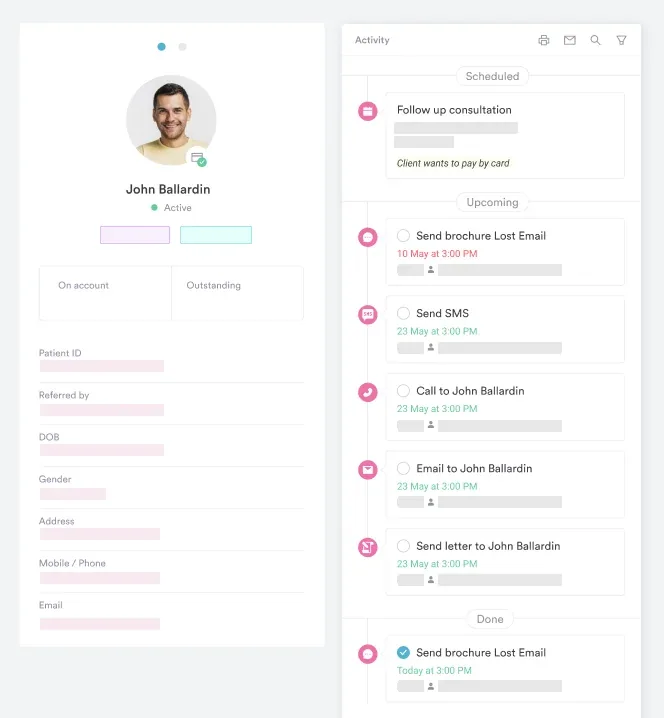
Accurate documentation is what separates a payable E06.5 claim from one coders fall back to E06.9 on. Coders need clinician documentation that supports a chronic, non-autoimmune, non-drug-induced thyroiditis diagnosis before they can assign E06.5. Three documentation elements are critical.
The clinical notes must confirm a chronic inflammatory course of the thyroid, not an acute or subacute episode. Duration, symptom pattern, and prior visit history all contribute. A single-visit note without prior history references rarely gives coders enough to go on.
E06.5 is not appropriate when autoimmune thyroiditis (Hashimoto’s) is the documented diagnosis. The medical record should show either negative TPO antibody results, clinical reasoning that rules out an autoimmune cause, or a stated diagnosis consistent with the Riedel’s/fibrous variant. When TPO testing is absent, the clinician’s stated diagnosis drives code selection.
If the thyroiditis is caused by a medication, E06.4 (drug-induced) applies. If transient thyrotoxicosis accompanies the chronic thyroiditis, E06.2 is the correct code. Documentation that clearly notes these are not present — or a stated diagnosis such as “fibrous thyroiditis” or “Riedel’s thyroiditis” — supports E06.5 directly.
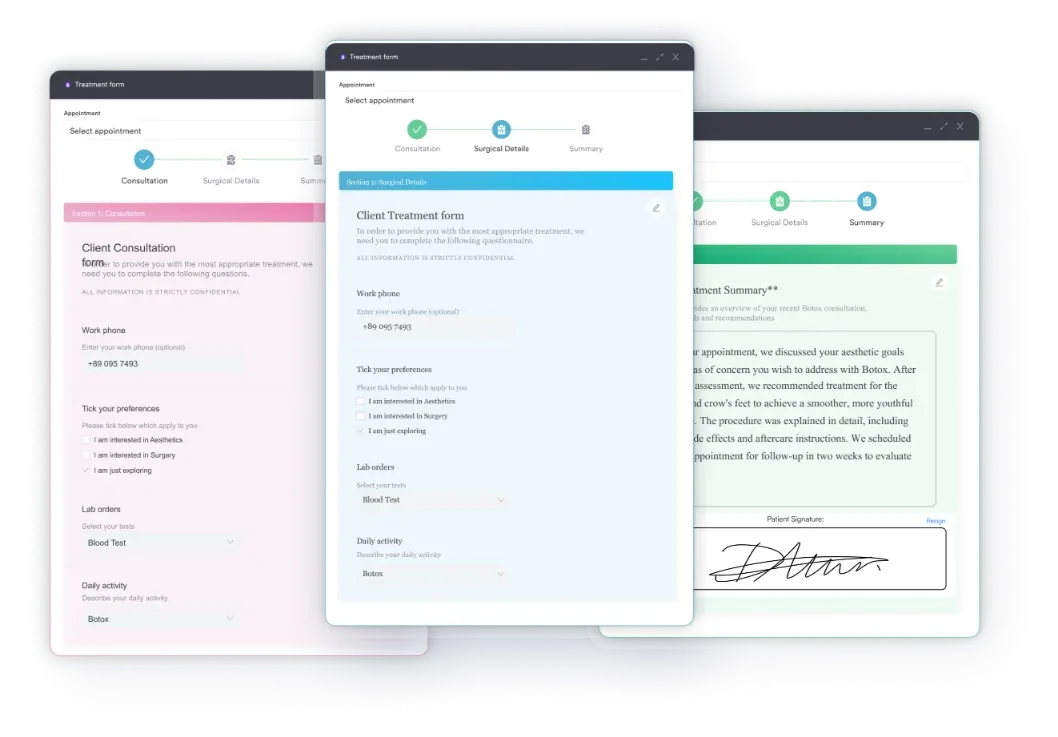
Using digital intake forms that capture thyroid history, prior diagnosis dates, and medication lists at each encounter gives coders the structured data they need to assign E06.5 correctly without querying back to the clinician. Practices running functional medicine practice software with built-in patient history capture get this workflow automatically.
If the clinician documents ‘Riedel’s thyroiditis’ or ‘fibrous thyroiditis’ in the assessment, ICD-10 Code E06.5 is the direct code assignment. No further specificity is required — these are inclusion terms for E06.5. Do not default to E06.9 (unspecified) when a more specific chronic thyroiditis variant is stated.
The predecessor ICD-9-CM code for other chronic thyroiditis was approximately 245.8 (Other and unspecified thyroiditis). CMS created General Equivalence Mappings (GEMs) when ICD-10-CM launched to bridge the two systems, but GEM crosswalks are approximate, not exact translations — ICD-10-CM introduced greater specificity than ICD-9-CM supported.
| ICD-9-CM | Description | Approximate ICD-10-CM |
|---|---|---|
| 245.0 | Acute thyroiditis | E06.0 |
| 245.1 | Subacute thyroiditis | E06.1 |
| 245.2 | Hashimoto’s thyroiditis | E06.3 |
| 245.8 | Other and unspecified thyroiditis | E06.5 (approximate) |
| 245.9 | Thyroiditis, unspecified | E06.9 |
Past claims using 245.8 that need review should use the GEM mapping as a starting point, then check against the actual clinical documentation to confirm whether E06.5 or another E06.x code is the best current match. The ICD List tool provides GEM-based crosswalk lookups alongside current FY2026 code information.

Pabau’s claims management tools help endocrine and integrative medicine clinics document diagnoses accurately, reduce unspecified code usage, and keep billing workflows running without manual follow-up.

When coding thyroid conditions, several adjacent codes appear frequently alongside ICD-10 Code E06.5 in the same encounter or patient record.
Practices using claims management software can build coding checklists that flag these related codes at charge capture, so coders never drop a billable secondary diagnosis like E03.9 from a thyroiditis encounter. Consistent code pairing also reduces both under-coding and audit exposure across other ICD-10-CM documentation workflows.
Unspecified fallbacks show up in every ICD-10-CM chapter, not only the endocrine one. A finger sprain documented without a named site lands on ICD-10 code S63.618A, which still needs a seventh character for the encounter.
Other chronic thyroiditis has a specific home in ICD-10-CM — and falling back to E06.9 (unspecified) when the documentation supports E06.5 costs practices reimbursement accuracy. The code is billable, specific, and CMS has recognized it as valid since October 2015.
The key distinctions matter: E06.5 covers Riedel’s and ligneous variants; E06.3 covers Hashimoto’s; E06.2 handles cases with transient thyrotoxicosis. When clinicians document thoroughly and capture comorbid hypothyroidism, coders can assign ICD-10 Code E06.5 cleanly every time.
Pabau’s practice management software helps endocrine and integrative medicine clinics build structured documentation workflows that support accurate code assignment at every encounter. To see how Pabau handles thyroid and endocrine clinic workflows, book a demo.

Billing a forehead contouring procedure? Forehead contouring billing guide covers the RVUs, modifiers, and why the autograft is not billed separately.
Billing an orbital rim reconstruction? Orbital rim reconstruction billing guide covers the RVU breakdown for trauma repair, congenital correction, and facial feminization surgery.
Billing a cranial bone tumor case? Cranial bone tumor billing guide covers the 2026 RVUs, ICD-10 codes, and modifiers for this reconstruction.
ICD-10 Code E06.5 is used to diagnose and bill for other chronic thyroiditis — a category that includes fibrous thyroiditis (Riedel’s thyroiditis), ligneous thyroiditis, and chronic thyroid inflammation not attributable to autoimmune, drug-induced, or transient thyrotoxic causes. It is a billable FY2026 code valid for reimbursement claims.
E06.3 is autoimmune thyroiditis (Hashimoto’s disease), characterized by positive thyroid peroxidase (TPO) antibodies and autoimmune pathophysiology. E06.5 covers other chronic thyroiditis forms that are not autoimmune in origin, such as Riedel’s or fibrous thyroiditis. Assigning E06.3 requires documented autoimmune basis; E06.5 applies when the chronic thyroiditis is of a different etiology.
Yes. ICD-10 Code E06.5 is a billable and specific ICD-10-CM code, valid for FY2026 reimbursement (October 1, 2025 through September 30, 2026). It can be used as a primary or secondary diagnosis code depending on the reason for the encounter.
Under MS-DRG version 43.0 (FY2026), ICD-10 Code E06.5 groups into MS-DRG 011 (Tracheostomy for face, mouth and neck diagnoses or laryngectomy with MCC) and MS-DRG 012 (with CC). The assigned DRG depends on documented complications or comorbidities at the inpatient encounter.
The E06 category covers six types: E06.0 (acute), E06.1 (subacute), E06.2 (chronic with transient thyrotoxicosis), E06.3 (autoimmune/Hashimoto’s), E06.4 (drug-induced), E06.5 (other chronic, including Riedel’s), and E06.9 (unspecified). Each has distinct clinical criteria and documentation requirements.
Yes. When other chronic thyroiditis has resulted in documented hypothyroidism, both E06.5 and the appropriate E03.- code (such as E03.9 for unspecified hypothyroidism) should be reported together. Sequence the condition chiefly responsible for the encounter first, per ICD-10-CM Official Guidelines.
Hashimoto’s thyroiditis is coded E06.3 (autoimmune thyroiditis), not E06.5. The distinction depends on documented TPO antibody results or a stated autoimmune diagnosis. If the record instead describes Riedel’s, ligneous, or fibrous thyroiditis with a negative or absent autoimmune workup, E06.5 is the correct code.
Drug-induced thyroiditis is coded E06.4, reported with an additional external cause code for the causative medication. E06.5 applies only when the chronic thyroiditis has no documented drug cause, autoimmune basis, or transient thyrotoxic phase.




