ICD-10 Code S42.444P: Medial epicondyle fracture, right humerus
ICD-10 Code S42.444P: full descriptor and code validity ICD-10 Code S42.444P car...

Last Updated: Oct 13, 2026
Billable Code Specific Code
D67 is the billable ICD-10-CM code for hereditary factor IX deficiency.
The condition is X-linked recessive and affects primarily males, with females typically serving as carriers. Severity ranges from mild (factor IX activity 6-49%) to moderate (1-5%) to severe (less than 1%), with severe cases most likely to present with spontaneous hemarthroses and deep tissue bleeds. Accurate documentation of the severity and clinical manifestations strengthens the medical record and supports claims management workflows when submitting for factor replacement therapy.
The WHO ICD-10 browser classifies D67 as a single non-subdivided code, meaning there are no additional character extensions. All documented severity levels and clinical variants of hereditary factor IX deficiency map to D67.
Let Pabau's smart automation suggest the right codes, reduce claim denials, and keep your practice compliant—effortlessly.
Automate repetitive tasks and focus on what matters most—your patients.
Reduce coding errors and ensure compliance with the latest regulations.
Clean claims, fewer denials, and faster reimbursements.
Powerful insights and reporting to help your practice thrive.
HIPAA compliant SOC 2 certified GDPR-compliant Trusted by 4,000+ clinics worldwide

ICD-10 Code D67 is the billable diagnosis code for hereditary factor IX deficiency, also known as Hemophilia B or Christmas disease.
D67 is valid for the 2026 ICD-10-CM fiscal year and falls under block D65-D69 (coagulation defects) within chapter D50-D89 (diseases of the blood).
Coders must distinguish D67 (factor IX deficiency) from D66 (factor VIII deficiency / Hemophilia A) – using the wrong code is a common denial trigger.
Practice management software like Pabau supports accurate ICD-10 code capture, reducing coding errors and claim rejections for hematology and coagulation disorder practices.
Yes. When a chart documents hemophilia B, the hemophilia B ICD-10 code is D67, the billable ICD-10-CM code for hereditary factor IX deficiency. The two labels describe the same condition, so a search for the factor IX deficiency ICD-10 code and a search for hemophilia B both resolve to D67. There is no need for an additional character or a separate severity code.
Two boundaries decide whether D67 actually applies. The deficiency must be hereditary, not an acquired inhibitor, and it must be factor IX, not factor VIII. Miss either boundary and the claim moves to a different code (D66 for factor VIII, or D68.311 for an acquired inhibitor), which is where most hemophilia B coding denials start. The sections below work through each boundary in the order a coder hits them.
Understanding where ICD-10 Code D67 sits in the classification hierarchy helps coders navigate adjacent codes and apply correct sequencing rules.
Within the D65-D69 block, D67 sits between D66 (hereditary factor VIII deficiency / Hemophilia A) and D68 (other coagulation defects). The CDC/NCHS ICD-10-CM web tool confirms D67 is valid for fiscal year 2026 with no pending revisions or retirements. Coders can verify billable status annually before claim submission.
ICD-10 Code D67 is a billable diagnosis code and can be submitted directly on insurance claims. It carries four official inclusion terms under the ICD-10-CM tabular list, all of which map to D67 regardless of how the condition is documented in the chart.
When a physician documents any of these terms in the medical record, the coder assigns D67. No additional specificity characters are available or required. The AAPC Codify ICD-10-CM lookup lists all four inclusion terms under D67 and can be used for cross-referencing during code selection. Accurate code assignment at the encounter level supports compliant patient records and reduces downstream claim edits.

When coding encounters for patients receiving ongoing factor IX replacement therapy (e.g. recombinant factor IX products), always assign D67 as the primary diagnosis. Document the specific product administered and the indication in the clinical note to support medical necessity for payer review.
The most critical distinction in hereditary hemophilia coding is between D66 and ICD-10 Code D67. The factor VIII deficiency ICD-10 code is D66 (Hemophilia A), and the factor IX deficiency ICD-10 code is D67 (Hemophilia B). Using these codes interchangeably is incorrect and will trigger clinical documentation queries from payers.
The distinction between D66 and D67 is clinically meaningful because treatment protocols differ. Factor VIII replacement products are used for Hemophilia A; factor IX replacement products are used for Hemophilia B. Payer systems flag mismatches between the diagnosis code and the administered treatment code, which delays reimbursement. Maintaining a compliance management workflow that cross-checks diagnosis against procedure codes before submission prevents these errors. For the full ICD-10-CM code hierarchy, the CMS ICD-10 codes page provides annual updates and official tabular files.


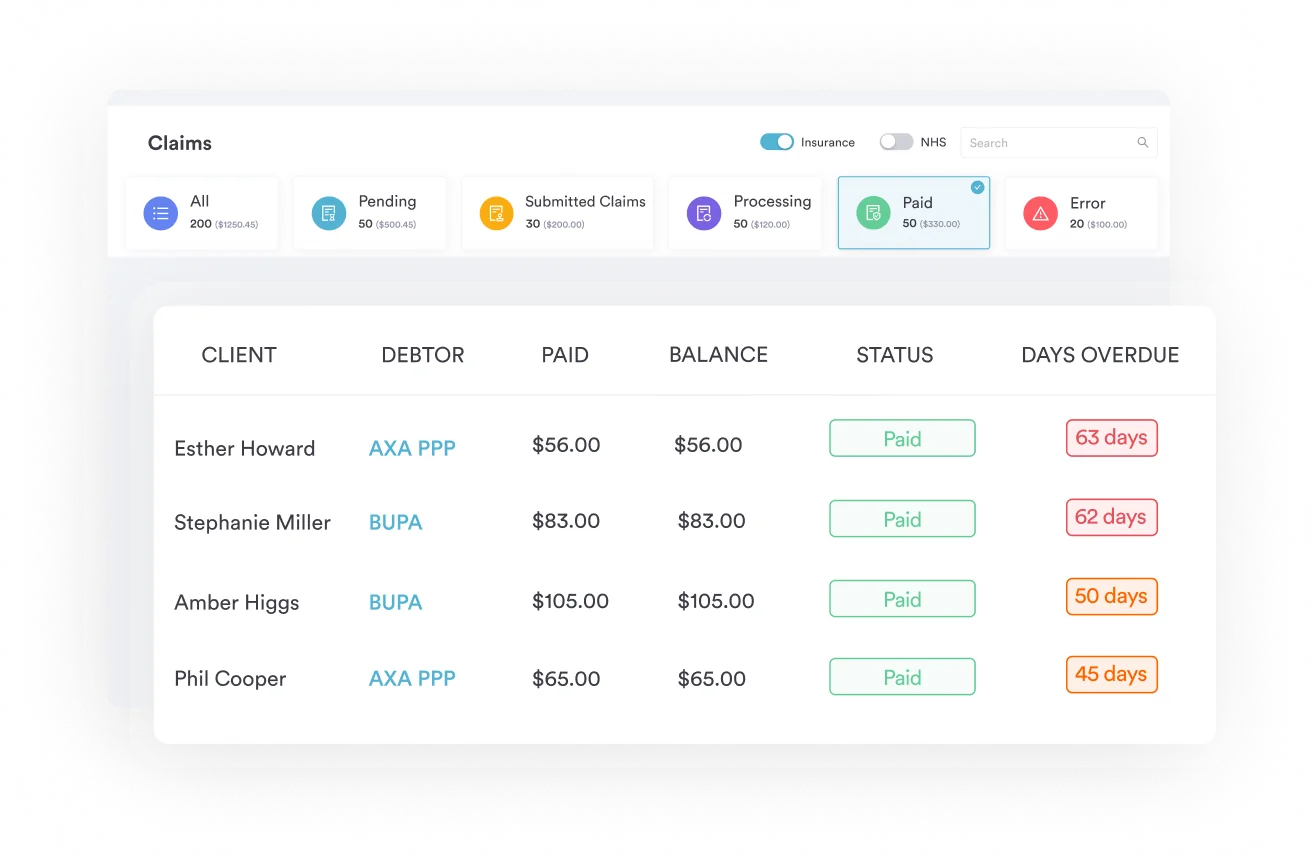
Pabau’s claims management software captures diagnosis codes at the point of care, cross-checks against procedure codes, and streamlines billing workflows for hematology and specialist practices.

A GP practice system keeps shared-care monitoring for these diagnoses on schedule without manual chasing.
Accurate coding of ICD-10 Code D67 depends on what the physician or hematologist documents in the clinical record. The code cannot be assigned from laboratory values alone. The provider must explicitly document one of the recognized clinical terms (hereditary factor IX deficiency, Hemophilia B, Christmas disease, or equivalent).
Key documentation elements that support D67 coding and payer review include:
According to ICD List, D67 has no excludes notes or use-additional-code directives beyond standard coagulation defect coding conventions. However, coders should follow the ICD-10-CM Official Guidelines for Coding and Reporting when sequencing D67 with manifestation codes. Using digital intake forms that capture bleeding history, current medications, and prior factor replacement products at intake reduces documentation gaps that cause coding uncertainty later.

Flag patients with D67 in your practice management system using a chronic condition marker. This ensures the diagnosis populates automatically on subsequent visits and prevents the common error of assigning a general coagulation defect code (D68) when the specific Hemophilia B code is on file.
Hematology and infusion practices managing Hemophilia B patients encounter a predictable set of billing scenarios involving ICD-10 Code D67. The following guidance covers the most common workflow touchpoints.
When a patient attends for a factor IX infusion, D67 functions as the principal diagnosis code. The procedure is typically coded with an infusion administration CPT code (e.g. 96365 for initial intravenous infusion) alongside the relevant HCPCS J-code for the specific factor IX product administered. The diagnosis-to-procedure linkage must be explicit in the claim.
Factor IX replacement products are high-cost biologics. Most commercial payers and Medicare Advantage plans require prior authorization before dispensing. The authorization request must reference D67 as the documented diagnosis, supported by factor IX activity levels and a hematologist’s attestation of severity. Practices using prescription management software to track factor IX product prescriptions, dosing, and renewal dates are better positioned to respond to payer requests quickly. Prior auth denials most commonly occur when the diagnosis code on the request does not match the code on the dispensing claim, reinforcing the need for consistent D67 assignment across all documentation touchpoints. Practices that bill a narrow set of services keep a coding guide covering that set rather than the whole schedule.
The ICD-9-CM predecessor to D67 is code 286.1 (congenital factor IX disorder). For practices reviewing legacy records or submitting late claims on pre-October 2015 service dates, 286.1 applies. For all current-year encounters, D67 is the correct code. Using AI-assisted clinical documentation that flags outdated codes during note review helps practices avoid submitting retired ICD-9 codes on current claims. The crosswalk mapping is confirmed in the CMS ICD-10 annual update files.
Under HIPAA transaction and code set standards, electronic claims submitted to payers must use valid ICD-10-CM codes. D67 meets this requirement for the 2026 fiscal year. Practices must ensure their clinic software is HIPAA-compliant in how it stores, transmits, and populates diagnosis codes on claims forms. Any system that allows free-text diagnosis entry without ICD-10 code validation introduces compliance risk for coagulation disorder specialties where code precision directly affects reimbursement for expensive treatments.
Coding hereditary factor IX deficiency accurately depends on one specific code: D67. Confusing it with D66 (Hemophilia A) or the broader D68 category results in claim rejections, prior authorization mismatches, and documentation queries that slow payment cycles for high-cost biologics. The four inclusion terms, the ICD-9-CM crosswalk from 286.1, and the sequencing rules with M36.2 for hemophilic arthropathy are the core knowledge points every coder handling hematology billing needs.
Pabau’s claims management software captures diagnosis codes at the point of care and supports accurate code linkage across complex multi-code encounters. To see how Pabau handles coding workflows for specialist practices, book a demo.

Need a reference for other blood disorder ICD-10 codes? Intraparenchymal hemorrhage ICD-10-CM codes covers the I61.x series, documentation tips, and coding best practices for hemorrhage claims.
Billing for facial nerve paralysis surgery? CPT code 15845 billing guide explains the modifiers, ICD-10 crosswalk, and facility billing details for this graft procedure.
Coding a head and neck lipectomy claim? Suction assisted lipectomy coding guide explains how to bill submental and cervical fat removal without triggering a denial.
ICD-10 Code D67 is the billable ICD-10-CM diagnosis code for hereditary factor IX deficiency, a genetic bleeding disorder also known as Hemophilia B or Christmas disease. It is valid for the 2026 fiscal year and falls under the D65-D69 coagulation defects block within chapter D50-D89.
Yes, D67 is a billable ICD-10-CM diagnosis code that can be submitted directly on insurance claims for fiscal year 2026. It requires no additional characters or specificity extensions.
D66 codes for hereditary factor VIII deficiency (Hemophilia A), while D67 codes for hereditary factor IX deficiency (Hemophilia B). These are genetically distinct conditions requiring different replacement factor therapies. Using the wrong code triggers payer mismatches between the diagnosis and the administered treatment product.
D67 falls under Chapter 3 (D50-D89): Diseases of the blood and blood-forming organs. Within that chapter, it sits in block D65-D69 covering coagulation defects, purpura, and other hemorrhagic conditions.
The ICD-9-CM predecessor to D67 is code 286.1 (congenital factor IX disorder). For any service dates from October 1, 2015 onwards, D67 is the correct code. ICD-9 codes are not valid for current-year claim submissions.
M36.2 (hemophilic arthropathy) is assigned as an additional code when joint damage from recurrent hemarthroses is documented. Administration codes (CPT 96365 or similar) and HCPCS J-codes for the specific factor IX product are also assigned on infusion encounter claims.
The diagnosis code for hemophilia B is D67, the ICD-10-CM entry for hereditary factor IX deficiency. It is billable on its own for the 2026 fiscal year and needs no added characters, so the same code applies whether the record documents hemophilia B, Christmas disease, or factor IX deficiency.
No. D67 is a single, non-subdivided code, so mild, moderate, and severe hemophilia B all map to the same entry. Severity is captured clinically through the documented factor IX activity level, not through a different code. That percentage still matters for prior authorization and medical necessity, even though it does not change the code assigned.
Use Z14.8 (genetic carrier of other disease). ICD-10-CM has dedicated carrier codes only for hemophilia A – Z14.01 for an asymptomatic carrier and Z14.02 for a symptomatic one – so a hemophilia B carrier falls under the Z14.8 catch-all. Reserve D67 for a patient who has the deficiency, not for documented carrier status.
An acquired factor IX inhibitor, also called acquired hemophilia B, is coded to D68.311 (acquired hemophilia), not D67. The difference is cause: D67 covers the inherited, X-linked deficiency, while D68.311 covers autoantibodies that neutralize factor IX in a patient who was not born with the disorder.
Hereditary factor IX deficiency is coded to D67, the same billable entry used for Hemophilia B and Christmas disease. The clotting factor IX shortfall is the defining feature, so any chart documenting it resolves to this single code for the 2026 fiscal year.
Hemophilia A, caused by a hereditary factor VIII deficiency, is coded to D66, not D67. D66 sits directly beside D67 in the D65-D69 block, and pairing the wrong sibling code with a factor replacement product is a frequent denial trigger.