Fertility clinic marketing: Strategies that attract & convert patients
Fertility clinic marketing is how a fertility practice attracts, educates, and c...

Last Updated: Oct 14, 2026

A marketing plan for private practice needs a defined ideal client, measurable goals, and a channel mix matched to your practice stage.
Google Business Profile and clinician directory listings are the highest-ROI starting points for most private practices.
Most practices lose new clients between inquiry and first appointment because their intake funnel has too much friction.
Pabau’s automated recall, online booking, and email campaign tools turn your day-to-day operations into a continuous marketing engine.
Most private practices do not fail because of poor clinical work. They fail to grow because they treat marketing as something to deal with later. Referrals dry up. The website sits untouched. A Psychology Today profile goes up, generates a trickle of inquiries, and that is considered “marketing.” The result: inconsistent caseloads, revenue plateaus, and practitioners who eventually wonder whether private practice is actually viable.
Building a marketing plan for private practice does not require a dedicated marketing team or a large budget. It requires a structured approach: know who you are trying to reach, choose two or three channels that match your capacity, and measure what actually produces appointments. This guide covers each of those steps, with specific tactics for solo practitioners and small clinics across therapy, aesthetics, physiotherapy, and general private GP work. It also covers what most guides miss: how your operations and intake process either support or undermine every marketing effort you make.
A marketing plan for private practice is not a list of tactics. It is a structured document that connects your business goals to specific actions, audiences, and metrics. Practices that skip this step end up posting sporadically on Instagram, paying for a directory they never optimise, and spending on Google Ads without tracking which clicks become appointments.
Start with three foundational decisions before choosing any channel. Strong patient acquisition strategies always begin here.
A solo CBT therapist accepting all presentations competes with every other therapist in the city. A physiotherapist who specialises in postpartum rehabilitation or sports injuries can dominate a specific search term, earn precise referrals, and build a client base that stays. The American Psychiatric Association’s private practice marketing guide identifies niche development as one of the most reliable paths to a sustainable practice.
Your ideal client profile should specify: age range, presenting concern or condition, insurance or self-pay preference, geography, and how they search for help. “Adults with anxiety in central London who search on Google and prefer out-of-hours appointments” is actionable. “People who need therapy” is not.
Vague goals produce vague results. “Get more clients” is not a goal. Specific goals for a marketing plan for private practice look like these:
Each goal maps to a specific channel and a specific metric. Without this mapping, you cannot tell whether your efforts are working or simply costing you time. Good private practice management treats marketing outcomes with the same rigour as clinical ones.
Before spending money or time, establish where your current clients come from. Ask every new client at intake: “How did you find me?” Track referral sources in your practice management system. Most practitioners discover that 60-80% of new clients come from just one or two sources, and the rest represent scattered experiments that could be deprioritised. This audit takes one week and immediately clarifies where to invest.
No practice has the capacity to run every channel simultaneously. The goal is to select two or three that match your practice size, specialty, and where your ideal clients actually search. The following breakdown reflects what produces measurable results for most private healthcare practices.
| Channel | Best For | Effort Level | Time to Results |
|---|---|---|---|
| Google Business Profile | Local search visibility | Low (setup once) | 2-4 weeks |
| Therapist/clinician directories | Mental health, therapy, psychology | Low-medium | 1-4 weeks |
| Content and SEO | Long-term organic acquisition | High | 3-9 months |
| Email marketing | Retention and referrals | Medium | Ongoing |
| Referral partnerships | GP referrals, allied health | Medium | Variable |
| Paid ads (Google, Meta) | Fast visibility, specific niches | High (ongoing) | Days |
Google’s own documentation confirms that a Google Business Profile is free to create and significantly improves local search visibility for healthcare providers. For private practices with a fixed location, this is the single highest-ROI action available. A complete profile with accurate hours, services, a booking link, and 15+ genuine reviews will outperform an untouched competitor profile consistently.
Beyond the profile itself, local SEO means ensuring your website includes your city or neighbourhood, the conditions or treatments you offer, and schema markup that helps Google display your practice in map packs. For marketing for clinics at a local level, this foundation beats paid ads during the first 12 months.
Psychology Today remains one of the most widely used therapist directories for private practice client acquisition, consistently cited across practitioner communities. For UK practices, directories like Counselling Directory, Psychology Today UK, and BACP’s Therapist Directory serve equivalent functions for therapy and mental health practices; physiotherapists can use Physio First’s practitioner finder, and private GPs can list on directories such as Doctify and Top Doctors. An optimised directory profile includes a clear specialty statement, a photo, fee transparency, and information about what a first session looks like.
Treat your directory listing as a sales page, not a professional CV. Clients read profiles looking for one thing: “Does this practitioner understand my problem?” Profiles that describe the practitioner’s qualifications without speaking to the client’s experience consistently underperform. A well-built structured marketing plan ensures your directory presence reinforces the same message as your website and social profiles.
Standard SEO principles apply to private practice: a website that answers specific questions your ideal clients type into Google will earn consistent organic traffic. A physiotherapist writing about “knee pain after running” or a therapist covering “CBT techniques for health anxiety” builds topical authority over time. The American Medical Association frames content development as a core element of building practice authority, not just a digital marketing tactic.
A structured content marketing plan turns these one-off posts into a system, prioritizing topics by patient search intent rather than guesswork.
For social media marketing for clinics, the most effective approach is educational short-form content that mirrors the blog questions your ideal clients ask. Instagram Reels and LinkedIn posts about common clinical questions perform better than promotional posts about service pricing. Social media builds trust; directories and search capture intent. Working from a social media marketing plan keeps that posting cadence realistic for a small team.
GP surgeries, physiotherapy clinics, occupational health teams, and HR departments are all potential referral sources, depending on your specialty. A referral relationship begins with a one-page introduction document explaining who you work with, what you treat, and how quickly you can see patients. Knowing how private GP referrals to the NHS work also helps you position your practice within these pathways. Follow up quarterly. Practices that actively manage referral relationships often find this becomes their most reliable and lowest-cost acquisition channel within 12 months.

Pabau combines online booking, automated reminders, recall messaging, and email campaigns in one platform, so every client interaction supports your marketing plan for private practice without adding to your workload.

Most private practitioners either underspend (doing nothing but word-of-mouth) or overspend on channels before they have the operational capacity to handle the volume those channels generate. A sensible budget framework depends on practice stage.
The U.S. Small Business Administration recommends that established small businesses allocate 7-8% of gross revenue to marketing, with newer businesses often needing to invest closer to 12-20% during growth phases. Private practices should treat this as a floor, not a ceiling, in early years. Track which channels generate actual bookings, not just website traffic, and reallocate quarterly based on real conversion data.
For practices investing in paid advertising: Google Ads healthcare categories carry restrictions on certain claim types under both FTC guidelines and Google’s own advertising policies. Review these requirements before running campaigns for any clinical service. Similarly, any email marketing that includes client information must comply with HIPAA (US) or GDPR (UK/EU) depending on jurisdiction. Medspa email marketing campaigns built within a HIPAA-compliant platform remove much of this compliance burden.
Track new client source at intake by adding a single dropdown field to your intake form: ‘How did you find us?’ After 90 days, run a simple count. Most practices find that one or two channels generate 70%+ of bookings. That is where to focus budget and time, not on channels producing one inquiry per quarter.
The most underused marketing asset in private practice is the client journey itself. Most practitioners spend time and money attracting new clients, then lose a significant percentage of inquiries between first contact and confirmed appointment, and lose a further percentage after a first session because there is no systematic follow-up.
The inquiry-to-booking gap: Industry benchmarks suggest that practices converting fewer than 50% of inquiries into bookings have an operational problem, not a marketing problem. The solution is reducing friction: a 24-hour callback commitment, an online booking option on the website and directory profile, and automated confirmation and reminder messages. Converting leads into clients at a higher rate often delivers more growth than doubling marketing spend.
Retention as marketing: A client who returns generates zero acquisition cost. A client who refers a friend generates negative acquisition cost (your cost per new client goes down). Automated post-appointment follow-ups, recall messages for clients who have not booked in 60 or 90 days, and a simple loyalty programme for long-term clients all contribute to word-of-mouth growth that compounds over time. Targeted email and SMS campaigns keep those recall and rebooking messages relevant to each client segment. Pabau’s marketing features are built specifically for this model, connecting booking, recall, and campaign tools within one platform rather than requiring separate software. Pabau’s marketing tools combine reviews, campaigns, and automated communications inside the same system.
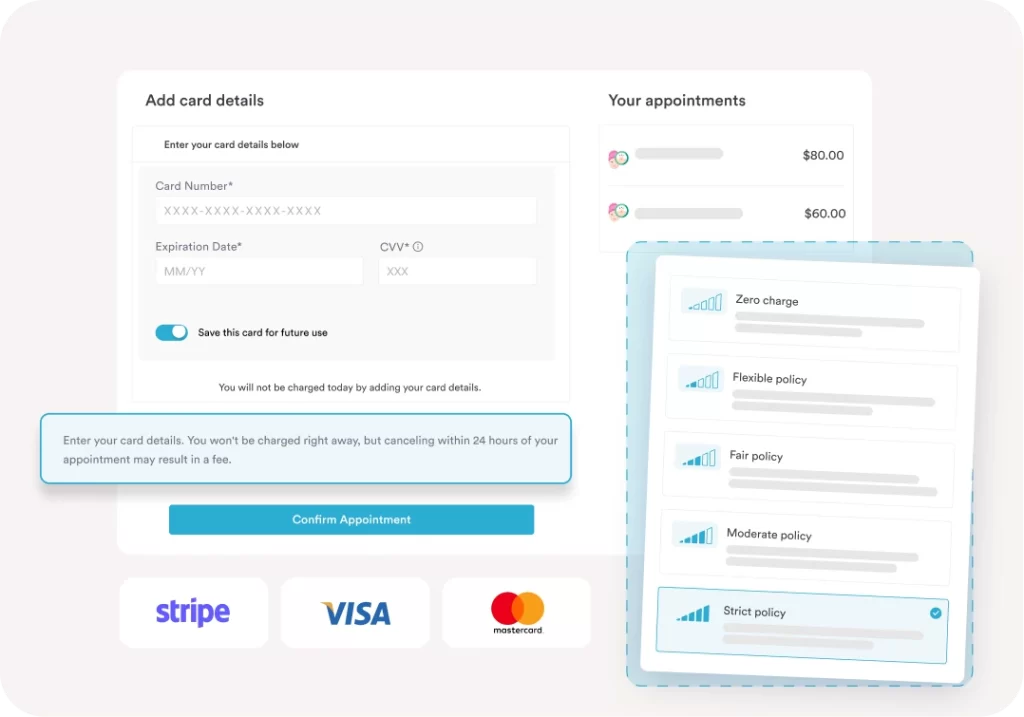
Online booking as a conversion tool: Each marketing channel, whether a directory listing, a social post, or a Google search, sends a potential client somewhere. If that destination requires them to call during business hours, complete a lengthy paper form, or wait 48 hours for a response, a significant portion will leave. Online booking widgets embedded directly on your website and directory profiles reduce the steps between intent and confirmed appointment, directly improving conversion rates from every marketing channel you run. For any practice investing in a marketing plan for private practice, the booking experience is the last mile of every campaign.
A marketing plan without measurement is a spending plan. These are the metrics that actually tell you whether your private practice marketing is producing results.
Review these metrics monthly during the first year and quarterly thereafter. When you notice a channel consistently producing bookings at a lower cost than others, increase investment there first before exploring new channels. Conversely, a channel that generates traffic but no bookings after 90 days is consuming attention without return. Growing a medical practice sustainably depends on this discipline: doubling down on what works and cutting what does not, rather than chasing every new marketing tactic.
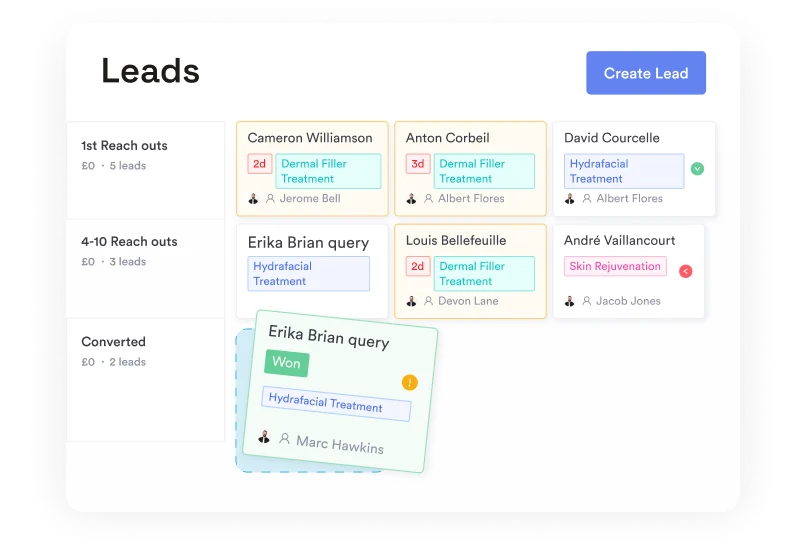
For practices seeking a systematic approach to lead generation for med spas and conversion tracking, the most important step is ensuring your practice management software connects marketing touchpoints to actual appointment data. When you can see that a specific email campaign generated 12 bookings last month, or that your Psychology Today profile produced 8 inquiries but only 3 bookings, you have the information needed to make decisions. Without that connection, marketing measurement is guesswork.
Finally, if your practice serves UK clients, ensure your marketing activities align with ASA (Advertising Standards Authority) guidelines on healthcare advertising claims, and that any data collected through forms or email lists complies with GDPR. In the US, HIPAA applies to any use of patient information in marketing communications, including review requests sent by email. Compliance is not a marketing obstacle; it is the foundation on which client trust is built, and trust is what converts a marketing plan for private practice into a full caseload.

Want more patients finding you online? healthcare lead generation strategies covers how private practices turn online searches into trusted, booked appointments.
Want a complete clinic marketing framework? Marketing for Clinics provides a broader strategic overview for multi-discipline practices.
Thinking about growing your therapy or psychology practice specifically? Therapy Practice Management covers the operational infrastructure that supports sustainable growth.
Most private practices do not struggle to attract clients because their clinical work is poor. They struggle because there is no structured plan connecting their visibility efforts to how clients actually find, choose, and book with them. A marketing plan for private practice that combines a clear ideal client profile, two or three well-executed channels, and a frictionless intake experience will outperform a scattered collection of tactics every time.
Pabau’s automated recall workflows, online booking widget, and integrated email and SMS campaigns are built to turn your daily clinical operations into a continuous acquisition and retention engine, without adding a separate marketing software stack. If you are ready to connect your operations to your growth goals, book a demo to see how Pabau supports marketing plan for private practice execution from first inquiry to long-term client retention.
Start by defining your ideal client profile and measurable goals (e.g. 15 new inquiries per month). Then choose two or three channels matched to where your clients search, assign a budget, and set specific metrics to review monthly. The audit step, tracking where current clients actually come from, is the most commonly skipped and most valuable starting point.
At minimum: an ideal client definition, revenue and caseload goals, a channel mix with rationale, a 12-month budget broken by channel, a conversion tracking method, and a quarterly review schedule. Many plans also include a referral partnership list and a content calendar for SEO and social media.
Track five metrics monthly: new inquiry volume by channel, inquiry-to-booking conversion rate, client acquisition cost per channel, retention rate (percentage returning for a second appointment), and referral source breakdown. If a channel produces traffic but no bookings after 90 days, it is not working regardless of impressions or clicks.
The U.S. Small Business Administration suggests 7-8% of gross revenue for established businesses, with newer practices often investing 12-20% during growth phases. A solo practice in year one can build a strong foundation with £300-800 focused on Google Business Profile, one optimised directory listing, and a professional website, before adding paid channels.
HIPAA (US) restricts using patient information in marketing without explicit authorisation, including sending review requests by email to identified patients. GDPR (UK/EU) requires consent for email marketing and clear opt-out mechanisms. Both regulations permit general marketing communications, appointment reminders, and recall messages within defined parameters. Using a compliant practice management platform with built-in consent tools simplifies adherence significantly.