CRM for chiropractors: how to manage patients, bookings and marketing
A CRM for chiropractors is a patient relationship management system built around...

Last Updated: Oct 13, 2026

The US median annual wage for massage therapists is $57,950, according to BLS May 2024 data.
Self-employed massage therapists may earn more per session but carry higher overhead costs, including rent, supplies, and liability insurance.
Specialisations such as sports massage, medical massage, and lymphatic drainage typically command higher hourly rates than general spa work.
Location is one of the strongest salary predictors – therapists in Washington, Alaska, and Massachusetts tend to earn significantly above the national median.
Scheduling efficiency, rebooking rates, and retail commissions all contribute meaningfully to total annual income beyond the base hourly rate.
The national median tells only part of the story. According to the Bureau of Labor Statistics (BLS) Occupational Outlook Handbook, the median annual wage for massage therapists in the US was $57,950 as of May 2024. That figure sits in the middle of a wide range – the bottom 10% earned less than $33,280, while the top 10% earned more than $97,450.
The median masks a wide spread of outcomes. Hourly rates on Indeed and ZipRecruiter sit at $28-$32 for employed therapists and climb sharply in medical or clinical settings. BLS projects 15% employment growth from 2024 to 2034 (about 24,700 openings each year), signaling sustained demand and negotiating leverage for skilled practitioners.
Employed versus self-employed status changes the picture considerably. A therapist working 35-40 hours per week in a hotel spa may earn a predictable salary with benefits, while a clinic-based or mobile practitioner charging $90-$130 per session can generate substantially more – provided their schedule stays full. For spa and wellness operators managing multiple therapists, understanding this earnings range helps set realistic compensation benchmarks and retain staff.
Geography shapes massage therapist earnings more than almost any other single variable. BLS state-level occupational data consistently shows that therapists in Washington, Alaska, and Massachusetts earn well above the national median, while those in lower cost-of-living states tend to earn less – though purchasing power often narrows that gap considerably. For a wider view, our massage therapist salary guide sets these state figures alongside self-employed rates and specialisation premiums.
Here is a snapshot of how much massage therapists make across key US states. The national median row reflects BLS Occupational Employment and Wage Statistics (OEWS) May 2024 data; the state-level ranges are indicative figures drawn from prior OEWS state wage cycles and private salary surveys, and may shift once the May 2024 state-level OEWS update propagates through every market:
| State | Approximate Annual Median Wage | Notes |
|---|---|---|
| Washington | $65,000-$75,000 | High demand in Seattle metro; strong licensing framework |
| Alaska | $62,000-$72,000 | Remote premium; limited therapist supply |
| Massachusetts | $60,000-$70,000 | Medical and academic healthcare hubs |
| California | $50,000-$60,000 | High cost of living offsets higher nominal rates |
| National Median (US) | $57,950 | BLS May 2024 |
| Texas | $40,000-$48,000 | Lower cost base; growing wellness market |
| Florida | $38,000-$46,000 | High tourism-driven spa employment |
State licensure requirements also affect earning capacity. The Federation of State Massage Therapy Boards (FSMTB) oversees the MBLEx licensing exam, and states with stricter licensure tend to attract – and retain – higher-paid practitioners. Clinics hiring across multiple states, particularly those using multi-location practice management tools, need to account for these wage differences in their staffing budgets.
Self-employment is the dominant model for many experienced massage therapists – and the income potential is meaningfully higher on a per-session basis. A therapist charging $100 per 60-minute session and seeing six clients per day generates $600 in daily revenue. Over a 48-week year at four working days per week, that equates to roughly $115,000 in gross revenue before expenses.
The gap between gross and net income is where the self-employment model gets complicated. According to the American Massage Therapy Association (AMTA), self-employed therapists report higher per-session earnings than their employed counterparts – but overhead costs including room rental, professional liability insurance, supplies, continuing education units (CEUs), and marketing typically consume 30-45% of gross income. Physical exhaustion also naturally caps how many sessions a therapist can sustain each week.
The most successful self-employed practitioners tend to combine three income streams: hands-on sessions, retail product commissions, and service packages sold in advance. A therapist operating out of a wellness clinic or chiropractic office who can also sell pre-paid packages through an online booking system will generate more predictable annual income than one relying solely on walk-in clients. Accurate tracking of all revenue streams matters – and is often the first thing missing from solo practice finances.
Four variables drive the widest income differences among massage therapists: specialisation, employment setting, client volume, and whether tips and retail are tracked as real income.
Not all massage modalities command the same rates. Sports massage therapists working with professional athletes or in sports medicine clinics routinely charge $120-$180 per session. Medical massage billed through insurance using CPT codes 97124 or 97140 can generate significantly higher per-hour revenue than standard spa massage. Lymphatic drainage massage and prenatal massage also carry premium positioning in private clinic settings.
Certifications from the National Certification Board for Therapeutic Massage and Bodywork (NCBTMB) signal advanced competency and typically support higher rates. Therapists who invest in continuing education units (CEUs) in high-demand specialties report measurably better income outcomes than those who maintain only their base licence.
Where a therapist works matters as much as what they do. Hospital and clinical settings affiliated with physical therapy or chiropractic practices generally pay higher base salaries than resort spas or franchise massage chains – but may offer fewer tip-earning opportunities. Hotel and resort spas in high-tourism markets often supplement lower base wages with gratuities that can add $15,000-$25,000 annually for full-time therapists in premium properties.
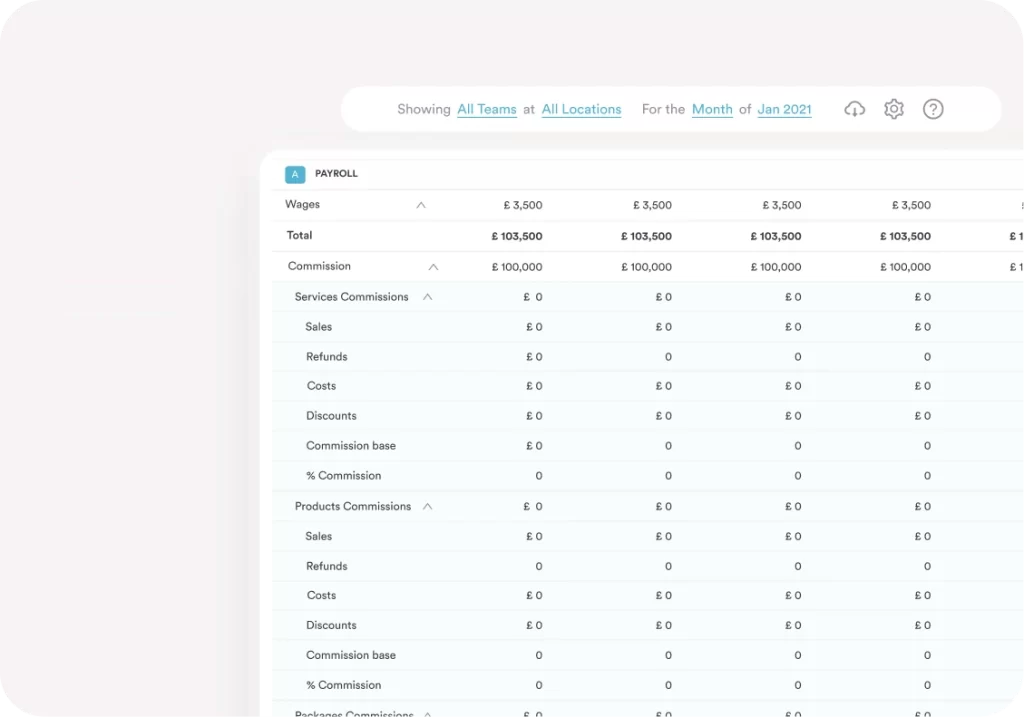
For clinic owners managing therapist compensation, the setting-specific income structure also affects how commissions, retail bonuses, and shift premiums are structured. A tiered commission model for product sales can meaningfully increase total compensation without raising base wages. Pabau’s commissions management tools help clinic managers track these accurately across staff members.
Most full-time massage therapists see between four and eight clients per day, with five to six being the practical average for sustainable practice. At $75 per session and six daily clients, a therapist working five days earns $2,250 per week – $117,000 gross annually at full capacity. Reality is more complicated: cancellations, no-shows, and seasonal variation routinely reduce that figure by 20-30%.

Reducing no-shows directly improves annual earnings. Automated appointment reminders and online booking tools are the most practical levers. Clinics using online booking software with automated confirmation and reminder sequences typically report lower cancellation rates, which translates into more consistent therapist income without adding client volume.

Pabau helps spa and wellness clinic managers track therapist schedules, commissions, and client rebooking rates – all from one platform. Fewer no-shows, clearer revenue visibility, and less administrative overhead for your team.

Most therapists hit an income ceiling not because demand is low but because their schedule has gaps they cannot see, their rebooking rate is inconsistent, and their retail and package revenue is not being systematically tracked. Addressing those three areas is where meaningful income growth comes from.
A deep tissue or Swedish massage generalist will face more price competition than a therapist certified in myofascial release, sports rehabilitation, or oncology massage. Adding one advanced modality – and marketing it explicitly – typically supports a rate increase of $20-$40 per session. For a therapist seeing five clients per day, that represents an additional $25,000-$52,000 in annual revenue at full capacity.
Rebooking at the point of checkout – rather than leaving the client to reschedule later – is the single most reliable income lever available to any therapist. A client who books the next appointment before leaving has a completion rate that is typically 40-60% higher than one who says they will call. Clinics that use client portal tools to send post-treatment booking prompts see consistent rebooking improvements without requiring any change to the session itself.

Pre-paid session packages and monthly memberships convert unpredictable income into recurring revenue. A client paying for a monthly membership commits to regular sessions – removing the will-they-won’t-they variable from the therapist’s schedule. For solo practitioners and small clinic operators, membership management features make it practical to administer these arrangements without manual tracking.
Run a rebooking audit once per quarter. Pull your rebooking rate from the previous 90 days and compare it by therapist and service type. A rate below 40% is a revenue problem, not a satisfaction problem – the fix is usually a more consistent checkout conversation or an automated follow-up prompt, not a service improvement.
International salary comparisons require care – regulatory frameworks, employment norms, and currency differences all shape what a therapist actually takes home. UK and UAE markets operate under distinct licensing structures, both of which affect who can legally practise and what they can charge.
In the UK, massage therapy is not a statutory regulated profession – registration with the Complementary and Natural Healthcare Council (CNHC) or the General Council for Massage Therapies (GCMT) is voluntary. This affects earnings at the top end of the market: therapists who hold formal qualifications and maintain voluntary registration can access NHS subcontracting work and private clinic roles that pay more than general wellness spa positions.
Employed massage therapists in UK private clinic settings typically earn between £25,000 and £40,000 annually, based on private sector salary surveys and NHS Agenda for Change pay band comparisons for allied health roles. Self-employed therapists in London and major cities charging £70-£120 per session can exceed £50,000, though overhead costs – particularly room hire and professional indemnity insurance – reduce net income substantially. UK clinics using spa management software with integrated VAT reporting also face an additional compliance consideration once revenue crosses the VAT registration threshold.
The UAE market is distinctive. Demand from medical tourism and the luxury wellness sector supports high session rates – particularly in Dubai and Abu Dhabi – but practitioners must hold a licence issued by the Dubai Health Authority (DHA) or the Department of Health Abu Dhabi (DoH) to practise legally. Licensing requirements under these frameworks directly affect which modalities a therapist can offer and therefore their earning ceiling.
Licensed wellness therapists in Dubai five-star hotel and medical spa settings report annual earnings in the range of AED 84,000-AED 144,000 (approximately $23,000-$39,000 USD), with accommodation and benefits packages common. Higher-credentialled clinical massage practitioners with DHA approval can charge premium rates that push total compensation considerably higher. Clinics operating under NABIDH health data compliance requirements benefit from practice management software designed for UAE clinic regulations, which simplifies both record-keeping and therapist scheduling across multi-practitioner settings.
Top-earning massage therapists share three habits: they specialize in a billable modality, they rebook clients before they leave the room, and they convert one-off sessions into pre-paid packages. Geography and employment setting matter, but scheduling discipline closes the gap between average and high-earning practice faster than any state move.
Book a demo with Pabau to see how clinic management software helps spa and wellness operators track therapist productivity, automate rebooking prompts, and turn schedule gaps into recovered revenue.

Looking for guidance on spa and wellness clinic operations? Spa Software by Pabau covers how all-in-one clinic management tools support therapist scheduling, commissions tracking, and client retention in wellness settings.
Need to understand how sports medicine clinics structure therapist roles? Sports Medicine Software explores the operational requirements for multi-discipline clinics where massage therapists work alongside physiotherapists and sports rehabilitation specialists.
Need a quick anatomy reference for patients? Knee muscle diagram covers the muscles, ligaments, and tendons acting on the knee for patient handouts.
Need a functional outcome measure for the leg? Lower Extremity Functional Scale template covers 20 daily activities with scoring guidance and functional interpretation benchmarks.
Employed massage therapists in the US typically earn $28-$32 per hour according to salary aggregator data, while those in clinical or medical settings can earn $35-$50 per hour. Self-employed therapists charging $90-$130 per session can reach an effective hourly rate of $60-$100, though overhead costs reduce net income significantly. Hourly rates vary substantially by state, specialisation, and setting.
Yes – particularly for therapists who combine advanced specialisations, consistent rebooking practices, and recurring revenue from packages or memberships. The BLS projects 15% employment growth for massage therapists from 2024 to 2034, with about 24,700 openings each year on average, indicating strong and rising demand. Therapists in high-demand clinical roles or premium wellness settings with full schedules regularly earn above $70,000 annually.
A full-time self-employed massage therapist with a strong client base typically nets $55,000-$85,000 annually, according to AMTA industry survey data. Per-session pricing of $100 or more pushes gross revenue well above employed counterparts, but overhead costs (room rental, supplies, insurance, continuing education) consume 30-45% of gross income before tax.
Washington, Alaska, and Massachusetts consistently rank among the highest-paying states for massage therapists, based on BLS state-level occupational wage data. Washington’s Seattle metro area combines strong demand with a robust licensing framework, supporting median wages well above $65,000. Alaska benefits from a remote premium and limited therapist supply, while Massachusetts draws from medical and academic healthcare employment hubs.
Most full-time massage therapists see between four and eight clients per day, with five to six being the practical sustainable average for most practitioners. Seeing more than six clients daily over extended periods carries a significant physical burnout risk. Scheduling tools that pad transitions between sessions and reduce back-to-back pressure help therapists maintain volume without compromising long-term capacity.
Medical massage billed through insurance, sports massage with professional athletes, and oncology massage in clinical settings consistently achieve the highest per-session rates. NCBTMB-certified therapists in clinical environments often bill $120-$180 per session. Lymphatic drainage massage and myofascial release also command premium rates, particularly in post-surgical recovery and rehabilitation clinic settings.