GLP-1 diet plan
A GLP-1 diet plan is a structured eating framework for patients taking semagluti...

2
Last Updated: Oct 13, 2026

Between 40% and 70% of children with autism spectrum disorder have a language delay, but speech delay alone does not confirm autism.
Children with autism-related speech delays show reduced social engagement, atypical eye contact, and limited use of gestures compared to children with isolated speech delays.
Early identification and intervention through speech therapy, family-centered coaching, and augmentative communication tools significantly improve outcomes.
Practice management software helps speech therapy practices track developmental milestones, document progress, and coordinate care across multidisciplinary teams.
A two-year-old arrives at your practice with fewer than 20 words. The pediatrician advised “wait and see.” Now you have to decide. Is this a late talker who will catch up, or an early sign of autism that warrants a developmental referral?
According to the CDC, 1 in 31 eight-year-olds (3.2%) were identified with autism spectrum disorder in 2022, up from 1 in 36 in 2020. Between 40% and 70% of those children also have a language delay. So a meaningful share of every pediatric speech caseload needs more than vocabulary practice.
The distinction matters operationally too. Misroute either case and the family loses a 6 to 12 month intervention window they will not get back. This guide covers what to observe during assessment, what to write down, and how to route the referral that follows.
Speech delay, also called late language emergence, occurs when a child does not meet expected communication milestones for their age. Some parents refer to these children as “late bloomers.” Many children with speech delays eventually catch up to their peers, particularly when they receive early intervention.
Autism spectrum disorder involves broader developmental differences beyond communication. The language delay is one part of a wider pattern that also shows up in social interaction, play, and behavior.
The critical difference lies in how children attempt to communicate and engage socially. Children with isolated speech delays typically show strong social interest, appropriate eye contact, and effective nonverbal communication even when their verbal skills lag behind. They use gestures, facial expressions, and other methods to interact with caregivers and peers.
In contrast, children whose speech delays are related to autism often demonstrate reduced social engagement alongside their language challenges. These children may show limited response when called by name, reduced facial expressions, minimal use of gestures, and differences in how they interact with others.
Document social communication behaviors alongside speech milestones during assessments. Observe whether the child attempts to gain attention through pointing, showing objects, or making eye contact when they cannot express themselves verbally.
Children with autism-related speech delays show distinct patterns of social communication. The behaviors below are the ones that separate the two presentations during an assessment, and they diverge long before vocabulary size does.
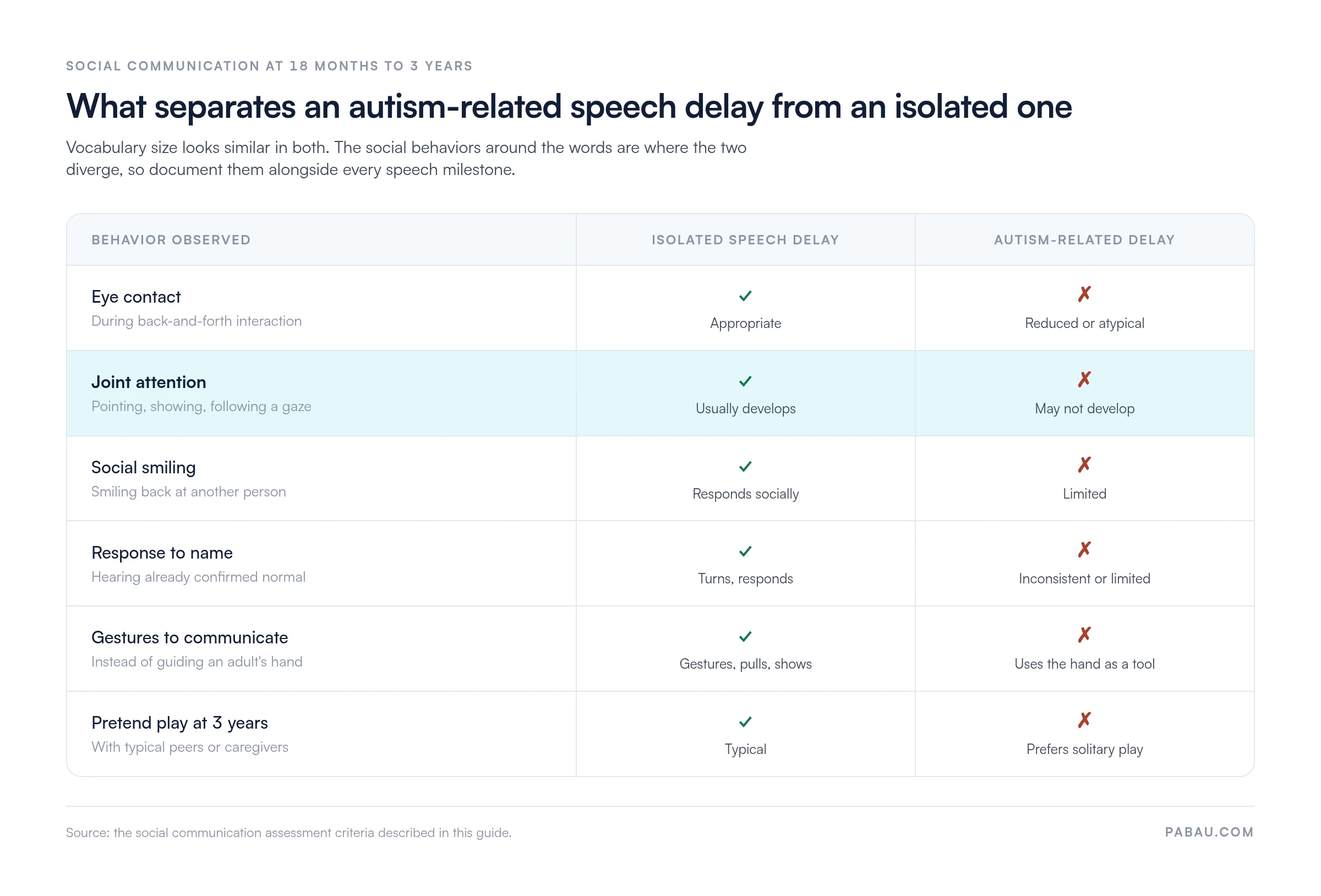
How a child attempts to communicate provides valuable diagnostic information:
Children with isolated speech delays actively seek ways to communicate. They may use gestures, pull caregivers toward desired objects, demonstrate frustration when not understood, and show clear intent to interact. These children want to communicate but lack the verbal tools.
Children with autism may use physical cues differently. Rather than pointing or showing interest, they might push or guide an adult’s hand to an object. They may engage in echolalia (repetition of words or phrases) without apparent communicative intent, or they may show limited interest in sharing experiences with others.
18 months:
2 years:
3 years:
Speech-language pathologists play a crucial role in identifying whether a child’s speech delay exists in isolation or as part of autism spectrum disorder. SLPs work collaboratively with psychologists, pediatricians, and other specialists to gather comprehensive developmental information.
Clinical assessment should include:
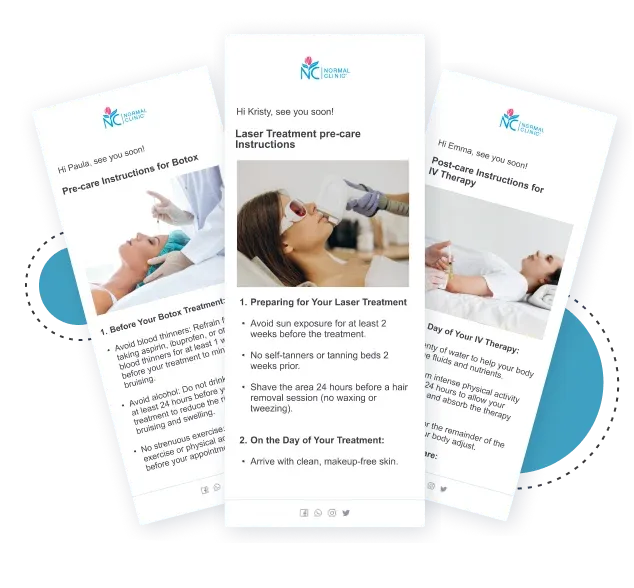
Track speech milestones, social communication behaviors, and intervention progress with this clinical worksheet.
Modern clinic management software helps SLPs document observations systematically and track developmental progress over time. It also shares that information with the other team members involved in the child’s care.
Create standardized observation checklists in your practice management system so social communication behaviors are documented the same way at every pediatric assessment. This supports accurate diagnosis and tracks changes over time.
Whether a child has an isolated speech delay or autism with communication challenges, speech therapy provides essential support. Treatment approaches vary based on the underlying cause but share common elements:
Family-centered coaching represents best practice across both conditions. Working directly with caregivers lets SLPs model strategies, incorporate family preferences, and embed therapeutic techniques into the child’s natural routines. It works because children spend far more time with their families than in clinical sessions.
For articulation targets, a take-home R sound practice sheet carries the same idea, running from held sounds through syllables, words, minimal pairs and sentences. Parents run it between visits, and the dated tracker on page one holds notes on wins and goals.
Play-based activities create natural opportunities for communication development. For children with speech delays, play provides contexts for vocabulary expansion and sound practice. For children with autism, play-based therapy can address both communication goals and social interaction skills simultaneously.
Augmentative and alternative communication (AAC) tools support children who struggle with verbal expression. AAC includes sign language, picture exchange systems, and speech-generating devices. These tools do not hinder verbal development. Research shows they often help spoken language along while giving the child a way to communicate now.
Modern speech therapy software allows practices to document treatment plans, track progress toward specific goals, and generate reports for parents and referring providers efficiently.
Children with autism typically benefit from a team approach that extends beyond speech therapy. Occupational therapists address sensory processing and motor skills, psychologists support behavioral challenges and family adaptation, and physical therapists may address gross motor development if needed.
Effective collaboration requires seamless information sharing. Client records that consolidate assessment results, treatment notes, and progress data from multiple providers enable coordinated care. When team members can see current information about a child’s development across domains, they can adjust their own interventions to support overall progress.
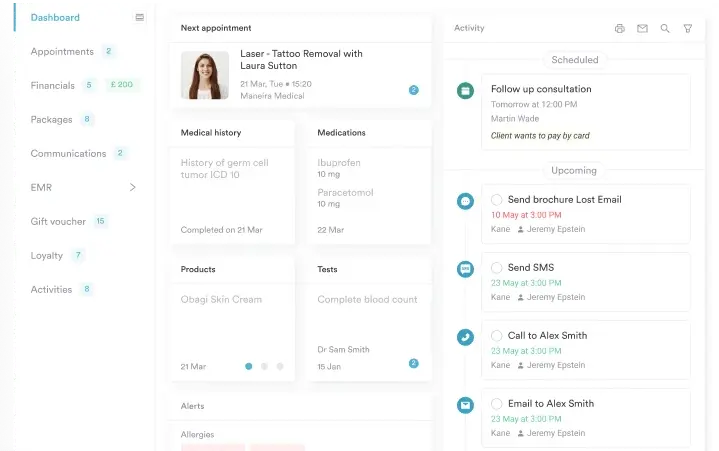
For practices serving children with autism, establishing referral relationships with complementary providers ensures families receive comprehensive support. Clear communication pathways between providers keep details from being lost, and they spare parents from coordinating the information themselves.
Pediatric speech assessments generate substantial documentation requirements. Practices need systems that capture developmental history, assessment results, treatment goals, session notes, and progress tracking without overwhelming clinical staff.
Digital forms allow parents to complete intake questionnaires and developmental histories before appointments, saving valuable clinical time. Automated data capture means the information flows straight into client records rather than requiring manual transcription.
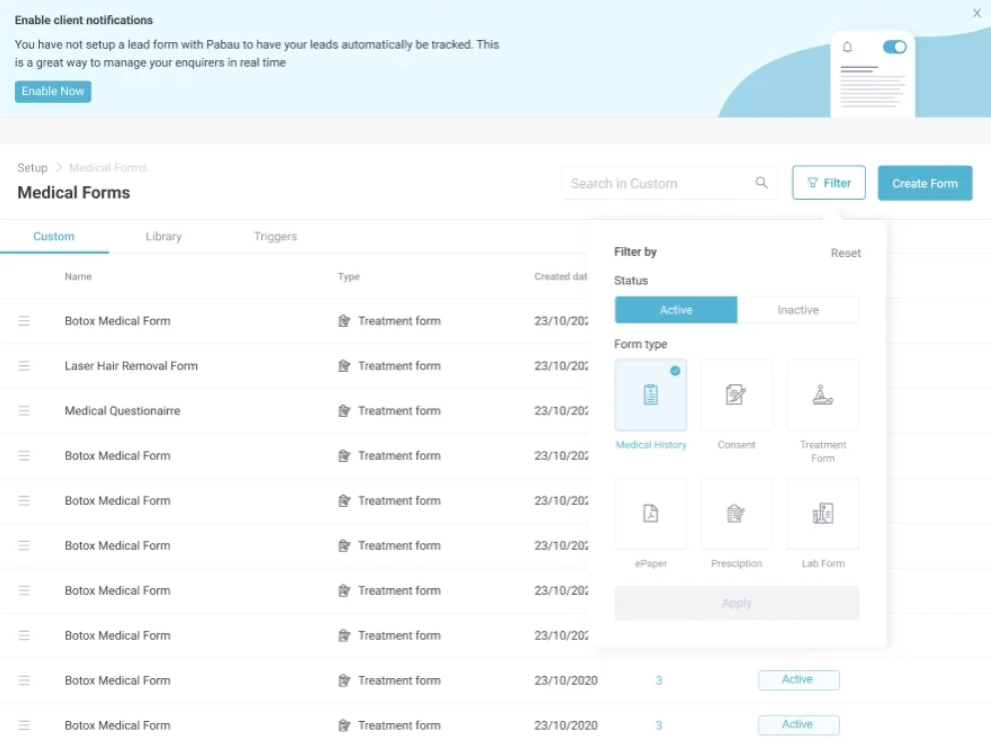
For practices managing high volumes of pediatric clients, templates specific to speech and language assessment reduce documentation time while maintaining thoroughness. Pre-built templates for common diagnoses, such as articulation disorders, language delays, and autism-related communication challenges, keep documentation consistent across providers.
Families and referring providers need regular updates about a child’s progress. Practices that efficiently track developmental milestones and document incremental improvements demonstrate value and support continued engagement with treatment.
Pabau Scribe, our AI scribe, drafts treatment notes from the session itself, which cuts the writing-up time after a pediatric assessment. It is part of the core platform and runs on credits, so every subscription includes it. Care Plus lifts the usage cap for practices documenting at high volume. When clinicians spend less time typing, they can put more energy into direct client care and family coaching.
Progress reports should clearly communicate:
Families of children with speech delays or autism often juggle multiple therapy appointments, medical visits, and other commitments. Flexible scheduling options and clear communication about appointments reduce missed sessions and support consistent attendance.
Automated appointment reminders, online booking, and a client portal for updating demographic information all reduce the administrative load on families and front desk staff alike. That matters most for practices serving families managing the complex needs of children with autism.
“Pabau has transformed how we manage our paediatric speech therapy practice. The ability to track developmental milestones, share progress with parents, and coordinate with other providers in one system has made our clinic significantly more efficient.”
Research consistently demonstrates that early intervention produces better outcomes for children with both speech delays and autism. The earlier a child receives appropriate support, the greater their potential for developing functional communication skills.
For practices, this creates both an opportunity and a responsibility. Families often seek help for communication concerns before a child receives an autism diagnosis. SLPs who recognize early signs of autism during speech assessments can start the referral for a full developmental evaluation.
Early identification allows families to:
Practices that establish clear pathways for developmental screening, autism referrals, and coordinated care stand out. Families turn to them while they are still uncertain about their child’s development.
Families of children with speech delays or autism often experience significant stress, particularly before receiving a clear diagnosis. Uncertainty about whether a child will develop typical communication, concerns about social development, and the logistics of managing multiple appointments all add up.
Practices can support families through:
Families who feel supported by their clinical team engage more consistently with treatment recommendations. They also practice strategies at home more effectively, and carry less stress about their child’s development.
Practices interested in developing expertise in autism and speech delay can differentiate themselves by:
Robust practice management systems enable these initiatives by reducing administrative burden, improving communication efficiency, and providing data for outcome analysis.
In most pediatric speech practices, social communication observations end up wherever there is room. A line in a session summary, a comment in an email to a parent, a paper checklist in one clinician’s folder. Six months later, when the referral question comes up, nobody can assemble the pattern.
Pabau, our all-in-one practice management system, keeps that evidence in one client record. Intake questionnaires and developmental histories arrive as digital forms before the first visit. Observation checklists you build once get completed the same way at every assessment. Progress against each goal sits in the same file as the treatment notes.
When a referral is warranted, that record supports it. You can pull the developmental history, the milestone data, and the social communication observations into one report for the pediatrician or psychologist. The family gets a faster answer, and the receiving clinician gets documented behavior instead of an impression.

Pabau keeps developmental histories, observation checklists, and progress data in one client record. A referral decision then rests on documented behavior rather than recall.

Vocabulary counts alone will not separate these two presentations. The social behaviors around the words will, and only if someone writes them down at the first assessment.
That makes it a documentation decision as much as a clinical one. A practice whose notes capture eye contact, joint attention, and gesture use can route a referral within weeks. A practice whose notes capture word counts is left with 18 months of vocabulary drills and a family still waiting.
Build the observation into your assessment template, and agree a referral pathway with a developmental pediatrician before you need one. Then the answer stops depending on which clinician happened to see the child that day. Book a demo to see how pediatric speech practices document social communication, track progress, and refer with evidence in hand.

Need a wider clinical view of late language emergence? Speech delay therapy: identification, modalities & clinic workflows walks through SLP assessment, intervention modalities, and how to structure workflows around them.
Working on caregiver buy-in? Engaging families in speech therapy covers family-centered coaching, generalization at home, and keeping parents active between sessions.
Need ready-made documentation? SOAP notes for speech therapy template is a downloadable SOAP template structured for SLP sessions, including social communication observations relevant to ASD differentials.
Speech delay alone does not indicate autism. Look for accompanying differences in social communication. Reduced eye contact, limited use of gestures, minimal response to name, and restricted social engagement are the signs that matter most. Children with isolated speech delays usually show strong social interest and use nonverbal communication well despite limited verbal skills. A comprehensive evaluation by a speech-language pathologist and developmental specialist can determine whether autism is present.
Concerns usually arise when a child has fewer than 50 words by age two. No two-word combinations by 24 months, or a very limited vocabulary at 18 months, also warrants a closer look. Developmental milestones vary, though, and some children are naturally later talkers. No babbling by 12 months, no single words by 16 months, or any loss of communication skills needs an evaluation. Contact a speech-language pathologist in those cases.
Treatment usually starts with speech therapy focused on functional communication. Family-centered coaching embeds strategies in daily routines, and augmentative and alternative communication (AAC) tools help where they fit the child. Many children also benefit from occupational therapy for sensory processing, applied behavior analysis (ABA) for skill development, and psychological support for the family. Early intervention produces the best outcomes, so seek assessment as soon as concerns arise.
Practice management software streamlines documentation of speech assessments, tracks developmental milestones, and keeps multidisciplinary team members in sync. Digital forms let parents complete intake questionnaires remotely, and automated reminders reduce missed sessions. Centralized client records give every provider access to current information. AI documentation tools cut the writing-up time, so clinicians can spend more of the day on client care and family coaching.
No. Between 40% and 70% of children with autism have a language delay, but some develop verbal language on a typical timeline. Even children with autism who speak fluently often show differences in pragmatic language, meaning the social use of language. That can look like difficulty with conversation turn-taking, trouble with nonliteral language, or communication that does not fit the context. Assessment should cover every aspect of communication, not just vocabulary and articulation.