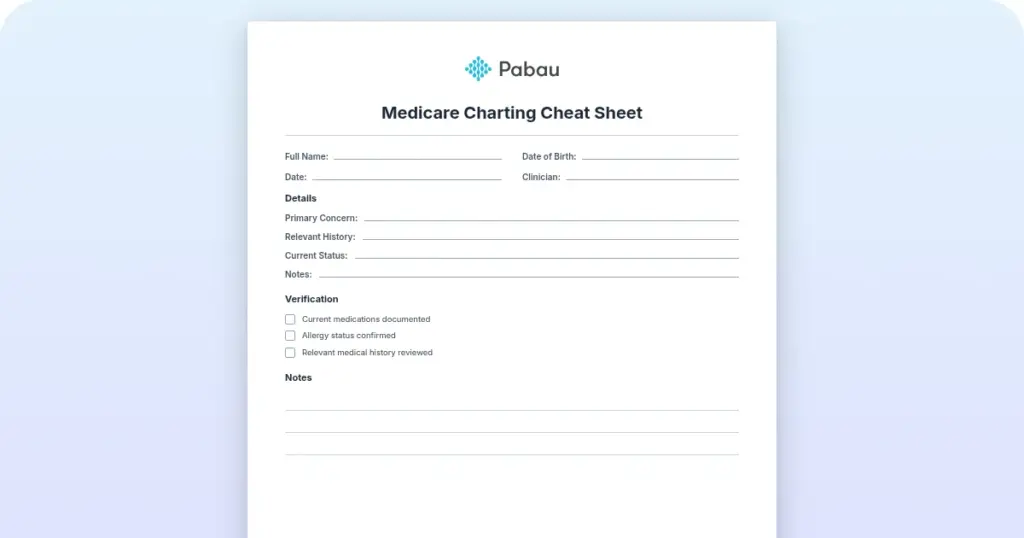
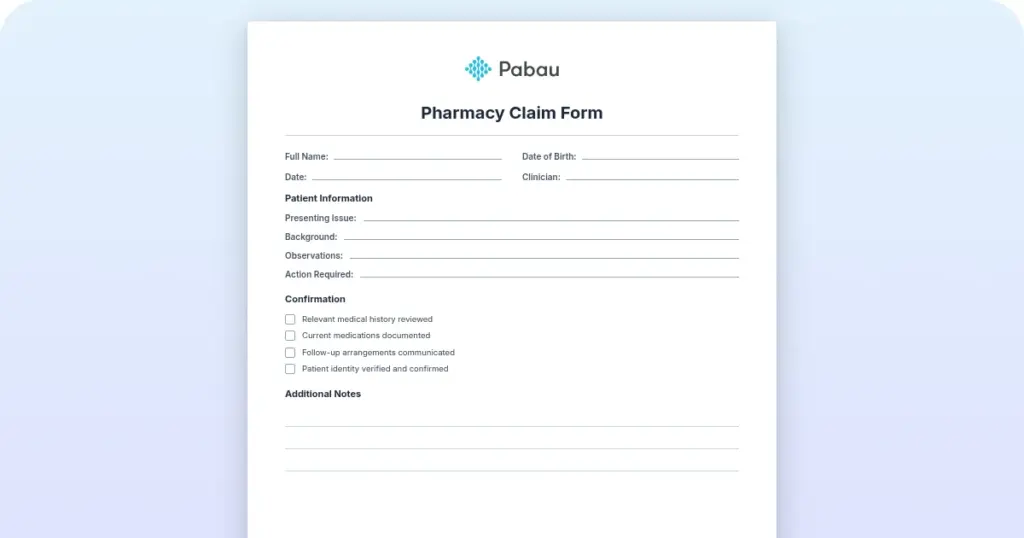
Medicare charting cheat sheet
A Medicare charting cheat sheet is a one-page reference that lists what Medicare...

2
Last Updated: Oct 21, 2026

Power Diary rebranded as Zanda in November 2024 – both names refer to the same platform, which remains Australia/NZ-focused.
Cliniko suits allied health solo practitioners and small teams wanting a clean, straightforward interface with reliable treatment notes.
Zanda (Power Diary) adds Google Calendar sync and AI session transcription, but its Medicare/DVA integrations are specific to Australian practices.
Pabau covers scheduling, clinical notes, billing, telehealth, and automation in one platform – built for multi-disciplinary and growing clinics across the UK, EU, and beyond.
Switching practice management software is one of the most disruptive decisions a clinic can make (see what practice management software is if you need a quick refresher). Allied health practices comparing cliniko vs power diary are usually at a crossroads: one platform feels too simple, the other too geographically limited. Neither decision is straightforward when your whole patient record, billing history, and scheduling workflow sits inside the system you’re about to leave.
This article evaluates both platforms across the categories that matter most to clinic operators: scheduling, clinical documentation, billing, telehealth, integrations, pricing, and support. It also introduces Pabau as a third option for practices that have outgrown the constraints of either tool. The Cliniko vs Power Diary decision is more nuanced than most comparison articles admit.
Power Diary rebranded as Zanda in November 2024 (zandahealth.com). The product continues under both names across review platforms and user communities. This article uses both terms interchangeably. Here is how the three platforms stack up at a high level:
Both platforms handle core appointment scheduling competently. The differences show up when a practice starts adding rooms, resources, or multiple practitioners to the same calendar view.
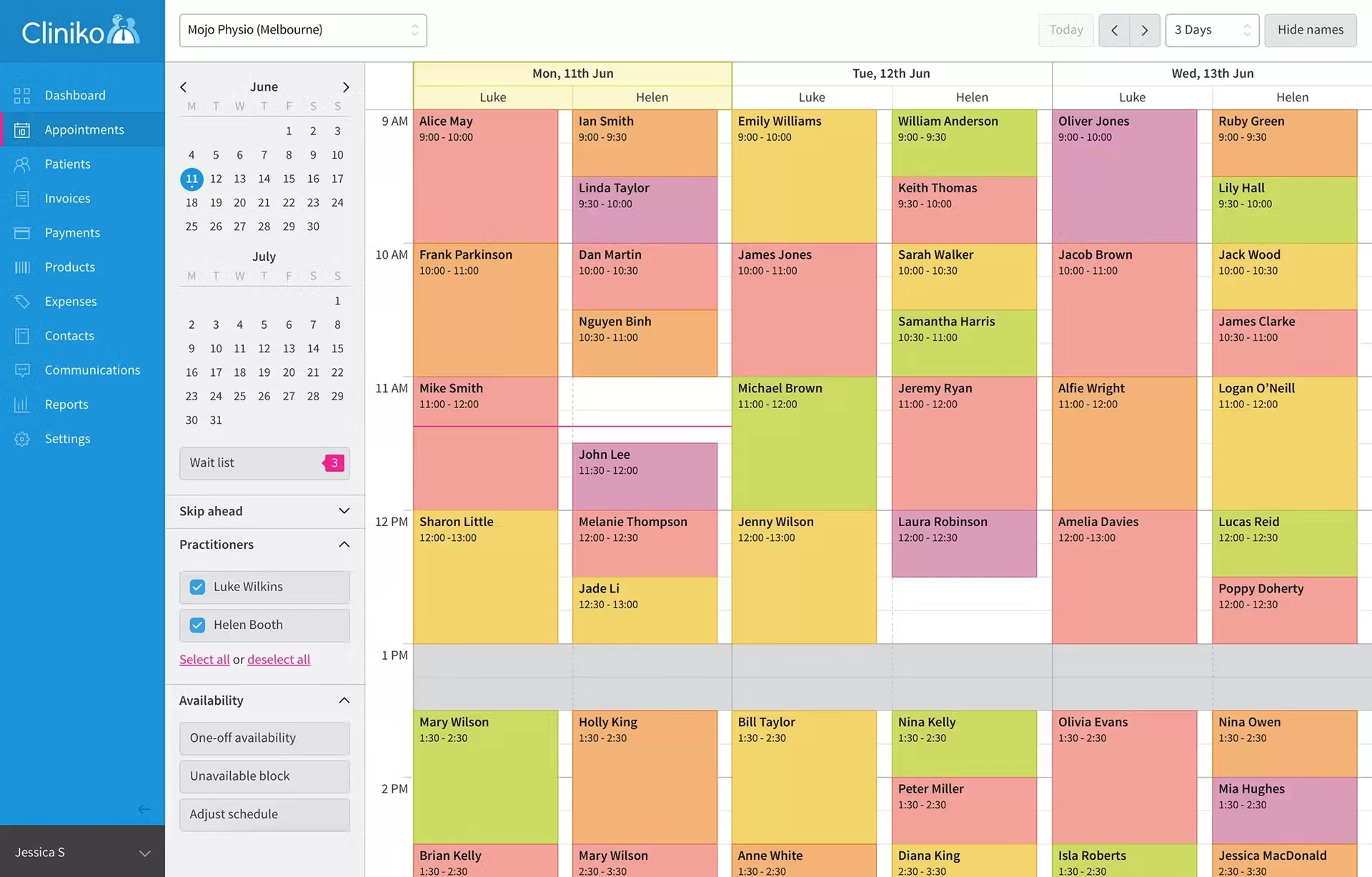
Cliniko’s scheduling interface is widely praised for being clean and intuitive. Practitioners can manage appointments across multiple locations, set availability rules, and send automated SMS and email reminders. The online booking system embeds directly into a clinic’s website. However, a commonly cited limitation is the absence of native Google Calendar sync, which means appointments don’t reflect in a practitioner’s personal calendar without a workaround.
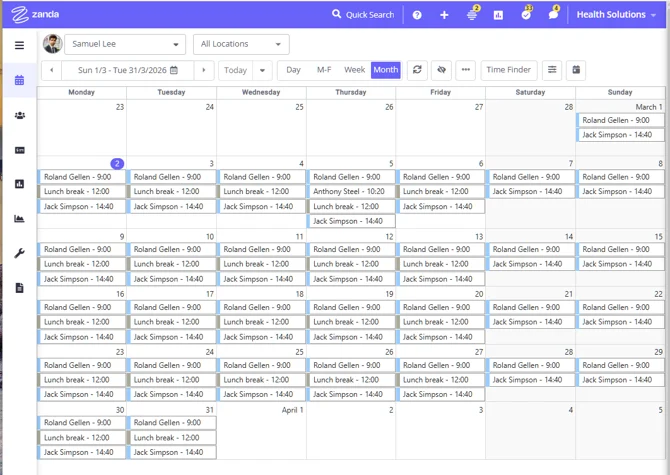
Zanda (Power Diary) positions Google Calendar sync as a core differentiator. Colour-coded diary views and smooth appointment management are consistently highlighted in user reviews. For practitioners who already live inside Google Calendar, this integration removes friction. Both platforms support multi-practitioner views, though neither natively handles room or resource booking with the same depth as larger clinic management systems.
Treatment note quality is often the deciding factor for allied health practitioners. A physiotherapist seeing 30 patients a week needs templates that load fast, capture the right fields, and store cleanly against the patient record. Both platforms handle this well, though their approaches differ.
Cliniko is particularly well-regarded for its treatment note templates in allied health clinic management, especially among physiotherapy clinic management software workflows. Templates are customisable, the interface is clean, and notes attach directly to appointments. One persistent limitation users mention is the inability to attach a PDF to an email from within the system, which complicates referral and discharge documentation workflows.
Zanda has introduced AI-powered session transcription as a differentiator (verified via GetApp comparison data). This feature, currently highlighted as “secure AI-powered session transcription,” reduces the manual effort of writing notes after a session. For practices where note-taking time is a bottleneck, this is a meaningful capability. Both platforms support digital intake forms, though the depth of customisation varies.
Neither platform positions billing as its primary strength, but both cover the basics well for private practice. Where they diverge is in market-specific integrations.
Cliniko offers invoicing, payment processing via Stripe, and Xero integration for accounting. It does not include native insurance billing, which means UK practices dealing with BUPA or other private insurers typically need to manage claims outside the system. The claims management workflow requires supplementary tools for most insurer integrations.
Zanda (Power Diary) offers equivalent invoicing and Xero/Stripe integration, and includes Medicare and DVA (Department of Veterans’ Affairs) billing for Australian practices. Cliniko also supports Medicare and DVA claims for Australian practices via its Tyro Health (formerly Medipass) integration. Both platforms cover this use case, so Medicare/DVA is not a differentiator between them. This capability is irrelevant to UK and international practices. Neither platform matches the depth of dedicated medical billing systems for complex multi-payer environments.
| Feature | Cliniko | Zanda |
|---|---|---|
| Invoicing | Yes | Yes |
| Xero Integration | Yes | Yes |
| Stripe Payments | Yes | Yes |
| Medicare/DVA Billing | Yes (Australia only, via Tyro Health) | Yes (Australia only) |
| Private Insurance Billing | No (external tools) | No |
| Package Management | Limited | Limited |
Both platforms include telehealth functionality, though the depth of integration with the rest of the clinical workflow differs. For practices that adopted telehealth as a temporary pandemic measure and kept it, the question is whether video consultations sit inside the patient journey or function as a bolt-on link.
Cliniko offers video appointment functionality as part of its core platform. Practitioners generate a telehealth link tied to the appointment, which the patient accesses via their browser. It works reliably and covers the basic use case. Zanda similarly highlights telehealth as a core feature, with video consultations embedded in the appointment workflow alongside client communication tools like 2-way SMS.
Both platforms use integrated telehealth software rather than routing through external tools like Zoom or Teams. This matters for patient data compliance, particularly under GDPR for UK and EU practices. The experience is broadly comparable between the two platforms at the basic level.
Check whether your platform’s telehealth solution stores the consultation record (notes, consent, post-care) alongside the video link in the same appointment record. Disconnected notes and telehealth links create documentation gaps that are difficult to audit later.
Both platforms share a similar core integration footprint: Xero for accounting, Stripe for payments, and Mailchimp for email marketing for email marketing. Where the cliniko vs power diary comparison gets more interesting is in the breadth of the wider ecosystem.
Cliniko’s Mailchimp integration is frequently cited as a strength, enabling practices to build segmented patient lists for targeted campaigns directly from appointment and patient data. It also integrates with Medicare and DVA (Australia) for billing via its Tyro Health integration. The platform’s broader integration ecosystem is more developed than Zanda’s, according to community reviews.
Zanda (Power Diary) covers the core integrations but has noted limitations in its wider app ecosystem. The Google Calendar sync is an advantage over Cliniko in this category. UK practices should also evaluate both platforms for GDPR compliance standards, particularly around data residency and patient consent documentation, since both platforms were primarily built for the Australian market.

Pabau combines scheduling, clinical notes, billing – with Medicare and DVA claiming via Tyro Health in Australia – telehealth, and automation in one system built for multi-disciplinary clinics. No bolt-on tools, no switching between platforms.

Both Cliniko and Zanda use per-practitioner pricing models. Exact pricing for both platforms changes periodically. Always verify current rates directly on cliniko.com and zandahealth.com before making a decision, as figures published on third-party comparison sites frequently become outdated within months.
Both platforms are generally considered competitively priced for small to medium allied health practices. The cliniko vs power diary pricing comparison matters most at scale: as a practice adds practitioners, per-user costs accumulate. Practices with 5 or more active practitioners typically find the cost difference between platforms narrowing, while the feature gaps become more decisive.
Cliniko earns its reputation among allied health practitioners primarily through simplicity and reliability. The interface is consistently described as intuitive enough for non-technical staff to learn in a day. According to Capterra reviewers, where Cliniko holds a 4.7/5 rating, the treatment note templates are a genuine strength. Physiotherapists, occupational therapists, and speech therapists frequently cite the note-taking workflow as the reason they stay on the platform.
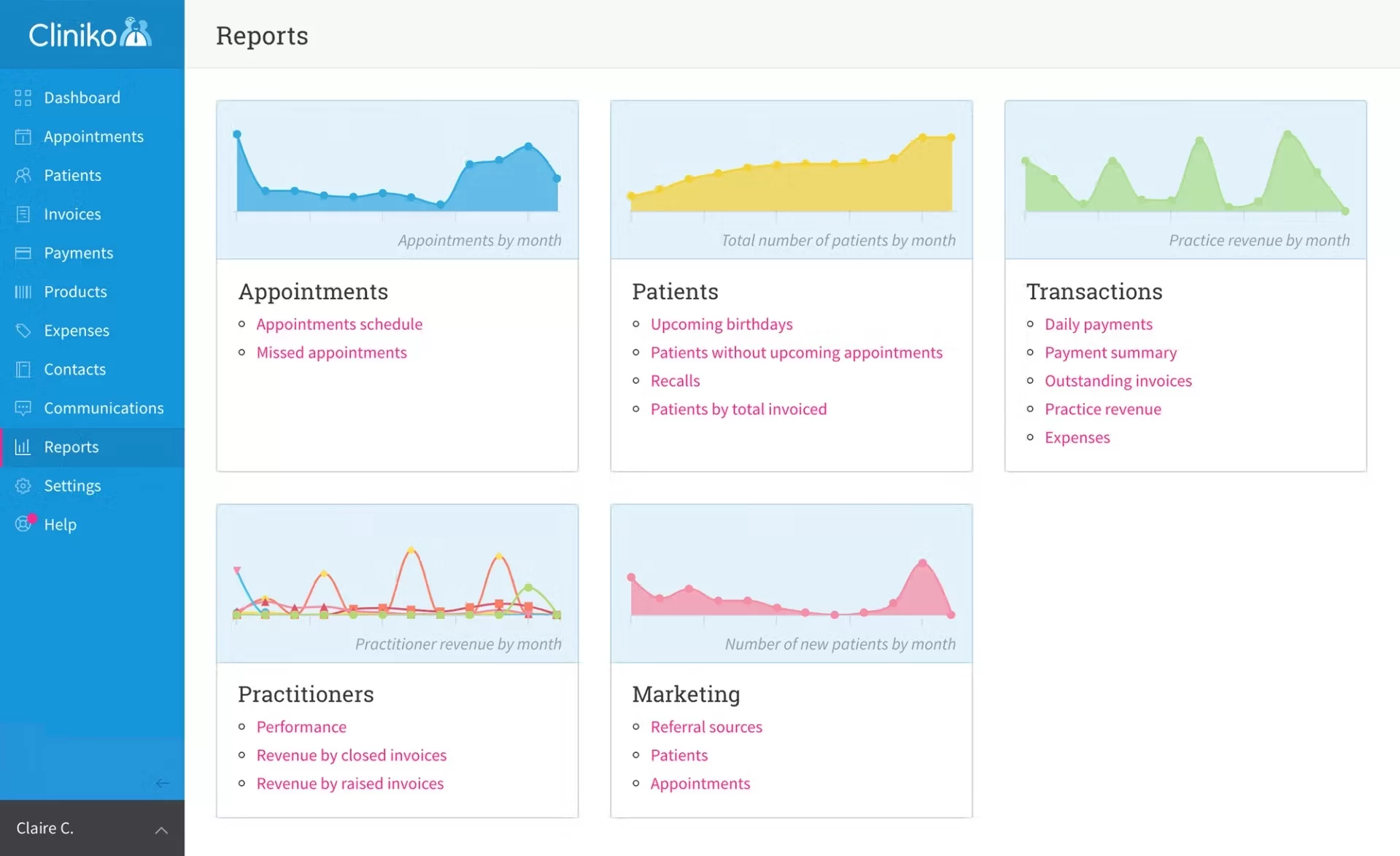
Zanda has built meaningful differentiation through AI-powered session transcription and Google Calendar sync, two features that address real friction points for practitioners. According to Capterra reviewers, where the platform holds a 4.6/5 rating, the diary management tools and client communication features receive consistent praise. Australian practices particularly benefit from the Medicare/DVA billing integration, which removes a significant manual step in claim submission.
Review platform data for both products comes from Capterra (Cliniko: 4.7/5) and Capterra (Zanda: 4.6/5). Neither platform has a significant public profile on G2 or Trustpilot at the time of writing.
Cliniko reviewers consistently highlight the user-friendly interface and responsive support team. Critical reviews cluster around missing features: the inability to view cancelled appointments clearly in the diary and the PDF email attachment limitation come up repeatedly. According to Capterra, users describe Cliniko as mature and reliable, with good treatment note workflows that have improved incrementally over time.
Zanda reviewers on Capterra praise the diary management tools and client communication features, particularly the 2-way SMS functionality. The AI session transcription is a newer addition and feedback on it is still accumulating. Some reviewers note that the interface feels less modern than newer entrants to the market. Australian practices tend to give higher scores, largely because the Medicare/DVA integration adds substantial workflow value that non-Australian users simply don’t experience.
The cliniko vs power diary decision maps fairly cleanly to practice type and geography. Neither platform is universally better; each has a defined sweet spot.
Choose Cliniko if you run a small to mid-sized allied health practice in the UK, Australia, or another English-speaking market, and your priority is a clean, reliable interface with strong treatment note templates and straightforward online booking. It suits physiotherapists, osteopaths, and speech therapists who want a system that works well without extensive configuration. Physical therapy practices frequently land on Cliniko for its note-taking reliability alone.
Choose Zanda (Power Diary) if you are an Australian allied health practice that needs Medicare/DVA billing integration, or if Google Calendar sync is a genuine workflow requirement for your practitioners. The AI session transcription is worth evaluating if note-writing time is a real bottleneck. It is also worth considering for occupational therapy practices in Australia where the billing integrations add direct value.
Consider neither if your practice is growing beyond a handful of practitioners, operates across multiple locations, or needs automation depth beyond basic reminders. Both platforms show their limits at scale. If your clinic leans aesthetic, our Boulevard vs Mangomint comparison weighs two spa-focused options the same way.
Practices that have outgrown Cliniko or Power Diary typically share a common profile: they’ve added practitioners, opened a second location, or started offering a broader range of services that don’t fit neatly into an allied health-only platform. The Pabau vs Cliniko comparison and the Pabau vs Zanda comparison both reveal the same pattern: Pabau serves a different level of operational complexity.
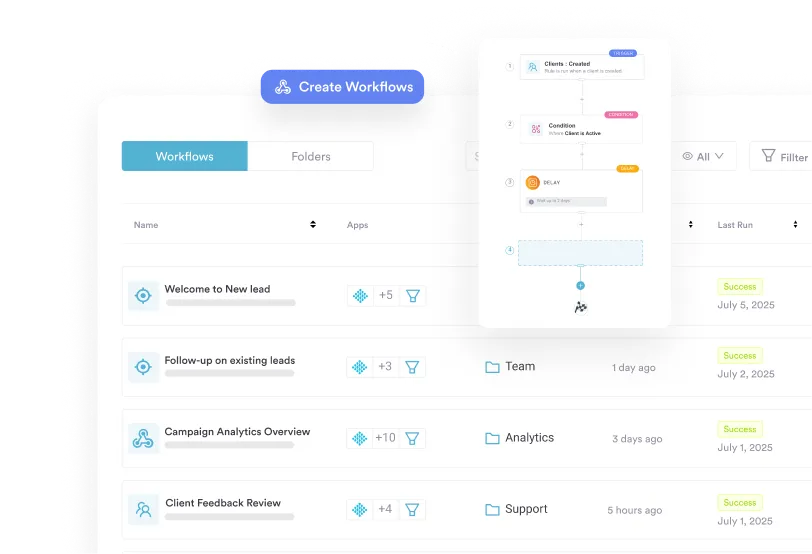
Pabau supports aesthetic, wellness, medical, allied health, and multi-specialty practices with a unified platform covering scheduling, clinical documentation, billing, telehealth, marketing automation, and reporting. Unlike Cliniko and Zanda, Pabau includes automated workflows that extend beyond appointment reminders into recall campaigns, consent form triggers, and post-care communications.
According to Capterra reviewers, Pabau holds a 4.7/5 rating based on over 600 verified reviews. Positive themes include the comprehensive all-in-one platform structure and strong onboarding support. Reviewers note a learning curve relative to simpler tools, which reflects the platform’s greater feature depth.
“We outgrew Cliniko. It’s great for simple clinics, but we needed a more complete system with automation, marketing, and better reporting all in one place.”
Run a feature gap audit before switching platforms. List every workflow your team relies on daily: note templates, billing steps, patient communications, and reporting. Map each item to the target platform before committing. Migration is disruptive once and avoidable if done right.
Both Cliniko and Zanda (Power Diary) are solid choices for small allied health practices, but neither was built to scale across disciplines, multiple locations, or complex clinical workflows. The cliniko vs power diary comparison ultimately comes down to geography and feature priorities: Cliniko for global usability with clean treatment notes, Zanda for Australian practices needing Medicare/DVA billing.
For practices ready to move beyond those constraints, Pabau’s automated workflow engine and multi-industry clinical platform offer a materially different level of operational control. Book a demo to see how Pabau handles the workflows your current system no longer supports.

Evaluating Cliniko specifically against Pabau? Pabau vs Cliniko covers the feature-by-feature comparison in detail, including onboarding and migration support.
Need a deeper look at Zanda alternatives? Pabau vs Zanda breaks down the specific workflow and compliance differences for UK and international practices.
Running a physiotherapy or physical therapy practice? Physical therapy practice management software covers the documentation, scheduling, and billing requirements specific to musculoskeletal and rehab clinics.
Choosing between Boulevard and Mangomint? Boulevard vs Mangomint comparison compares Boulevard’s enterprise salon focus against Mangomint’s clean setup for independent operators.
Cliniko is generally preferred for its cleaner interface and stronger treatment note templates across a wider range of geographies. Power Diary (Zanda) edges ahead for Australian practices specifically because of Medicare/DVA billing integration and Google Calendar sync. Neither platform is universally better; the decision depends on your location, team size, and billing requirements.
Power Diary rebranded as Zanda in November 2024. The platform added AI-powered session transcription and refined its telehealth and client communication tools under the new name. Cliniko remains a separate, independent product. Both serve allied health practices but target slightly different markets: Cliniko has a stronger global footprint, while Zanda is more deeply integrated into the Australian health system.
Yes. Zanda includes telehealth video consultations as part of its core platform. Appointments are linked to video sessions accessible through the browser, and consultation notes can be recorded within the same appointment workflow. Cliniko also includes native telehealth functionality.
Both platforms use per-practitioner pricing models and are considered competitive for small allied health practices. Pricing changes regularly on both platforms. Always verify current rates directly on cliniko.com and zandahealth.com. For practices with five or more practitioners, it is worth requesting a full cost breakdown from each vendor including any additional fees for SMS, telehealth, or premium features.
Cliniko is a strong starting point for small allied health practices outside Australia because of its ease of use and treatment note quality. Zanda suits Australian practices needing Medicare/DVA billing. Pabau is the better fit for practices planning to grow, diversify their service offering, or manage multiple locations, offering broader automation and clinical workflow depth alongside allied health functionality.