







Barlow and Ortolani test: Technique, interpretation, and referral

Missed developmental dysplasia of the hip (DDH) is one of the most litigated conditions in pediatric primary care. The Barlow and Ortolani test is the frontline screen used to catch it. Most cases are detectable at birth with a careful physical examination. However, clinical audit data consistently shows that examination technique varies widely between practitioners. […]
Noble compression test: How to perform and interpret results
Most lateral knee pain in runners gets blamed on the IT band. The Noble compression test helps confirm whether iliotibial band syndrome is the real cause. The challenge is proving it. The noble compression test, also known as Noble’s test, is a quick, hands-on tool clinicians use during a physical exam. It provokes the characteristic […]
CPT Code 97039: Unlisted modality, constant attendance billing guide

CPT Code 97039 is an unlisted physical medicine modality code, billed when a therapeutic modality requires constant provider attendance but has no dedicated CPT code of its own. The official descriptor requires specifying the modality type and the time in attendance, and most claim denials trace back to one of those two elements missing from […]
Gaenslen’s test: How to perform and interpret it

Most guides to Gaenslen’s test stop at the description: flex one hip, extend the other, and watch for pain. That leaves the harder questions unanswered. So what actually counts as a positive result? Why does the test throw so many false positives, and where does it belong in a sacroiliac joint (SIJ) workup? This guide […]
Phalen’s test: How to perform, interpret, and apply it clinically

How to perform Phalen’s test, interpret positive and negative results, and confirm carpal tunnel with nerve conduction studies.
Anterior pelvic tilt: Causes, symptoms, and how to fix it
Anterior pelvic tilt is often harmless. Learn the real causes, symptoms, and the stretch-and-strengthen routine that actually corrects it.
HCPCS Code L2820: Soft interface for lower extremity orthosis

L2820 is one of the most-searched orthotic “CPT codes” that isn’t a CPT code at all. It’s an HCPCS Level II add-on code, and that single distinction shapes how you bill it. According to the Centers for Medicare and Medicaid Services, or CMS, HCPCS Level II L-codes govern every orthotic addition billed to Medicare. As […]
Duck Walk Test
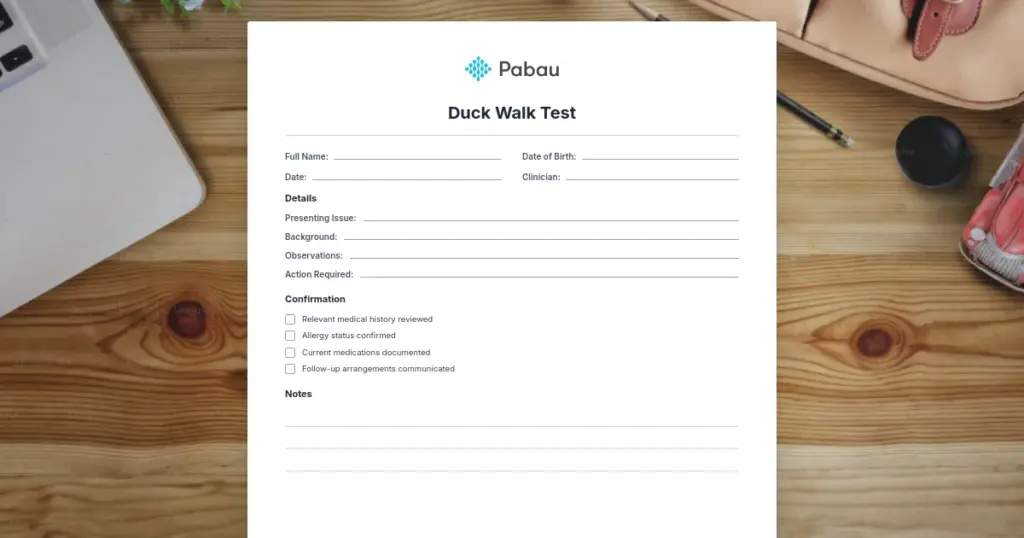
Download your free duck walk test Duck walk test A ready-to-use assessment form documenting patient positioning, test procedure, positive signs (joint line pain, clicking, inability to complete squat), clinical findings, and referral recommendations for meniscal pathology screening. Download template The duck walk test, also called the Childress test or Childress sign, is a clinical assessment […]
Body pain chart: Tracking template
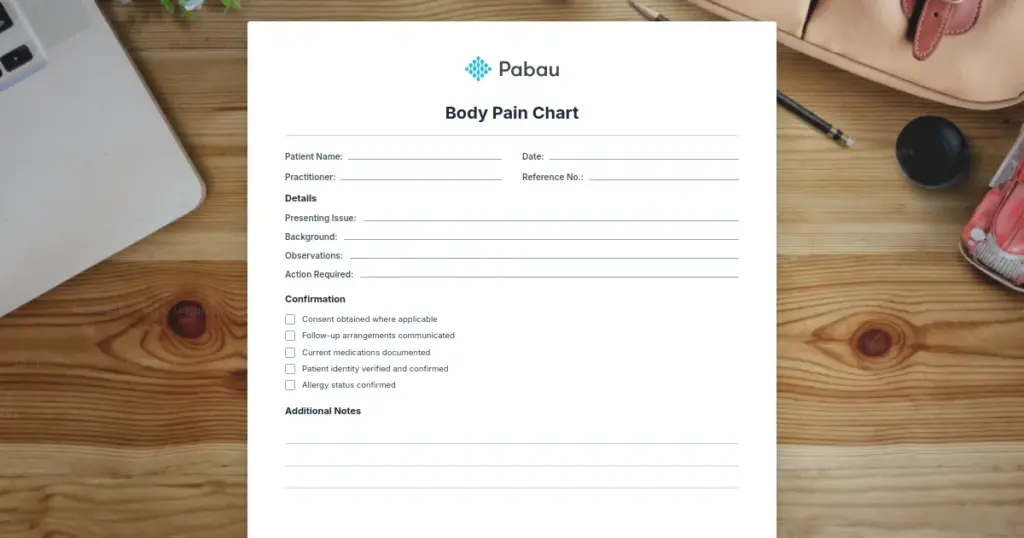
Download your free body pain chart Body Pain Chart A ready-to-use diagram tool featuring front and back body silhouettes with pain marking zones, a severity rating scale (0-10), a pain-sensation checklist, and fields for treatment notes. Suitable for physiotherapy, chiropractic, osteopathy, MSK practices, sports medicine, and pain management practices. Download template A body pain chart […]
Craniocervical flexion test: Protocol, scoring and free form
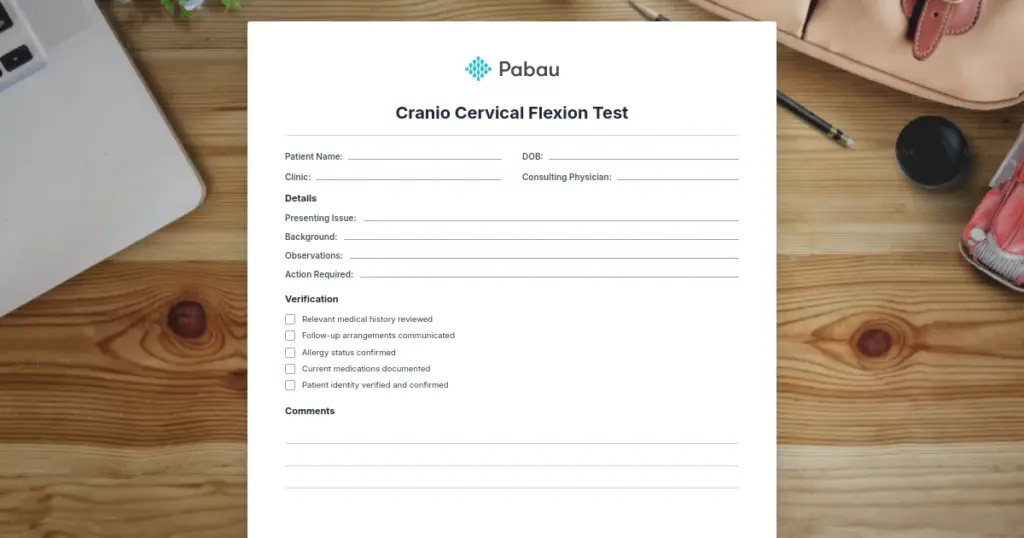
Download your free craniocervical flexion test A standardized assessment form capturing patient positioning, pressure biofeedback inflation, five-stage progression data, hold durations, activation scores, performance indices, and clinical interpretation guidance for deep cervical flexor evaluation. Download template The craniocervical flexion test (CCFT) is a clinical assessment used by physiotherapists. Unlike broader cervical range-of-motion tests, the CCFT […]