HCPCS code L0623: Sacroiliac orthosis billing guide
What is HCPCS code L0623? HCPCS code L0623 is the Level II code for a sacroiliac...

Last Updated: Oct 13, 2026

Anterior pelvic tilt occurs when the pelvis rotates forward, exaggerating the lumbar curve – a common postural pattern driven by tight hip flexors and weak glutes
Many people have anterior pelvic tilt without any pain or symptoms; the direct link to lower back pain is weaker than social media suggests
Correcting anterior pelvic tilt requires a two-pronged approach: stretching the overactive muscles (hip flexors, quads) and strengthening the underactive ones (glutes, core, hamstrings)
Persistent pain, worsening symptoms, or no improvement after 4-6 weeks of self-managed exercise are clear signals to see a physical therapist
A 2011 study by physical therapist Lee Herrington, published in Manual Therapy, found that 85% of men and 75% of women show some degree of anterior pelvic tilt. Specifically, that figure comes from a normal, symptom-free population. So why has “fixing APT” become such a hot topic on social media? And what does the clinical evidence actually say?
This guide covers the anatomy, the causes, and what the research says about pain. In addition, it covers a practical corrective exercise approach for anyone using physical therapy EMR software to track patient progress.
Anterior pelvic tilt is a postural deviation where the front of the pelvis drops downward while the back of the pelvis rises. As a result, the lumbar spine develops an exaggerated inward curve, a condition clinically known as hyperlordosis.
When you look at someone with pronounced anterior pelvic tilt from the side, the lower back arches noticeably. Specifically, the abdomen protrudes forward and the buttocks appear more prominent. You may also see it called a forward pelvic tilt, a forward tilted pelvis, or simply a tilted pelvis.
Clinically, some sources define APT as a forward pelvic rotation exceeding approximately 10 degrees, though exact thresholds vary across studies. In practice, what matters more is whether the deviation is causing functional problems, not the precise degree.
However, according to the Cleveland Clinic, pelvic tilt is when your pelvis tips further forward or backward than it should relative to the spine and legs.
Understanding anterior pelvic tilt is easier when you contrast it directly with its opposite. By contrast, posterior pelvic tilt (PPT) occurs when the front of the pelvis rises and the back drops, flattening the lumbar curve rather than exaggerating it.
Anterior pelvic tilt is fundamentally a muscle imbalance problem. Some muscles become shortened and overactive, pulling the pelvis forward. Meanwhile, others become lengthened and underactive, failing to resist that pull. Because prolonged sitting is the most common driver, it helps explain why APT has become so prevalent in desk-based workers.
This muscle-imbalance pattern is what physical therapist Vladimir Janda termed lower-crossed syndrome. The National Academy of Sports Medicine (NASM) describes the same pattern in its own guidance on pelvic tilt. In particular, NASM points to tight hip flexors pulling against weak glutes and abdominals.
Understanding which muscles are involved is the first step toward meaningful correction. In practice, recognizing this pattern in patients connects directly to broader physiotherapy compliance requirements around musculoskeletal documentation for practitioners.
Symptoms of anterior pelvic tilt range from purely visual posture changes to genuine physical discomfort. However, many people display significant anterior pelvic tilt with no symptoms at all.
A 2014 systematic review and meta-analysis by Laird et al. was published in BMC Musculoskeletal Disorders. It compared pelvic posture and movement in people with and without low back pain. However, the researchers found no consistent pattern linking pelvic tilt angle to the presence or severity of pain.
The visual cues above are often what drives people to search for a fix. However, posture appearance alone is not a reliable indicator of pain risk. Many people with textbook “perfect” posture experience back pain, while others with pronounced APT remain symptom-free throughout their lives.
This is where clinical reality diverges sharply from social media advice. The evidence linking anterior pelvic tilt directly to lower back pain is genuinely mixed. Orlando Orthopaedic Center notes that some people naturally carry more pelvic tilt than others and live pain-free. Specifically, the center adds that the evidence for a direct APT-to-pain causal chain is limited.
A mild anterior pelvic tilt is extremely common and, on its own, is usually nothing to worry about. That does not mean APT is irrelevant, however. It may contribute to lower back discomfort in some individuals. Specifically, this applies to those with concurrent muscle weakness or who spend extended periods in loaded postures.
The key distinction is between APT as an isolated postural finding, which is often benign. By contrast, APT can be one component of a broader musculoskeletal picture that includes pain, movement limitation, and functional impairment.
A clinician seeing patients for low back pain should assess pelvic alignment as one data point within a comprehensive evaluation. Instead, APT correction should not be treated as an automatic fix for pain. This nuanced view is increasingly reflected in contemporary musculoskeletal physical therapy guidelines.
Corrective exercises for anterior pelvic tilt follow a consistent two-pronged approach: stretch the overactive, shortened muscles and strengthen the underactive, lengthened ones. If you are wondering how to correct anterior pelvic tilt without guesswork, this is the recommended framework. Specifically, NASM, the American Physical Therapy Association (APTA), and most sports medicine practitioners all support this approach.
Consistency matters more than intensity. Most practitioners recommend performing these exercises 4-5 days per week. Noticeable postural changes typically take 6-12 weeks of consistent effort; however, this varies significantly by individual. Never push into sharp pain during any of the movements below.
Use this as a map before you start. Every movement below targets one side of the imbalance, so you know exactly why each exercise is on the list.
In practice, these target the hip flexors, quads, and lumbar extensors that pull the pelvis into forward rotation.
These target the glutes, core, and hamstrings that need to resist the pelvis tipping forward. In addition, use measurements tracking within patient records to monitor progress over time if you are managing this clinically.
Track starting measurements before beginning a corrective program. Note hip flexor tightness (the Thomas test gives a practical baseline), lumbar curve assessment, and any pain scores. Reassess at 4, 8, and 12 weeks. Without a baseline, patients cannot see their progress and are far more likely to abandon the program.
Exercises only occupy a few minutes a day. By contrast, the positions you hold for the other 16 waking hours do more to reinforce or unwind the tilt. The same goes for the eight hours you spend asleep. Prolonged sitting is the single biggest driver, so adjusting how you sit and sleep gives the corrective work something to build on.
Sitting: Set your chair so your hips sit slightly higher than your knees. Also, keep your back against the chair rather than perched on the edge. Next, stand up to reset roughly every 30 to 45 minutes. A brief standing hip-flexor stretch between patients or meetings stops the iliopsoas re-shortening across a long day at a desk.
Sleeping: People often search for the best anterior pelvic tilt sleeping position. Honestly, no single position corrects the tilt overnight. However, some positions do reduce the strain on an already-arched lower back.
Sleeping on your side with a pillow between the knees keeps the pelvis neutral. If you sleep on your back, a pillow under the knees softens the lumbar arch. Front-sleeping tends to push the pelvis further into forward rotation, so it’s the one position worth avoiding.
A simple anterior pelvic tilt test at home is possible and useful, though it should not replace a professional evaluation. Three practical checks are widely used. For example, practices conducting initial musculoskeletal assessments can use digital intake forms to capture patient-reported posture history and symptoms before the first appointment.

Wall-stand test: Stand with your heels, buttocks, and upper back against a wall. Next, your head should also touch the wall with your chin roughly level.
Next, slide your hand between the wall and your lower back. If you can fit more than the width of your hand through the gap, significant lumbar curvature is present. However, this is a rough screening tool, not a clinical measurement.
Belt or waistband check: Look at yourself side-on in a mirror. If the front of your belt or waistband sits noticeably lower than the back, the pelvis is rotating forward. In practice, it is the fastest visual screen and the one most clinicians use as a first glance.
Thomas test (clinical assessment): Lie on the edge of a treatment table and pull both knees to your chest. Next, lower one leg while keeping the other held in.
If the lowered thigh does not stay flat, meaning it rises toward the ceiling, the hip flexors on that side are likely shortened. In practice, this is a clinician-administered test and gives much more reliable information than the wall-stand method. Standardized grading like this is common across specialties — aesthetic clinicians, for instance, stage capsular contracture with the Baker scale.
Self-managed exercise is an appropriate starting point for most people with anterior pelvic tilt and no significant pain. However, for patients with persistent symptoms or complex presentations, physical therapy offers a structured, individualized approach that generic internet exercise routines simply cannot replicate.
A physical therapist treating APT follows a structured process that a generic online routine cannot replicate:
Practices specializing in musculoskeletal physical therapy increasingly rely on software to manage the administrative side of this work. Practice management software like Pabau brings that side together in one system, so the clinical record and the schedule are not living in separate tools.
Pabau’s client records give practitioners a structured place to document assessment findings, exercise prescriptions, and progress across appointments. In addition, the pelvic health software includes treatment note templates built around musculoskeletal workflows.
That makes it easier to maintain consistent documentation across a multi-practitioner team. For practices considering setting up a musculoskeletal-focused operation, the guide on physical therapy clinic setup covers the operational requirements in detail.
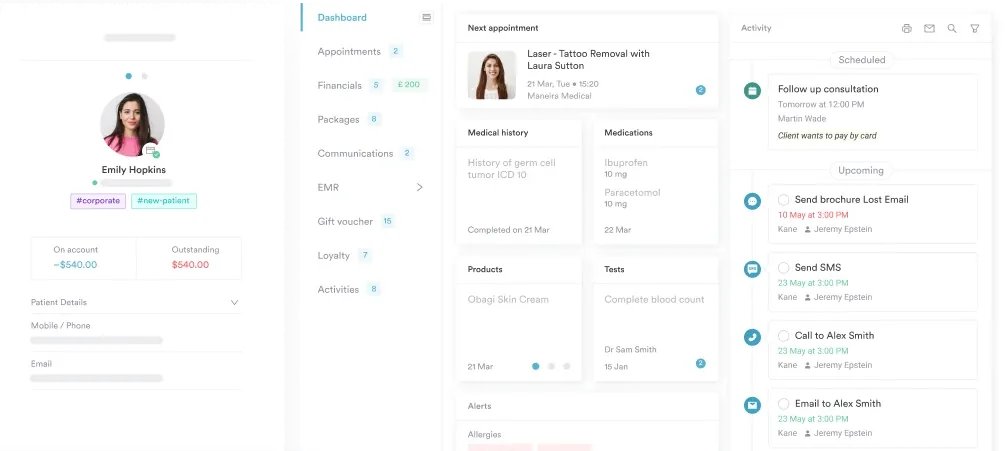
The physiotherapy clinic management software landscape has evolved significantly. Practices that once tracked treatment on paper are moving toward digital records that let them track outcomes across patient cohorts. This is particularly valuable for conditions like APT, where improvement is gradual.
In addition, Pabau offers automated workflows that can trigger appointment reminders and post-session follow-ups automatically, reducing the administrative burden on clinical staff.
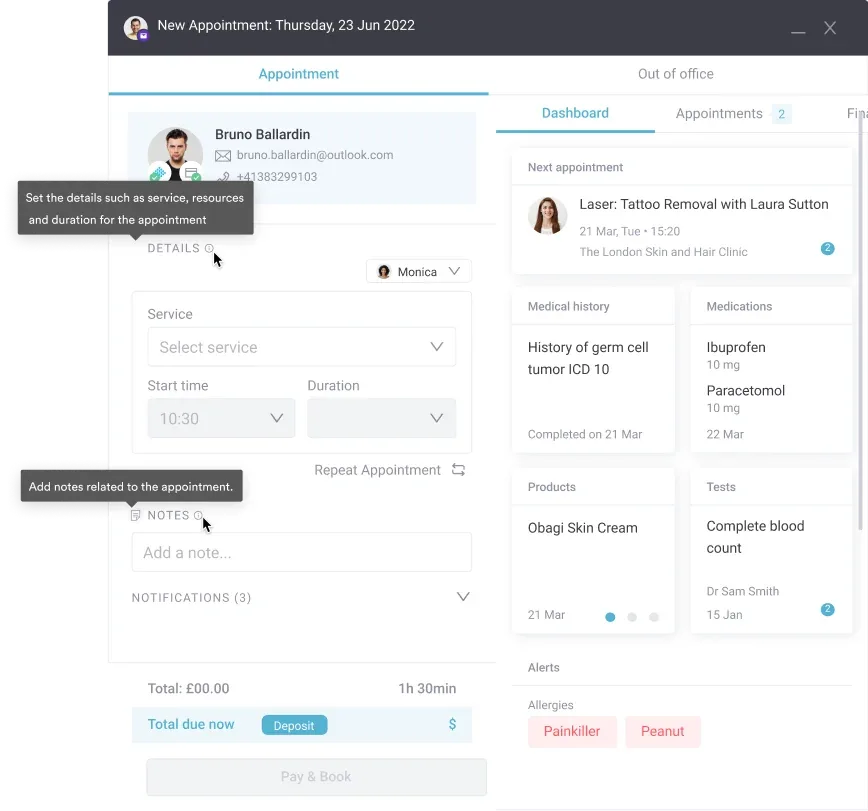
Because correcting anterior pelvic tilt takes several weeks, a regular cadence of reassessment appointments is what sustains progress. As a result, reliable scheduling and reminders help ensure those follow-up sessions actually happen. Otherwise, they can slip between the early posture gains and the plateau that often follows.

Pabau gives you structured patient records, assessment templates, and automated follow-ups built around clinical workflows. See how it works for your practice.

Most cases of anterior pelvic tilt can be managed through consistent self-directed exercise. However, some presentations warrant professional assessment. According to NHS guidance on back pain, you should see a doctor if the pain hasn’t improved after a few weeks of home treatment.
A physical therapist or orthopedic specialist can first rule out underlying causes. These range from nerve involvement to a broader joint disorder such as M25.9. Next, they confirm whether APT is genuinely the primary driver of symptoms. Finally, they design a rehabilitation program appropriate to your specific anatomy.
Asymmetric limb movement or unsteadiness can point to a neurological cause rather than a postural one. A clinician may run the finger-to-nose coordination test at that stage to check cerebellar control before starting rehabilitation.
Self-diagnosing from a TikTok video and applying a generic exercise protocol can mean treating the wrong problem entirely. Instead, effective patient care management starts with an accurate assessment, not an assumed diagnosis.
Anterior pelvic tilt is common, widely discussed, and often misunderstood. The clinical picture is more nuanced than most posture advice suggests: APT is often asymptomatic. In addition, correcting posture alone won’t automatically resolve pain. Instead, what helps is addressing the underlying muscle imbalances. That means consistent stretching of tight hip flexors and progressive strengthening of the glutes and core.
For practitioners managing musculoskeletal conditions like this, the quality of patient documentation matters as much as the quality of the exercise prescription. In practice, Pabau’s personalized treatment plan tools give physical therapy and MSK practices the infrastructure to deliver consistent, trackable care.
If persistent pain is involved, professional assessment through a qualified physical therapist or orthopedic clinician is the right next step. Finally, you can book a demo to see how Pabau supports musculoskeletal practice workflows end to end.

Managing a physical therapy or MSK practice? Physical therapy EMR software covers the specific record-keeping and compliance requirements for physical therapy practices.
Need to document patient progress systematically? Measurements tracking software lets practitioners log and compare clinical measurements across appointments.
Need a quick test for tight hip flexors? Ely’s test answers in about 90 seconds whether the rectus femoris muscle is tight.
Anterior pelvic tilt is a postural deviation where the front of the pelvis rotates downward and the back rises, exaggerating the inward curve of the lower back (hyperlordosis). It is caused primarily by tight hip flexors and weak gluteal and abdominal muscles, and is one of the most common postural patterns seen in sedentary adults.
The evidence is mixed. Anterior pelvic tilt may contribute to lower back discomfort in some individuals, but research has not established a direct causal link between the degree of pelvic tilt and the presence or severity of back pain. Many people have significant APT with no pain at all.
Most people see noticeable postural improvement within 6-12 weeks of consistent daily exercise, though this varies significantly based on the severity of the muscle imbalances, exercise consistency, and whether professional guidance is involved. Significant long-standing APT may take 3-6 months to meaningfully correct.
Yes, in many cases. Self-directed exercise combining hip flexor stretches and glute and core strengthening resolves APT for a significant proportion of people. Professional help is warranted when there is persistent pain, worsening symptoms, or no improvement after 4-6 weeks of consistent self-managed exercise.
The simplest self-test is the wall-stand method: stand with your heels, buttocks, and upper back against a wall and slide your hand behind your lower back. A gap larger than one hand width suggests significant lumbar curvature. For a more reliable assessment, the Thomas test administered by a clinician is preferred.
The underactive muscles are usually the gluteus maximus, the deep abdominal muscles (particularly the transverse abdominis), and the hamstrings. Because they cannot counter the forward pull of tight hip flexors, an effective corrective program pairs hip flexor stretches with glute and core strengthening.