Zenoti vs Vagaro: 2026 Comparison, Costs & Feature Breakdown
Compare Zenoti and Vagaro in 2026 - features, pricing, pros & cons. Find which p...

March 27, 2026


Buy now, pay later is now available in Pabau

Zenoti is best for large, multi-location businesses that need enterprise analytics and AI automation.
Vagaro is best for solo providers and small to mid-size beauty and wellness teams on a budget.
Pabau is best for medical and aesthetic clinics that need clinical records, compliance, and growth tools in one platform.
Zenoti and Vagaro focus on scheduling and operations. Pabau goes further with built-in clinical workflows.
So, you’re comparing Zenoti vs Vagaro.
They often end up on the same shortlist, even though they’re not built the same way. Zenoti is enterprise software for large, multi-location businesses. Vagaro is straightforward scheduling for smaller teams.
Below, we compare them on pricing, features, support, records, and reporting. We also look at Pabau for practices that need more clinical depth than either one offers.
| Zenoti | Vagaro | Pabau | |
|---|---|---|---|
| Best For | Large, multi-location chains and enterprise med spas | Solo providers, small to mid-size beauty businesses | Medical and aesthetic clinics scaling beyond basic booking |
| Stand-Out Feature | AI-powered tools & reputation management across 200+ platforms | Affordable per-calendar pricing with marketplace visibility | End-to-end patient journey with built-in EMR |
| Price (2026) | Custom quote | From $23.99/month | From $69/user/month ($62 billed annually) |
| Pros | Deep analytics, AI automations, scales for enterprise | Low entry cost, no contracts, easy setup | Clinical records, full patient journey automation, scalable platform |
| Cons | Steep learning curve, many paid add-ons | Add-on costs increase over time, limited clinical depth | Longer onboarding, not suited to booking-only setups |
| Customer Support | 24/7 support, dedicated onboarding team | Phone, email, chat, free training | 21-hour assisted support, video, structured onboarding |
| Clinical Records | HIPAA-compliant charting and photo management | Custom forms and SOAP notes | Full EMR, audit trails, consent, treatment notes |
| Reporting | AI-powered analytics with granular breakdowns | Sales, staff, and client reporting | 50+ pre-built reports, real-time dashboards, multi-location |
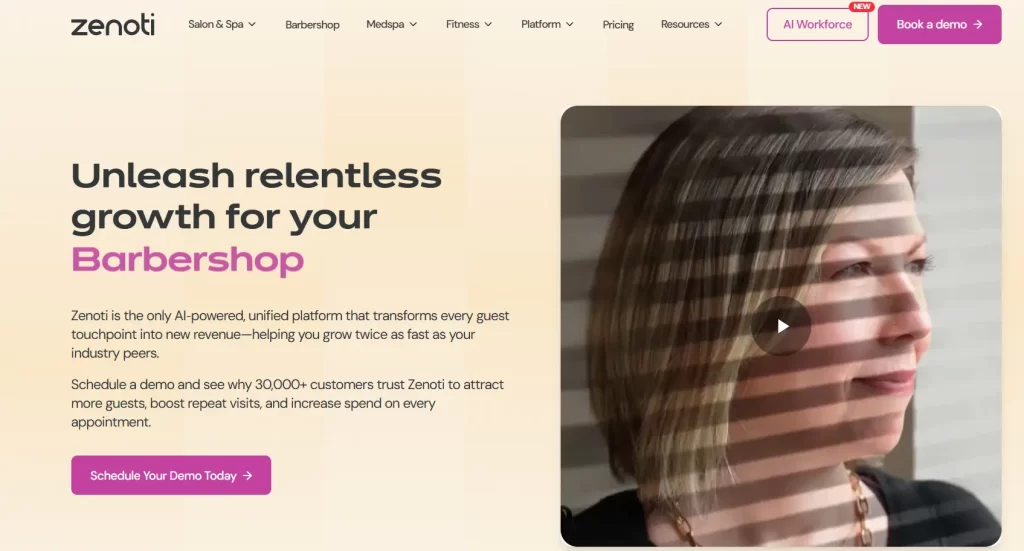
Zenoti is best for multi-location med spas, franchise brands, and large salon chains. It powers over 30,000 businesses in 50+ countries and is built for scale.
The platform is heavy on analytics, AI-driven marketing, and centralized control across locations.
That said, smaller practices often find the pricing and complexity hard to justify. Onboarding runs 4 to 6 weeks, and the learning curve takes real-time investment.
See how Pabau compares to Zenoti.
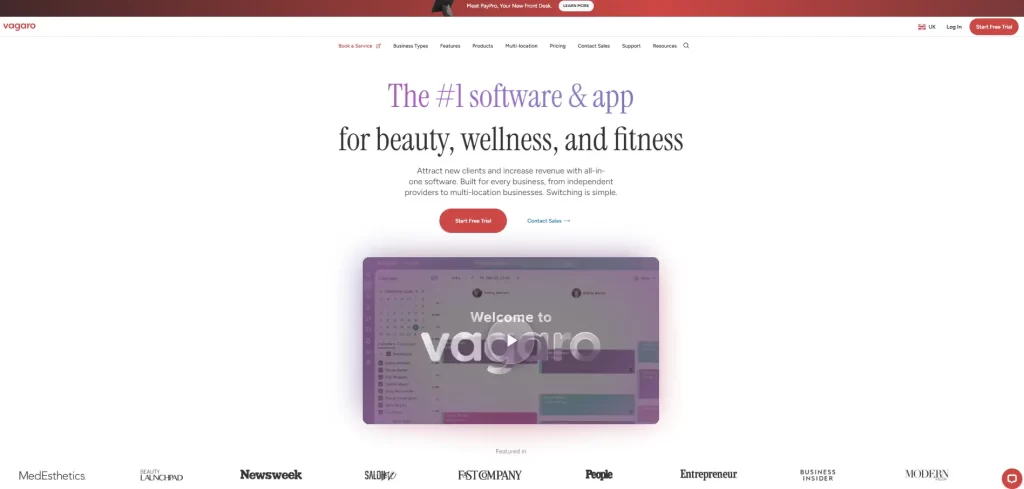
Vagaro is best for solo providers and small to mid-size beauty, wellness, and fitness businesses.
It covers scheduling, built-in payments, and marketplace visibility without locking you into a long-term contract. As salon software, it handles the basics well. And a 30-day free trial makes it easy to try before you commit.
Where it falls short is clinical depth. If your practice offers regulated treatments or needs structured medical records, you’ll likely outgrow Vagaro pretty quickly.
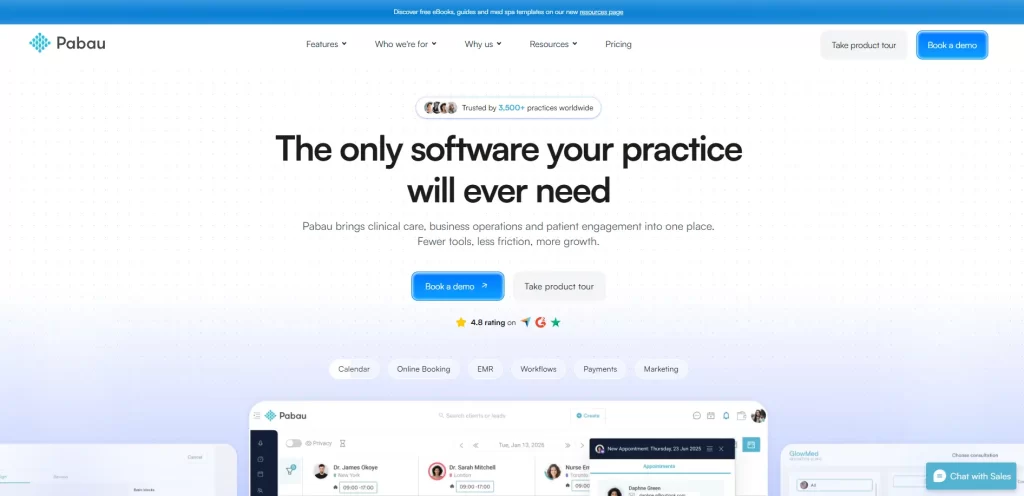
If you need more clinical depth than Zenoti or Vagaro offer, Pabau is worth a look. It’s an all-in-one platform that connects scheduling, payments, records, and marketing in one system. It also includes:
Book a demo to see how Pabau compares to Zenoti and Vagaro.
Pricing is one of the clearest differentiators between Zenoti and Vagaro. One uses custom quotes. The other offers transparent pricing with published per-calendar rates.
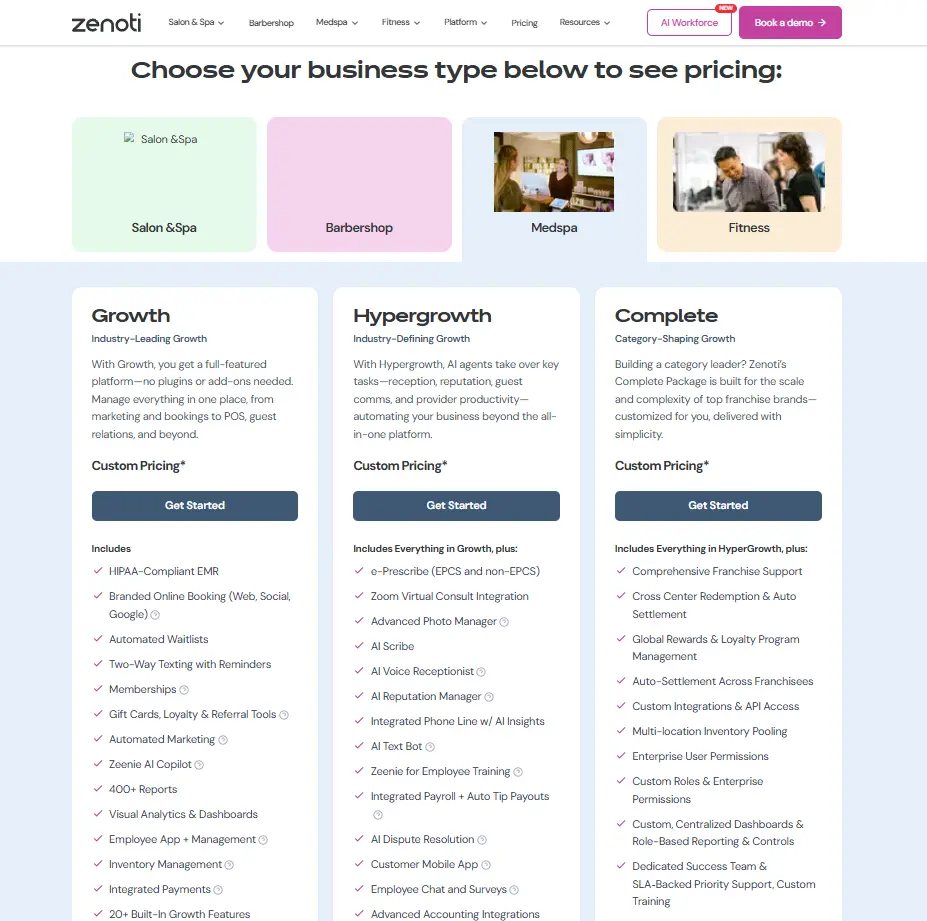
Zenoti doesn’t publish pricing on its website. Plans are custom-quoted based on business size, number of locations, and feature needs.
For med spas, there are three tiers:
Zenoti typically requires a 12-month contract. Make sure to clarify cancellation terms and add-on costs before signing.
For a full breakdown, read our Zenoti pricing guide.
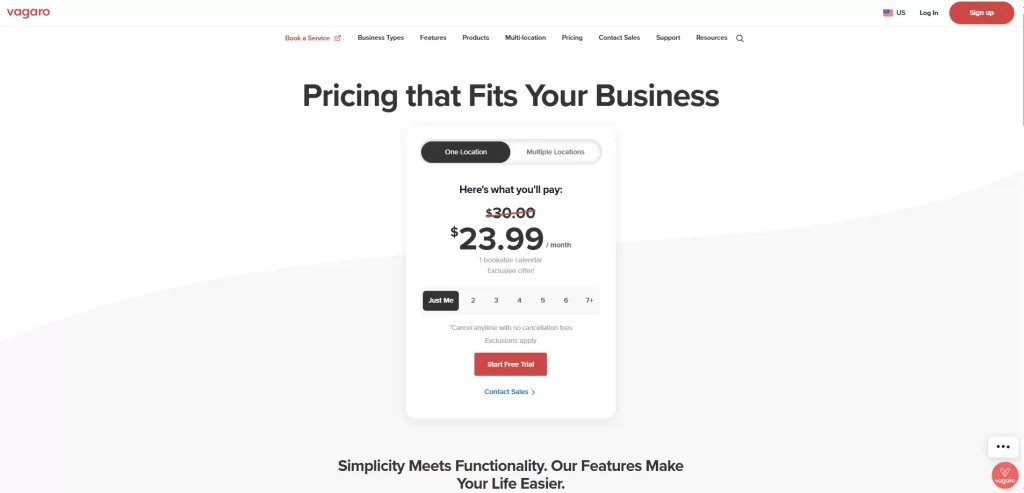
Vagaro prices plans by the number of bookable calendars:
Premium features like text marketing, custom forms, website builder, and cloud storage are paid add-ons. So the real monthly cost is usually higher than the starting price.
Want the details? See our Vagaro pricing guide.
Pabau uses per-user subscription pricing, starting from $72/user/month ($65 billed annually). Core clinical and operational tools come included as standard.
There’s no marketplace commission and no per-location surcharges for core functionality. For clinics that want everything in one system, this keeps pricing predictable.
Check out the pricing details on Pabau’s pricing page.
| Platform | Starting Price (2026) | Pricing Model | What’s Included |
|---|---|---|---|
| Zenoti | Custom quote (~$225–$400/mo) | Per-location basis | Full feature set, AI marketing, and multi-location enterprise tools |
| Vagaro | From $30/month | Per bookable calendar | Core booking, payments, and marketplace listing; forms & SOAP extra |
| Pabau | From $59/month | Per user / per tier | Complete EMR, Echo AI notes, consent forms, and patient journey automation |
The best system isn’t the one with the most features. It’s the one your team can use confidently every day.
A strong client experience starts with software that doesn’t slow your front desk down. This is the difference between Vagaro vs Zenoti.
Vagaro is quicker to adopt. Zenoti offers more operational depth but requires more time to implement.
Pabau requires a structured setup because clinical workflows are built in. Once live, teams handle appointment scheduling, client management, records, forms, and follow-ups in one system. That alone cuts down admin workload significantly.
The Pabau GO app gives practitioners mobile access to schedules, notes, and records. They can update everything between appointments without heading back to the front desk.
Customer service quality affects onboarding speed, daily confidence, and how quickly issues get resolved. Reliable client communication from your vendor matters just as much as the features.
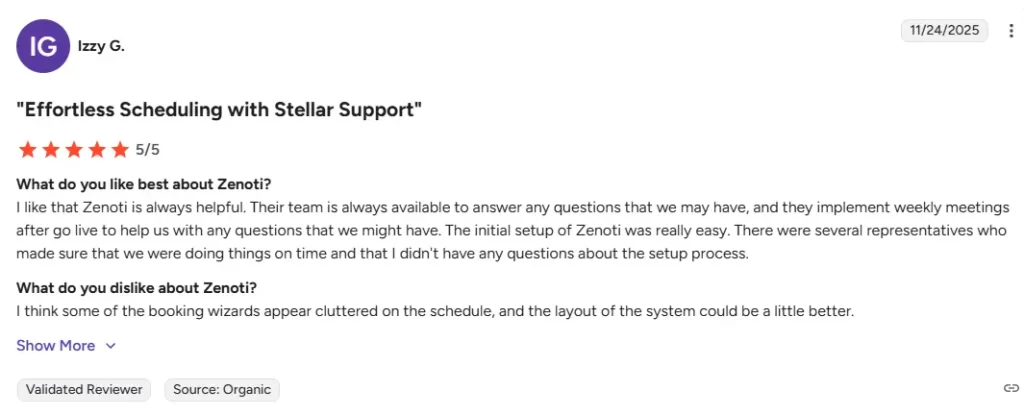
Ask about support tiers during the sales process. Some users report that chat-only support can be slow for urgent issues, especially on lower plans.
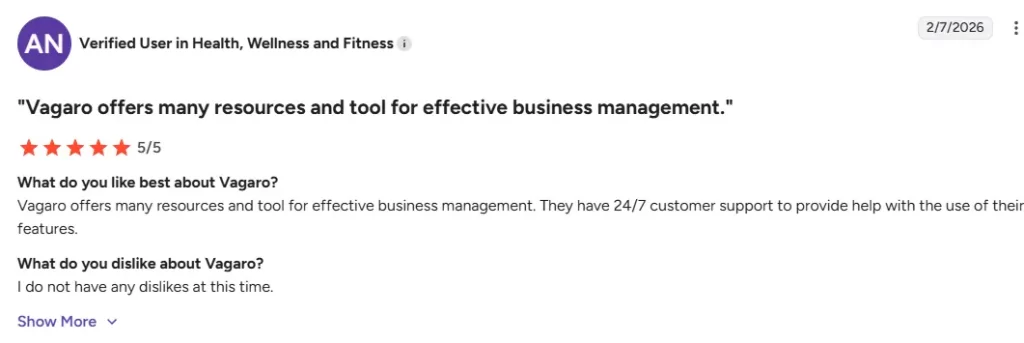
Zenoti and Vagaro focus support around setup and platform navigation. Pabau takes a more hands-on approach designed around clinic operations, patient engagement, and long-term adoption:
Integrations reduce manual data entry by syncing your practice management system with the rest of your tech stack. Here’s where Zenoti versus Vagaro stand.
Zenoti offers a broader integration library than most competitors. Open API access supports custom configurations for larger and multi-location brands.
Zenoti and Vagaro center integrations around business operations. Pabau extends this into medical workflows and regulated treatments:
For a complete view, see the Pabau integrations page.
This is where the gap between Zenoti, Vagaro, and Pabau becomes most obvious. Client records go beyond contact details. They define how safely and consistently you deliver care.
Pabau stands out for medical-grade client records built for aesthetic and healthcare clinics:
For clinics that need more than basic CRM tools, Pabau’s EMR-style records make it the stronger option.
Clear reporting turns activity into strategy. Both Zenoti and Vagaro provide performance visibility, but they focus on different metrics and levels of depth.
When reporting needs to guide clinical and business decisions, Pabau brings everything into one view. Its analytics combine clinical, operational, and financial data in a single dashboard:
Pabau uses dynamic reporting. Data updates in real time and can be filtered without exporting or rebuilding reports.

Need help with medical spa inventory management? Explore the best med spa inventory management software and see which tools track stock, expiry dates, and usage at the service level.
Want to reduce front-desk bottlenecks? Learn how to streamline appointment booking with smarter scheduling workflows and fewer manual steps.
Looking for a broader comparison? See how the 7 best practice management software solutions for 2026 stack up across features, pricing, and use cases.
Here are the features that matter most when comparing practice management systems side by side.
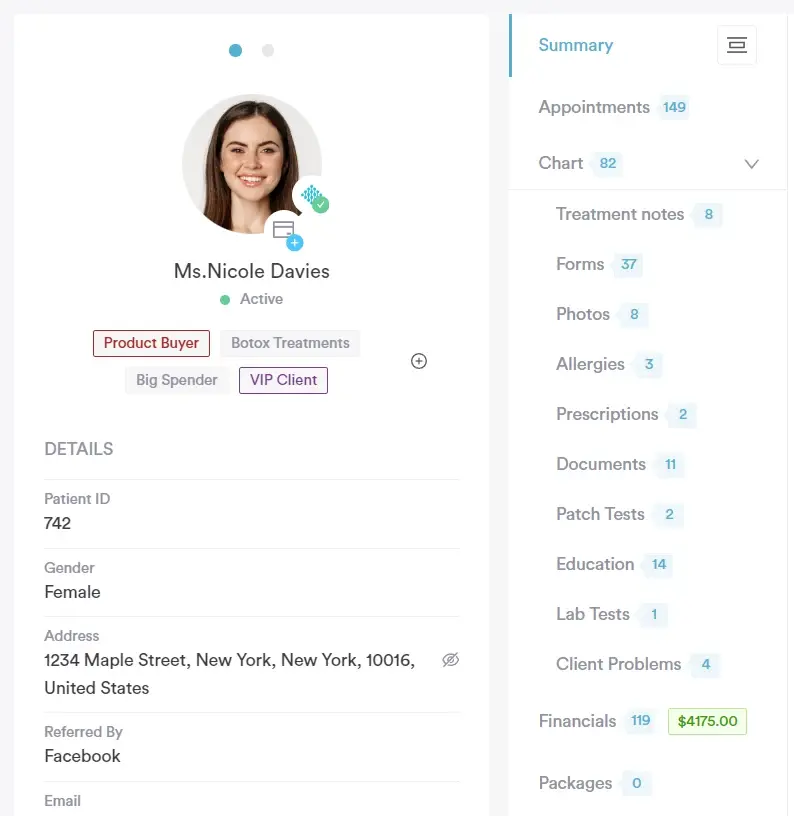
If you perform injectables, device treatments, or prescribe medication, documentation needs to be part of the workflow. Look for:
Pabau includes a built-in EMR as standard. Records, notes, consent, and before-and-after photos sit in one timeline tied to every visit.
Booking systems should do more than hold a calendar slot. Make sure yours includes:
Pabau’s smart scheduling connects booking, consent, and client records in one flow. Customizable rules, automated confirmations, and integrated payments all come standard.
Book a demo to explore the full workflow.
Automation matters most when your team is stretched. Look for:
Pabau includes built-in email and SMS automation, loyalty programs, and performance reporting. Smart automations run across the full patient journey, from booking confirmation through aftercare follow-up.

Zenoti and Vagaro handle scheduling, payments, and marketing well. For practices where clinical documentation, compliance, and continuity of care carry equal weight, that foundation only goes so far.
Pabau brings all of this into one system built for medical-first practices: appointment booking, client records, smart automations, online payment processing, and reporting.
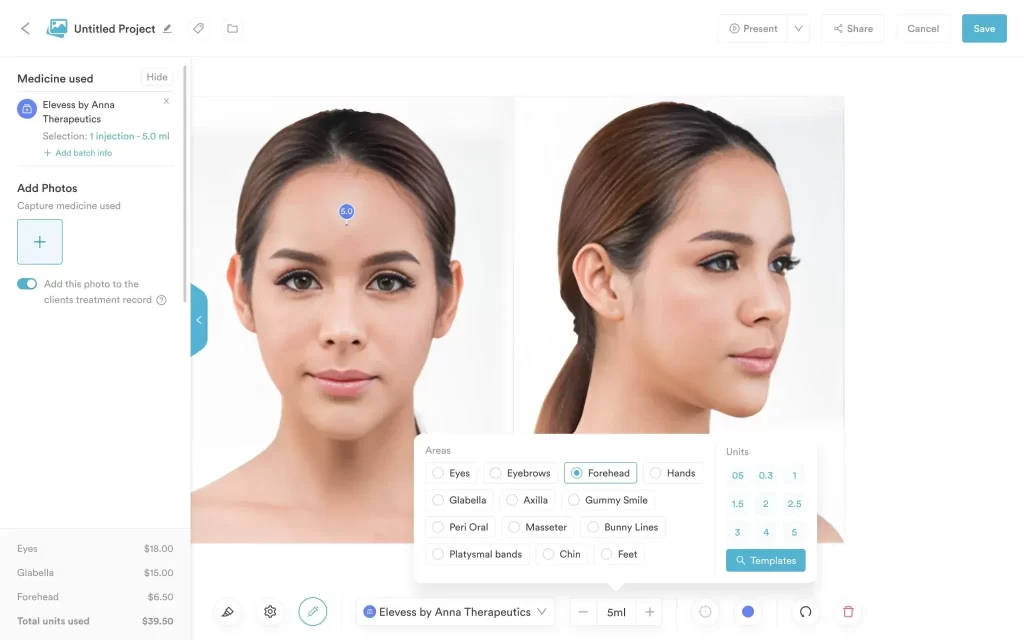
Pabau lets practitioners record injectable treatments directly on patient photos or anatomical diagrams. Product placement, units used, and batch and expiry details are all logged per visit. This supports accurate repeat treatments and clear documentation over time.
The Pabau GO app gives practitioners mobile access to schedules, patient records, forms, and before-and-after photos. Records can be updated during or after appointments, without returning to a front desk terminal.
Echo AI captures consultations in real time and turns them into structured notes inside the patient record. It reduces documentation time and keeps records consistent across your team. Telehealth sessions with screen sharing are also supported.
| Platform | Starting Price | What’s Included |
|---|---|---|
| Zenoti | Custom quote | Full feature set, AI tools on higher tiers |
| Vagaro | From $23.99/month | Core booking, payments, marketplace; add-ons extra |
| Pabau | From $72/user/month ($65 annually) | EMR, consent, booking, automation, reporting |
“The software is extremely efficient when it comes to management of the clinic calendar, booking in clients, and arranging staff schedules. It is very easy to move appointments and automate lots of aspects of the business.” – Katharine H., verified G2 reviewer
“Because Pabau is feature-rich, new users sometimes find it complex or overwhelming at first, particularly when transitioning from simpler systems. It can take time and training to feel fully comfortable.” – verified G2 reviewer
The decision comes down to what your practice needs right now.
Vagaro is the stronger pick for solo providers and small teams that want affordable scheduling with no long-term commitment. It covers bookings, payments, and basic business management at a price point that’s hard to beat.
Zenoti makes more sense at enterprise scale. Multi-location analytics, AI automation, and centralized campaign control justify the complexity and cost for larger operations.
And if clinical records, HIPAA compliance, and the full patient journey are non-negotiable? That’s where Pabau is built to deliver.
Book a demo, and we’ll walk you through how it works for practices like yours.