MCT Food List Template
An MCT food list ranks foods by how much medium-chain triglyceride (MCT) fat the...

1
Last Updated: Oct 19, 2026
The TLC diet food list is the set of foods the National Heart, Lung, and Blood Institute (NHLBI) recommends to lower LDL cholesterol. TLC stands for Therapeutic Lifestyle Changes. Approved foods include skinless poultry, fish, whole grains, legumes, produce and low-fat dairy. Fatty and processed meats, full-fat dairy, tropical oils and fried foods are limited.
The plan also caps saturated fat at under 7% of calories and dietary cholesterol at under 200 mg a day. It adds 10 to 25 grams of soluble fiber.
Practices often hand patients a generic heart-healthy handout, and patients then struggle to tell which foods count. A specific list with daily limits gives both sides something concrete to work from.
This guide covers approved foods, foods to avoid, daily gram targets, a printable grocery list, a 7-day sample menu and the NHLBI visit timeline.
A ready-to-use reference covering approved proteins, grains, dairy and produce, foods to avoid, saturated fat and cholesterol limits, and a printable grocery list.
Download template
The TLC diet limits saturated fat to under 7% of daily calories and dietary cholesterol to under 200 mg.
Soluble fiber targets of 10 to 25 grams per day and about 2 grams of plant stanols or sterols help lower LDL cholesterol.
Approved foods center on skinless poultry, fish, whole grains, legumes, produce and low-fat dairy.
The NHLBI estimates that combining all five TLC changes can lower LDL cholesterol by 20% to 30%.
Practices can print the grocery list and sample menu to support patient counseling.
The TLC diet sets seven daily targets, listed in the NHLBI’s guide to lowering cholesterol with TLC. According to the guide, saturated fat raises blood cholesterol more than any other part of the diet.
The guide treats soluble fiber and plant stanols as extra options. They are usually added at the six-week review if LDL cholesterol is still above goal.
Seven percent of calories works out to about 9 to 19 grams a day, depending on calorie intake. The NHLBI’s own table sets 8 to 17 grams, about 6% of calories, which leaves a buffer under the ceiling.
Patients read food labels in grams, not percentages. Write the gram figure on the patient’s printed list, so a label check at the store takes seconds.
The TLC diet food list starts with foods that lower LDL cholesterol without pushing saturated fat or dietary cholesterol above NHLBI limits. Most approved foods come from plants, lean proteins and low-fat dairy.
Skinless poultry, fish, legumes and lean cuts of meat are the core protein choices. The NHLBI suggests about two fish meals a week, with oily fish such as salmon, trout and herring for their omega-3 fatty acids.
Egg whites contain no cholesterol, while yolks are one of the main sources of dietary cholesterol. Count each yolk toward the 200 mg daily limit.
Whole grains provide the soluble fiber the TLC diet relies on. The NHLBI suggests six or more servings a day from this group, adjusted to calorie needs.
Oats, oat bran and barley are dependable soluble fiber sources (about 1 gram per half cup cooked). Choose breakfast cereals with 3 to 4 grams of fiber per serving, and limit bakery products high in added sugar, salt and fat.
Fresh produce adds fiber and nutrients with very little saturated fat. Aim for three to five servings of vegetables and two to four servings of fruit a day.
Frozen and canned options count too, as long as they have no added fat, sauce, salt or sugar. Whole fruit beats juice, since one orange has about six times the fiber of a 4-ounce glass of orange juice.
Two to three servings a day of nonfat or low-fat dairy fit the plan, such as 1% milk, low-fat yogurt and low-fat cheese. Pick cheeses with no more than 3 grams of fat per ounce.
Unsaturated oils replace butter and solid fats. Avocado, canola, corn, olive, safflower and soybean oils all qualify, along with soft margarines that list liquid vegetable oil first.
Spreads with added plant stanols help patients reach the 2-gram target. One tablespoon of stanol spread provides about 1 gram, roughly half the daily amount.
Unsalted nuts, nut butters, seeds and seed butters are on the TLC diet, because most of their fat is unsaturated. They are calorie dense, so portions need to fit the patient’s calorie target.
These snacks keep saturated fat low between meals.
The foods to avoid are the ones that raise saturated fat or dietary cholesterol. Patients usually find this section harder than the approved list, so concrete examples help.
Since 2020, trans fats can no longer be added to foods in the US. That makes saturated fat the main number to check on a label.
A grocery list organized by supermarket aisle saves patients from rereading the full guide at the store. Print it and keep it on the fridge.
The NHLBI notes that frozen produce is often cheaper than fresh and just as nutritious. That helps patients who worry the plan will raise their grocery bill.
The Nutrition Facts label is the fastest way to check a food against TLC limits. Teach patients these five checks in order.
Some meat, poultry and fish products don’t carry a Nutrition Facts label. For those, patients can rely on the approved and avoid lists above.
This sample menu shows how the food list fits into a normal week. Portions and calorie needs vary, so adjust them to each patient.
Snacks from the list above can fill the hours between meals. Swap any dinner protein for another approved option to keep the week varied.
The TLC diet lowers LDL cholesterol by cutting saturated fat and dietary cholesterol while adding soluble fiber and plant sterols. Each change targets a different step in how the body makes and absorbs cholesterol.
Combined, the TLC changes can lower LDL cholesterol by 20% to 30%, according to NHLBI estimates. Plant stanols and saturated fat cuts carry the largest single effects, as the chart below shows.
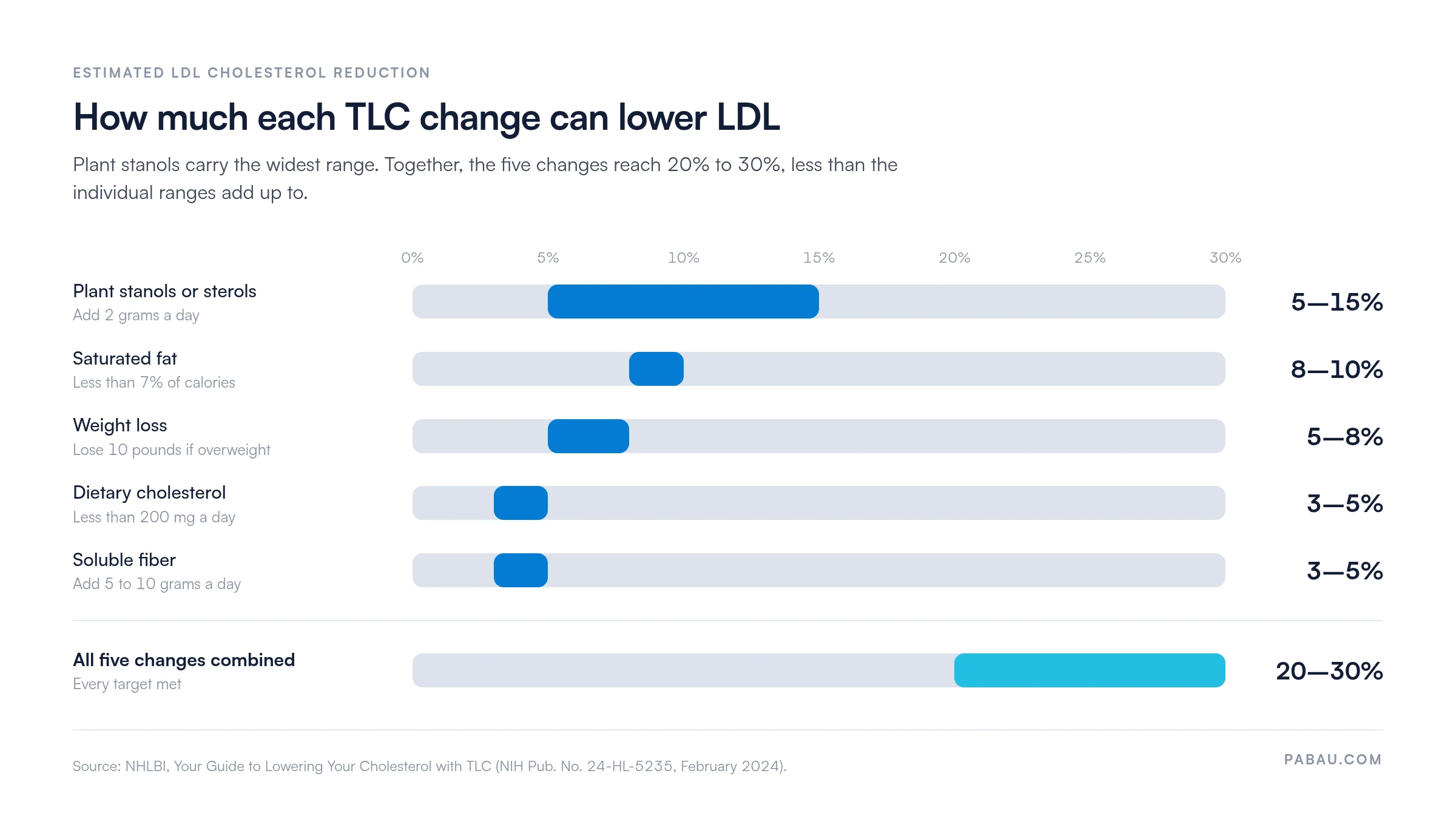
The ranges help set expectations at the first visit. Read the baseline lipid panel against a cholesterol level chart to size the drop each patient needs. A patient who needs a 40% drop can see early why medication may join the plan later.
The NHLBI lays out the TLC program as a series of provider visits, about six weeks apart at the start. Each visit adds one layer of change.
The guide says TLC changes should continue even after a patient starts cholesterol medication such as a statin. Book the six-week reviews before the patient leaves, so the timeline doesn’t slip.
The TLC diet, DASH diet and Mediterranean diet all lower heart disease risk, but they differ in focus. The TLC diet is designed specifically around LDL cholesterol, while DASH was developed to manage blood pressure.
The three plans overlap heavily, so a patient already using a DASH diet food list can usually adopt TLC limits without starting over. The main addition is a firm daily cap on saturated fat and dietary cholesterol.
Audit your intake forms for diet history questions before the first counseling session. Flag patients on statins or with kidney or diabetes diagnoses for physician review before changing their diet. Record their diet history and gram targets in the patient record, so follow-up visits start from what the patient eats now.
Patients who receive a printed food list and a clear first-week goal are more likely to follow the plan. Counseling works best when the clinician picks two or three changes rather than the whole list at once.
Patients who manage diabetes or kidney disease may need a dietitian referral, since their targets can differ from standard TLC limits. A nutrition assessment form at intake records those diagnoses before the first diet change.
A TLC program runs for months and produces a steady stream of records. There’s a diet history at intake, a gram target on the handout and a lipid result at each review. When those sit in separate files, each follow-up starts with someone hunting for the last numbers.
Pabau, the practice management platform we build, keeps them in one patient record. Send the diet history questionnaire as a digital form before the first visit, so answers arrive filed against the patient. Attach the TLC food list to the same record, and log each lipid result in the treatment notes.
Weight loss is one of the five TLC changes, so practices often run cholesterol and weight programs side by side. Pabau’s weight loss clinic software keeps both in the same patient record.
Automated appointment reminders then bring patients back for the six-week reviews, so the timeline holds without front-desk phone calls. Every Pabau subscription includes forms, records and reminders, with no feature tiers to unlock.

Pabau’s digital forms, patient records and automated reminders help your team collect diet history and share the TLC food list. Reminders bring patients back for each cholesterol review.

A TLC food list changes eating habits when it’s specific to the patient. A gram limit on the handout, two or three swaps and a booked six-week review will move LDL further than a perfect menu.
Set expectations early, too. Making all the TLC changes together can lower LDL by 20% to 30%, so some patients will still need medication. Present TLC as the base layer that stays in place after a statin is added, so patients keep their new habits.
Pabau’s digital forms let your team collect the diet history before the first visit and file it in the patient’s record. Book a demo to see how Pabau keeps cholesterol follow-ups on schedule for your practice.

Need to explain a patient’s lipid results? Cholesterol level chart by age shows healthy LDL, HDL and total cholesterol ranges for each age group.
Is diet alone not reaching goal? Cholesterol medication list covers the drug classes that can join a TLC plan when diet alone falls short.
Is blood pressure the bigger concern? DASH diet food list lays out the sodium-focused plan that pairs well with TLC limits.
Want a less restrictive heart-healthy plan? Mediterranean diet plan offers a structured eating pattern built around olive oil, fish and produce.
Need patients to track what they eat? Food log template sheet gives patients a daily record to bring to each six-week review.
The TLC diet food list is the NHLBI-based set of approved and limited foods used to lower LDL cholesterol. It sets daily targets for saturated fat, dietary cholesterol and soluble fiber.
Avoid fatty red meats, processed meats, organ meats, full-fat dairy, butter, tropical oils, processed baked goods and fried foods. These raise saturated fat or dietary cholesterol.
The TLC diet recommends 10 to 25 grams of soluble fiber per day. Oats, beans, lentils and apples are useful sources.
Yes, fish is an approved protein on the TLC diet. The NHLBI suggests about two fish meals a week, and oily fish such as salmon supplies omega-3 fatty acids.
The NHLBI estimates that combining all TLC changes can lower LDL cholesterol by 20% to 30%. Cutting saturated fat below 7% of calories accounts for 8% to 10%. Adding 2 grams of plant stanols or sterols a day can contribute another 5% to 15%.
It depends on calorie intake. The NHLBI guide sets about 13 grams a day at 2,000 calories and 17 grams at 2,500 calories. Those figures equal about 6% of calories, leaving a buffer under the 7% limit.
Yes. Egg whites contain no cholesterol, so they fit the plan freely. Egg yolks are a major source of dietary cholesterol, so count them toward the 200 mg daily limit.
The NHLBI path runs about 12 weeks before medication is considered for most patients. Higher-risk patients may start medicine alongside TLC from the start. Others start diet changes, add plant stanols and soluble fiber at about six weeks, and review treatment six weeks later. TLC changes continue even if medication starts.
The TLC diet targets LDL cholesterol with limits on saturated fat and dietary cholesterol. The DASH diet was developed to lower blood pressure, with a focus on sodium and produce-rich eating. The two overlap heavily and can be combined.
Yes. The TLC diet suggests about 2 grams a day of plant stanols or sterols, which can lower LDL cholesterol by 5% to 15%. Fortified spreads are an easy source, since one tablespoon of stanol spread provides about 1 gram.