Normal vital signs chart
A normal vital signs chart lists the expected resting ranges for blood pressure,...

1
Last Updated: Oct 19, 2026

A food log is a structured record of what a patient eats and drinks, used to link diet to symptoms, weight, and blood sugar.
The printable template on this page has six fields. They are name, date and time, food or beverage, quantity, calories, and a free-text notes box.
Each sheet records a single entry, so print one copy per entry for the period you want to review.
Patients can use the extra notes box for portion context, hydration, mood, exercise, or symptoms that followed a meal.
Practice management software like Pabau lets you collect the same fields digitally and file every entry in the client record.
A one-page printable form with fields for name, date and time, food or beverage, quantity, and calories, plus an extra notes box for context. Each sheet records one entry, so print a small stack and hand it to patients at the end of a consultation.
Download templateA food log is a written record of what a patient eats and drinks, and when. It replaces recall with something you can read together at the next visit. Patients managing weight, blood sugar, or a suspected food sensitivity get the most from one, because the record shows patterns a consultation question rarely surfaces.
The template on this page is a single-page printable form. It records one entry at a time, with fields for name, date and time, food or beverage, quantity, calories, and extra notes. This guide covers what belongs in each field, how often patients should log, and how to bring the completed sheets into a clinical note.
A food log is a dated record of the food and drink a patient consumes, with the quantity and the calories for each entry. Practitioners use it to connect intake to outcomes such as weight change, blood glucose readings, energy levels, and digestive symptoms. A written record also gives every follow-up the same starting point, because you and the patient read the same data.
Self-monitoring is one of the better-supported behavior change tools in nutrition care. The Academy of Nutrition and Dietetics publishes dietary assessment guidance built around it. For a patient with diabetes, the log supplies the carbohydrate context behind a glucose reading. For a patient with a suspected food sensitivity, it narrows the list of foods worth eliminating first.
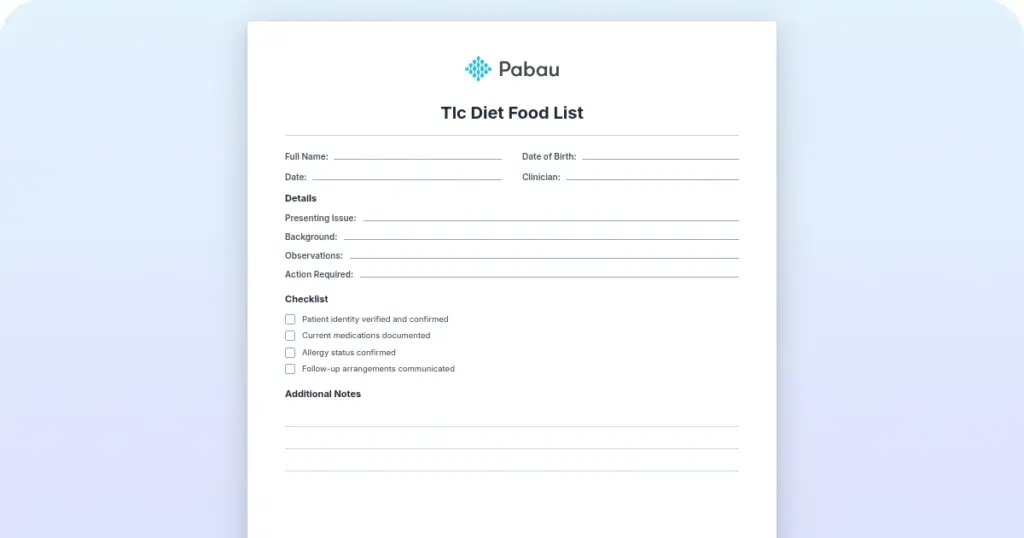
The template on this page captures six fields. Each one answers a question you will ask when the sheets come back. The panel below shows the sheet itself, with what belongs in every field.
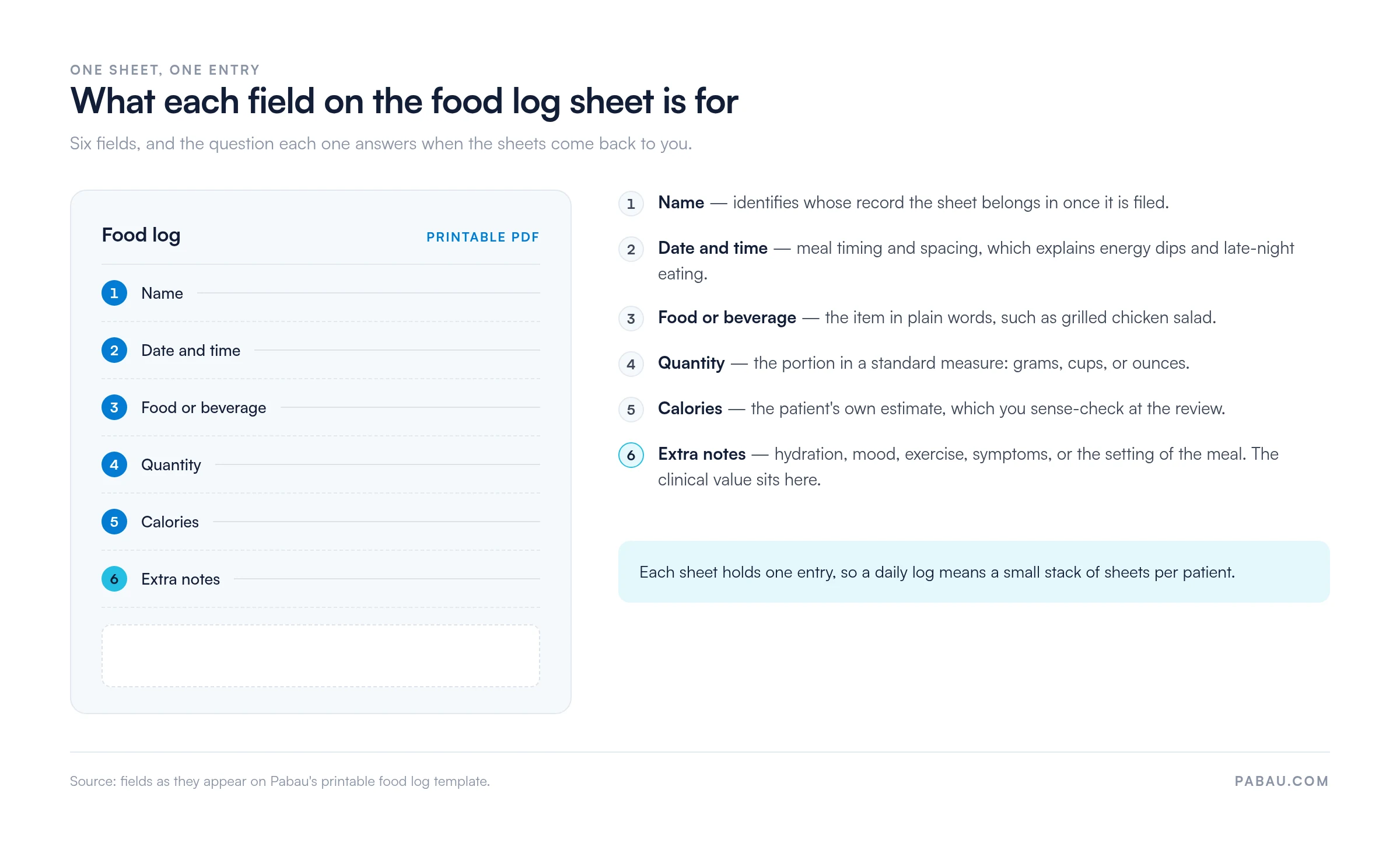
The notes box is where this form earns its clinical value. Ask patients to write how they felt within an hour of eating, and whether they drank water with the meal. Those two habits turn a list of calories into a timeline you can read against their symptoms.
The printable sheet has no macronutrient columns and no separate water, mood, or symptom fields. If you need protein, carbohydrate, and fat totals for every entry, collect the log as a digital form instead. That level of detail suits practitioners who trace a symptom back to a specific food.
Log daily while you are investigating an active problem, and weekly once the patient moves into maintenance. Match the cadence to the clinical goal, and to what the patient will realistically keep up:
The printable form holds one entry, so a daily log means several sheets a day. Print a stack for the patient, or collect the same fields through a digital form if paper tends to go missing.
Daily logging captures symptoms while they are still fresh, which matters for elimination protocols and insulin titration. For a patient on insulin, run the sheets next to a blood glucose log so intake and readings line up by time. Weekly logging lowers the burden during maintenance, when you only need a picture of a typical week.
Walk patients through these five steps before they leave with the sheets:
Weight loss depends on a calorie deficit, and a written log is the most reliable way to see whether one exists. It surfaces the intake patients forget, such as cooking oil, condiments, drinks, and portion creep. CDC guidance on healthy weight puts self-monitoring alongside diet and activity changes for that reason.
For weight loss practices, these four checks make the log worth the effort:
Dietitians and functional medicine practitioners read food log data before they change a plan. When a patient reports fatigue, bloating, or unstable blood sugar, dated entries narrow the search faster than general dietary advice. The sheets often show the cause plainly, such as a skipped breakfast, thin protein intake, or a late meal that disturbs sleep.
For structured patient records, attach the completed log to the clinical note and cite specific entries at the follow-up. Many practices collect it through digital intake forms in the patient portal, which cuts admin time and shows adherence before the appointment starts. Automated reminders can then prompt each patient to submit the week’s entries on time.
Clinical use cases for this template include:
Patient engagement improves when you close the feedback loop out loud. Tell the patient what you saw in last week’s sheets, name the pattern, and propose one change to test. Feedback tied to their own entries earns more trust than advice that could apply to anyone.
A completed log moves dietary assessment from opinion to record. Instead of a patient saying they eat fairly healthily, the note carries dated entries, quantities, and their own calorie estimates. That record supports metabolic health tracking workflows and shows what your counseling was based on. It also documents the patient’s starting point, which helps when you set out the case for a dietitian referral.
Handing out the printable form and waiting is where the workflow usually breaks. The sheets come back at the next visit, or they do not come back at all, and the review happens from memory. Chasing them costs reception time that nobody planned for.
Practice management software like Pabau closes that loop. You can collect the same six fields as a digital form through the patient portal. Entries arrive before the appointment and file themselves in the client record. There is no retyping, and the log sits next to the consultation note you write from it.
Automated reminders prompt each patient to submit their entries on schedule, and you read them inside the record you already have open. Practices see fewer missing forms, so follow-up appointments start with the data instead of a catch-up.

Pabau’s digital forms and client records let you send food logs to patients, collect entries through the portal, and review them inside the clinical note.

Ask for a food log when you have a question it can answer. Weight that will not shift and a symptom with no obvious trigger are two good examples. A log requested without that question tends to come back half filled.
The printable template keeps the ask small, with six fields and one entry per sheet. Set the cadence, tell the patient what belongs in the notes box, and book the review before they leave. The sheets are only worth collecting if someone reads them.
Download the template above and decide now who reviews it and when. Book a demo to see how Pabau collects food logs digitally and files them in the patient record.

Need a fuller dietary assessment at intake? The nutrition assessment form collects diet history, weight, and clinical background before the first consultation.
Writing the note after the review? The ADIME note template turns what you read in the sheets into assessment, diagnosis, intervention, and monitoring.
Briefing a patient on portions and swaps? The nutrition cheat sheet gives them a one-page reference to keep beside the log.
Print one copy of the template for each entry the patient expects to make, then clip a week of sheets together. Each sheet holds one food or beverage with its quantity and calories. For a grid that shows a whole week at once, collect the same fields as a digital form instead of the printable sheet.
The template on this page has six fields: name, date and time, food or beverage, quantity, calories, and extra notes. Use the notes box for anything else that matters clinically, such as hydration, mood, exercise, or symptoms that followed the meal. Macronutrient totals need a digital form, since the printable sheet has no columns for them.
Record food within 30 minutes of eating to ensure accuracy. Use a food scale for portions, since grams are the most precise measure. Include all beverages, cooking oils, condiments, and sauces. Those overlooked calories often explain a weight loss plateau. Compare weekly calorie totals to targets and adjust if actual intake keeps exceeding the plan.
Yes. A log with symptom notes beside each entry helps practitioners spot trigger foods and guide elimination protocols. Food logs support clinical observation, but they do not diagnose an allergy or an intolerance. Practitioners use the patterns to decide which foods are worth formally eliminating or testing.
Explain the clinical purpose at the first visit. Tell the patient you will read the sheets for patterns behind their fatigue, weight gain, or digestive symptoms. Provide the printable template or a digital form, show a completed example, and set a specific review date. Emphasize that the log is a shared clinical tool, not a judgment on how they eat.
Daily logging suits active weight loss, diabetes management, and food sensitivity screening, because entries and symptoms stay fresh. Weekly logging suits maintenance and general wellness reviews. The printable template covers name, date and time, food or beverage, quantity, calories, and notes, and holds one entry per sheet. Digital forms sent through a patient portal improve compliance over paper.