HIPAA compliant texting: What you can send patients & how to communicate securely
HIPAA compliant texting is possible when a text holds no protected health inform...

Last Updated: Oct 16, 2026

A therapy termination letter closes the case formally and shows you did not abandon the client.
Every letter needs the reason for ending, the final session date, referrals, and a crisis contact.
Four endings call for different language: planned, non-attendance, non-payment, and retirement or relocation.
Give at least 30 days notice, and longer when you are the one leaving the practice.
Practice management software like Pabau stores, sends, and timestamps the letter against the client record.
Ending therapy well takes more than a warm goodbye in the final session. It takes a letter. If your practice also runs cash-pay aesthetic services, our ranking of med spa management software weighs charting and payment tools. A termination letter records why the work stopped, when it stopped, and where the client can go next.
That written record sits between a clean case close and an abandonment complaint. The NASW Code of Ethics, Section 1.17, is direct about this. Social workers must take reasonable steps to avoid abandoning clients, including proper notice and referrals. A letter proves you did both, on a date, in writing.
The four samples below cover the endings therapists meet most often. Each one comes with the checks worth running before you send it.
A therapy termination letter is a written notice that formally ends the therapeutic relationship. It does three jobs at once.
Not every case close needs one, though. A client who finishes a planned course of therapy may be fine with a closing session note. Any ending that involves risk, conflict, silence, or your own decision to stop belongs in writing.
Send a formal letter whenever the ending involves risk, silence, money, or a decision you made rather than the client. The list below covers the common cases.
Planned, low-risk endings sit in a gray area. A careful final session note often documents them well enough. Even so, many malpractice insurers suggest a letter anyway. It gives a busy therapy practice one clean boundary in the record instead of an argument about dates.
Six elements belong in almost every termination letter. Treat them as your baseline, then adjust the tone to fit the ending.
One optional element earns its place in complex cases. Summarize the presenting concerns and how they changed over treatment. That mirrors a psychiatric evaluation template, and it strengthens the record at the other end of the work.
Copy these, then change the details to fit your client and your state. If the ending carries elevated risk, run the wording past your supervisor or your malpractice insurer first. Therapists get asked for other letters too, and an emotional support animal letter carries its own required elements. Our ESA letter template sets them out ready to sign.
Use this when: the client has reached their treatment goals and you both agree the work is done.
Dear [Client Name],
This letter confirms that our work together will end after our session on [Date]. It has been a privilege to work on [presenting concern, for example managing anxiety].
You have made clear progress along the way. That includes [specific skill, for example a daily grounding practice and fewer panic episodes]. The tools you built are yours to keep.
If you want to return to therapy later, or you need support before then, please contact [Referral Name and details]. You can also call or text the 988 Suicide and Crisis Lifeline at any time.
Wishing you well,
[Therapist Name], [Credentials], [License Number], [Date]
Hand this one over in the final session where you can. Attach a copy of whatever the client used between sessions, too. A circle of influence worksheet in the envelope gives them something concrete to keep.
Use this when: the client has missed several sessions and has not answered your attempts to reach them.
Dear [Client Name],
I am writing because we have not been able to connect since [date of last contact]. I have tried to reach you on [dates and methods]. Since I have not heard back, I am closing your case as of [date, usually 30 days from this letter].
Support is still available to you. Please contact [Referral Name and details], or reach the 988 Suicide and Crisis Lifeline at any time. If you would like to resume therapy with me, call [your number] within [timeframe] and we can talk about availability.
Sincerely,
[Therapist Name], [Credentials], [License Number], [Date]
Log every contact attempt before this letter goes out. Two calls, a voicemail, and a portal message with dates carry far more weight than a line saying you tried.
Use this when: the client has an unpaid balance and you cannot keep treating them. Have your malpractice insurer or a healthcare attorney check the wording first.
Dear [Client Name],
I am writing to let you know that I cannot continue therapy services at this time. The balance on your account is $[amount] as of [date]. Your final session will be on [date], ideally 30 days from this letter. That gives you time to arrange other care.
None of this reflects your clinical progress or our work together. I am happy to refer you to [Referral Name and details] and to support a smooth handover. Crisis support is available any time through the 988 Suicide and Crisis Lifeline.
Sincerely,
[Therapist Name], [Credentials], [License Number], [Date]
Keep the billing conversation out of the clinical letter. Chase the balance through your normal patient collections process, and keep this letter focused on care and referrals.
Use this when: you are retiring, relocating, or closing the practice. Give 60 to 90 days notice where you can.
Dear [Client Name],
I am writing to let you know that I will be [retiring, relocating, closing my practice] effective [date]. Our final session will be on [date]. I want you to have everything you need to keep making progress with another provider.
Our work together has mattered to me, and I want the handover to feel considered. I am happy to write a referral letter to the clinician you choose. [Referral Name and details] would be a good starting point. If you are ever in crisis, please call or text 988.
With gratitude,
[Therapist Name], [Credentials], [License Number], [Date]
Tell clients in session first, then follow with the letter. A retirement notice that arrives cold reads as abandonment, even when the notice period is generous.
Abandonment is what turns a routine ending into a board complaint. It happens when care stops abruptly, without adequate notice, referrals, or thought about what the client still needs. A planned, documented ending is the opposite of that.
Three professional bodies set the standards therapists are usually held to.
State licensing boards add their own requirements on top. Rules vary by jurisdiction, so check your state before you lean on a single standard. Notice and transition planning show up the same way in group therapy consent paperwork. Your existing forms may already carry usable language.
A standard letter is not enough for a client with active suicidality or a crisis history. Those endings need a spoken handoff to the incoming provider, an updated safety plan, and a confirmed first appointment. Crisis intervention planning happens before the letter, not in place of it.
Then document the handoff in the same place as the letter. Name the receiving clinician, the date you spoke, and what you shared. That answers the first question any reviewer asks.
Five questions catch most of the problems that surface later. Work through them before you print or send anything.
If any answer is no, fix that before the letter goes out. A day of delay costs nothing. A thin record costs a great deal when someone reviews it two years later.
Date the letter the day it goes out, not the day you drafted it. If those dates differ, your 30-day notice window is shorter than the record suggests. Log the send date and the method in the client file on the same day.
The letter is one of three documents that should sit in the file at case closure. Together they answer why the work ended, what happened during it, and where the client went next. The same filing discipline applies to any letter you sign, from a referral note to an emotional support animal letter.
The middle document trips people up most. A discharge summary written weeks later reads like reconstruction, so write it in the same week the case closes. The structure in our social work SOAP notes guide transfers straight into it.
Delivery method decides how much your documentation is worth if anyone questions it. Three methods are common, and they carry very different weight.
According to HHS HIPAA privacy guidance, electronic delivery of protected health information needs a compliant mechanism. A termination letter contains that information. Plain email without encryption does not qualify, which is why HIPAA-compliant practice software matters at case closure.
Record the method and the date in the file either way. For certified mail, scan the tracking confirmation and attach it. With portal delivery, the timestamp logs itself.
Most states require mental health records to be kept for at least seven years from the last date of service. Records for minors usually run longer, often years past the age of majority. Check your own state, because the range is wide.
Retention only helps if the file is findable. Run a medical chart audit on a sample of closed cases. It shows you fast whether the three documents sit together or scattered across systems.
Five mistakes account for most termination problems, and every one of them is avoidable.
All five come from the same place, which is time pressure at the end of a caseload day. Case closure admin piles up quietly, and it feeds therapist burnout. Doing all three documents in one sitting per closure is what stops the pile.
Most therapists draft the letter in a word processor, print or email it, then file a copy somewhere else. The letter, the note, and the referral log end up in three systems. Each hop is a chance for something to go missing.
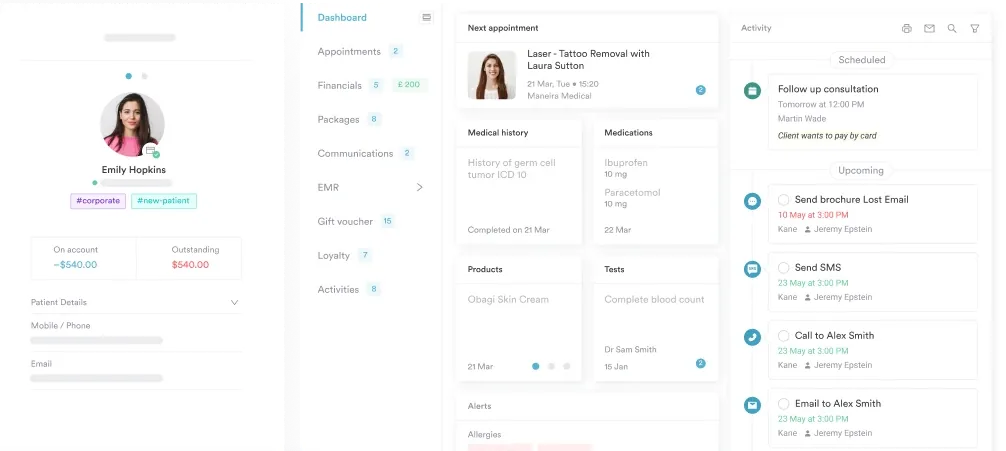
Practice management software like Pabau keeps the whole close in one file. You build a termination letter template for each scenario in digital client forms, then reuse it. When a case closes, you personalize the fields and send it through the secure client portal.
The portal is HIPAA compliant and timestamps delivery on its own. So the audit trail your insurer wants builds itself. The sent letter then sits against the client record, beside the session note and the referral log.
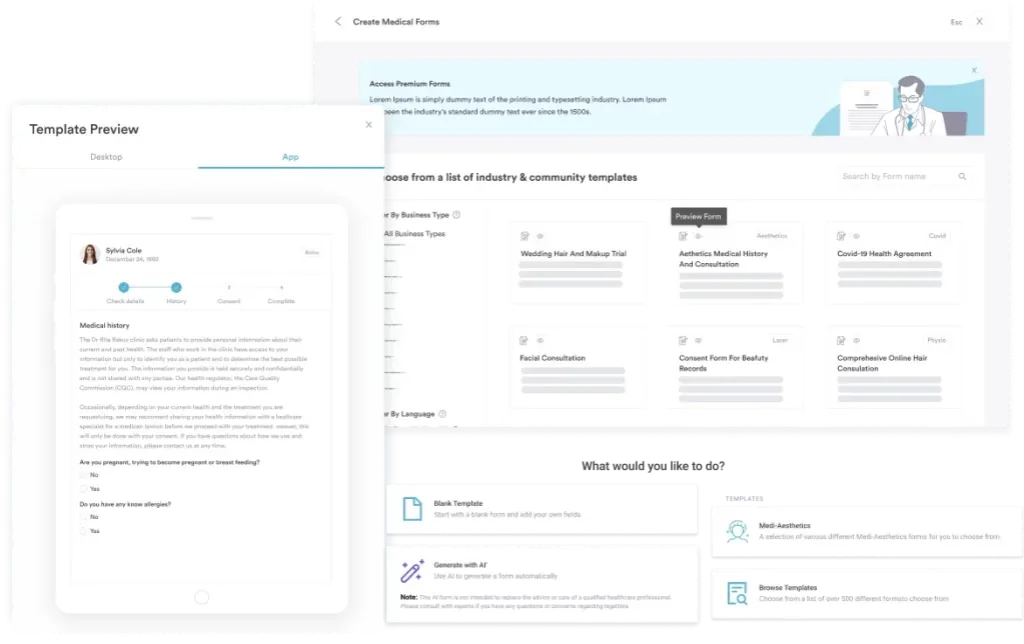
For a mental health practice software setup, that continuity is the point. You can show the whole arc from first intake to final letter in one place. That is what a board reviewer or an auditor asks to see.

Pabau stores your termination letter templates, sends them through a HIPAA-compliant client portal, and timestamps delivery. So the letter, the session note, and the referral log stay on one file.

Termination is a clinical act with a paper consequence. Handle the letter well and the client gets a clean ending plus a route to more support. Rush it, and the file becomes the thing you are judged on.
Pick the sample that matches your situation, run the five checks, then close all three documents in the same week. That habit is worth more than any single letter.
Doing that across a word processor, an email client, and a filing cabinet is where the slips happen. Book a demo to see how Pabau keeps the letter, the note, and the referral log on one client record.

Need a between-session tool the client keeps? Interoceptive exposure worksheet gives panic-focused practice a client can carry on alone after therapy ends.
Want a simple measure of progress before you close? Herth Hope Index scores hope in minutes, which gives your discharge summary something concrete to cite.
Need to map a client’s history? Life events timeline records each event’s age, duration, context, and emotional impact from 0 to 10.
Helping a client set new goals? Life goal planner has a SMART goal page for each of eight life areas, plus milestone dates and check-ins.
Wondering why some clients respond faster? Locus of control worksheet helps identify whether a client blames circumstances or takes ownership, a pattern that predicts therapy outcomes.
Nothing further is required, as long as the letter reached them and the file shows it. Keep the delivery receipt, note the closing date, and stop there. If the letter comes back undelivered, try one more address or phone number and log that attempt too.
Yes, a short one. Client-initiated endings still need a closing date, a note that the decision was theirs, and an open door for returning. That protects you if the client later says treatment stopped without warning.
The parent or guardian who holds treatment consent receives it. Write it to them, and keep the clinical detail light. Many therapists also send a short, age-appropriate note to the young person, since the ending matters to them too.
Usually yes, and the letter should say so where that is clinically appropriate. Reopening means a fresh intake, updated consent, and a new treatment plan rather than picking up the old file. Non-payment cases are the exception, since the balance normally has to be settled first.
Many payers do ask for one, especially where treatment was authorized in blocks of sessions. A discharge summary naming the presenting problem, the course of treatment, and the outcome usually satisfies it. Check your contract, since requirements differ by payer.