Fair fighting rules worksheet
A fair fighting rules worksheet is a therapy handout that sets out ground rules ...

3
Last Updated: Oct 21, 2026

The Jungian personality test measures four dichotomies: Extraversion/Introversion, Sensing/Intuition, Thinking/Feeling, and Judging/Perceiving. These derive from Carl Jung’s 1921 theory of psychological types.
Combining the four dichotomies produces 16 personality types, each identified by a four-letter code such as ENFP or ISTJ. These codes help practitioners understand cognitive preferences and decision-making patterns.
Cognitive functions (dominant, auxiliary, tertiary, and inferior) extend the four-letter type into a deeper model. They show how individuals process information and make decisions in sequence.
The downloadable template is a quick 10-item self-report form scored 0 to 4. It includes space for the clinician to record the client’s personality type and description after discussion.
A quick 10-statement self-report form scored 0 to 4, with a total score field. It leaves space for you to record the client’s personality type and description after your discussion.
Download templateA jungian personality test applies Carl Jung’s four dichotomies to reveal how a client gains energy, processes information, and makes decisions. In fact, clinicians, coaches, and therapists have used this typology for over a century to understand cognitive preferences and interpersonal patterns.
This guide explains the framework, walks you through administering the downloadable template, and shows how personality type insight supports treatment planning and client outcomes.
Whether you’re running psychology practice management. Additionally, it requires no software login or proprietary fees.
A jungian personality test is a typological assessment based on Swiss psychiatrist Carl Jung’s 1921 theory of psychological types. Unlike clinical diagnostic instruments, it is a framework for understanding how individuals perceive the world, process information, and make decisions.
Jung identified four paired opposites: Extraversion vs. Introversion, Sensing vs. Intuition, Thinking vs. Feeling, and Judging vs. Perceiving. As a result, together, these combine into 16 distinct personality patterns.
Isabel Briggs Myers and her mother Katharine Cook Briggs extended Jung’s work between the 1940s and 1960s to create the Myers-Briggs Type Indicator (MBTI). Notably, MBTI is a psychometrically validated instrument now widely used in clinical practice, coaching, HR, and education. This template draws on the same Jungian framework and works for both group and individual administration.
The jungian personality test is valued by therapists, counselors, coaches, and organizational development professionals because it makes unconscious preferences visible. Rather than judging personality as “good” or “bad,” it describes natural cognitive tendencies. Consequently, this helps clients understand why they prefer certain environments, communication styles, and work approaches.
The jungian personality test rests on four core dichotomies. As a result, understanding each one helps practitioners score and interpret results accurately.
Each dichotomy represents a preference, not an absolute trait. A person does not have introversion permanently. Instead, they report a preference for introversion on a spectrum. The template gives you a total score to discuss with the client, not an automatic breakdown by dichotomy.
Combining the four dichotomies yields 2^4 = 16 personality types, each identified by a four-letter code. Use the grid below as a reference when you discuss a client’s likely type. Instead, the downloadable template itself leaves the type field blank for you to complete.
No type is better or worse. Rather, each brings distinct strengths in different contexts. Use the descriptions in this guide as a shared reference when you discuss results. Then note the client’s type and a short description directly on the template.
Occupational therapists often score assessments like this directly inside occupational therapy software, keeping results attached to the treatment plan.
Most online personality tests stop at the four-letter type code. Jung’s original theory adds four cognitive functions that show how each type processes information: thinking, feeling, sensing, and intuition. Specifically, these functions stack in a specific order for each type. Together they form a functional stack that predicts which mental processes feel most natural and which require effort.
In fact, this deeper model helps explain why two people who share the same four-letter type can feel very different from each other. It also shows how to tailor treatment recommendations. Ultimately, understanding a client’s functional stack reveals which interventions will feel natural versus which require conscious effort or reframing.
The downloadable jungian personality test template is designed for immediate administration in consultations, group workshops, coaching sessions, or classroom settings. Additionally, it requires no login or software. Just print it or display it digitally.
The process is transparent. Unlike black-box online tests, clients see every statement they rate and take part in the conversation that shapes their result, building confidence in the outcome.
The jungian personality test template serves a broad range of professionals who want to understand client personality and tailor interventions:
Personalized treatment and coaching: Understanding a client’s personality type helps you match interventions to their cognitive style. A client with strong Sensing preferences will respond better to concrete, practical steps than abstract future possibilities. A Feeling type will connect more with relational reframing than logical debate.
Transparency and client ownership: Clients see every statement they rate and take part in the conversation that produces their result. This differs from a black-box score, and the shared process often produces insights that accelerate motivation.
Cost-free administration: You do not pay per test, subscribe to software, or restrict access. Download, print, and use the template with unlimited clients.
Clinical documentation clarity: Recording the test result in the client record creates a clinical note that contextualizes treatment choice. “Client is ISFJ type: prefers one-on-one structure and practical, step-by-step guidance” is both clinically relevant and defensible in peer review or licensing audits.
Multi-disciplinary relevance: This framework is recognized across psychology, coaching, HR, education, and medical practice. Overall, this means you can use the same language across your organization or referral network.
Treat the total score as a starting point, not a verdict. A single self-report tally cannot isolate which dichotomy drove a high or low result. Pair it with a follow-up conversation before recording a personality type.
Practitioners often ask how the jungian personality test compares to MBTI, Big Five, DISC, and Enneagram. Here is a quick comparison:
The Jungian approach combines typology (discrete types like DISC and Enneagram) with trait-like elements (continuous preference strengths like Big Five). Consequently, this makes personality insights instantly accessible during future visits.
The comparison also helps you pick the right tool for the person in front of you. Someone who finds the 16 types abstract may engage more readily with a character personality questionnaire you can discuss in session.
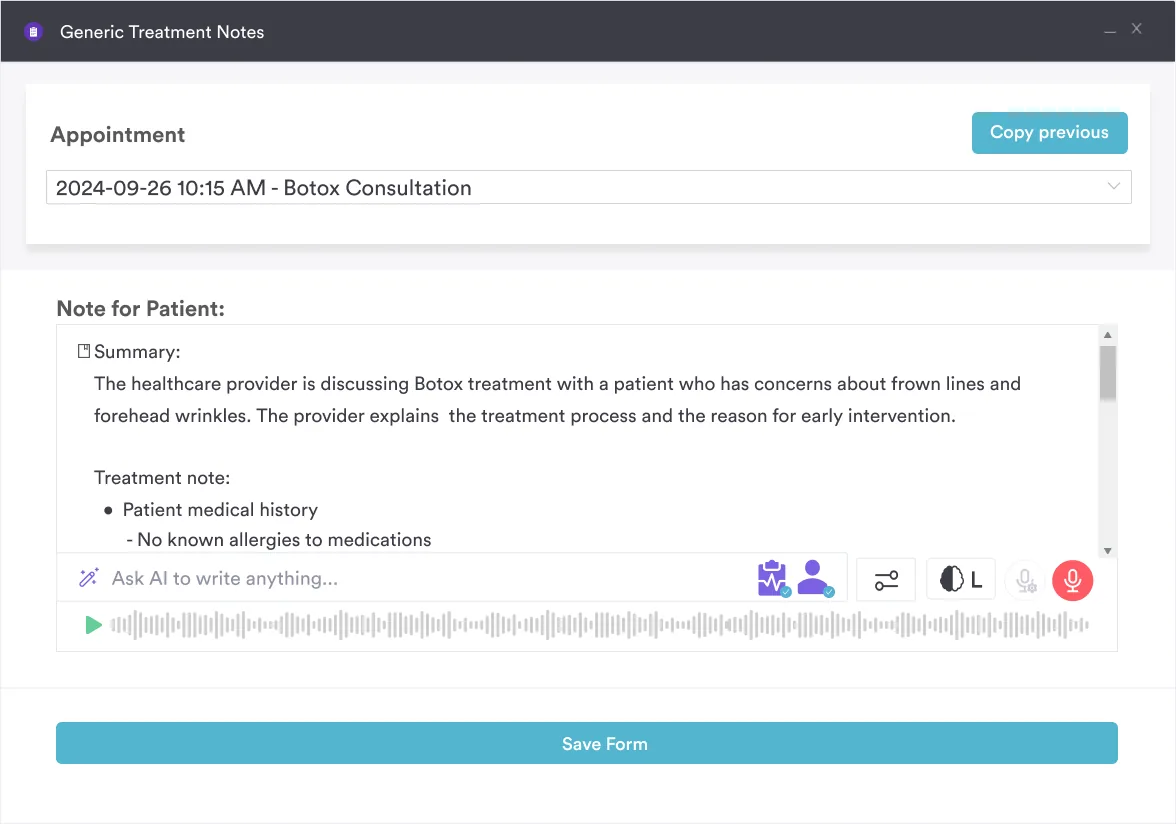
Most practices record a completed jungian personality test on paper or in a generic notes field, separate from the rest of a client’s history. As a result, that makes the context behind a treatment decision easy to lose between sessions.
Practice management software like Pabau stores the finished assessment alongside every other client record. The type and description then sit next to session notes, treatment plans, and progress tracking. You can reference it instantly before a follow-up appointment instead of searching through a paper file.

Store completed jungian personality test results in digital client records. Use insights to personalize treatment plans and track progress over time, all in one integrated platform.

A jungian personality test is only as useful as the conversation it produces. The four-letter code matters less than the discussion behind it. Instead, treat the total score as a prompt for dialogue, not a label to file away.
Score your next client with the downloadable template, then use the result to pace sessions and frame treatment choices around their natural strengths.
Book a demo to see how Pabau keeps that personality note alongside every session record, so it takes seconds to find at the next visit.

Need a worksheet for exploring emotional cost and benefit? Cost-benefit analysis therapy worksheet helps clients weigh the pros and cons of a behavior change alongside their personality-driven decision style.
Want to help a client map what sets off their reactions? Identifying triggers worksheet gives clients a structured way to log triggers that complements the type insight from this test.
Building a graded exposure plan for anxiety? Fear hierarchy worksheet sequences exposure steps to match a client’s pace and readiness.
Need to assess planning and self-control skills? Executive function assessment screens for the organizational and self-regulation skills that shape how a client acts on treatment plans.
Looking for a tool to strengthen social skills work? Friendship worksheet gives younger clients a guided way to practice building and keeping friendships.
The free downloadable template on this page is a short 10-item self-report form you score and discuss with the client yourself. Online tests like HumanMetrics and 123test give instant digital scoring, but this template keeps the process transparent and lets you record the result in your own words.
The Jungian personality test uses Jung’s 1921 theory and the same four dichotomies as MBTI (E/I, S/N, T/F, J/P). MBTI is a proprietary, psychometrically validated instrument that requires licensing. This template offers a free, simple 10-item self-report you score and interpret yourself, without the cost or restriction of a licensed instrument.
Extraversion/Introversion (where you gain energy), Sensing/Intuition (how you gather information), Thinking/Feeling (how you decide), and Judging/Perceiving (how you approach structure). Each dichotomy represents a preference, and the four combine into 16 personality types.
Yes. The template is available as a downloadable PDF above. Print or use it digitally in sessions, coaching, workshops, or classrooms with no software requirement or per-test fee.
The Jungian typology framework has been in use for over a century and is widely recognized in psychology, coaching, and education. However, personality assessments measure preferences, not definitive traits, and results can shift over time or based on context. Instead, use the test as a starting point for self-understanding and treatment planning, not as a clinical diagnostic label.
Jungian cognitive functions (dominant, auxiliary, tertiary, inferior) explain the specific mental processes each type uses and the order in which they develop. MBTI includes the same four dichotomies but often does not emphasize functional stacking. This guide covers both the four-letter type code and the cognitive function framework, though the downloadable template itself only captures the client’s self-report responses and your notes on their likely type.