Massage Therapy Business Plan
A massage therapy business plan is a written document that sets out how your pra...

Last Updated: Oct 21, 2026
A pharmacy claim form is the document a patient sends to their drug plan to get repaid for a prescription paid out of pocket. Practices that file these requests for patients need a ready-to-use copy on hand. This page gives you a free template, explains each field, and shows where to send the finished form.
A ready-to-use form covering member and plan details, drug details including NDC and days supply, prescriber information, and the amount paid.
Download template
A pharmacy claim form asks a plan to repay a prescription the patient paid for directly.
TRICARE allows one year from the date of purchase to file, so track that deadline.
Prescriber details, the pharmacy receipt, and the NDC number must match the dispensed drug.
Pabau, the practice management platform we build, captures member details at intake through digital forms, ready for each claim.
A pharmacy claim form collects the patient, plan, drug, and payment details a payer needs to reimburse a pharmacy purchase. Most people file one when their plan did not process the claim at the counter. That usually follows an out-of-pocket purchase or a visit to a pharmacy outside the plan’s network.
The form asks for repayment after the purchase. If a drug needs approval before it is dispensed, the plan asks for a separate prior authorization form.
Medicare Part D works differently. The Centers for Medicare and Medicaid Services (CMS) sets the framework, so check the CMS prescription drug coverage guidance before you file.
Work through the pharmacy claim form in five steps, starting with the receipt and ending with submission. Each step matches a section of the form, so you can check your work as you go.
Keep a copy of the completed form with the original receipt. Plans may ask for both if the claim is reviewed.
Practices that file these requests every week save time with one standard template. To see how Pabau keeps forms and patient records together, book a demo.
Patients who paid for a prescription themselves need a pharmacy claim form most often. Administrators and billing staff who file on their behalf use the same form. Treatment costs, such as a consultation or procedure, go on a medical insurance claim form instead.
Medicare Part D enrollees may use a Part D drug claim form. Medicare Advantage plans with drug coverage (MAPD) can use their own prescription reimbursement request form, with similar fields and plan-specific details.
A standard form keeps every request in the same order. That makes review simpler for the plan and easier for your team to check.
Check each NDC number against the dispensed drug label before you send a claim. A mismatch can stall the request, so a two-minute check now saves a resubmission later.
Complete the member, plan, drug, prescriber, and payment sections in that order, copying each detail from its source document. Errors in the member and drug sections can delay a claim, so check those fields twice. Four documents hold most of those details, as the map below shows.
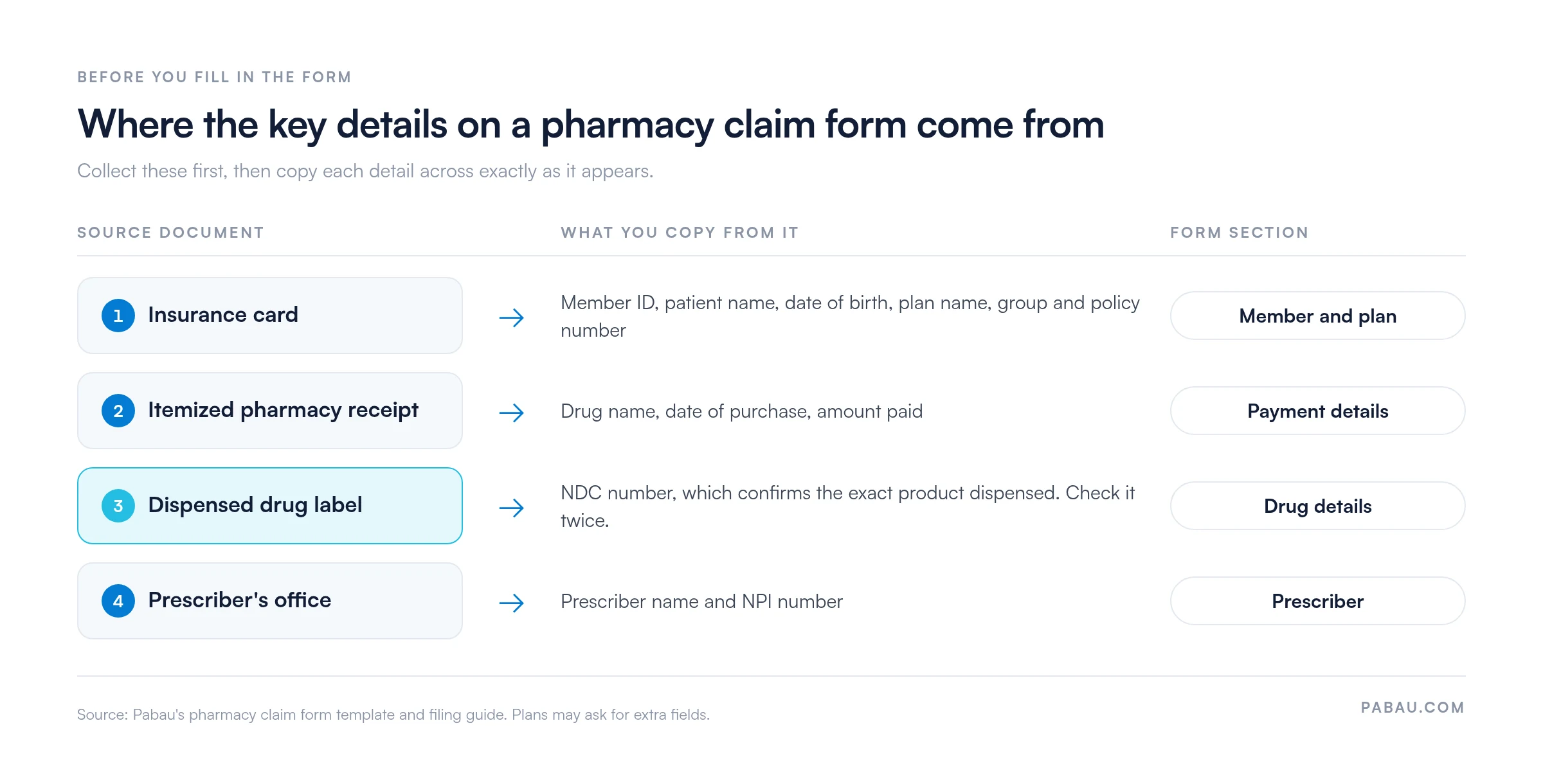
TRICARE also asks for prescriber information, the pharmacy receipt, and the pharmacy phone number, so keep all three together. On the prescriber line, enter the prescriber’s own individual NPI rather than the practice’s group number.
Submit the completed pharmacy claim form by mail, fax, or online portal, using the channel your plan lists.
Track the filing deadline from the date of purchase. TRICARE allows one year, but other plans set their own limits, so confirm with the plan before you send. TRICARE’s official site covers its filing rules.
The form contains protected health information (PHI), so handle it with care. The HHS HIPAA guidance explains the basics. It does not replace legal advice for your practice.
Most rejections come from a missing or mismatched detail, and each one has a quick fix.
For a wider view of how claims move through review, read about tracking and appealing denials.
The NCPDP Universal Claim Form is a standard pharmacy claim layout maintained by the National Council for Prescription Drug Programs. Many payers and pharmacy benefit managers (PBMs) accept it, so practices can use it as a base for their own form.
Using the standard layout keeps field names consistent across plans. Read the specification on NCPDP’s Universal Claim Forms page.
A pharmacy claim form requests reimbursement after the purchase, while a prior authorization form asks the plan to approve a drug before it is dispensed. Using the wrong form causes delays, so confirm which one the plan requires before you file. Our medical prior authorization form covers the request that comes first.
Practices that file pharmacy claims for patients often rebuild each one by hand. Staff dig out the insurance card, call the prescriber’s office for the NPI, and retype details the practice already holds.
In Pabau, member, plan, and prescriber details sit in the patient record, captured once through digital intake forms. The same platform helps you track claims to payment, so staff can see what was sent and what still needs a reply.
Pabau Scribe, our AI scribe, drafts treatment notes during the visit, so the prescription behind each claim is already documented. Your team makes fewer calls to chase missing details, and more claims go out complete the first time.
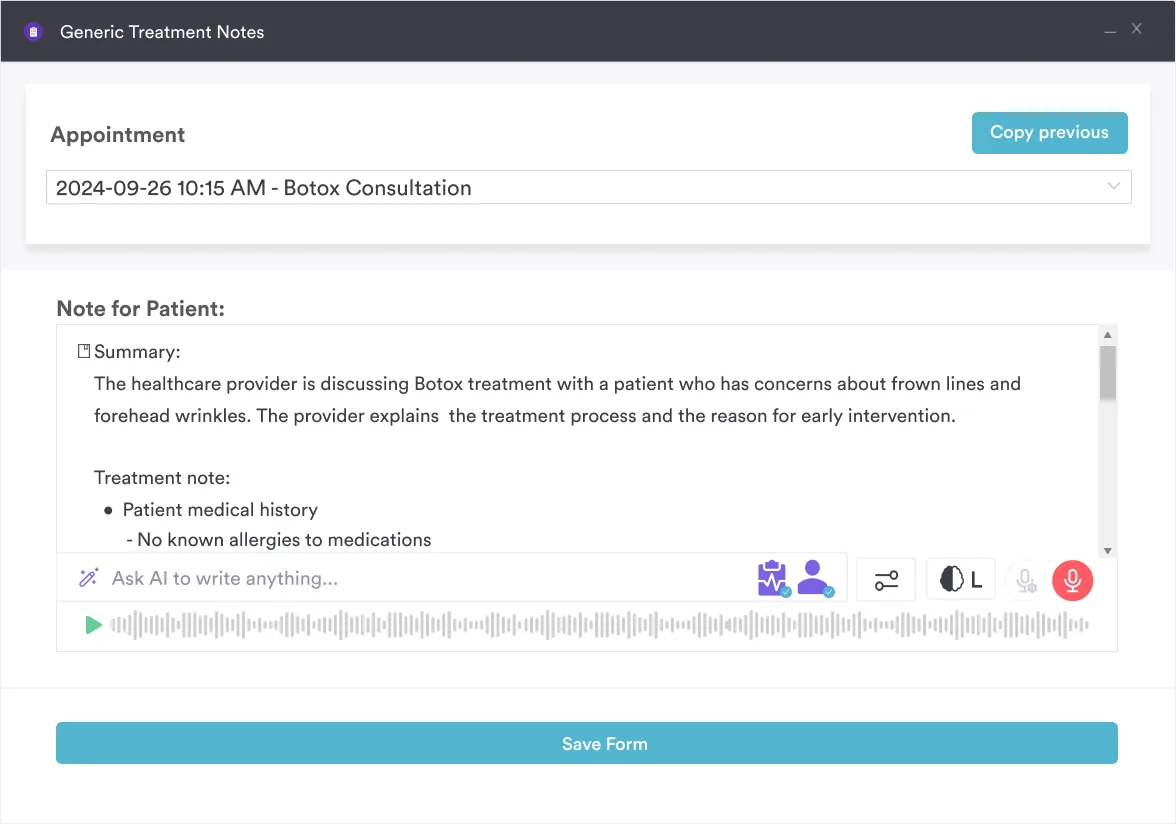

Pabau keeps member, plan, and prescriber details in each patient record, so your team can prepare and track pharmacy claims without chasing paperwork.

A pharmacy claim is won or lost before it is sent. The plan reimburses the purchase when the member ID, NDC number, prescriber NPI, and receipt all agree, inside the filing window. Most rejections trace back to one of those details going missing between the counter and the claim.
So fill in the form last. Collect the receipt and the drug label at the time of purchase, and note the plan’s deadline the same day. A practice that files for patients every week should keep those details on record, so no claim starts from a blank page.
Book a demo to see how Pabau keeps patient, plan, and prescriber details in one record. Your team then files complete pharmacy claims the first time.

Billing for treatment rather than prescriptions? Medical insurance claim form gives you the template patients and practices use to claim treatment costs back from an insurer.
Does the drug need approval before it is dispensed? Medical prior authorization form covers the request you send before treatment, not after payment.
Was a claim denied? Medical appeal form template helps you challenge a denial with the documentation the payer needs to see.
Unsure which NPI belongs on the form? Type 1 vs Type 2 NPI explains the difference between individual and organizational provider numbers.
Do many of your patients pay up front? Patient self-pay guide covers billing and collections for patients who pay you directly.
A pharmacy claim form is a document you send to your prescription drug plan to get repaid for a prescription you paid for yourself. It lists the member, plan, drug, prescriber, and payment details the plan needs to process the request.
File one when the pharmacy did not bill your plan at the counter. Common cases are paying out of pocket or filling a prescription at an out-of-network pharmacy. Forgetting your insurance card at the counter is another.
Each plan sets its own deadline. TRICARE, for example, allows one year from the date of purchase. Check the deadline on your plan’s form or website before you send the claim.
The NDC, or National Drug Code, is a unique number that identifies the drug, its strength, and its package size. It appears on the manufacturer’s packaging, and the pharmacy can provide it if your label or receipt does not show it.
Yes. Administrators and billing staff often file pharmacy claims on a patient’s behalf. Some plans ask for the patient’s signature or a signed authorization first, so check the plan’s form before you send it.
No. A pharmacy claim form asks for reimbursement after you have paid for a drug. A prior authorization form asks the plan to approve a drug before it is dispensed, so it comes earlier in the process.