CRM for chiropractors: how to manage patients, bookings and marketing
A CRM for chiropractors is a patient relationship management system built around...

Last Updated: Oct 13, 2026

Patient self-pay means the patient is the payer of record, so nothing is billed to an insurer and nothing is reimbursed.
Underinsured patients need the same workflow as uninsured patients, right up until their deductible clears.
The No Surprises Act requires a Good Faith Estimate for uninsured and self-pay patients, timed from the date the service is scheduled.
A fixed escalation timeline, from the estimate at day 0 to the collections handoff at day 90, stops balances quietly turning into bad debt.
Practice management software like Pabau automates the deposit, the reminders, and the payment plan at each step of that timeline.
Patient self-pay means the patient, not an insurer, is the payer of record for a visit. That one fact changes when you ask for money. With a payer you bill after the service. With a self-pay patient, every dollar you fail to collect before they walk out gets harder to collect.
Two groups sit inside the label. Some patients have no coverage at all. Others are insured, but their deductible is unmet or their plan excludes the service. Both need the same thing from your front desk. One written process, applied the same way every time.
This guide covers the definitions, the pricing models, the Good Faith Estimate rules, and the collection tactics behind that process. It also gives you a day-by-day escalation timeline for unpaid balances, from the estimate at booking through to the collections handoff at day 90.
Self-pay in medical billing means the patient pays the practice directly, with no claim submitted to an insurer for that service. There is no payer contract behind the charge, no allowed amount, and no remittance advice to reconcile. The price you post is the price you collect.
Self paying patients fall into three groups, and the difference decides how you price and when you ask. Uninsured patients have no coverage at all. Underinsured patients hold a plan that still leaves most of the cost with them. Insured patients can also elect self-pay for a single service.
According to KFF, more than 25 million Americans have no health insurance. Tens of millions more carry high-deductible plans that leave them paying cash for routine and elective care. That second group is the one practices underestimate, because the patient arrives holding an insurance card.
Self pay in healthcare now spans routine primary care visits, elective procedures, and entire aesthetic treatment plans. The table below sets the segments side by side. You can see what each one owes, and what your team has to get from them.
The row that catches practices out is the third one. An underinsured patient behaves like a self-pay patient in February and like an insured patient in November. Your front desk has to switch scripts mid-year.
A self-pay charge still needs a code. Your chart, your receipt, and your posted fee schedule should all name the same CPT, whether the service is an office visit or 14040.
Average single-coverage deductibles for employer-sponsored plans reached $1,735 in 2023, according to KFF’s Employer Health Benefits Survey. The 2024 figure was $1,787. A patient on a perfectly good plan still owes close to two thousand dollars before the insurer pays for most services. For the first several appointments of the year, that patient is functionally self-pay.
Three structural trends keep pushing patients into the segment:
Patients who choose cash to skip prior authorization still owe the whole episode. Price the procedure and its anesthesia together, so a code such as 01732 does not surface as a later surprise.
Medicaid adds a fourth, less predictable stream. Patients who lose eligibility at redetermination often keep their appointments and pay cash until coverage is restored. Others self-pay for something their state’s Medicaid program simply does not cover, which is common for cosmetic and wellness services.
In the aesthetic and wellness space, self-pay is the whole revenue model. Getting that workflow right matters more than almost any other operational decision an owner makes.
Most collection problems start at booking, when nobody tells the patient what they owe or when it falls due. A written financial policy, sent to every self pay patient before their first appointment, prevents most of them. Good payment policy tools send it out automatically with the confirmation.
Search for rules for charging self-pay patients pdf and you will find plenty of downloadable policies, all of them written for somebody else’s practice. Yours has to match your own fee schedule, your state’s rules, and the services you actually provide. The table below gives you the five elements to cover, and wording you can adapt for each.
The AAFP recommends that every practice have patients sign a written financial agreement at registration. That signature creates a legal basis for collection. More practically, it ends the “I didn’t know I had to pay” conversation before it starts.
One line in that policy does the heavy lifting. If your rate is 125% of Medicare, publish what that works out to for the codes you bill most. Size-banded entries such as 14301 deserve their own row, since the defect measurement decides which code applies.
Self pay pricing runs on one of three models. The options are the chargemaster rate, a percentage of the Medicare fee schedule, or a sliding scale tied to income. Which one fits depends on your practice type, your patient population, and what the practice down the road charges.
Patients never compare your self pay rate against a fee schedule. They compare it against the last self-pay doctor visit cost they paid, and against whatever the hospital across town quoted them. A self-pay discount hospital program can look dramatic on paper, because hospital list prices start far higher than a private practice’s. Benchmark your self pay discounts against local practices instead. Getting this code paid on the first pass is what a clean claim rate measures, and revenue cycle software reports it.
Whatever model you pick, decide what the quoted number covers. A surgical fee and its anesthesia sit on separate codes, so 01472 can reach the patient as a second charge. Say which one your price includes before they book.
Federally Qualified Health Centers are required by HRSA program requirements to run sliding fee discount programs tied to Federal Poverty Level thresholds. For everyone else a sliding scale is optional. It still cuts bad debt among patients who would otherwise walk out having paid nothing.
A basic scale uses four tiers. Patients at or below 100% of FPL pay a nominal fee. The 101-150% band gets the largest discount, and 151-200% gets a partial one. Above 200%, patients pay the full or near-full fee.
Patients document their income at each tier change. Review the scale every January, when the thresholds update, alongside the rest of your med spa pricing strategy.
Since January 1, 2022, the No Surprises Act has required a Good Faith Estimate (GFE) for every uninsured or self-pay patient. The clock starts when the service is scheduled, not when the appointment happens. CMS guidance sets three deadlines:
What the GFE must include:
That last line matters most for timed services. An anesthesia line such as 01490 moves with the length of the case. Estimate at the top of your usual range, and put the reason in writing.
If the final bill exceeds the GFE by more than $400, the patient can start a patient-provider dispute resolution process. Practices that fail to issue GFEs face civil monetary penalties from CMS. The requirement covers all providers and facilities, not just hospitals.
The same law carries a separate balance-billing rule for insured patients. In an emergency, or at an in-network facility, a provider may not charge a patient for more than their in-network cost share. That protection runs on insurance, so it never covers your self-pay work. The Good Faith Estimate is what does.
Three terms come up in every one of these conversations, and patients mix them up constantly. Defining them at the desk saves a dispute later:
Build the Good Faith Estimate into your booking confirmation sequence rather than treating it as a separate admin step. Send a templated GFE with the confirmation email, pre-populated with the scheduled service codes and expected charges. Because the deadline runs from the scheduling date, sending it with the confirmation clears the requirement automatically and takes the price surprise out of checkout.
The most effective collection strategy is collecting at the time of service. Every day a balance ages past the appointment date, the odds of collecting it fall. MGMA practice management data consistently shows lower bad debt ratios at practices that collect on the day than at those billing after the fact.
Single-visit procedures are the easiest money you will collect. When the whole service bills under one code, such as 19120, the balance is knowable at check-in. Take it there, not thirty days later.
Practical collection tactics, in order of effectiveness:
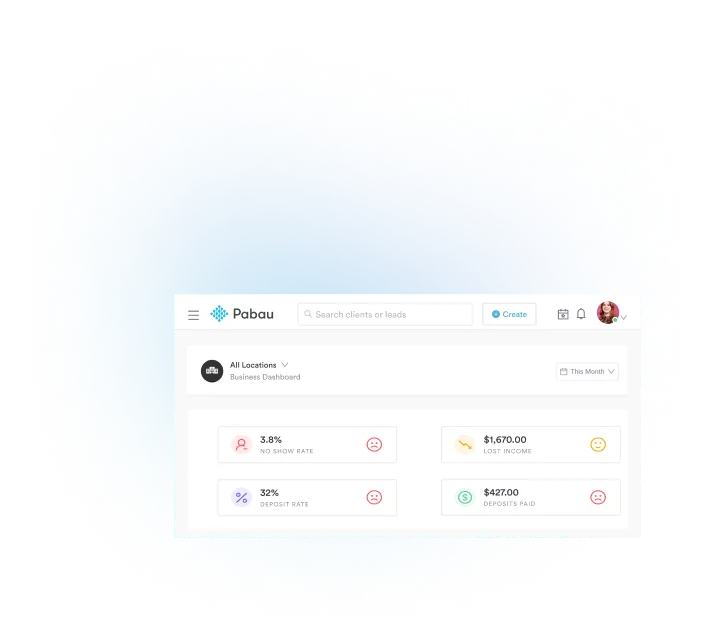
Payment plans succeed or fail on three variables. Those are term length, minimum payment, and automation. Plans that run past six months with no minimum payment rarely finish. A practical framework for patient payment plans looks like this:
Work on reducing no-shows at the same time. A patient who doesn’t show doesn’t pay, and you lose the revenue and the appointment slot together.
Bad debt is mostly a screening problem. Most uncollectible accounts were predictable before the appointment was ever confirmed. Financial screening at booking, rather than at checkout, is where the number comes down.
A pre-service financial screening process should include:
Underinsured patients often pay you first and chase their plan afterwards. Hand them an itemized superbill at checkout, carrying the same codes your billers would send in an 837 file. Reimbursement that lands keeps them current with you.
Screening catches most of it. For the balances that still age, run a fixed escalation sequence instead of deciding account by account. The timeline below is the one to copy, and the third column shows what a practice management system handles for you at each step.
Fixing the days is the whole point. A front desk that escalates when the moment feels awkward escalates late, and late is what turns a balance into bad debt. Publish the timeline in your policy so patients see the day 90 step on the day they book.
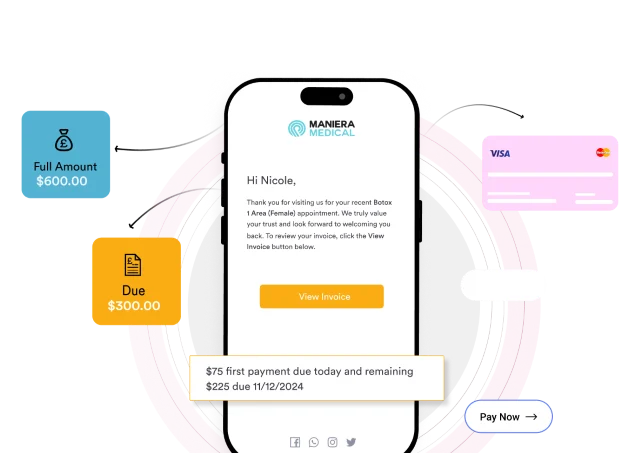
Sound financial management for practices also means tracking bad debt as a KPI. Target a bad debt ratio below 2-3% of self-pay revenue. Anything above 5% points to a process problem rather than a run of difficult patients.
Aesthetic and wellness practices run almost entirely on self pay patients. Botox, dermal fillers, laser treatments, pressotherapy, IV therapy, and most functional medicine services sit outside insurance. That produces a revenue model with no payer safety net behind it, which is why the tactics below look nothing like standard revenue cycle advice.
Three habits are near-universal in high-performing aesthetic practices:
Cancellation policies carry more weight here than in most other practice types, because slots are revenue-specific. A practitioner blocked out for a cancelled Botox appointment can’t easily backfill with a different treatment mid-day. A clear cancellation fee policy that patients acknowledge at booking protects revenue and sets expectations at the same time.
Surgical add-ons raise the stakes further. A body contouring case billed under 15879 ties up room time and product you cannot resell. Price the deposit against that exposure, not against a facial.
Practices in this space also do better on purpose-built medical spa software. It handles treatment photos, consent workflows, product-level stock tracking, and HIPAA-compliant storage of before-and-after imagery. A mixed aesthetic and wellness menu adds another requirement, and wellness clinic software keeps packages, memberships, and treatment credits on one balance instead of three.
The escalation timeline above only works if nobody has to remember it. Generating invoices, sending payment links, taking deposits, tracking balances, chasing unpaid accounts: done by hand, that adds hours to every staff member’s week. Practice management software like Pabau runs the whole sequence in the background instead.
Mapped against the timeline, four features do most of the work:
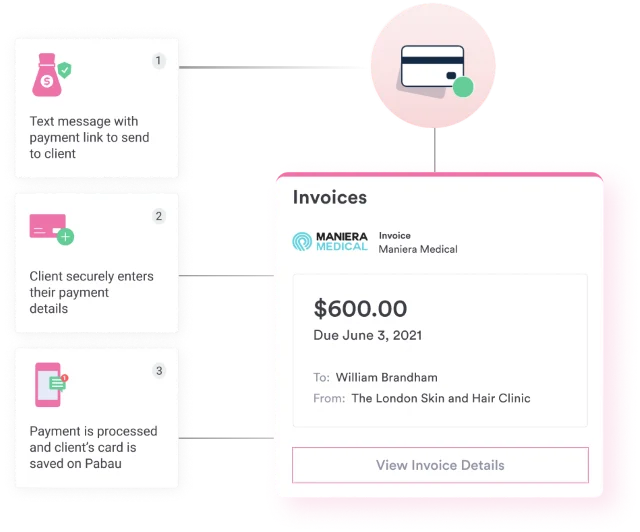
Pabau’s payment processing sits in the same system as appointments and patient records. Nothing has to be reconciled between a booking tool and a separate processor. A practice manager can see every outstanding balance across the practice from one dashboard, sorted by how long it has aged.
In-person payments run through Pabau Pay, our card terminals, and land against the same invoice as the deposit taken online. Ageless Enhancements, a two-location med spa in Massachusetts, saves around ten minutes per patient by keeping the whole journey in one place.
For practices that would rather not carry payment plan risk themselves, Klarna integration lets patients spread the cost through a third-party provider. Default risk moves off your books entirely.

Pabau handles deposits, payment reminders, invoicing, and online payments automatically, so your team spends less time chasing balances and more time with patients.

The practices that do well on self-pay revenue are rarely the ones with the cleverest discount schedule. They are the ones that settle the money question before the patient arrives. After that the software holds the line, and nobody on your team has to play the bad guy.
Start with the written policy. The deposit, the payment plan, the Good Faith Estimate, and every step of the day 90 timeline hang off it. Once patients know the price and the payment timing at booking, a deposit stops feeling like a confrontation.
There is a trade-off worth naming. A firm deposit policy will cost you a handful of bookings. It will also save you far more in bad debt.
Book a demo and we’ll walk through the deposit, invoicing, and reminder workflow for your practice type.

Coding a septic arterial embolism? Septic arterial embolism coding sets out where this code sits in the I70 to I79 vascular disease block.
Want the whole money process mapped end to end? Healthcare revenue cycle management explains how each stage feeds the next, from booking through to payment.
Coding a bleeding duodenal ulcer? Duodenal ulcer hemorrhage coding walks through where this code sits in the K26 hierarchy and how to sequence it.
Coding a coffee ground emesis case? Hematemesis coding guide explains how this code captures upper gastrointestinal bleeding presenting as coffee ground vomit.
Coding a psoriasis vulgaris diagnosis? Psoriasis vulgaris coding guide explains why documented specificity avoids the denials tied to the unspecified psoriasis code.
Self-pay means the patient pays the practice directly, and no claim is submitted to an insurer. Self pay in healthcare covers uninsured patients, patients whose deductible is unmet, and patients who choose to keep a service off their insurance record. The practice sets the price, and there is nothing to reconcile against a payer contract afterwards.
Self-pay insurance is not a product you can buy, because self-pay describes the absence of an insurer. Nothing is billed, adjudicated, or reimbursed. People searching the phrase usually want one of two things. Either a published cash price list for common services, or a health-sharing plan, which is not insurance and reaches providers as a self-pay account.
Yes. An insured patient can pay cash for a service and ask you not to bill their plan. Staff often ask, is it legal to self pay when you have insurance? It is, and HIPAA gives patients the right to restrict disclosure to a health plan when they pay in full out of pocket. Take that election in writing, and check your payer contracts first, because some restrict cash pricing on covered services.
Self-pay is often cheaper because the practice skips the cost of billing a claim. There is no eligibility check, no coding review, no denial appeal, and no wait of 30 to 60 days for the money. Practices pass part of that saving on as a cash price. The comparison only holds against list price, though. A patient who has already met their deductible usually pays less through the plan.
Sometimes, and Medicare’s rules are stricter than any commercial plan’s. If you are an enrolled provider and the service is covered, you must bill Medicare rather than charge the beneficiary directly. Patients often ask why can’t Medicare patients pay out of pocket, and that claim-submission rule is the answer. Services Medicare never covers, such as cosmetic treatments, can be billed as self-pay. Can you self-pay if you have Medicaid? In most states you cannot, not for a covered service from an enrolled provider.
Most practices discount 10-40% off the chargemaster rate, or price services at 100-150% of the Medicare fee schedule. Aesthetic and elective practices often use flat pricing with no standard discount, adding value through package pricing and membership models instead. Sliding fee scales tied to Federal Poverty Level thresholds are used mainly by FQHCs and community health centers.
A Good Faith Estimate is a written cost estimate for uninsured and self-pay patients. The No Surprises Act has required it since January 2022. The deadline runs from the scheduling date. Book a service 3 to 9 business days out and the estimate is due within one business day of scheduling. Book it 10 or more business days out, or take a request with no appointment, and the deadline is three business days.
Collect at time of service wherever you can, taking a deposit to confirm the appointment and the balance at check-in. For anything carried past the appointment, automated reminders at 7, 14, and 30 days recover a good share with no staff follow-up. Payment plans on automated ACH or stored-card collection outperform manual billing by a wide margin.
Yes. Aesthetic practices operate almost exclusively on a self-pay model, because cosmetic and elective services are rarely covered by insurance. That removes claims processing, prior authorization, and payer negotiation, which cuts administrative overhead sharply. The trade-off is that cash flow depends entirely on upfront collection and a clear financial policy, with no insurance reimbursement as a backstop.