Consent form for trip: free template and guide
A consent form for trip is a document in which a parent or guardian authorizes a...

1
Last Updated: Oct 20, 2026
A motivation questionnaire is a structured set of questions that shows what drives a patient and where their commitment to a plan may stall. Practices use it to spot barriers early, so treatment conversations start from what the person wants.
Most practitioners either build one from scratch or borrow a validated instrument designed for research. This guide gives you a free template and the questions it should contain. It also shows how to read the answers as a pattern, so a single score never makes the decision for you.
A five-section questionnaire covering core motivation ratings, a ranking of eight motivational drivers, open-ended questions and an intrinsic versus extrinsic check. It closes with a clinician notes section for key motivators, barriers and recommendations.
Download template
A motivation questionnaire measures what drives a person and what gets in the way. It opens a conversation about the plan and carries no diagnostic weight.
Validated tools such as the Intrinsic Motivation Inventory and URICA suit research, while a short custom form suits everyday practice.
Read the answers as a pattern across importance, confidence and drivers, because each pattern calls for a different next step.
Review the answers with the patient before acting on them, and repeat the questionnaire at planned review points.
Practice software such as Pabau sends the questionnaire before the visit and stores every answer in the patient record.
A motivation questionnaire is a set of structured questions that measures how motivated a person is. It also shows what drives them and what might get in the way. Clinicians use it to open a conversation about the plan, and it carries no diagnostic weight.
In healthcare and wellness settings, it usually focuses on readiness for change, confidence in following a plan and the goals the person cares about most. Workplace versions look at engagement, recognition and goal alignment instead.
Most questionnaires borrow from two research traditions. Self-Determination Theory separates intrinsic motivation, driven by interest or personal values, from extrinsic motivation, driven by rewards or pressure. The stages of change model asks how close a person is to acting on a decision. A stages of change worksheet walks a patient through each stage.
A useful questionnaire covers more than one dimension. A single “How motivated are you?” item tells you very little, because two people can give the same score for very different reasons.
Motivation questionnaires fall into two broad groups. Validated instruments have been tested for reliability and are cited in research. Custom questionnaires are built by a practice for a specific purpose and need careful piloting before use.
The validated instruments you are most likely to meet are listed below.
The IMI was developed within Self-Determination Theory, and the Center for Self-Determination Theory permits academic use but requires permission for commercial use. URICA was developed in 1983 by McConnaughy, Prochaska and Velicer. Most practices adapt a shorter custom version instead, because these tools were built for research rather than routine appointments.
Workplace motivation questionnaires ask people to rate statements on a Likert scale, usually from strongly disagree to strongly agree. Questions cluster around recognition, autonomy, goal clarity and how well daily work connects to personal purpose.
In recruitment, the term often means SHL’s Motivation Questionnaire (MQ), a psychometric test that rates 18 dimensions of motivation in 20 to 25 minutes. A practice survey is much lighter, and statements like these are a typical starting point.
For a practice team, run the survey anonymously and share the themes, not individual answers. Staff answer more honestly when they know nobody will trace a low score back to them.
A patient motivation questionnaire focuses on readiness for change, confidence in the treatment plan and perceived barriers such as cost, time or side effects. It shows the clinician where the patient needs support. It cannot reliably predict whether they will stick to the plan.
Treat answers as a prompt for discussion. When a score comes back low, explore the barriers together and adjust the plan around them. For patients who are still deciding, a readiness for change questionnaire gives a closer look at where they sit before you agree on a plan.
In wellness and aesthetic practices, the questionnaire centers on the outcome the patient wants and how they will know it has worked. It also asks what else is happening in their life. These answers shape which treatment sequence is realistic.
Watch for answers that point to outside pressure, such as a partner’s wishes or a fixed event date. Extrinsic drivers are not a red flag on their own. They do mean the consultation should confirm that the patient wants the result for themselves.
The most useful reading combines two answers: How important the change is and how confident the patient feels. This pairing comes from motivational interviewing, and each combination points to a different conversation. The matrix and table below map each pattern to a next step.
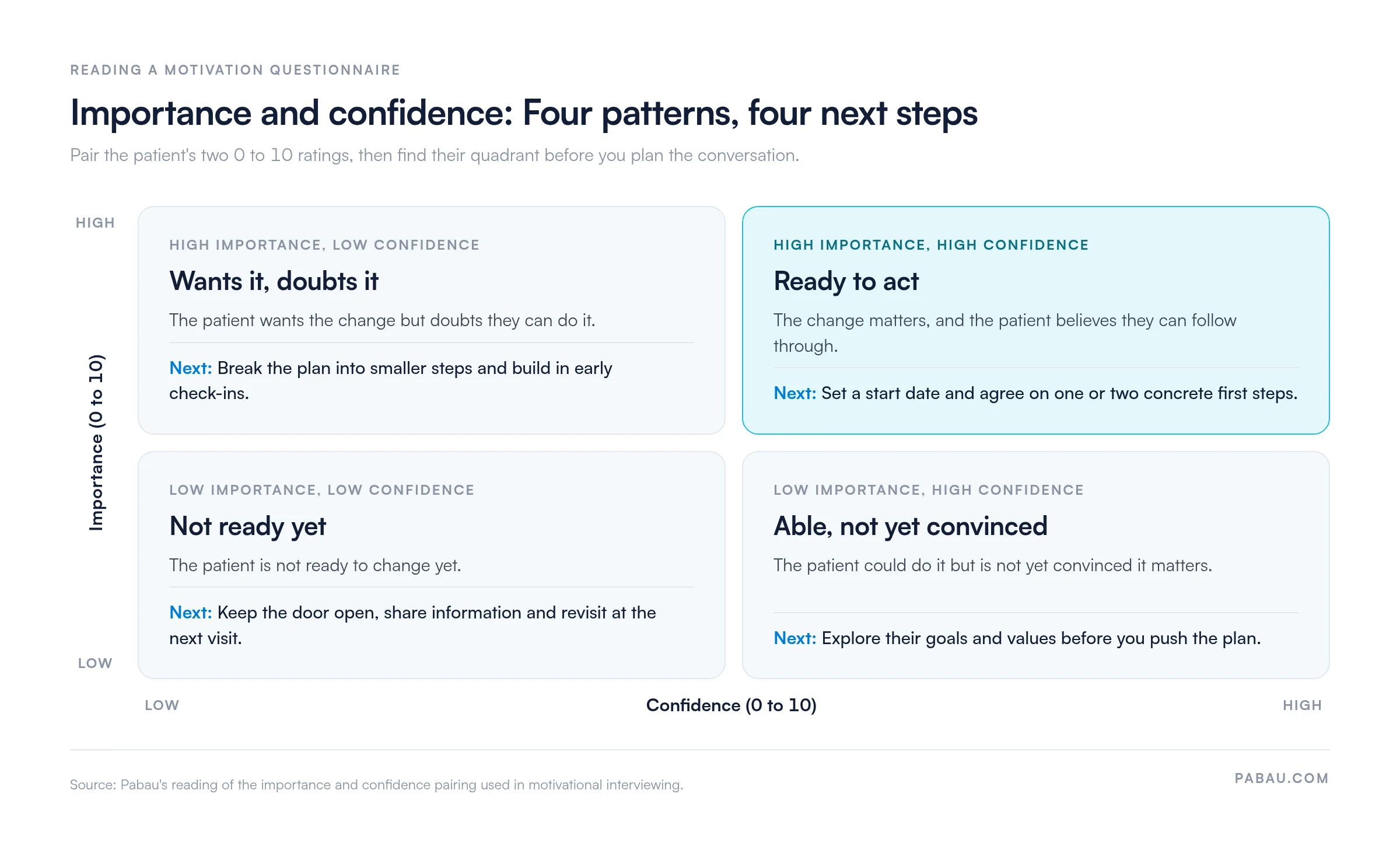
Each pattern calls for a different style of question. A motivational interviewing cheat sheet keeps the core techniques to hand during these conversations.
Apply the same logic to the template’s intrinsic and extrinsic section. A patient who answers mostly “extrinsic” often responds well to visible milestones and reminders. A patient who answers mostly “intrinsic” responds better when the plan is tied to their own values and goals.
Keep the questionnaire to 10 to 15 items. Shorter forms get completed, and patients answer more honestly when they are not fatigued. Review the results in the first five minutes of the consultation so the patient sees their answers are being used.
A questionnaire helps only when its answers reach the consultation. These five steps keep it useful and proportionate.
Store completed questionnaires with the same care as other clinical documentation. HIPAA in the US and GDPR in the UK and EU apply to the personal information you collect.
A short, structured questionnaire gives the team a shared starting point. It can reveal barriers a patient would not raise unprompted, such as cost worries or a sense that the plan is not theirs.
The PDF above is a 12-page form split into five sections. Use all of it, or only the parts that fit your patients.
Adapt the wording to your specialty, remove any item that does not fit your patients and keep the scoring simple. If you pair it with a SMART treatment plan, the patient’s goals can become the targets you review later. Look for them in the Section 1 ratings and the Section 3 answers.
On paper, a motivation questionnaire is filled in at reception, read once and filed. By the next review, nobody can find the answers to compare.
In Pabau’s practice management software, the questionnaire goes out as one of your digital forms before the appointment. Answers land in the patient record automatically, so you read them before the patient walks in.
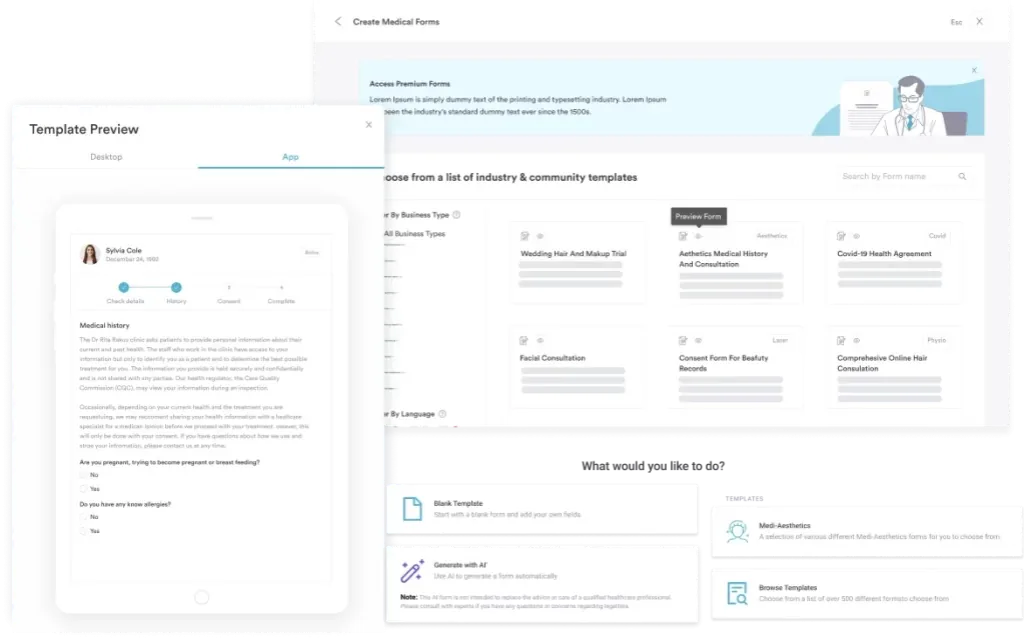
Consultation notes sit in the same record, so the barriers a patient named are linked to the plan you agreed on. Pabau’s client records keep each completed questionnaire on file, so you can compare answers at every review point. Therapy and coaching practices can see the wider workflow in therapy practice management software.
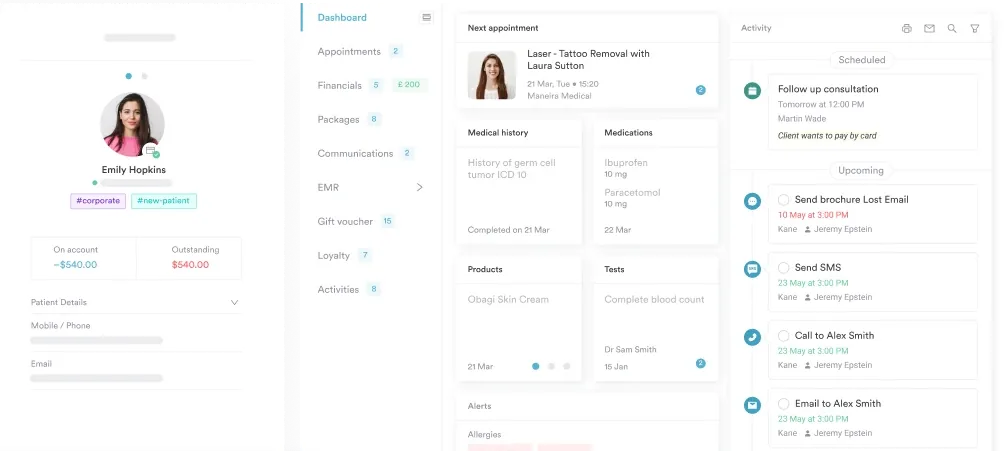

Pabau’s digital forms send a motivation questionnaire ahead of time and keep the answers in the patient record. Your first conversation starts from what the patient has already shared.

A motivation questionnaire earns its place when it changes the next conversation. Keep it short, read importance and confidence together, and agree on one concrete step before the patient leaves.
The trade-off is time. Reviewing answers takes a few minutes per consultation, and that costs less than a treatment plan the patient quietly abandons. Repeat the questionnaire at each review, and the scores build into a record of progress you can show the patient.
Book a demo to see how Pabau sends motivation questionnaires before the visit and keeps every answer in the patient record.

Is your patient still deciding whether to change? Readiness for change questionnaire measures where a patient sits before you agree a treatment plan.
Want to map motivation to a stage? Stages of change worksheet walks patients through each stage so you can match support to where they are.
Need an exercise to build motivation between sessions? Motivational worksheet gives patients a structured prompt to reconnect with their reasons for change.
Turning answers into goals? SMART treatment plan converts the goals a patient names into specific, measurable targets.
Exploring what drives a patient’s choices? Values worksheet helps patients name the values that sit behind their intrinsic motivation.
A motivation questionnaire is a structured set of questions that measures drivers, readiness for change and perceived barriers. Clinicians use it to open a conversation about the plan, and it carries no diagnostic weight.
The IMI is free for academic use, but commercial use needs permission from the Center for Self-Determination Theory. Most practices use a custom questionnaire instead.
Not reliably. Scores can prompt a useful discussion, but a questionnaire on its own should not be used to predict whether a patient will stick to treatment.
For everyday practice, 10 to 15 items is enough. Shorter forms get completed, and patients answer more honestly when they are not fatigued.
Send it before the first consultation so you can review the answers in advance. Repeat it at planned review points to see whether motivation has changed.
Intrinsic motivation comes from interest, enjoyment or personal values. Extrinsic motivation comes from outside rewards or pressure, such as praise, money or another person’s wishes.
Validated tools come with their own scoring rules, which you should follow exactly. For a custom form, look at patterns across importance, confidence and drivers rather than relying on a single total.
Yes. Workplace versions rate statements on recognition, autonomy and goal clarity. Run them anonymously and share themes with the team rather than individual answers.