Reflection questions: 14 examples and a free template
Reflection questions are open-ended prompts that guide a person through structur...

5
Last Updated: Oct 16, 2026

A motivational worksheet is a structured clinical form that helps clients name their values, set goals, and work through barriers to change.
The decisional balance section is the part that does the heavy lifting, because it asks for the pros and cons of staying the same too.
A 1 to 10 readiness rating turns motivation into something you can score, revisit, and compare between sessions.
Practice management software like Pabau captures the completed form in the client record and links it to the next appointment.
A ready-to-use worksheet covering values clarification, decisional balance, goal setting, barriers, and action planning. It also carries the motivational interviewing prompts and a readiness-to-change rating.
Download templateA motivational worksheet is a structured therapeutic form that helps clients name what drives them and what gets in the way. It walks a client through their values, the pros and cons of changing, and the steps they will commit to. Therapists, coaches, behavioral health teams, and wellness practitioners all use some version of it.
A motivational worksheet is a client-facing form that explores motivation and readiness for change. It captures the drivers and barriers behind whether someone follows through on a health goal. That goal might be quitting smoking, losing weight, managing a chronic condition, or building a new habit.
The form does two jobs at once. For the clinician, it gives structured insight into a client’s values, ambivalence, and stage of readiness. For the client, it produces a written record of their own reasoning.
That record reinforces commitment, and it saves the client from having to recall why change mattered in the first place. It also documents informed decision-making and shared planning. Both are expectations under HIPAA, under CQC standards in the UK, and under clinical best practice.
Most therapeutic frameworks lean on some form of values-exploration tool. That includes motivational interviewing (MI), cognitive behavioral therapy (CBT), and acceptance and commitment therapy (ACT). Once the form lives inside a practice’s mental health documentation system, it stops being paper and becomes a clinical record you can track across sessions.
The form works best when it is introduced early in the therapeutic relationship. The first or second session, right after initial assessment, is the natural slot. Here is how to fit it into your workflow:
After each session, document the client’s responses so progress is captured over time. Compare their answers from one month to the next. Movement on the readiness scale, or a barrier that has been cleared, is a concrete sign of therapeutic progress.
The form travels well across healthcare and wellness settings, and it needs no redesign to fit a new one. Therapy practice management teams use it to structure intake and to keep care planning consistent between clinicians. It also earns its place in these settings:
Reduces premature dropout. Clients who articulate their own reasons for change stay engaged longer than clients who receive external directives. The form creates internal accountability.
Speeds treatment progress. By surfacing ambivalence early, it saves the sessions that would otherwise be spent in the “why aren’t you changing?” loop. Clients move sooner through contemplation, preparation, and action.
Improves compliance documentation. The completed form evidences informed planning, risk disclosure, and shared decision-making. Those are CQC and HIPAA expectations, and the record protects the clinician as well as the client.
Enhances outcomes measurement. Readiness scores, goal specificity, and named barriers can all be tracked as numbers. Practices using a digital version can report on motivation, goal achievement, and follow-through across a whole caseload.
Enables multi-session continuity. Comparing responses across sessions makes progress visible to the client. Visible progress is what reinforces the therapeutic alliance.
Knowing the difference between intrinsic and extrinsic motivation shapes how you use the form. Intrinsic motivation is self-driven. The client wants to change because it fits their values, their identity, or their sense of meaning. It sounds like “I want to be a healthier parent for my kids.”
Extrinsic motivation comes from outside. The client changes to win a reward or avoid a penalty: “My doctor said I have to lose weight, or I’ll end up on medication.”
Intrinsic motivation tends to be the more durable of the two. Clients who change to honor their own values hold that change longer. Clients driven by outside pressure often revert once the pressure lifts. So the questions on the form should connect the change to what the client already cares about.
Ask “How does this goal reflect who you want to be?” rather than repeating a blood pressure reading. Extrinsic motivators still have a role, and they often jumpstart the change. Acknowledge the external driver, then help the client find an intrinsic “why” underneath it.
The decisional balance section is the heart of the form. It does not just list the reasons to change. All four cells get filled: the benefits and drawbacks of changing, and the benefits and drawbacks of staying the same.
The four-cell format surfaces the benefits of staying the same, which every client feels even when nobody names them. It also gives the costs of changing a place to sit, so they can be acknowledged rather than minimized. Once ambivalence is on paper, it becomes something you can work with.
The form is most powerful when it is paired with core MI skills. The acronym OARS captures the four foundational techniques:
Use OARS as you guide the client through each section. Avoid filling the form in for them, because the power sits in the client’s own words. If you want the prompts scripted in advance, our motivational interviewing script lays them out in session order.
Not every client is ready to change. Where a client sits is information you can act on, and it is worth recording. The Transtheoretical Model names five stages of readiness: precontemplation, contemplation, preparation, action, and maintenance.
Each stage calls for a different part of the form, so the section you open with should follow the client rather than the page order. The map below sets out which section does the work at each stage.
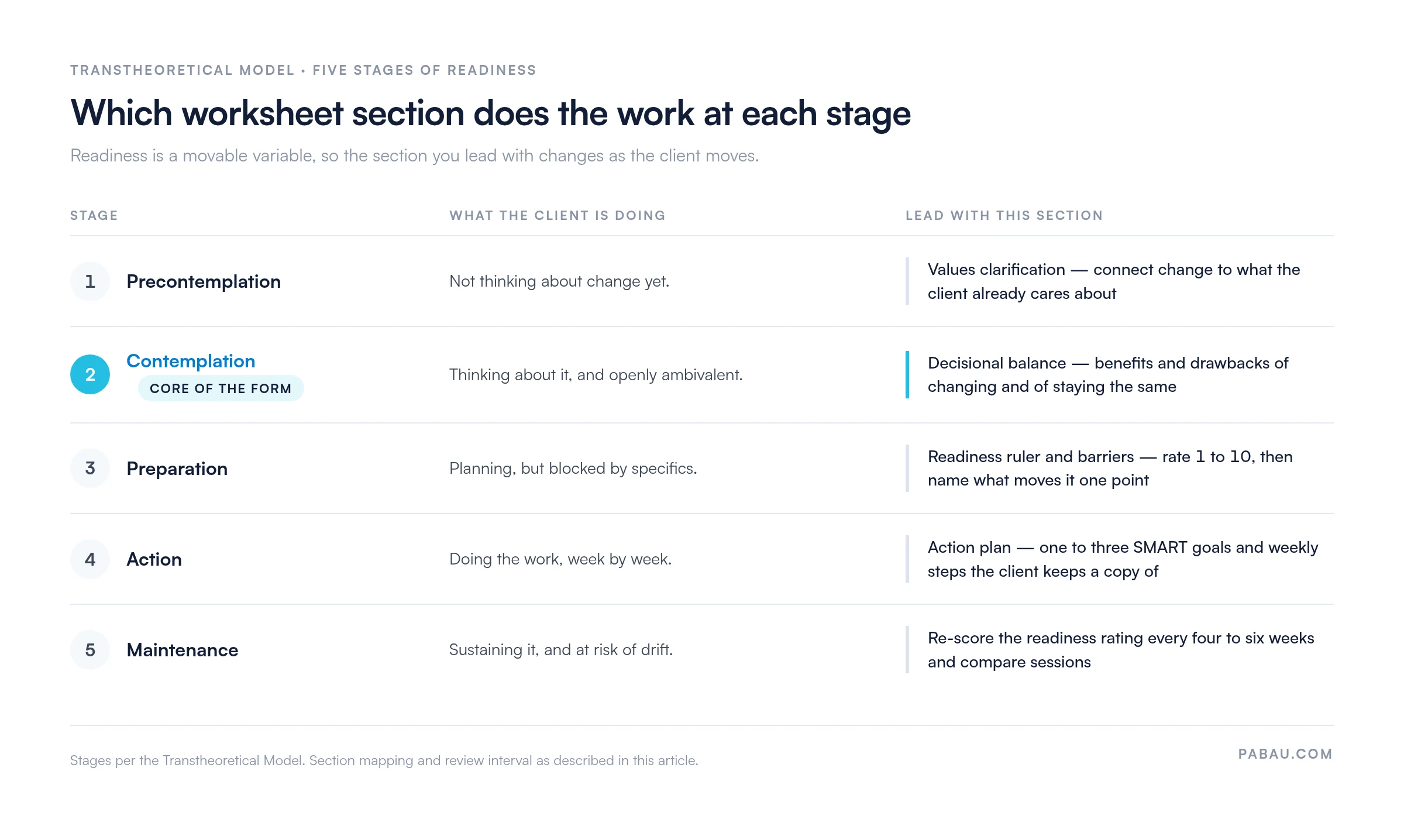
A readiness ruler gives you a concrete starting point. Ask: “On a scale of 1 to 10, how ready are you to make this change?” Then ask the follow-up that matters: “What would it take to move you one point higher?”
That second question reframes readiness as a movable number and hands the client control of it. You are helping them work out what they need in order to feel ready. If you want to work a stage at a time, our stages of change worksheet gives each stage its own prompts.
A paper worksheet still works, but it stops at the end of the session. Practice management software like Pabau captures the same form through digital intake forms, so it lands in the client record instead of a drawer. Every answer then sits beside the clinical notes and the next appointment.
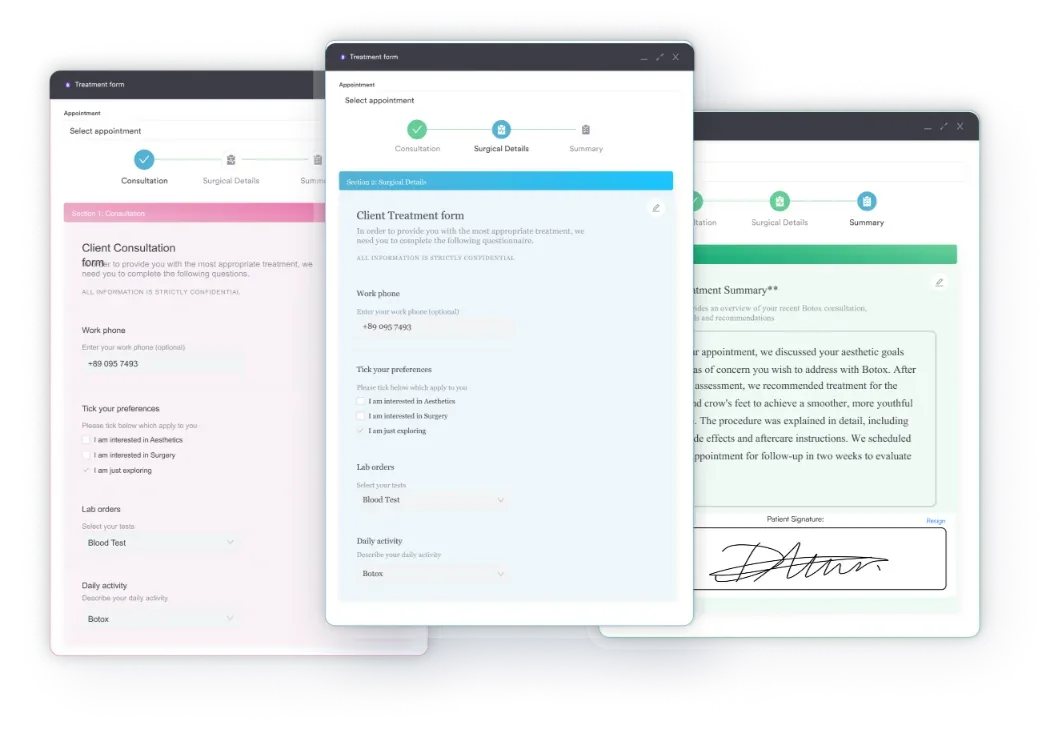
Readiness scores can then drive the schedule. If a client rates their readiness at 7 out of 10, an automated workflow books the follow-up while that score is still high. Goal and barrier data carry into the clinical note, so documentation stays consistent between clinicians.
Over time, comparing responses across sessions becomes a dashboard report. Motivation progress turns into a clinical outcome you can measure.
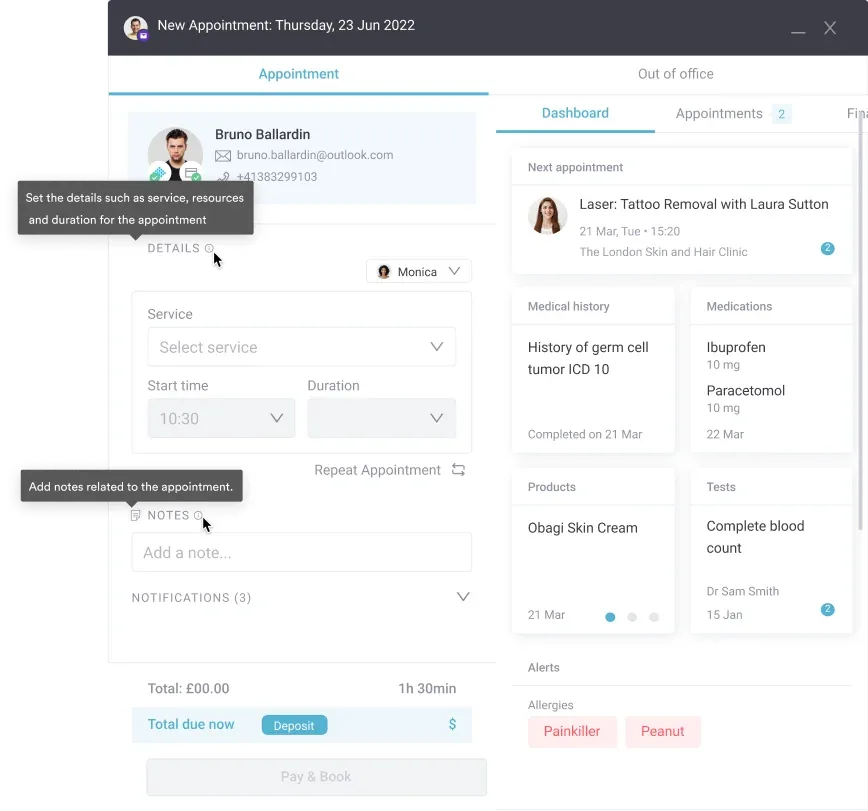
Track the readiness rating across three consecutive sessions. If the score stalls or drops, the current approach is not landing. Revisit the decisional balance and look for barriers nobody has named yet. Movement of one to two points a month is solid therapeutic progress.
Pabau pricing starts at $104 a month for one user, and every subscription includes every feature. Solo therapists, community mental health centers, and integrated medical practices all use it to document motivational work for supervision, accreditation, and funders.

See how Pabau captures client motivation data, tracks it across sessions, and files it in the client record. Documentation time drops and the audit trail stays intact.

The worksheet earns its place when it keeps working after the session ends. A client who has written down their own reasons for changing has something to argue with when motivation dips at week three.
So introduce it early, use OARS to guide the conversation, and re-score the readiness rating every four to six weeks. The trade-off is time: the form costs you ten minutes of session that you could spend elsewhere. Sessions spent circling the same ambivalence cost far more than that.
Where it pays off most is on the second and third pass, when you can put two sets of answers side by side. Book a demo to see how Pabau turns the completed worksheet into a client record your team can track between sessions.

Want the OARS prompts on one page during the session? The motivational interviewing cheat sheet keeps the four techniques and their example questions in front of you.
Need to score readiness more formally than a 1 to 10 ruler? The readiness for change questionnaire places a client on the stage model before you pick a section to work on.
Ready to turn motivation into a written commitment? The change plan worksheet takes the goals from this form and turns them into dated steps.
A motivational worksheet is a structured clinical form. It helps clients explore personal values, identify goals, weigh the pros and cons of change, and plan concrete steps. Therapists, coaches and behavioral health teams use it to speed behavior change and to document shared decision-making.
MI worksheets are built to explore ambivalence rather than to score a symptom. They use a four-cell decisional balance, which asks for the pros and cons of staying the same as well as changing. That format surfaces the client’s own reasoning and reduces defensiveness.
Yes. It is most valuable for clients considering change or in the early stages of it, but it fits across therapeutic settings. Adjust the language and the depth for age, literacy, and presenting problem. The core framework still applies.
OARS stands for Open questions, Affirmations, Reflective listening, and Summaries. They are the four core skills that make motivational interviewing work. Use them as you guide clients through the form, to encourage change talk and reduce resistance.
Review the readiness rating every four to six weeks. Compare responses across sessions to track goals, barrier resolution, and movement through the stages of change. A stalled readiness score signals the need to re-explore ambivalence or adjust the approach.