Mental health self-care checklist
A mental health self-care checklist is a structured daily tool for tracking the ...

6
Last Updated: Oct 20, 2026

Motivational interviewing is a collaborative style that strengthens a patient’s own motivation to change a behavior.
PACE stands for partnership, acceptance, compassion, and evocation, and it is the mindset behind every MI technique.
OARS names the four core clinician skills: open questions, affirmations, reflections, and summaries.
DARN-CAT separates preparatory change talk from mobilizing change talk, which is the kind that predicts action.
Practice management software like Pabau lets you record the stage of change and automate follow-ups between visits.
A quick-reference sheet covering the PACE spirit, the OARS skills with example phrasing, and the DARN-CAT change talk map. It also carries the four MI phases and the five stages of change, with a suggested clinician response for each.
Download templateA motivational interviewing cheat sheet is a quick reference that puts the core MI frameworks where you can see them mid-session. It covers the PACE spirit, the OARS skills, the DARN-CAT change talk map, and the five stages of change.
Motivational interviewing is a collaborative conversation style developed by William R. Miller and Stephen Rollnick. It strengthens a patient’s own motivation to change a behavior, rather than supplying the clinician’s reasons for it. That distinction is what separates MI from advice-giving.
The sheet earns its keep in weight management, medication adherence, mental health treatment, and substance use recovery. One section here goes beyond the printable sheet. It covers what to record after an MI conversation, so your next session picks up where this one ended.
Before the techniques do anything useful, the mindset behind them has to be in place. PACE is that mindset:
Clinicians who work this way create the conditions where change talk shows up on its own. Patients feel heard rather than pressured or judged.
OARS names the four clinician skills that carry an MI conversation. Use the table in session when you are not sure which move fits the moment:
Reflections and open questions do most of the work. SAMHSA’s treatment guidance points to reflective listening as the skill that builds alliance and draws out change talk.
MI moves through four phases. Knowing which one you are in tells you which skill to lean on:
Few conversations run straight through all four phases. You may circle back to engaging when trust slips, or stay in evoking when change talk stays thin. Using digital consultation forms for the intake questions keeps your face-to-face time for the relational work.
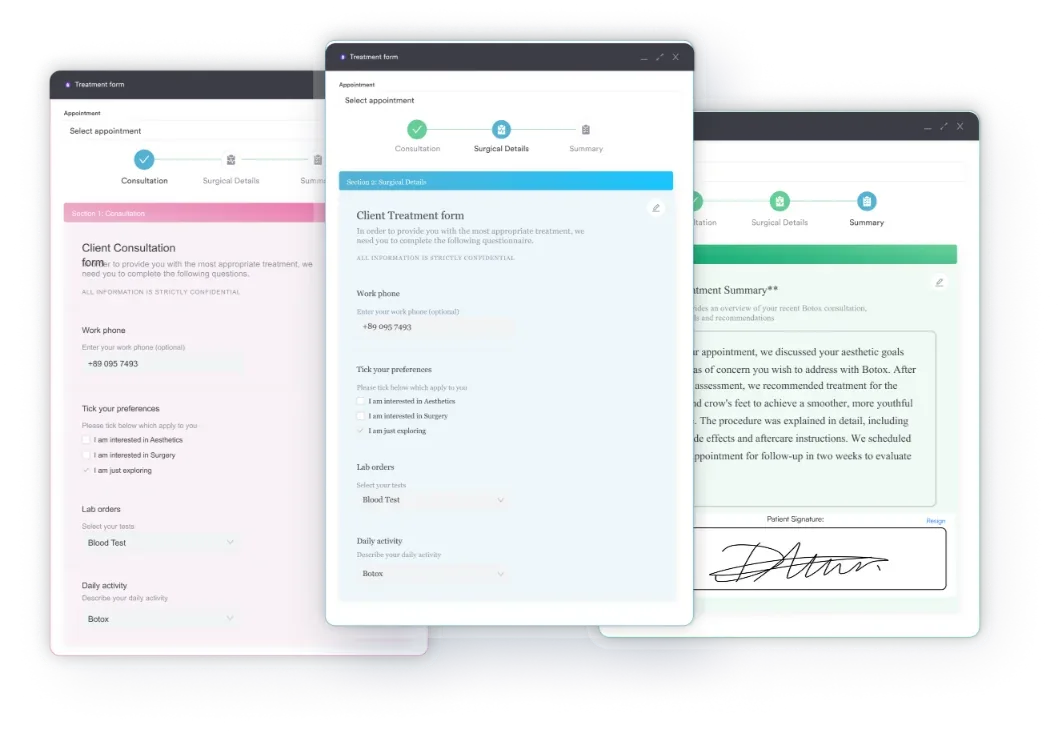
A patient management platform stores every completed form against the right patient record automatically.
Change talk is anything the patient says in favor of change. DARN-CAT splits it into preparatory talk, where the patient is still thinking, and mobilizing talk, where they are ready to act. Mobilizing change talk is the part that predicts behavior change:
The skill is listening for change talk and amplifying it. When you hear sustain talk, answer with reflection and reframing instead of argument.
The transtheoretical model from Prochaska and DiClemente describes five stages a person passes through when changing a behavior. MI clinicians match their approach to the stage in front of them:
Readiness is not fixed. Patients slide back and forth between stages, especially after a setback. A short outcome measure such as the CORE-OM questionnaire gives you a number to track alongside the stage.
Meet the patient where they are, not where you would like them to be. A plan built for the wrong stage is the most common reason a good conversation leads nowhere.
Resistance and sustain talk are normal, and they tell you something useful about where the ambivalence sits. Roll with them instead of arguing:
Sustain talk predicts no change and change talk predicts change. Your job is to evoke and amplify change talk, not to manufacture it or argue the patient into it.
Print the sheet or keep it open on a second screen. When a conversation stalls, look at the OARS table and pick the skill you have not used yet. When you cannot tell whether the patient is ready, check DARN-CAT.
Most cheat sheets stop at the conversation. What decides whether the next session builds on this one is the note you write afterwards. Record these five things while the conversation is still fresh:
Those five fields turn a good conversation into a thread you can pick up weeks later. A coaching log does the job if your notes are still on paper.
Between sessions, patients in the action and maintenance stages need something to hold onto. A grounding techniques worksheet or a values exercise gives them a task rather than a promise.
Mid-session, if the patient is stuck on a barrier, look at the stages table first. Are they still in contemplation? If so, go back to OARS and evoke more change talk before you plan anything.
If you cannot tell whether they have committed, check DARN-CAT. Desire and ability mean keep evoking. Commitment and taking steps mean move to planning.
PACE and the resistance section are mindset, not scripts. Read them early enough that they become your default stance rather than something you look up.
A cheat sheet is not training. The Motivational Interviewing Network of Trainers, or MINT, runs Training of New Trainers workshops and a voluntary trainer-certification pathway. Miller and Rollnick’s book Motivational Interviewing is the standard text, and you want the most recent edition.
NICE, the UK’s National Institute for Health and Care Excellence, publishes behavior change guidance built on MI principles. In the US, SAMHSA’s treatment resources fold MI into substance use and mental health protocols.
Skill still needs feedback. A peer consultation group or an MI trainer will take you further than any reference sheet can.
In most practices, MI runs on memory. The stage of change lives in the clinician’s head. The patient’s exact words are gone by the next visit, and follow-up depends on whoever remembers to send it.
Practice management software like Pabau gives those five fields a home. Structured client records hold the target behavior, the stage, and the change talk you heard. The next clinician reads the same picture you did.
A client portal carries the between-session work. Patients read what you assigned, log their steps, and arrive with something to report. Automated reminders nudge maintenance-stage behavior without anyone typing a message each week.
In MI that matters, because the patient’s own wording is the material you reflect back later.
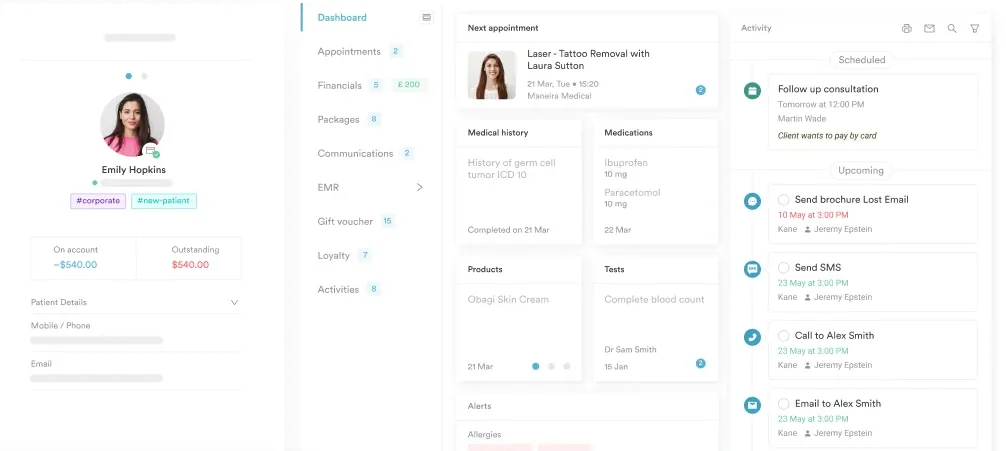
Practices working in weight management, medication adherence, or substance use recovery can run all of this from one place. Nobody drifts out of contact during the action and maintenance stages.

Pabau’s client records, digital forms, and automated follow-ups hold the stage of change and the next steps for every patient. Your next session starts where the last one ended.

Technique without the spirit behind it does not work. A clinician who runs OARS as a script gets polite answers and no change. The frameworks earn their place only once you already believe the patient’s reasons matter more than yours.
So treat the sheet as a prompt rather than a procedure. Ask the open question, affirm what you see, reflect what you hear, then write down the five fields before you move on. The habit is what compounds over a year of appointments.
The trade-off worth remembering is that MI is slower in the room and faster over the course of care. Book a demo to see how Pabau keeps behavior change conversations documented and followed up between visits.

Need a values exercise to open up evocation? Ikigai worksheet gives patients a structured way to name what they actually want from a change.
Working with a patient who cannot name the feeling? Gottman feelings wheel gives them the vocabulary before you start reflecting it back.
Running couples work alongside MI? Marriage boundaries worksheet turns vague complaints into specific requests a couple can negotiate.
Want a between-session practice to assign? Metta meditation script gives maintenance-stage patients something concrete to do each day.
Assessing psychopathic traits in a case? PCL-R checklist lists all 20 items with Hare’s factor and facet structure, plus scoring and cut-offs.
OARS stands for open questions, affirmations, reflections, and summaries. These are the four core clinician skills used in MI to evoke change talk and build a working relationship. Open questions invite expansive patient responses. Affirmations recognize patient strengths. Reflections demonstrate empathy and deepen understanding. Summaries pull together the key themes and transition between topics.
Change talk is what a patient says in favor of change, including reasons, ability, commitment, and steps already taken. Sustain talk is what a patient says against change, including barriers and doubts. Change talk predicts behavior change, so MI clinicians evoke and amplify it. Sustain talk is something you roll with rather than argue against.
The spirit of MI is the mindset behind the techniques, captured in the acronym PACE. Partnership means working with the patient rather than directing them. Acceptance means genuine respect for their autonomy. Compassion means putting their well-being first. Evocation means drawing out their own reasons for change instead of supplying yours. Without the spirit, OARS is only a technique.
Open-ended questions invite expansive answers and signal genuine curiosity about the patient’s perspective. Avoid closed openers such as asking whether they have thought about losing weight. Ask what brought them in today, or how they have thought about making this change. Use them early to build rapport and during evoking to elicit change talk. They avoid the yes or no answers that close a conversation down.
The four phases are engaging, focusing, evoking, and planning. Engaging builds rapport and trust. Focusing narrows the conversation to one behavior or goal. Evoking elicits and strengthens change talk. Planning turns that into concrete action steps. Few conversations run straight through all four. You may circle back to engaging if trust slips, or stay in evoking if change talk is thin.
DARN-CAT separates two types of change talk. DARN covers desire, ability, reasons, and need. That is preparatory talk, where the patient is thinking about change but has not committed. CAT covers commitment, activation, and taking steps. That is mobilizing talk, where the patient is ready to act. Mobilizing change talk predicts behavior change, so MI clinicians work to evoke it. The framework tells you when to keep evoking and when to move to planning.
The five stages are precontemplation, contemplation, preparation, action, and maintenance. In precontemplation the patient is not thinking about change. In contemplation they are thinking about it but ambivalent. Preparation means they are committed and working out how. Action means they are making the change. Maintenance means the new behavior is established. Match your approach to the stage. Early on that means empathy without pushing. In contemplation it means evoking change talk. Later it means planning support, problem-solving, and relapse prevention.
Rolling with resistance means answering pushback without arguing. One option is to reflect it back, telling the patient you can hear they are worried it will not stick. Another is to reframe that worry as evidence they take the change seriously. A third is to ask for a different angle, such as one reason they might want to try. You can also amplify the barrier slightly, so the patient tests it themselves. Resistance is normal and informative, and it shows you where the ambivalence sits.