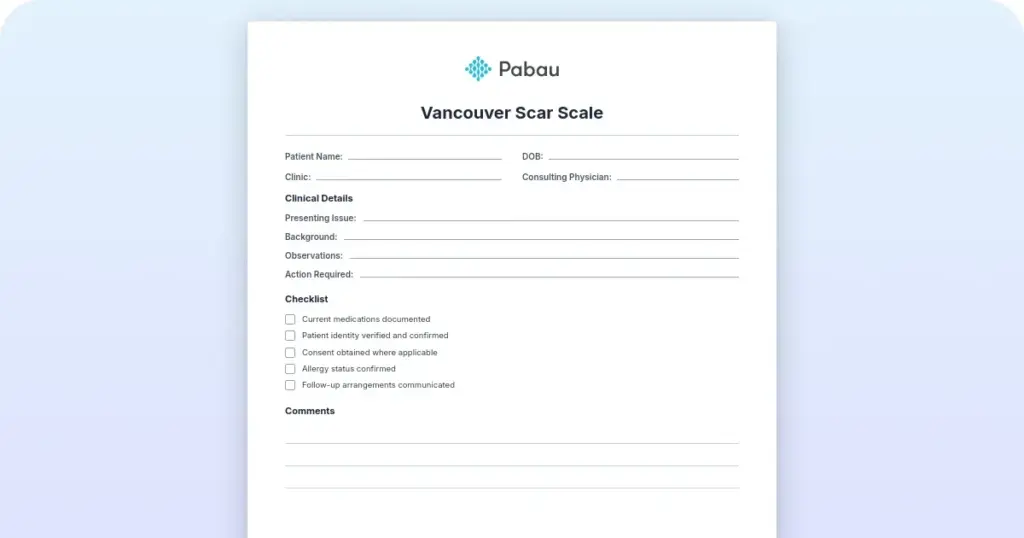
Vancouver scar scale template & scoring guide
Download your free Vancouver Scar Scale template A ready-to-use scoring form cov...

44
Last Updated: Sep 16, 2026

Lipedema surgery aftercare instructions guide post-operative recovery for lymph-sparing procedures that treat abnormal subcutaneous fat accumulation in the legs, arms, and torso.
Compression garments must be worn 24 hours daily for the first 6-8 weeks post-surgery, then transitioned to daytime wear to support lymphatic flow and reduce edema.
Manual lymphatic drainage should begin gently within the first week post-surgery (as directed by your surgeon) to facilitate fluid removal and decrease bruising and swelling.
Practice management software like Pabau lets clinicians deliver customized aftercare instructions, track recovery milestones, and manage follow-up appointments in one system.
A ready-to-use clinical template covering immediate post-operative protocols, compression garment schedules, lymphatic drainage timing, wound care procedures, activity restrictions, medication notes, nutritional guidance, complication warning signs, and week-by-week recovery milestones through week 12. Customizable for your clinic’s protocols and patient population.
Download templateLipedema surgery recovery unfolds over several weeks, and it goes more smoothly when patients know what to expect at each stage. Good aftercare sets the foundation for healing by covering compression, lymphatic management, wound care, and a gradual return to activity. Unlike cosmetic liposuction, lipedema surgery is a reconstructive procedure requiring lymph-sparing techniques and careful post-operative management to prevent complications and support long-term outcomes.
This template provides clinicians with a comprehensive framework to communicate essential recovery expectations to patients while maintaining compliance with post-operative protocols.
A lipedema surgery aftercare instructions template is a standardized clinical document that guides patients through their post-operative recovery journey. Lipedema is a chronic disorder characterized by abnormal, disproportionate accumulation of fatty tissue in the subcutaneous layer, typically affecting the legs, arms, and torso. Surgical intervention via lymph-sparing liposuction (tumescent, water-assisted, or ultrasound-assisted) removes excess adipose tissue while preserving the lymphatic system.
Post-operative aftercare instructions clarify expectations during the critical early healing phase (days 1-7), the active recovery period (weeks 2-8), and the long-term adaptation phase (weeks 9-12). The template documents compression protocols, lymphatic drainage schedules, wound care procedures, activity restrictions, medication guidance, and red-flag warning signs. Clear, written instructions reduce patient anxiety, improve adherence, and establish measurable recovery milestones.
Written aftercare also supports compliance. In the US, documented discharge instructions form part of the patient record under HIPAA. In the UK, they support Care Quality Commission (CQC) standards and GDPR record-keeping. Either way, clinicians should record that the patient received and understood their guidance before discharge.
Implement the template across five operational steps:
Standardized communication: Clear written instructions reduce misunderstandings about post-operative expectations and establish consistent recovery protocols across your patient population.
Improved patient compliance: Detailed week-by-week milestones and specific timelines (e.g. “wear compression garments 24 hours/day weeks 1-8, then daytime only”) support adherence better than verbal-only instructions. Patients can reference the document at home when questions arise.
Reduced complication rates: Clear wound care, activity restriction, and warning-sign guidance help patients recognize infection, excessive bleeding, or lymphatic complications early and contact the clinic promptly.
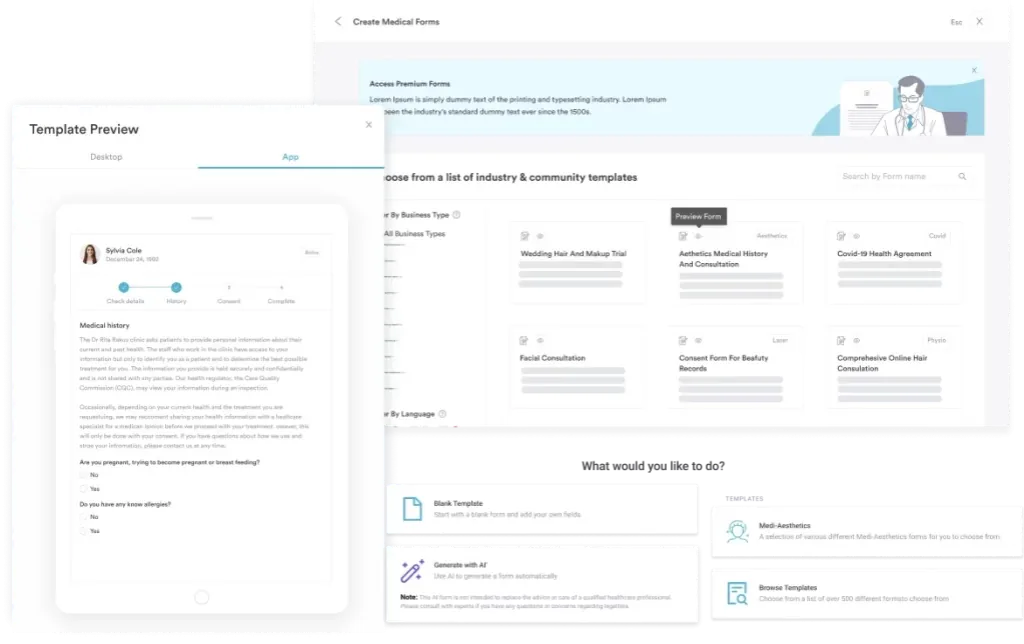
Documentation and regulatory compliance: Written aftercare instructions meet CQC audit requirements (England), GMC professional standards (UK), and GDPR patient record-keeping obligations. Delivering aftercare through digital intake and consent forms creates timestamped records of when instructions were sent and read.
Faster return-to-function: Structured activity progression and physical therapy timing optimize lymphatic recovery and reduce prolonged edema, enabling an earlier return to work and activity within safe limits.
The first 72 hours are the most demanding part of lipedema surgery recovery. Expect swelling and bruising in treated areas, which is a normal healing response. The same protocols apply whether the procedure treated the legs, arms, or torso. Surgical drains (if placed) will be active for 24-36 hours and require frequent dressing changes. Take prescribed pain medications as directed to maintain comfort and mobility.
Wear compression garments immediately post-surgery, 24 hours daily for the first 6-8 weeks (removing only to bathe), then transition to daytime-only wear. Begin gentle walking on day 1-2 to promote circulation. If garments cause discomfort or skin irritation, contact the clinic — proper fit is essential. Manual lymphatic drainage should begin within the first week, as directed by your surgeon. Your physical therapist will then schedule sessions at appropriate intervals.
Rest for the first 48 hours — avoid lifting, bending, or strenuous activity. From week 1, gentle walking is encouraged to promote circulation. By weeks 3-4, gradually return to normal daily activities if pain permits; avoid heavy lifting (over 10 pounds) until week 8. Smoking and nicotine must be strictly avoided throughout recovery, as they impair wound healing and increase infection risk.
Keep dressings dry and change them as instructed (typically every 6-8 hours initially). Avoid submerging incisions in baths or pools until sutures are removed (usually day 10-14). Shower carefully, letting water run over sites without direct pressure. Report any signs of infection — redness, warmth, pus, or odor — to the clinic immediately.
Garment choice directly affects lymphatic flow, swelling, and the final contour. Flat-knit garments are custom-made and the preferred choice for lipedema, holding consistent medical-grade compression across irregular limb shapes and resisting roll-down into skin folds. Circular-knit garments are easier to find off the shelf but often can’t hold enough compression for post-surgical edema.
Most post-operative lipedema garments fall in the Class 2 (23–32 mmHg) or Class 3 (34–46 mmHg) range. One detail worth flagging to patients: compression class numbering differs between countries, so confirm the target pressure in mmHg with the surgeon, not just the class number, before buying. Most patients wear compression 24 hours a day for the first 6 to 8 weeks, then move to daytime-only wear as swelling settles.
Have garments fitted by a lymphedema nurse or compression specialist to avoid tourniquet effects or skin breakdown. Wash garments daily to maintain elasticity, plan for at least two so one can be worn while the other is washed, and replace when elasticity decreases or fit changes due to swelling reduction (typically every 4–6 months).
Manual lymphatic drainage (MLD) is a specialized technique that stimulates the lymphatic system and removes excess fluid after surgery. Surgical trauma, fluid accumulation, and tissue inflammation all impair normal lymphatic flow — MLD addresses this by encouraging fluid movement toward functioning lymph nodes. Always use a therapist certified in MLD (Vodder, Földi, or Casley-Smith certification) — do not substitute with general massage, as incorrect technique can worsen swelling.
Sessions last 45–60 minutes. In weeks 1–4, frequency is typically 2–3 times per week, reducing to once weekly as swelling stabilizes (weeks 5–8), then monthly maintenance thereafter. Between sessions, your MLD therapist will show you simple home exercises — such as diaphragmatic breathing and gentle ankle pumps — to maintain lymphatic flow.
Nutrition directly affects how well you heal. Focus on a few basics in the early weeks:
Anti-inflammatory foods (fatty fish rich in omega-3s, turmeric, ginger) may reduce post-operative swelling. Avoid high-sodium processed foods, which can increase water retention. Discuss specific dietary restrictions or supplements with your surgeon before discharge.
Sleep disruption is common after lipedema surgery. Prioritize sleep hygiene by sleeping elevated (2-3 pillows) to reduce nocturnal swelling, maintaining a cool, quiet bedroom, and following prescribed pain management to minimize sleep disturbance. Sleep supports immune function and healing, so aim for 7 to 9 hours a night.
Certain symptoms require immediate medical attention. Contact your surgeon if you experience:
Delivering aftercare consistently is easier when it lives in one system. Practice management software like Pabau ties the template, the patient’s records, and their follow-up appointments together, so nothing is retyped or lost between visits. Use the patient portal to send each patient their tailored instructions, collect recovery updates between visits, and book follow-ups. Digital forms let patients report warning signs and pain levels early, so the clinic hears about a possible complication before the next appointment. An aesthetic clinic offering several treatment types needs each one documented to its own standard.
Appointment reminders, recovery milestone check-ins, and compression garment replacement prompts all go out at scheduled intervals. You can see which patients have acknowledged their instructions and which may need a nudge.
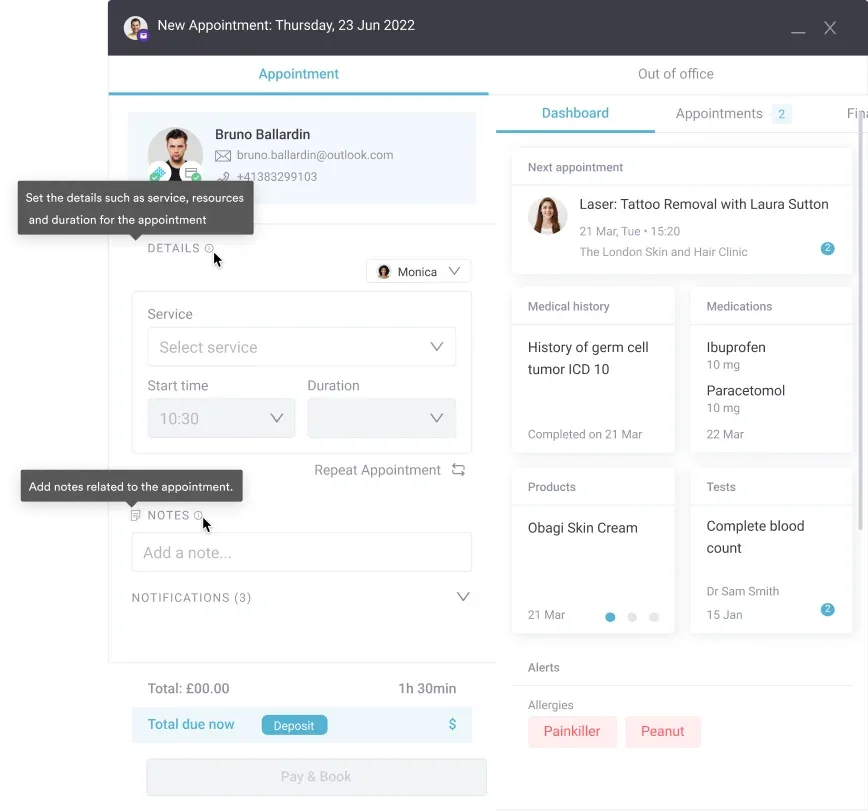
Document all aftercare instruction delivery in patient records to satisfy CQC inspection requirements and support continuity of care. A searchable template library within your practice management system allows clinicians to customize instructions (adding surgeon name, clinic contact details, post-op medication names) at the point of care, then print or email before discharge.
Post-operative instruction documents are clinical records under GDPR (EU/UK) and HIPAA (US). They must be stored securely, shared only with authorized personnel, and retained according to local regulations (typically 6-10 years). A HIPAA-compliant system keeps that data encrypted, with access logs and audit trails.
UK practitioners operating under GMC or CQC oversight should provide aftercare instructions in plain language, confirm patient understanding (document this in the medical record), and offer translated materials for non-English speakers where feasible. Include a disclaimer stating that these instructions supplement, rather than replace, the individualized medical advice of the treating surgeon.
Liability protection increases when aftercare documentation is thorough, timely, and regularly reviewed with patients. Digital delivery through a patient portal or email creates timestamped records proving the instructions were sent. Those records are valuable for quality assurance and in any dispute.
Supplement your aftercare template library with additional clinical resources. The American Society of Plastic Surgeons (ASPS) publishes post-operative care guidelines for lipedema procedures. The Lymphatic Education & Research Network (LE&RN) provides patient education on lymphatic recovery. Ensure your team has training in recognizing post-operative complications and communicating recovery expectations clearly.
Lipedema surgery aftercare instructions are essential clinical documents that guide post-operative recovery, improve patient adherence, reduce complications, and document care delivery for regulatory compliance. A well-designed template covers immediate post-operative needs, compression protocols, activity progression, wound care, and warning signs, so patients move through recovery safely and predictably.
Building aftercare into a digital system lets your practice deliver personalized guidance, track recovery milestones, and keep detailed records that support both patient outcomes and clinical governance. If you’d like to see how Pabau’s digital forms and patient portal handle aftercare delivery and follow-up scheduling, book a demo.
Rest is the priority on surgery day. Keep dressings clean and dry, take prescribed pain medications as directed, and wear the compression garment continuously (24 hours/day for the first 6-8 weeks). Begin gentle walking on post-op day 1-2 to promote circulation. Avoid lifting, bending, or strenuous activity for the first week.
Wear compression garments 24 hours daily for the first 6-8 weeks post-surgery (removing only to bathe), then transition to daytime-only wear. Timing varies by surgeon and surgical extent; your surgeon will provide specific recommendations at discharge.
Return-to-work timelines depend on job type. Desk-based work may resume within 1-2 weeks; physically demanding roles typically require 4-8 weeks off. Your surgeon will clear you for work return at follow-up appointments based on healing progress and activity tolerance.
Contact your surgeon immediately if you develop fever above 38.5°C, excessive bleeding, severe or worsening pain, signs of infection (redness, warmth, pus), shortness of breath, sudden swelling increase, or numbness/tingling in treated areas.
Manual lymphatic drainage should begin gently within the first week post-surgery as directed by your surgeon. Timing varies by surgical technique and individual healing, and your physical therapist will provide a specific schedule, typically 2-3 sessions per week initially.
Recovery time after lipedema surgery is gradual. Most patients rest for the first two weeks, return to non-strenuous work within one to two weeks, and resume normal daily activities by weeks 5 to 8. Tissue healing continues through about week 12, while final contour and swelling reduction can take several months.
Sleep on your back with the treated areas elevated on two or three pillows to reduce overnight swelling. Keep the compression garment on, follow your prescribed pain plan so discomfort does not interrupt rest, and aim for 7 to 9 hours a night to support healing.
Most patients describe moderate soreness, similar to a deep bruise, for the first several days rather than sharp pain. The procedure is usually performed under local or tumescent anesthesia, and prescribed pain medication controls discomfort well for most people. Pain that increases rather than eases after the first few days should be reported to your surgeon.