Consent form for trip: free template and guide
A consent form for trip is a document in which a parent or guardian authorizes a...

1
Last Updated: Oct 20, 2026
A good faith estimate form is the written cost disclosure that a provider gives uninsured and self-pay patients before a scheduled service. The No Surprises Act requires it, so patients see expected charges before care starts. The estimate is due within one to three business days of booking, depending on how far ahead the visit is.
This page gives you a free good faith estimate form to download, plus practical guidance on completing it correctly. For the wider billing picture, read our guide to self-pay patients.
A printable PDF with every field the federal rule requires, including patient date of birth, provider NPI and TIN, and itemized charges for each provider. It closes with the full disclaimer, dispute instructions, and a signed patient acknowledgment.
Download template
A good faith estimate form lists the expected charges for a scheduled service, and uninsured or self-pay patients must receive it before care.
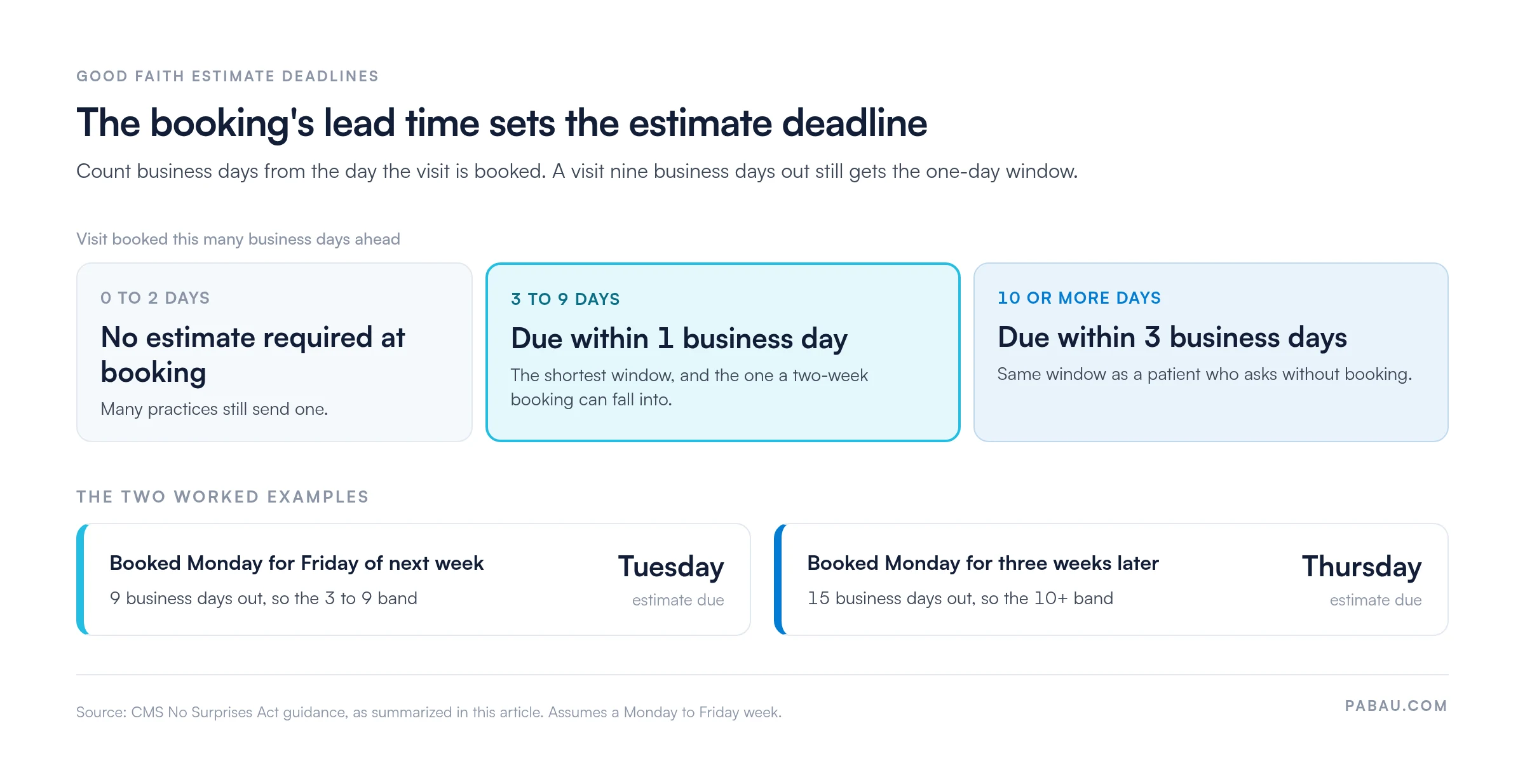
A service booked 10 or more business days ahead needs the estimate within three business days. Booked three to nine business days ahead, it is due within one.
Each estimate needs patient details, itemized charges, diagnosis and service codes, provider NPIs and TINs, and four set disclaimers.
If a provider’s bill comes in at least $400 above its line on the estimate, the patient can start a federal dispute.
Practice software such as Pabau can send the estimate at booking and keep a dated copy in the patient record.
A good faith estimate form is an itemized document that tells self-pay patients what a planned service is expected to cost. Its purpose is to prevent surprise bills, so patients can compare expected charges against their budget before agreeing to care.
CMS publishes a sample good faith estimate that shows the expected layout, and most practices start from it.
The No Surprises Act requires providers to give a good faith estimate to uninsured and self-pay patients who schedule a service or ask for one. The Act took effect in January 2022, and CMS publishes the guidance practices use to apply it.
The CMS No Surprises Act pages hold the current guidance, so check them before you finalize your process.
Providers and facilities that schedule care for uninsured or self-pay patients are covered, subject to how the Act defines a covered service. In practice, that often includes private practice therapists, counselors, and social workers, as well as practices that treat self-pay patients.
Scope depends on the Act’s definitions, so confirm your position with a compliance advisor. If you run a therapy practice, our therapy invoice template can bill the same line items the estimate listed, so the two documents match.
You must provide the estimate within one or three business days of scheduling, depending on how far ahead the service is booked. A patient who asks for an estimate without booking gets one within three business days of asking.
Count business days, not calendar days, from the day the appointment is booked. A booking that feels two weeks away can still fall into the shorter window, so count it on a calendar rather than by feel.
Both examples assume a practice that is open Monday to Friday.
The first case is the easier one to get wrong. Nine business days looks like a long lead time, yet it sits in the one-day window, as the chart below shows. Building the estimate into your booking step means it goes out on time whichever band applies.
A compliant good faith estimate form must list the patient’s details, the planned service, itemized expected charges, diagnosis and service codes, and each provider’s identifiers. It must also carry set disclaimers. These fields come from the federal rule, so treat them as a minimum rather than a checklist to trim.
The form must also include four disclaimers. It must say that other services may be recommended and estimated separately. It must explain that the final charges may differ from the estimate.
It must tell the patient about their right to dispute a bill and how to start that process. It must also state that the estimate is not a contract and does not oblige the patient to receive care.
Diagnosis codes follow the ICD-10-CM system, so use the code set in force on the service date. Practices that bill these services can also use claims management features to keep codes consistent between the estimate and the claim.
If a provider or facility bills at least $400 more than its total on the estimate, the patient can start patient-provider dispute resolution. That federal process lets an independent reviewer decide what the patient pays.
Here’s how the threshold plays out. Say your estimate lists $1,200 for your services. A bill of $1,550 is $350 over, so the patient has no dispute right. A bill of $1,600 is exactly $400 over, so they do.
The cleanest defense is an estimate that already lists the likely add-ons. If a follow-up injection or a lab test is reasonably expected, put it on the form with its charge.
One estimate can cover a course of recurring services for up to 12 months. It must state the expected scope, frequency, and total number of sessions. A weekly therapy plan or a series of laser sessions fits this rule.
If the services, providers, or expected charges change before the visit, issue a new estimate. The patient must receive it at least one business day before the service.
Keep a copy of every estimate you issue. A patient can ask for any estimate issued in the last six years, so a filing system that loses old forms creates a compliance problem.
You must also tell patients that estimates are available. The notice has to appear in three places:
The estimate itself must be in writing, on paper or electronically, as the patient prefers. Use clear, plain language that a patient without billing knowledge can follow.
The Pabau template above is a PDF you can print, fill in by hand, or adapt for your own process. It covers patient details, diagnosis codes, scheduling status, and itemized charges for the convening provider and up to two co-providers.
Each provider block has fields for the NPI, TIN, and service location. If you’re unsure which NPI to list, check whether the provider bills as an individual or as an organization.
The disclaimer already covers all four required statements and explains how to start a dispute. Add your practice details, then have your compliance advisor review the finished version, since the template is a starting point, not legal advice.
After the visit, a superbill template gives self-pay patients the itemized codes and charges they need for out-of-network reimbursement.
Work through the form in seven steps, starting with the deadline and finishing with a filed copy. This order keeps codes and charges aligned with the service you plan to deliver.
Check each figure against your current fee schedule before you issue it. Outdated prices are the fastest way to open a $400 difference between the estimate and the final bill.
Most errors come from missing fields and miscounted deadlines rather than poor judgment. Watch for these patterns during every review.
Each mistake is easy to catch on a second look but much harder to fix once the patient has been billed.
On paper, a good faith estimate depends on someone remembering to send it, counting the deadline correctly, and filing the signed copy. Each of those manual steps is a chance to miss the window or lose the record.
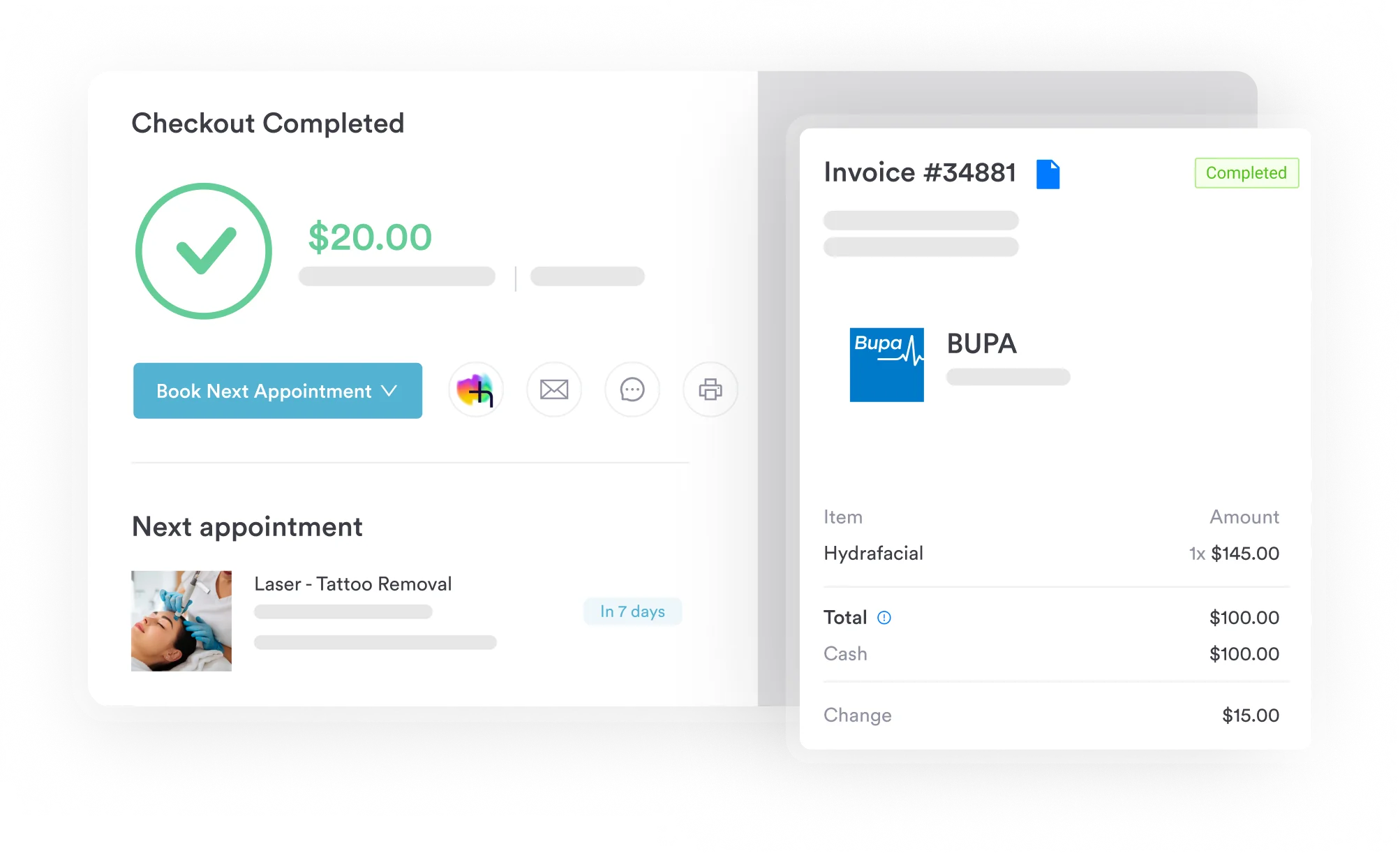
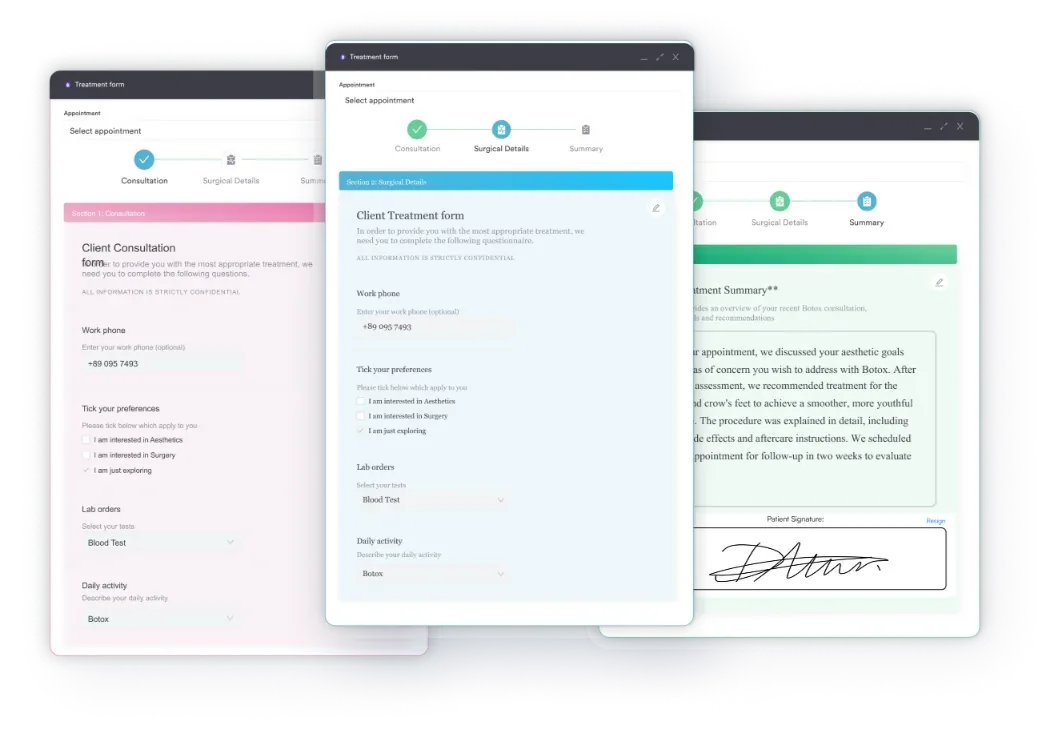
Pabau, the practice management platform we build, attaches the estimate to the appointment instead. Its digital forms can go to the patient when they book, so the estimate arrives inside the deadline without a reminder. The signed copy then sits in the patient’s Client record, dated and easy to find six years later.
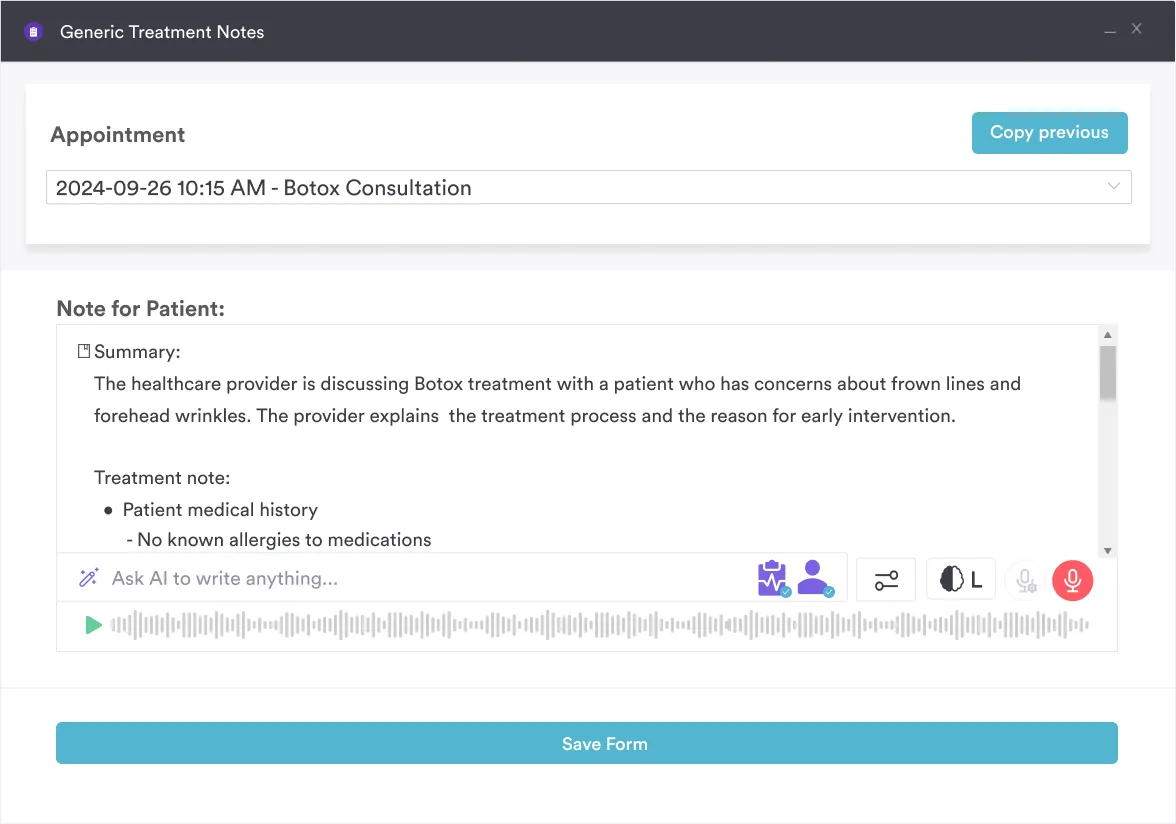
The codes on the estimate also carry through to billing. Pabau Scribe, our AI scribe, drafts session notes from the appointment, so the documented service matches the service you estimated.

Pabau sends your good faith estimate when the patient books and keeps the signed copy in their record. You meet the deadline and can produce any estimate on request.

A good faith estimate only protects you if it goes out on time and matches the bill that follows. The deadline and the $400 threshold are where self-pay billing goes wrong, and both are predictable.
So treat the estimate as part of booking, not as paperwork after it. List the likely add-ons up front, reissue the form when the plan changes, and keep every signed copy. Patients see the cost before they commit, and you avoid disputes you could have prevented.
Book a demo to see how Pabau sends good faith estimates at booking and keeps them on file for self-pay patients.

Treating more self-pay patients? Self-pay patients covers pricing, payment options, and how to collect from patients without insurance.
Need to know which NPI goes on the form? Type 1 vs type 2 NPI explains when to list an individual provider’s number and when to list the organization’s.
Giving self-pay patients a receipt they can claim? Our free superbill template gives patients the itemized codes and charges they need for out-of-network reimbursement.
Want the wider billing picture? What is medical billing explains the steps from service to payment.
Need the compliance rules behind your records? Medical billing compliance covers the rules that apply to your documentation.
GFE stands for good faith estimate. It is the written list of expected charges that uninsured and self-pay patients receive before a scheduled service.
The requirement, as CMS currently describes it, covers uninsured and self-pay patients. Insured patients may have separate protections, so confirm the current scope with CMS before changing your process.
No. The CMS sample shows the content to include, and a practice can use its own layout as long as every required field appears.
A dated estimate shows the patient received cost information before care, which helps if charges are questioned later. It does not replace legal review of your own compliance obligations.
It depends on the booking. A service booked 10 or more business days ahead needs the estimate within three business days. One booked three to nine business days ahead needs it within one business day.
Not always. The scheduling rule applies only when a service is booked at least three business days ahead. If the patient asks for an estimate, you still have three business days to provide one.
If any provider or facility bills at least $400 more than its line on the estimate, the patient can start patient-provider dispute resolution. They have 120 calendar days from the initial bill and pay a $25 fee.
Yes. One estimate can cover recurring services for up to 12 months. It must state the expected number of sessions, how often they happen, and the expected charges.
Keep every estimate for at least six years. A patient can ask for a copy of any estimate issued to them in that period.