HD Brows consultation form: Free template and guide
HD Brows is a seven-step brow treatment that combines consultation, tinting, wax...

2
Last Updated: Oct 13, 2026

Eyebrow lift with filler, also called a non-surgical eyebrow lift, uses hyaluronic acid or other dermal fillers to restore structural support and lift sagging brows, typically lasting 12-18 months.
Proper pre-treatment assessment and contraindications screening prevent serious complications including vascular occlusion near the supraorbital region.
Documentation of injection placement, product volume (0.3-0.6cc per side typical), and patient consent protects practitioners legally and improves clinical outcomes.
Practice management software like Pabau brings digital forms and injection plotting into one system, streamlining consent collection, treatment planning, and post-care tracking for eyebrow filler procedures.
A ready-to-use template covering patient consent, pre-treatment screening, injection technique documentation, post-treatment care instructions, and contraindications checklist for non-surgical eyebrow lift procedures using dermal fillers.
Download templateAn eyebrow lift with filler, also called a non-surgical brow lift, uses dermal filler to restore brow position and lift a heavy or sagging eyebrow without surgery. This free template gives you the consent, screening, injection-mapping, and aftercare structure to document a dermal filler brow lift safely at every step. Deciding where those consent and injection records live digitally is easier with our ranking of med spa management software.
Below, we walk through each section of the template, the clinical detail to record in it, and how practice management software like Pabau keeps consent, injection maps, and post-care in one patient record. If you’re building eyebrow filler protocols for the first time, it doubles as a step-by-step reference.
An eyebrow lift with filler uses hyaluronic acid (HA) or another dermal filler to rebuild structural support under the brow and lateral brow tail, creating a subtle lift without surgery. Practitioners place 0.3cc to 0.6cc per side above the periosteum (the bone layer) in the supraorbital and temporal regions, feathering the product to build a three-dimensional contour.
Most work in the pre-periosteal plane against the brow bone with a 30-gauge needle or a blunt cannula. A firm, high-lift HA such as Restylane Lyft or Juvederm Voluma holds its shape against the bone and projects the lateral brow tail.
The procedure addresses brow ptosis (drooping) caused by aging, gravity, and loss of skin elasticity. Unlike surgical brow lifts, this non-surgical approach offers minimal downtime, reversible results, and natural-looking elevation.
The treatment is performed by qualified aesthetic practitioners, including physicians, dermatologists, and nurses with prescribing credentials or those working under a prescriber’s supervision. Digital intake forms handle the pre-treatment questionnaire and contraindications screening, cutting the documentation burden and improving data accuracy.
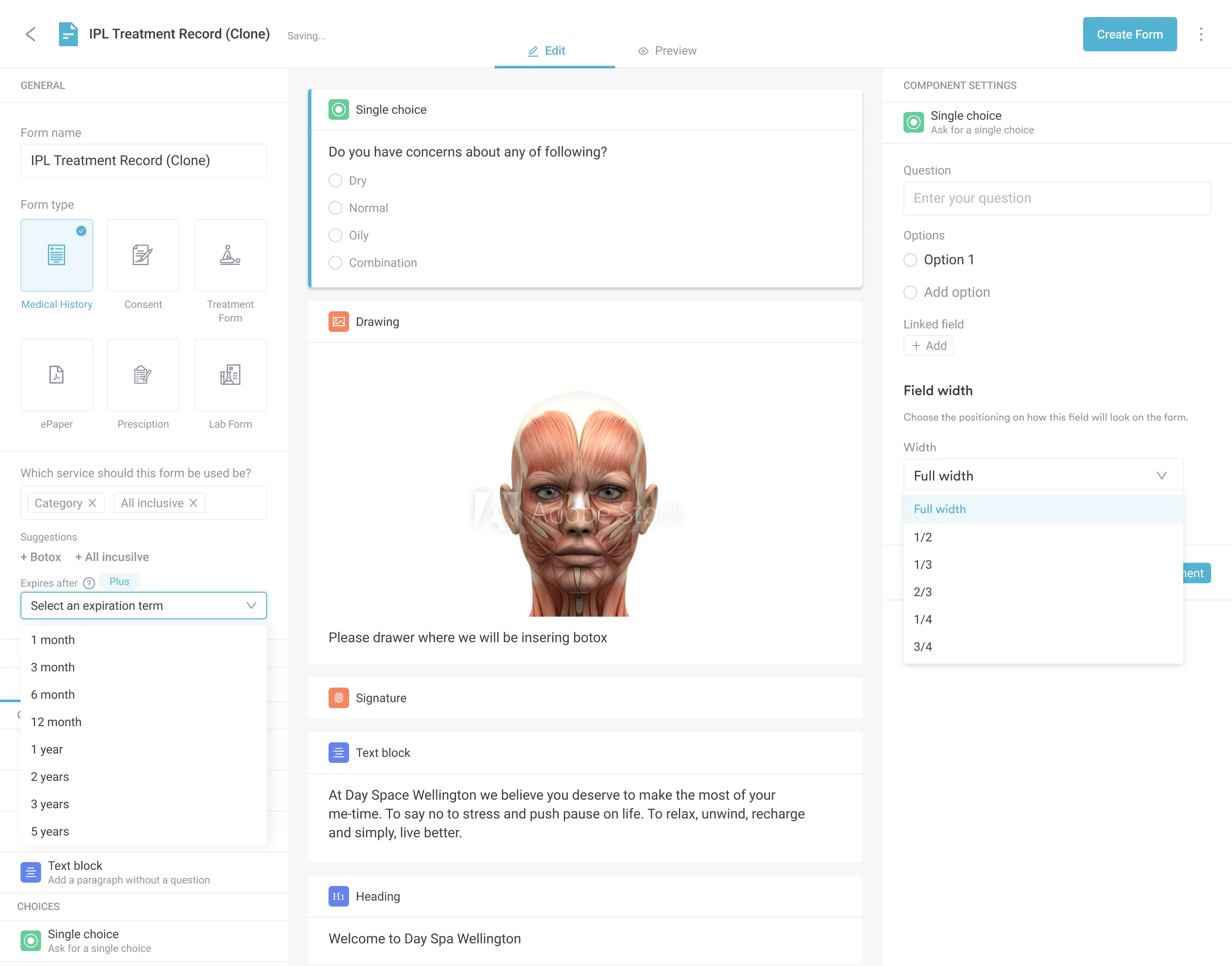
The template is structured in five steps that mirror a typical practice workflow. Each section brings together patient safety, regulatory compliance, and clinical documentation.
The template suits several clinical settings. Medical spas, dermatology practices, aesthetic surgery practices, and primary care practices offering cosmetic treatments all benefit from a standardized eyebrow filler protocol.
Practitioner qualifications for aesthetic treatments vary by region and regulatory body. The template includes a practitioner signature block to confirm appropriate training and qualifications per local standards (GMC, NMC, HCPC in the UK, state licensure in the US).
If you are comparing platforms, this guide to the best aesthetic clinic software weighs charting, photos, and payments side by side.
Compliance and legal protection: A standardized template demonstrates due diligence in informed consent collection. Regulators (CQC in England, state medical boards in the US) expect documented consent, contraindications screening, and technique records. Inconsistent or missing documentation increases liability exposure.
Workflow efficiency: A pre-built template eliminates the need to create consent forms from scratch for each new practice or practitioner. Staff spend less time on administrative setup and more time on clinical care.
Patient safety and consistency: A checklist-based template reduces the risk of missed contraindications or incomplete patient education. All practitioners follow the same pre-treatment screening protocol, ensuring uniform safety standards across the team or practice.
Data organization for future care: Documented injection placement, filler volume, and patient response enable practitioners to refine technique over time and deliver consistent results. Historical records support follow-up appointments and touch-up decisions.
Informed consent and risk disclosure: This section must document specific risks including bruising, swelling, asymmetry, temporary numbness, infection, and rare serious complications (vascular occlusion, blindness risk near the supraorbital region). Patient initials on each risk statement demonstrate informed understanding. Some jurisdictions require explicit discussion of off-label use (many HA fillers are not FDA-approved for brow lifting, requiring a prescriber note on appropriate use).
Contraindications screening: Absolute contraindications include active skin infection or herpes simplex in the treatment area, known allergy to filler components, and pregnancy (due to unknown fetal effects). Relative contraindications requiring practitioner judgment include anticoagulant or antiplatelet use (increased bruising risk), recent facial surgery in the area, and severe bleeding disorders. The template guides practitioners to document which contraindications apply and confirm patient eligibility.
Injection documentation and mapping: This creates a visual map for follow-ups and helps identify patterns if adverse events occur.
Baseline and post-treatment photography matter for three reasons: verifying patient satisfaction, reviewing your own technique, and documenting results for marketing. The template includes fields for pre-treatment and two-week post-treatment photos, with space to note the change in brow position, symmetry, and patient-reported satisfaction.
A clear eyebrow lift with filler before and after comparison also supports consultations and consent conversations about future touch-ups. Make sure all photography complies with HIPAA in the US or GDPR in the UK, and get written consent for photo storage and any external use.
Practitioners often pair eyebrow filler with a botulinum toxin (Botox) brow lift. The toxin relaxes the brow depressor muscles, the lateral orbicularis oculi and the glabellar complex, so the frontalis can lift the brow unopposed, while the filler adds the structural support underneath. The template includes a field to record whether combination therapy was used, so you can track which combinations work best for your patients.
Post-treatment instructions need to be clear and delivered the same way every time. The template specifies:
Schedule a two-week follow-up to assess results and address any asymmetry, and offer a touch-up at three to four weeks if fine-tuning is needed.
Duration of results depends on patient metabolism, filler type, and injection depth. HA fillers typically last 12-18 months in the brow region; firmer formulations may last longer. The template prompts practitioners to counsel patients on realistic re-treatment timelines and maintenance expectations.
To roll the template out across your team:
In the US, state medical boards expect documented informed consent, appropriate practitioner qualifications, and safety protocols. Dermal fillers are FDA-regulated devices, and using them off-label for brow lifting calls for documented practitioner judgment and patient acknowledgment.
In the UK, practitioners must meet CQC standards in regulated settings and follow General Medical Council (GMC), Nursing and Midwifery Council (NMC), or Health and Care Professions Council (HCPC) guidance depending on their registration. The template includes space for regulatory body confirmation and practitioner credentials. Some jurisdictions mandate specific consent-form wording, so check local regulations before you finalize your version.
To see how digital consent, injection mapping, and automated aftercare sit together in one patient record, take a look at practice management software like Pabau. Then download your free eyebrow lift with filler template above and document every brow treatment the same way.
An eyebrow lift with filler is a non-surgical aesthetic procedure using dermal fillers (typically hyaluronic acid) injected above the periosteum in the supraorbital and temporal regions to create a lifting effect, restore brow arch, and open the upper eye area.
Hyaluronic acid fillers in the brow region typically last 12-18 months, depending on patient metabolism, filler viscosity, and injection depth. Patients should schedule re-treatment approximately 12-18 months after the initial procedure to maintain results.
Common risks include temporary bruising, swelling, tenderness, and asymmetry. Rare serious risks include infection, vascular occlusion (filler blocking blood vessels), and blindness if filler is placed near supraorbital or supratrochlear vessels. Proper technique, anatomy knowledge, and patient screening minimize these risks.
Patients with active skin infection, herpes simplex in the area, known allergy to filler components, or pregnancy should not have the procedure. Caution is advised for patients on anticoagulants (increased bruising), those with severe bleeding disorders, or those with prior facial surgery in the brow region.
Yes. A botulinum toxin (Botox) brow lift relaxes the brow depressor muscles, the lateral orbicularis oculi and the glabellar complex, so the frontalis lifts the brow unopposed. Paired with filler, the toxin softens the downward pull while the filler adds structural support, giving a more pronounced, longer-lasting lift. Document combination therapy in the treatment record.
Most practitioners inject 0.3-0.6cc of filler per side, using a feathering technique to layer product above the periosteum. Exact volume depends on baseline brow position, degree of ptosis, desired lift, and patient anatomy. The template includes space to document the specific volume used for each patient.
Firm, structural hyaluronic acid fillers such as Restylane Lyft or Juvederm Voluma are the usual choice for a dermal filler brow lift, because they hold shape against the brow bone and project the lateral tail. The right product still depends on the patient’s anatomy and the correction planned, so record the brand and lot number in the treatment template.
Yes. A non-surgical brow lift for hooded eyes adds support along the lateral brow and temple, lifting the tail so it sits higher above a heavy upper lid. It suits mild to moderate hooding, while significant skin excess usually still needs surgical assessment, so document the baseline lid position before treating.
Non-surgical eyebrow lift cost varies with region, practitioner, and how much product each side needs, and it is usually priced per syringe rather than as a flat fee. Recording the volume used against each patient record makes it easy to set consistent pricing and quote repeat treatments accurately.