CRM for chiropractors: how to manage patients, bookings and marketing
A CRM for chiropractors is a patient relationship management system built around...

Last Updated: Oct 13, 2026

The biceps load test is a special test that assesses superior labrum anterior to posterior (SLAP) lesions by applying resistance to elbow flexion at specific shoulder positions.
Test I combines 90° shoulder abduction with external rotation to the point of apprehension. Test II combines 120° abduction with external rotation to its maximal point, and shows sensitivity of 89.7% and specificity of 96.9% for detecting SLAP pathology.
A positive result means resisted elbow flexion fails to relieve (or worsens) apprehension in Test I, or produces pain in Test II – but MRI or arthroscopy is required for definitive diagnosis, as the test alone is not diagnostic.
Practice management software like Pabau, including its digital assessment forms and clinical documentation tools, helps clinicians record biceps load test findings, imaging results, and referral decisions in a structured, compliant manner.
A ready-to-use clinical form for documenting biceps load test procedures, patient positioning, test findings, and clinical decision-making. Includes protocols for both Test I and Test II with space for sensitivity/specificity interpretation and referral recommendations.
Download templateShoulder pain during overhead activities, or when lying on the affected side, is a common complaint in sports medicine and orthopedic practices. Many clinicians suspect a superior labrum anterior to posterior (SLAP) lesion. But it can be hard to tell apart from other shoulder pathologies using clinical examination alone.
The biceps load test is a standardized special test that helps identify SLAP lesions through a structured protocol. It’s only one tool in a full shoulder assessment battery, though.
This guide covers the biceps load test in detail. You’ll learn what it is, how to perform both Test I and Test II, and how to interpret positive results. You’ll also see what the published diagnostic accuracy data tells us about its clinical value. It also includes a downloadable assessment form to help you record test findings in the patient record.
The biceps load test is a clinical special test that checks the biceps tendon and the superior labrum of the shoulder. It aims to detect superior labrum anterior to posterior (SLAP) lesions. These are tears or degenerative changes where the long head of the biceps tendon attaches to the glenoid labrum.
SLAP lesions are common in overhead athletes, throwing sports participants, and individuals with chronic shoulder impingement.
Unlike imaging studies (MRI, ultrasound) or surgical exploration (arthroscopy), the biceps load test is a bedside examination technique. It applies targeted resistance to the biceps muscle at a specific shoulder position. A positive test, indicated by increased pain or apprehension, raises suspicion of SLAP pathology.
However, a positive result requires confirmation through imaging or surgical diagnosis. It’s never diagnostic on its own.
The test exists in two versions: Biceps Load Test I (published by Kim et al., 1999) and Biceps Load Test II (published by Kim et al., 2001). Both apply the same principle of resisted elbow flexion. But they use different shoulder positions and different patient populations, which results in different diagnostic accuracy profiles.
Clinicians in sports medicine practices use the biceps load test as part of a battery of shoulder special tests. This battery includes Speed’s test, Crank test, O’Brien’s Active Compression test, and anterior slide test. Together, these tests help compare findings and build a clinical picture before ordering imaging or referral to orthopedics.
The two versions differ in shoulder abduction angle and the degree of external rotation. This changes the mechanical stress on the biceps tendon and labral attachment. Each test also uses a different rule for what counts as a positive result.
Kim et al. validated Test I in patients with recurrent anterior shoulder dislocation or instability. Its positive or negative call depends on whether resisted elbow flexion relieves the apprehension present in the standard apprehension-test position. That apprehension sign only exists in an unstable shoulder.
Test II was developed later for patients without anterior instability, where there’s no apprehension sign to relieve. Kim et al. built it around a pain-based criterion instead, giving the test a meaningful positive or negative rule even in a stable shoulder.
The two tests were therefore validated in different patient populations for different clinical scenarios. This wasn’t a case of one test improving on the other in the same population. Both show near-identical specificity (96.9%), meaning they’re equally good at ruling out SLAP lesions when negative – but each figure comes from its own validation population.
In clinical practice, many practitioners perform both tests in sequence to maximize diagnostic confidence. A positive result on either test warrants imaging confirmation before clinical decision-making.
The biceps load test requires precise patient positioning and examiner technique to yield reliable results. Below is the standardized protocol for both Test I and Test II. It’s derived from the original Kim et al. publications and confirmed by clinical education references.
Both tests share the same core setup: resisted elbow flexion with the shoulder abducted and externally rotated. They’re read differently, though, so getting the external rotation and the interpretation rule right for each version matters.
This reduces variation in how clinicians record findings across sessions.
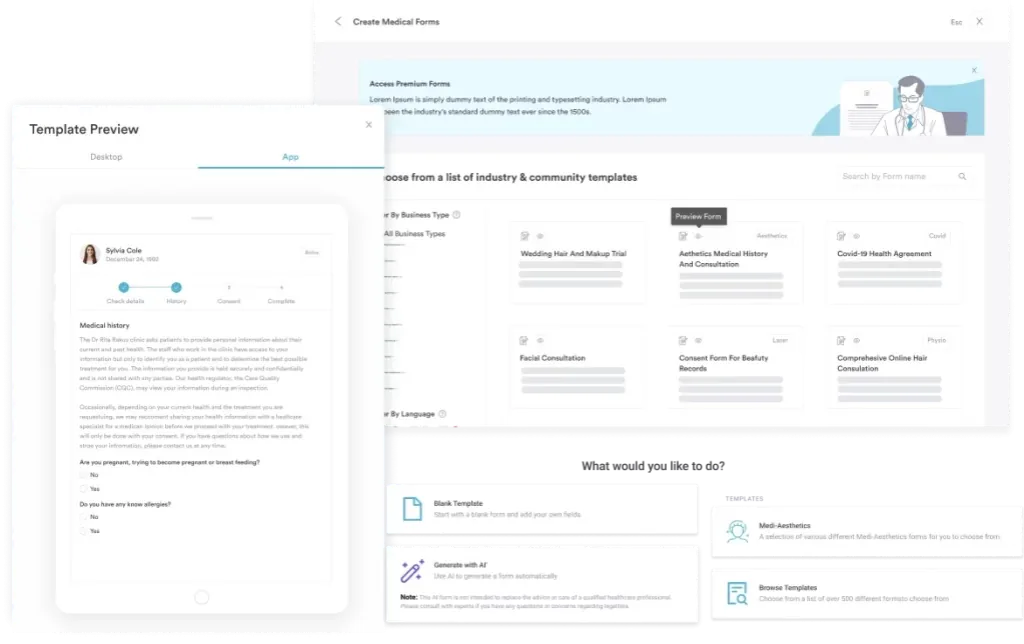
An occupational therapy platform can store each completed scale beside the patient’s goals and session history.
A positive biceps load test requires careful interpretation in the clinical context. A positive result raises suspicion of SLAP pathology but is not diagnostic on its own.
A negative test suggests a SLAP lesion is unlikely, especially when the clinical history is also low-suspicion. That means relief of the baseline apprehension during resisted elbow flexion for Test I, or no pain during resisted elbow flexion for Test II.
Clinical context still matters, though. Consider a patient with a high-suspicion presentation, such as an overhead athlete with a traumatic onset or a catching sensation. Imaging may still be warranted even if the biceps load test is negative.
A positive biceps load test should prompt structured clinical documentation and referral for imaging. MRI with arthrography or arthroscopic evaluation remains the gold standard for confirming SLAP lesions. Do not rely on the special test alone for treatment decisions.
The diagnostic accuracy of the biceps load test comes from two landmark validation studies performed by Kim and colleagues, published in the American Journal of Sports Medicine and Arthroscopy: The Journal of Arthroscopic and Related Surgery. These studies used arthroscopic confirmation as the gold standard, making their findings highly reliable.
Test I’s figures come from a population of patients with recurrent anterior shoulder instability, while Test II’s come from a separate population of patients without anterior instability. The two sets of numbers reflect different clinical scenarios rather than a single head-to-head comparison.
Sources: Kim et al., 1999, “Biceps load test: a clinical test for superior labrum anterior and posterior lesions in shoulders with recurrent anterior dislocations,” American Journal of Sports Medicine; and Kim et al., 2001, “Biceps load test II: a clinical test for SLAP lesions of the shoulder,” Arthroscopy: The Journal of Arthroscopic and Related Surgery.
These figures show a different pattern for each version. Test I has a lower PPV (83%) but a very high NPV (98%), which makes it especially useful for ruling out a SLAP lesion when the result is negative.
Test II has a high PPV (92.1%) and a high NPV (95.5%) in its own validation population. In both cases, a negative result is more useful for ruling a SLAP lesion out than a positive result is for ruling one in. Either way, a positive test still needs imaging or arthroscopic confirmation before clinical decision-making.
The biceps load test is rarely performed in isolation. Clinicians integrate it into a broader shoulder examination that includes other special tests to compare findings and reduce false positives.
These four tests are commonly grouped in pairs by what they stress: tendon loading versus joint compression.
Clinicians using complete electronic patient records with integrated assessment templates can document results across multiple special tests in a single session. This creates a full clinical picture that guides imaging decisions and treatment planning. A physical therapy practice tracking range of motion over weeks needs the earlier values beside the current one.
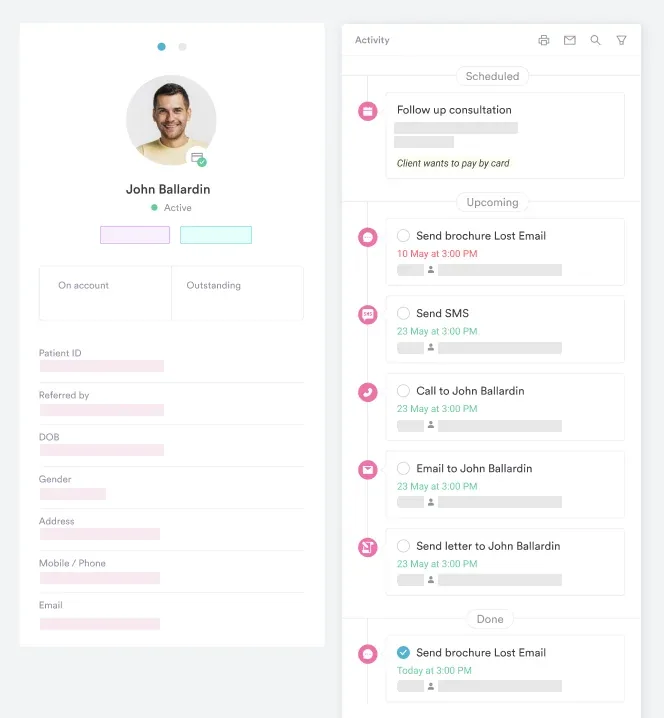

Clinicians lose time manually recording special test findings across different forms. Pabau’s structured assessment templates and AI-powered documentation help you complete the biceps load test protocol and build clinical notes in seconds, so you can focus on patient care.

Recording the biceps load test findings in the patient record requires capturing several key data points. Below is a practical checklist to keep your records consistent across all patients and support clinical governance and continuity of care.
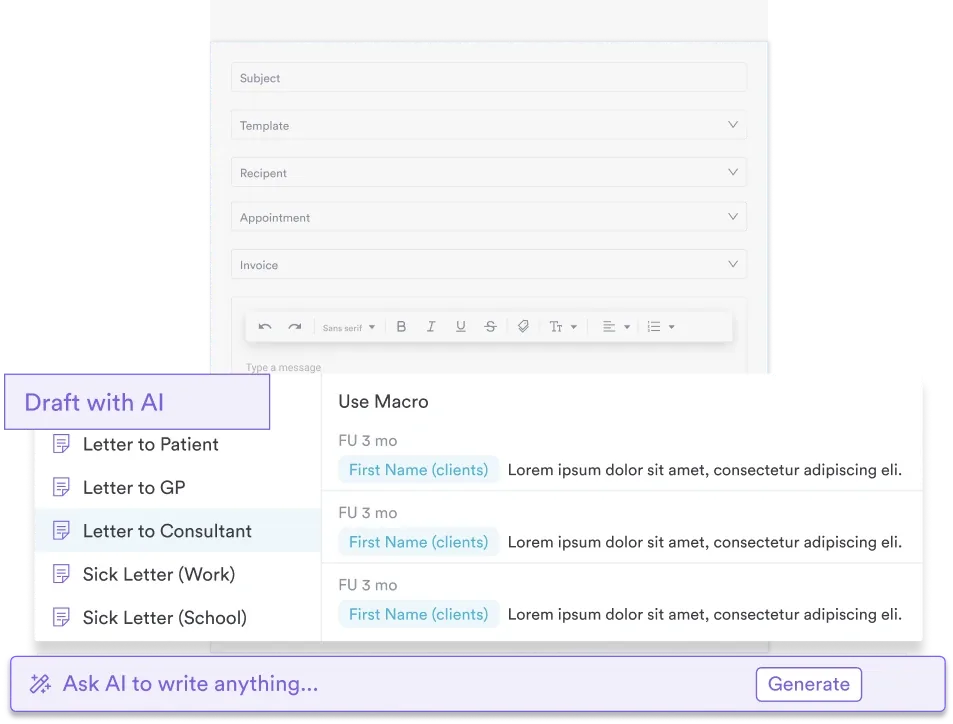
Using AI-powered clinical documentation tools can accelerate the note-writing process after the examination is complete. Clinicians can verbally summarize their findings. The AI then generates a structured note that fills in the checklist items above, cutting paperwork and keeping your format consistent. EMR software built for occupational therapy can ease that documentation load by structuring notes automatically.
The biceps load test is a high-value special test for identifying SLAP lesions in patients with shoulder pain and overhead demands. With sensitivity and specificity exceeding 89%, it deserves a place in every clinician’s shoulder examination toolkit.
Test I and Test II were validated in different patient populations, rather than one replacing the other. Many practitioners perform both: Test I when anterior instability is present, and Test II when it isn’t.
The key takeaway is that a positive result warrants imaging confirmation before clinical decision-making. The test alone is never diagnostic. But the biceps load test works best as part of a full shoulder examination battery. Alongside Speed’s test, Crank test, O’Brien’s test, and anterior slide test, it adds critical information that guides referrals, imaging selection, and treatment planning.
To standardize your records, book a demo of Pabau’s digital assessment forms and AI-powered charting tools. They’re built for physiotherapists, sports medicine practitioners, and orthopedic clinicians. Use them to document special test findings, imaging results, and clinical decisions in one structured system.

Want to round out your special test battery beyond the shoulder? Upper limb tension tests screen for neural tension contributing to arm and shoulder symptoms, a useful differential when biceps load test findings are equivocal.
Assessing upper body endurance in older adults? arm curl test template gives a standardized score sheet for the 30-second arm curl test with normative comparison data.
Mapping pain location more precisely? back pain location chart gives a standardized framework for marking and recording exactly where patients feel pain.
The biceps load test is a clinical special test that checks the biceps tendon and the shoulder’s superior labrum. It’s used especially to identify superior labrum anterior to posterior (SLAP) lesions. A positive test indicates increased suspicion of labral pathology and typically prompts MRI or arthroscopic confirmation.
Biceps Load Test I combines 90 degrees of shoulder abduction with external rotation to the point of apprehension. Test II combines 120 degrees of abduction with external rotation to its maximal point. The two tests were validated in different patient populations, not as one improving on the other. Test I was validated in patients with recurrent anterior shoulder instability. It reads as negative if resisted elbow flexion relieves the apprehension present in that unstable shoulder’s starting position. Test II was validated in patients without anterior instability, where there is no apprehension sign to relieve, so it uses a pain-based criterion instead. Both show excellent specificity (96.9%), but each figure comes from its own validation population. Many clinicians perform both tests in sequence to cover both clinical scenarios.
Speed’s test assesses the biceps tendon by asking the patient to flex the shoulder against resistance with the elbow extended and forearm supinated. It is less specific than the biceps load test and can be positive in both SLAP lesions and isolated biceps tendinopathy. The biceps load test applies resistance at a specific shoulder position designed to stress the labral attachment of the biceps.
A positive test (unchanged or worsened apprehension on Test I, or pain during resisted elbow flexion on Test II) indicates increased suspicion of a SLAP lesion. It is not diagnostic on its own. Based on the original validation studies, about 83% of patients with a positive Biceps Load Test I have labral pathology confirmed by MRI or arthroscopy. The same is true for about 92% of patients with a positive Biceps Load Test II. Imaging confirmation is still required before treatment decisions.
Document the test result along with findings from other shoulder special tests (Speed’s, Crank, O’Brien’s, anterior slide). If clinical suspicion is high, order imaging (MRI with arthrography or ultrasound). Refer to orthopedic surgery if imaging confirms SLAP pathology. If clinical suspicion is low despite a positive test, consider trial of conservative management before imaging.
No. The biceps load test is a bedside clinical screening tool, not a diagnostic test. MRI with arthrography or arthroscopic evaluation remains the gold standard for confirming SLAP lesions. The special test should guide imaging decisions and referrals, not replace them.