Maja Popovska
Exilis patient treatment record: Free PDF for RF sessions
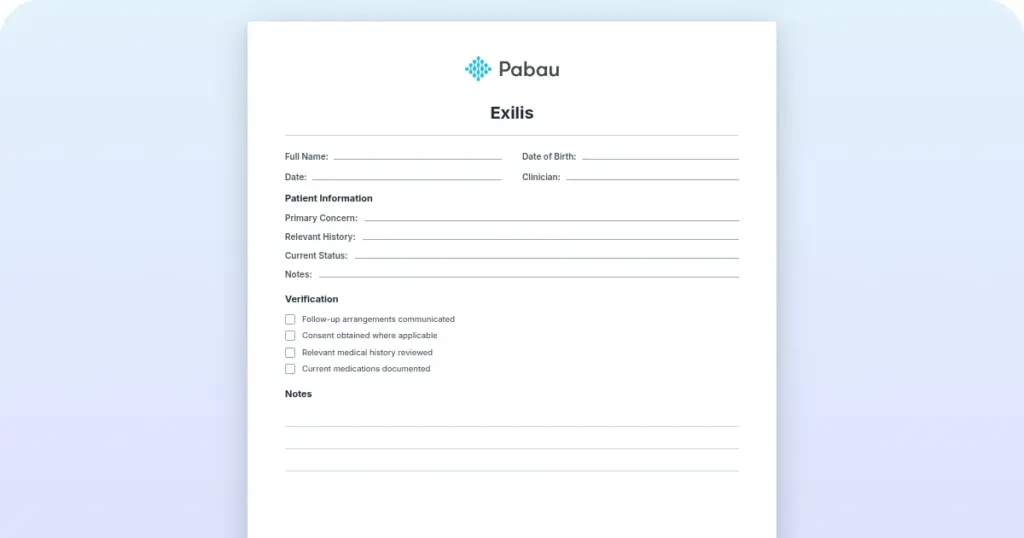
An Exilis patient treatment record is the session log for BTL’s radiofrequ...

3
Last Updated: Oct 23, 2026
Free PDF 3 pages, print-ready Clinician-reviewed
Baby Botox has become a common request from patients who want to soften early lines without changing how their face moves. This template gives practitioners a complete workflow for micro-dose neuromodulator treatments, covering consultation, informed consent, contraindication screening, and treatment documentation.
A ready-to-use template covering patient consultation, informed consent documentation, contraindication and allergy screening, pre-treatment checklist, post-treatment care instructions, treatment record-keeping, and clinical safety protocols for Baby Botox and neuromodulator procedures.
Upload this PDF, or any form you already use, and Pabau's AI Form rebuilds it with tick boxes, text fields and a signature. Attach it to the treatment once, and every patient gets it on time.
AI Form rebuilds the consent, history and aftercare forms you already use. You review each one, then publish.
Patients complete forms on their phone before they arrive, so the front desk stops retyping paper.
Every signed form is versioned and attached to the treatment record, ready when you need it.
Set how long a consent stays valid. Returning patients skip forms they have already signed.
Supports HIPAA and GDPR compliance AES-256 encryption 4.8 on G2 4.7 on Capterra Trusted by 4,000+ practices worldwide

Baby Botox uses micro-doses of botulinum toxin (10-20 units) for subtle facial rejuvenation and wrinkle prevention in younger patients and those seeking natural results.
Informed consent is legally and ethically essential; practitioners must clearly document patient understanding of contraindications, realistic outcomes, and potential risks before treatment.
Pre-treatment screening prevents adverse outcomes by identifying contraindications (pregnancy, neuromuscular disorders, active skin infections, unrealistic expectations).
Pabau’s digital forms and client records allow practices to automate consent workflows, track treatment history, and maintain audit-ready documentation for regulatory compliance.
Baby Botox is a preventative aesthetic treatment using micro-doses of botulinum toxin (typically 10-20 units per area) to soften fine lines and prevent deeper wrinkles from forming.
Also known as micro-Botox or MicroTox, this approach delivers subtle facial rejuvenation while preserving natural movement and facial expression, making it ideal for younger patients and those seeking preventative anti-aging before lines become deeply etched.
The treatment uses FDA-approved neuromodulators including Botox (onabotulinumtoxinA), Dysport (abobotulinumtoxinA), and Xeomin (incobotulinumtoxinA). Each works by relaxing specific facial muscles—the frontalis (forehead), corrugator supercilii (glabellar or “11” lines), and orbicularis oculi (crow’s feet)—just enough to prevent repeated muscle contraction from deepening existing creases or forming new ones. See our Botox face chart for detailed injection zones.
Unlike traditional Botox (20-50 units, targeting older patients with pronounced lines), Baby Botox emphasizes prevention and subtlety.
Clinical consensus from the American Academy of Dermatology (AAD) and American Academy of Facial Esthetics supports early preventative treatment as a safe, evidence-based approach for patients in their 20s and 30s seeking to maintain smooth skin without the “frozen” appearance sometimes associated with higher doses.
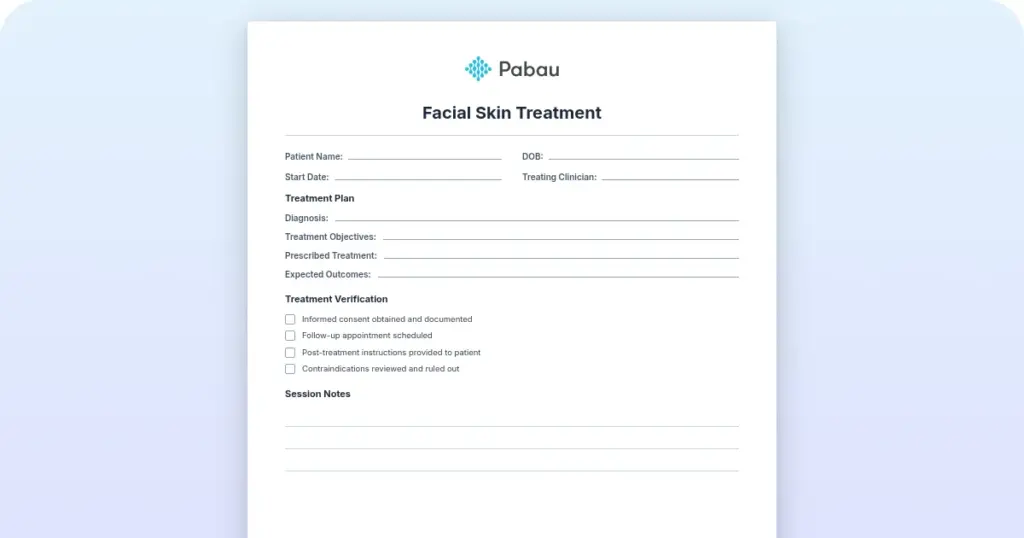
A Baby Botox treatment form is a clinical documentation template that captures essential patient information, informed consent, and treatment details before and after a neuromodulator procedure. It serves three critical functions: legal protection through documented informed consent, clinical safety through systematic screening, and operational clarity for audit and quality assurance. Practices offering dermal filler alongside Baby Botox can adapt a dedicated dermal filler consent form template for that procedure.
Implementing a standardized Baby Botox template streamlines patient onboarding, reduces incomplete records, and ensures every patient receives consistent informed consent before treatment. Follow these five operational steps:
Practices using digital intake forms and secure client records can automate many of these steps: pre-appointment digital consent completion, conditional logic screening (flagging high-risk combinations), and automated post-treatment reminders sent 2-3 weeks post-injection to assess results and schedule follow-ups.

How leading platforms handle clinical notes varies widely; our roundup of top medical spa software compares them directly.
Baby Botox is designed for specific patient profiles seeking preventative or subtle aesthetic refinement. Ideal candidates include younger patients (late 20s to early 40s) with early fine lines or those concerned about prevention, and patients with unrealistic expectations about traditional Botox who fear a “frozen” appearance.
Also good candidates: patients returning for repeat treatment who want to maintain rather than aggressively correct, and patients new to injectables who prefer starting low and adjusting upward.
Poor candidates for Baby Botox include patients with severe, deeply etched lines (who typically need aesthetic consultation recommending standard dosing, or in some cases a broader cosmetic surgery intake assessment), patients with active skin infections or uncontrolled medical conditions, pregnant or breastfeeding patients, and patients with unrealistic timelines (expecting permanent results or results within days rather than weeks).
A structured pre-treatment consultation prevents misaligned expectations and contraindication-related complications. Use this checklist during the consultation appointment to ensure comprehensive patient assessment:
Document the consultation using your clinical form to create a detailed record. This protects the practice, demonstrates informed consent, and provides baseline documentation for continuity of care if the patient is treated by a different practitioner in future.
Contraindication screening is non-negotiable. Botulinum toxin has absolute contraindications (conditions where treatment is never appropriate) and relative contraindications (conditions requiring careful assessment and informed patient consent).
During screening, ask open-ended questions: “Are you pregnant, planning pregnancy, or breastfeeding?” “Do you have any muscle or nerve disorders?” “Are you on any blood thinners or supplements?” Document the patient’s responses verbatim in the clinical record. If contraindications are identified, discuss alternative treatments or defer the procedure with written explanation of why treatment is not appropriate at this time.
Clear written aftercare instructions reduce patient anxiety, support optimal outcomes, and demonstrate professional standards. Provide patients with a printed or digital aftercare instruction sheet, similar to our general aftercare guidelines template, that covers these elements:
Send automated post-treatment reminders via medical spa practice management software on day 1 (recapping aftercare), day 7 (checking in on results), and day 21 (inviting the patient to a follow-up appointment). This proactive communication improves patient satisfaction and demonstrates high-touch clinical care.
Comprehensive treatment documentation protects the practice, supports continuity of care, and meets regulatory standards. Record the following in the clinical notes immediately after treatment:
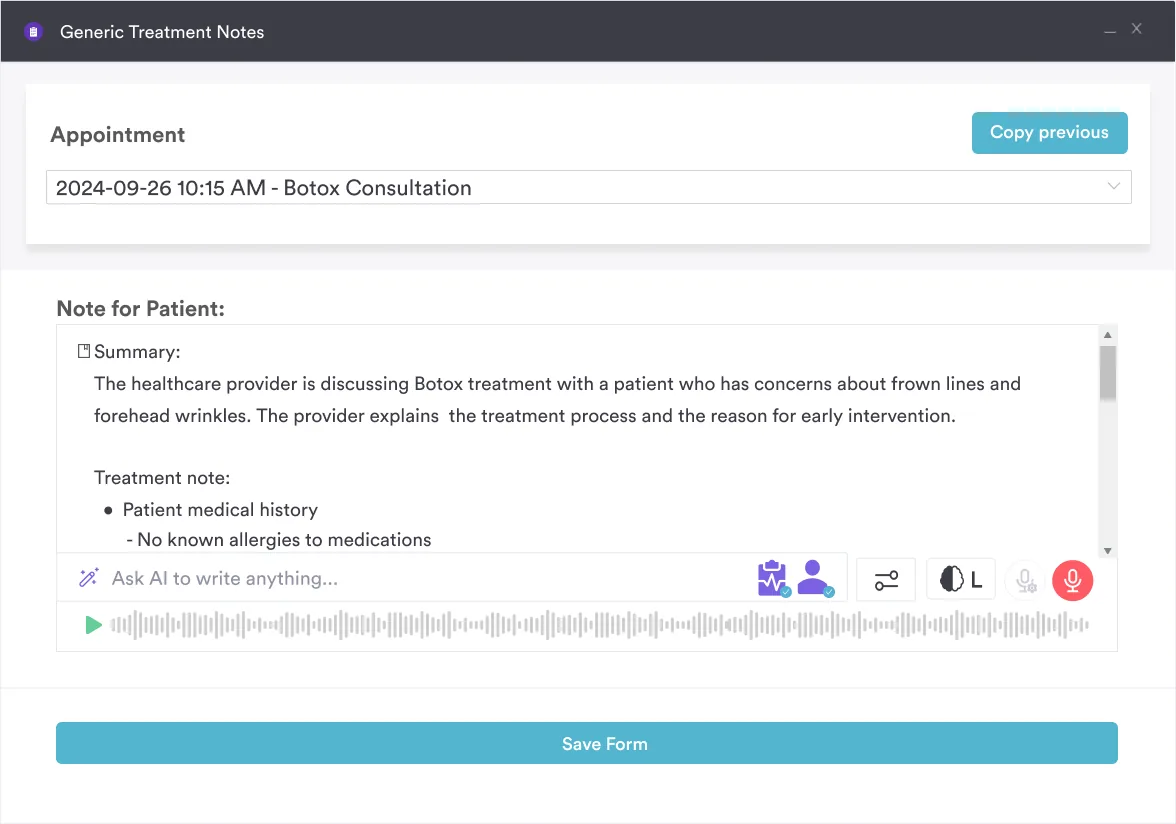
Practices using AI clinical documentation can automate note generation from voice dictation, reducing administrative time. Secure digital records ensure compliance with HIPAA (US) or UK GDPR data protection standards.
Aesthetic practitioners administering neuromodulators must operate within their scope of practice and regulatory jurisdiction.
In the United States, aesthetic qualifications and licensing vary by state: some states allow registered nurses and nurse practitioners to administer Botox under physician supervision, while others restrict it to physicians or physician assistants. States such as California impose additional requirements.
In the UK, practitioners must be registered healthcare professionals (doctors, nurses, dentists) and may require CQC registration in England (or the equivalent regulator in Scotland, Wales, or Northern Ireland) if operating as an independent practice.
Informed consent documentation is a legal and ethical requirement, not a formality.
Professional bodies including the American Med Spa Association (AmSpa) recommend detailed documentation of patient education, realistic outcome discussion, and acknowledgment of contraindications and risks. Broader medspa compliance obligations extend beyond consent to data security and advertising standards.

Pabau’s digital forms, client records, and automated workflows help aesthetic practices manage Baby Botox consultations, document informed consent, and maintain treatment records that meet regulatory standards — all in one secure platform.

If you are launching or refining a Baby Botox service, use this checklist to ensure all clinical, legal, and operational elements are in place:
A standardized Baby Botox consultation, consent, and treatment documentation template protects your practice, ensures regulatory compliance, and demonstrates professional clinical care. Comprehensive informed consent and contraindication screening prevent adverse outcomes and set realistic patient expectations, improving satisfaction and reducing disputes.
Book a demo with Pabau to see how digital forms and secure client records can automate your consent workflow, streamline pre-treatment screening, and maintain audit-ready documentation for every Baby Botox procedure your practice performs.
Baby Botox is a preventative aesthetic treatment using lower doses of botulinum toxin (10-20 units vs 20-50 for traditional Botox) to soften fine lines and prevent wrinkles while maintaining natural facial expression. It is commonly used in patients in their 20s-40s or those seeking subtle enhancement.
Baby Botox typically uses 10-20 units total, distributed across treatment areas (forehead, glabella, crow’s feet). Traditional Botox uses 20-50 units. The exact dose depends on patient anatomy, desired results, and practitioner technique.
Common, temporary side effects include bruising, swelling, redness, and mild tenderness at injection sites (resolve within 24-48 hours). Rare side effects include headache, asymmetry, or temporary eyelid drooping if improper technique is used. Serious allergic reactions are extremely rare. Thorough contraindication screening reduces risks significantly.
Results from Baby Botox typically last 3-4 months, similar to traditional Botox. This means patients need repeat treatment every 3-4 months to maintain results. Some patients may see results fade slightly earlier (8-10 weeks) due to the lower dose.
Yes. Baby Botox is marketed specifically for younger patients (late 20s and onward) seeking preventative anti-aging before deep lines form. The lower dose supports natural-looking results. Age alone is not a contraindication if the patient is an appropriate candidate and has realistic expectations.
Baby Botox can treat forehead lines (frontalis), glabellar lines/frown lines (“11s”, corrugator supercilii), crow’s feet (orbicularis oculi), bunny lines (nasalis), and perioral lines. Treatment areas depend on patient anatomy and where lines are forming. The lower dose is especially suited to fine lines and preventative use.