Exilis patient treatment record: Free PDF for RF sessions
An Exilis patient treatment record is the session log for BTL’s radiofrequ...

1
Last Updated: Oct 23, 2026

Morpheus8 is a radiofrequency microneedling device that builds collagen using controlled heat and thousands of tiny punctures.
Redness, swelling, and pinpoint bleeding are normal, and most patients look like themselves again within three to five days.
Retinol and exfoliating acids come out of the routine for roughly seven days either side of treatment.
The FDA has not authorized microneedling devices to drive serums, vitamins, or PRP into the skin.
Practice management software like Pabau can send the aftercare sequence and file the signed form in the client record.
A patient-facing handout covering what to expect, what to avoid, and for how long. It also lists the infection signs that warrant a call, plus a confirmation the patient signs.
Download templateMorpheus8 aftercare is the routine a patient follows for the two weeks after radiofrequency microneedling. Done properly, redness settles in three to five days and the skin peels on schedule. Done badly, you spend day four on the phone.
The handout below is written for the patient, not for the chart. It covers the healing timeline, the products to skip, how long each restriction lasts, and the warning signs that need a call.
It also carries a confirmation the patient signs. That turns the advice into part of the record instead of a leaflet left in the car.
Morpheus8 aftercare is the post-treatment protocol patients follow after radiofrequency microneedling. It supports healing, keeps complications rare, and protects the collagen result the patient came in for.
The device drives controlled micro-injuries into the dermis with radiofrequency energy. That triggers an inflammatory response which runs its course over three to six weeks. Like other energy-based treatments on a laser clinic menu, the result depends on what happens after the patient leaves.
Documented aftercare protects the practice too, and the requirements vary by country and by state. In the UK, the Care Quality Commission and the Joint Council for Cosmetic Practitioners (JCCP) expect written post-treatment guidance.
Wherever you practice, a signed handout is the cleanest proof that a patient was told what to do. A standard template also means the advice does not change depending on who is on shift.
Preparation starts about a week out. Patients who follow it bleed less, swell less, and recover faster.
Most patient anxiety comes from not knowing what counts as normal. Describe the expected reactions up front and you separate routine healing from a genuine complication.
Skin pigment changes are rarer still and generally resolve within six months. If a patient reports real discomfort at review, a pain rating scale gives you a number to compare against next time.
A structured timeline lets patients check their own progress instead of calling to ask. It also gives you the phases to build digital consent forms and automated education messages around.
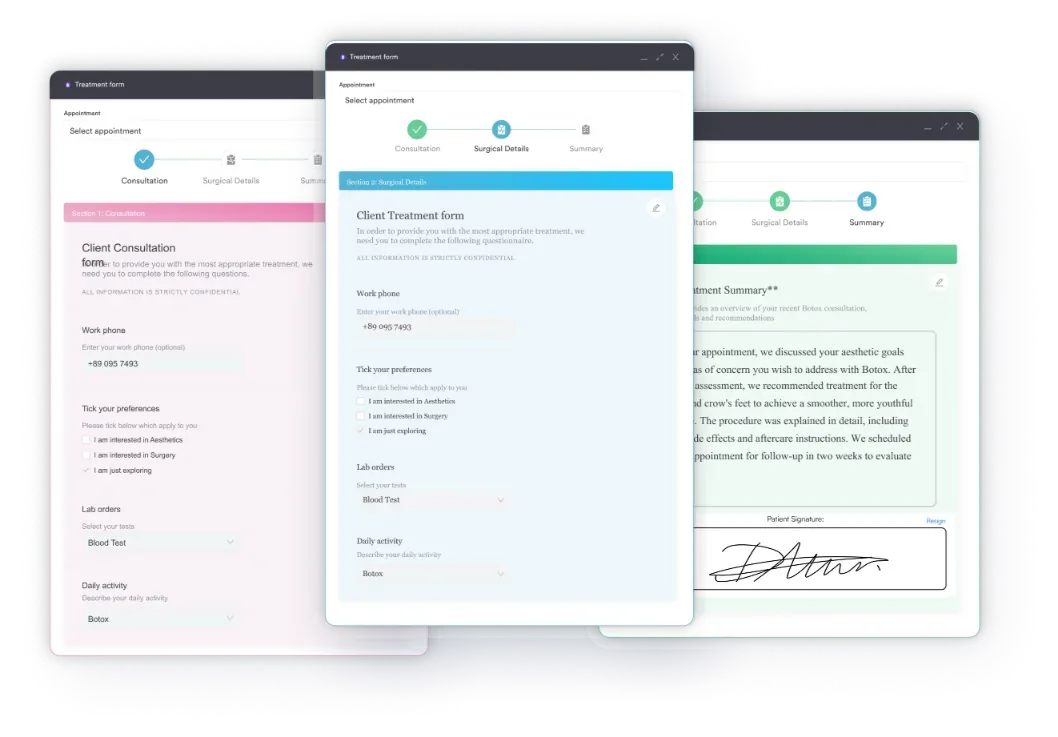
This is peak inflammation. The instructions here should push barrier repair and sun avoidance.
Flaking means the skin is renewing. Patients often panic at this point, so tell them in advance that it is expected.
By week two the visible recovery is largely done. The collagen remodeling phase carries the actual therapeutic benefit, and it continues for three to six months.
Book the review appointment before the patient walks out. Patients who understand why the review matters are far less likely to add to your no-show rate.
A two-column reference is the fastest way for a patient to check a restriction. Reproduce this format in whatever you print or email.
Naming brands dates a handout quickly. Describe the category and the properties instead, so your team can point patients at whatever retail line you actually stock.
One point worth knowing before you sell an add-on. The FDA has not authorized microneedling devices to drive cosmetics, topical drugs, vitamin solutions, or PRP into the skin. That matters if your treatment menu markets a serum infusion as part of the session.
Post-treatment skin is hypersensitive to UV light. Sun exposure during active healing raises the risk of post-inflammatory hyperpigmentation, which is more pronounced in Fitzpatrick IV to VI skin. Say this to every patient, not just the ones who ask.
Red-flag symptoms need a clinical review, and patients should know they can call without feeling like a nuisance. That confidence is a large part of patient compliance.
A practice-wide protocol protects the patient and the practice at the same time. Documented guidance shows that professional standards were met. Patients who follow it heal faster, rate the experience higher, and call less often.
Standardized medical forms also make the follow-up measurable. Pair the handout with a patient satisfaction survey and you can see whether the advice actually landed.
Printing the handout is the easy part. Making sure every patient gets it, reads it, and can find it again on day four is harder. Practice management software like Pabau automates that step with pre- and aftercare messaging tied to the appointment.
Messages then go out on your schedule rather than your team’s memory. A day-one check-in, a day-four note about peeling, and a two-week review prompt all fire on their own.
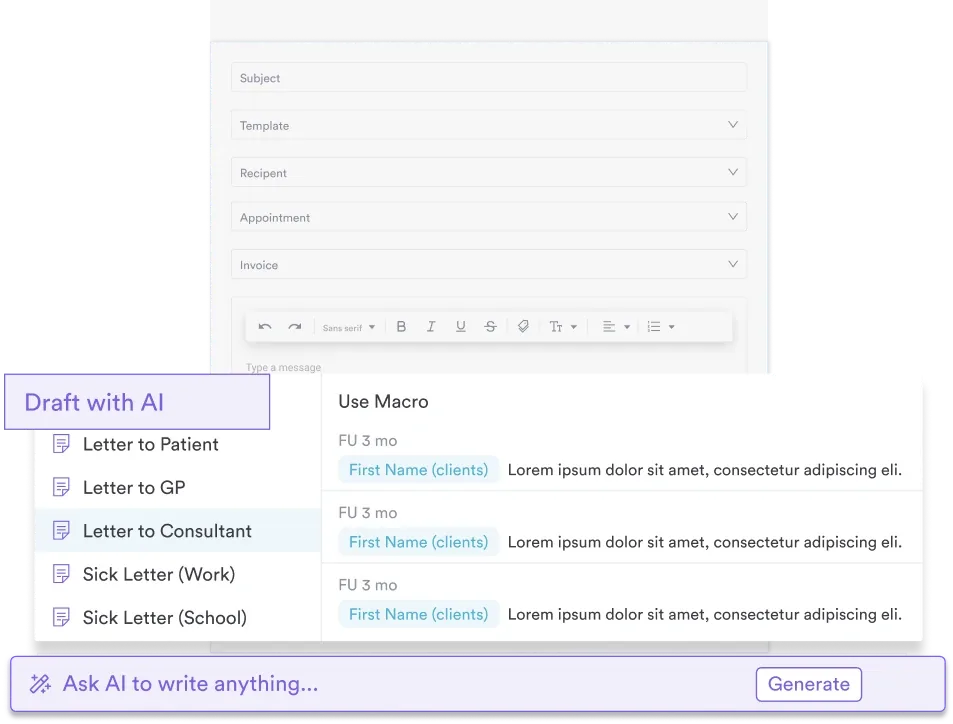
Skin With Bea Esthetics moved to Pabau for this reason. The Arizona med spa wanted automated emails and texts in its own brand voice, plus consent forms sent ahead of the visit.
The outcome is fewer worried calls on day four and a signed record against every treatment. Your front desk gets its afternoon back.

Pabau sends the aftercare sequence, captures the signed form, and stores both in the client record. Your team stops retyping instructions and chasing acknowledgments.

The treatment is over in 40 minutes. The result is decided over the next fortnight, almost entirely by whether the patient followed the instructions you handed them.
So make the handout easy to obey. Customize this template with your branding, hand it over at every appointment, and get the confirmation signed before the patient leaves the room.
The trade-off worth remembering is that a longer handout is not a better one. Patients read the short version. Book a demo to see how Pabau delivers aftercare and stores the signed form against each treatment.

Treating a similar device protocol? Microneedling aftercare template covers the same healing phases for practices running standard microneedling alongside Morpheus8.
Documenting the result properly? Before-and-after photo best practice shows how to capture the collagen result at three months while protecting patient privacy.
Want the follow-up to run itself? Patient engagement strategies explains how to catch an adverse reaction early through structured check-ins.
Paying staff on commission at your practice? Commission laws guide for med spas explains how to structure commission pay while staying legally compliant.
Need to tighten up the consultation? Skin care consultation form captures the history and skin type that decide your treatment depth in the first place.
Morpheus8 aftercare is the protocol patients follow after radiofrequency microneedling to support healing and protect the collagen result. It runs for three to six weeks and covers skincare, sun protection, and activity limits.
Most patients have visible redness for three to five days, peaking on days one and two. It can run longer in sensitive or darker skin. Consistent sun protection and barrier-repair moisturizing both speed up the fade.
Keep makeup off for the first 48 hours, which is what the handout tells patients. After that, mineral makeup that is non-comedogenic and fragrance-free can go back on once the redness has calmed.
Performed by a qualified practitioner and followed by proper aftercare, Morpheus8 has a strong safety profile. Serious complications are rare. Post-inflammatory hyperpigmentation is the most common concern, and diligent sun protection prevents most of it.
Leave out retinol, exfoliating acids, vitamin C serums, benzoyl peroxide, fragrance, and essential oils for at least seven days. These irritate healing skin. Gentle cleansers, barrier-repair moisturizers, and sunscreen are the whole routine for that week.
Visible recovery takes three to five days, though the skin keeps healing internally for weeks. Collagen remodeling continues for three to six months. Most patients resume normal activity within a week and full skincare by day 10.
Some patients bruise, and it can take one to two weeks to fade. Arnica cream may help it resolve faster. Lumps or nodules in the treated area are uncommon and usually settle within two weeks.