

CCSD code G5100: Bypass of duodenum billing guide
CCSD code G5100 bills a bypass that leaves the duodenum in place CCSD code G5100...

Last Updated: Oct 16, 2026
V5011 is the HCPCS Level II code for fitting/orientation/checking of hearing aid.
Most audiology claim denials for hearing aid services trace back to one of three problems: missing documentation, incorrect modifier use, or billing V5011 without its companion codes. Getting the workflow right before the claim goes out saves hours of follow-up and protects reimbursement.
Let Pabau's smart automation suggest the right codes, reduce claim denials, and keep your practice compliant—effortlessly.
Automate repetitive tasks and focus on what matters most—your patients.
Reduce coding errors and ensure compliance with the latest regulations.
Clean claims, fewer denials, and faster reimbursements.
Powerful insights and reporting to help your practice thrive.
HIPAA compliant SOC 2 certified GDPR-compliant Trusted by 4,000+ clinics worldwide

HCPCS code V5011 covers fitting, orientation, and checking of a hearing aid – a single-session service reported per hearing aid fit
V5011 is typically bundled with V5020, V5241 or V5160, and the dispensed hearing aid code on the same claim
Medicare excludes hearing aids from Part B coverage, so V5011 reimbursement depends on state Medicaid plans and commercial payers – verify prior authorization before each visit
Pabau’s claims management software helps audiology practices track V-code billing, document fitting sessions, and reduce claim errors across payer types
HCPCS code V5011 is the Level II code used to report fitting, orientation, and checking of a hearing aid. It covers the full scope of a hearing aid fitting visit: physical fitting of the device, counseling the patient on use and maintenance, and verifying that the aid is functioning correctly in the ear.
The code sits within the HCPCS V-code category maintained by the Centers for Medicare and Medicaid Services (CMS) under Hearing Assessments and Evaluations. It was added to the HCPCS system on January 1, 1990, and carries action code N, meaning no maintenance has been applied to the code since January 1, 1995.
V5011 is reported per hearing aid fitted. A binaural fitting session where two hearing aids are dispensed and fitted may justify reporting V5011 twice, once for each ear, depending on payer policy. Always verify bilateral billing rules with the individual payer before submitting.
The devices carry their own code on the same dispensing claim. An analog binaural in-the-canal pair, for instance, is reported as one unit under V5249.
The Massachusetts MassHealth Hearing Instrument Specialist Manual describes V5011 as applicable for programming visits, expanding the practical use case beyond initial fittings to include subsequent programming and adjustment sessions.
The table below summarizes the official code properties for V5011 as maintained by CMS.
| Property | Detail |
|---|---|
| HCPCS code | V5011 |
| Short description | Hearing aid fitting/checking |
| Long description | Fitting/orientation/checking of hearing aid |
| Code category | Hearing Assessments and Evaluations (HCPCS Level II V-codes) |
| Date added | January 1, 1990 |
| Action code | N (no maintenance) |
| Action effective date | January 1, 1995 |
| Typical provider types | Audiologist, Hearing Instrument Specialist |
| Washington DOC allowed amount (2026) | $49.64 |
Fee schedules vary significantly by payer. The Washington State Department of Corrections fee schedule, effective January 1, 2026, reimburses $49.64 for V5011. Other state Medicaid programs and commercial plans maintain their own allowed amounts. Use the CMS Physician Fee Schedule lookup tool and your payer contracts to confirm current rates before billing.
Incomplete documentation is the leading cause of V5011 denials. Payers expect the clinical record to clearly support that all three components of the service took place: fitting, orientation, and checking.
A compliant V5011 clinical note should include the following elements:
Maintaining structured clinical records management for every fitting session ensures auditors can quickly confirm all three components are documented separately. Payers that flag V5011 claims for review expect each element to be distinguishable in the note, not bundled into a single generic “fitting visit” statement.
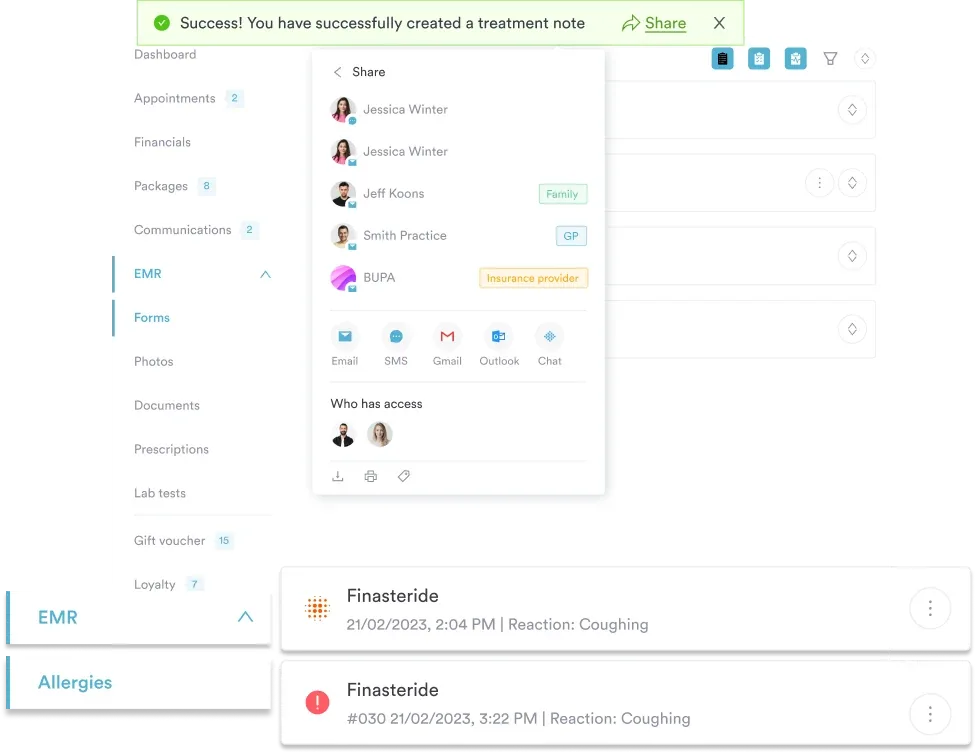
For practices managing HIPAA-compliant documentation practices across multiple providers, standardizing the fitting note template reduces the risk of incomplete records.
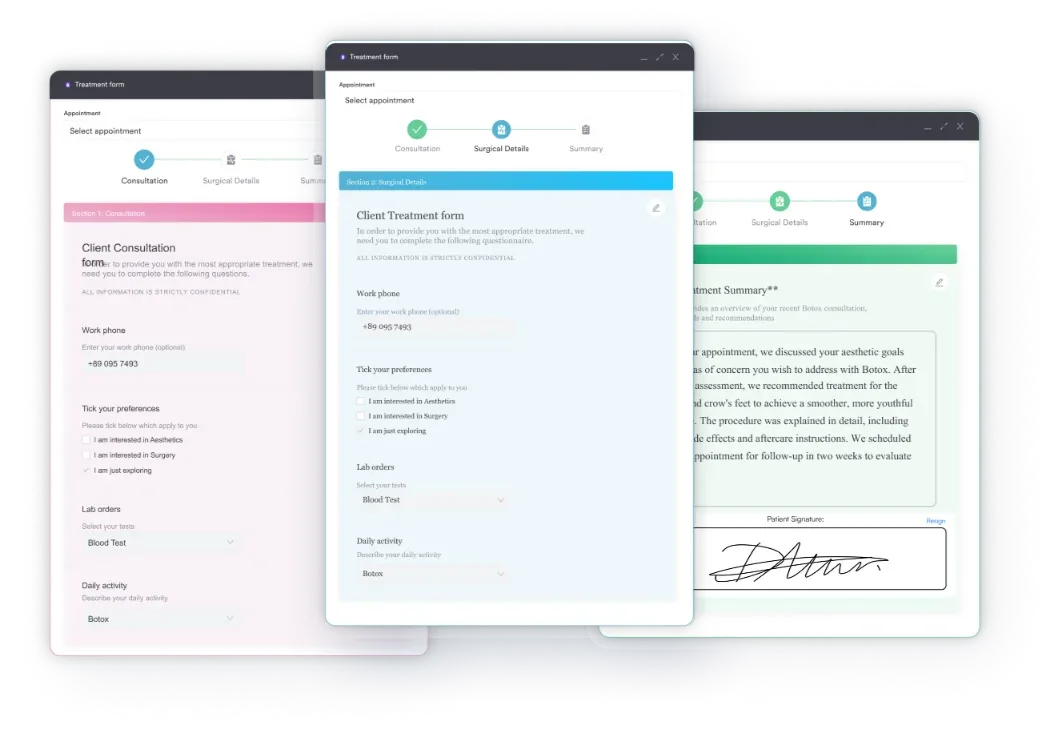
Audit your V5011 notes quarterly. Pull a random sample of 10 fitting visit records and check that each one documents the fitting, orientation, and checking components separately. A missing orientation note is the most common reason payers downcode or deny V5011 claims.
Miscellaneous codes are easy to mishandle, and medical practice management software keeps their documentation attached and auditable.
Medicare Part B does not cover hearing aids or routine hearing exams. As a result, V5011 is not reimbursed under traditional Medicare when submitted for a standard fitting visit. However, some Medicare Advantage plans include hearing benefits and may cover V5011 at the plan’s discretion. Always verify coverage with the specific Medicare Advantage plan before billing.
Medicaid coverage for V5011 varies by state and is where most consistent reimbursement occurs for hearing aid services. Washington Apple Health (Medicaid) provides a useful benchmark: V5011 is allowed for the initial fitting, and then up to three additional times per year for follow-up visits after the initial three visits bundled with each new hearing aid dispensing. Washington also requires an Established Patient Authorization (EPA) for V5011 when clinical criteria are met; prior authorization is required when EPA criteria are not met.
Commercial payers vary widely. Some cover V5011 as part of a hearing aid benefit with a dollar or frequency cap. Others require prior authorization before any fitting visit. Key questions to resolve before billing any commercial payer:
Tracking these rules by payer within your claims management software prevents repeated denials from the same coverage gaps. Building payer-specific billing notes into your workflow means the front desk team catches missing authorizations before the claim is ever submitted.
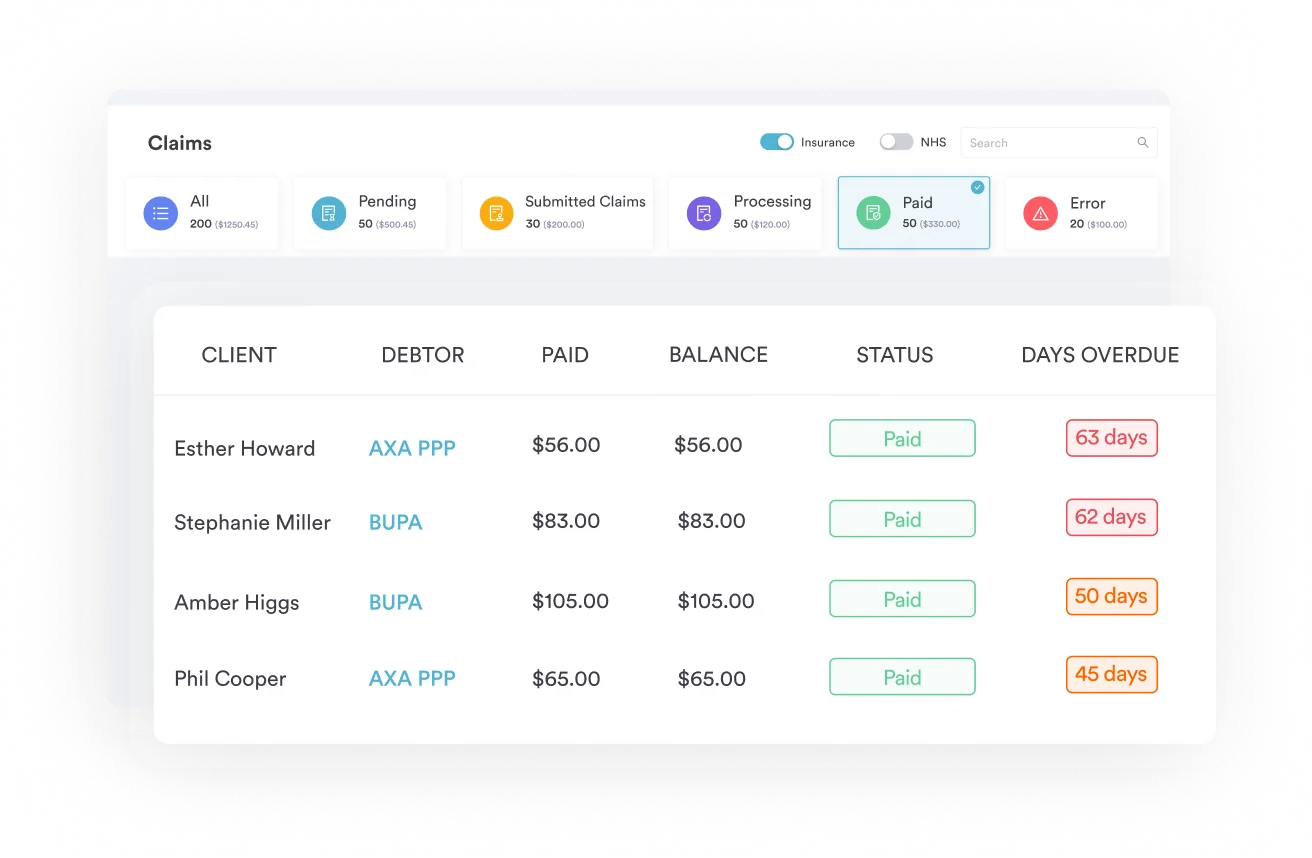

Pabau helps audiology practices track V-code billing, manage prior authorizations, and document fitting sessions in one place. Fewer denials, less rework.

Modifier use with V5011 depends on the clinical circumstance and the payer’s modifier requirements. The most relevant modifiers for hearing aid fitting services are:
For binaural fittings, many practices bill V5011 twice: once with modifier LT and once with modifier RT. Some payers prefer a single line with no bilateral modifier. Confirm the correct approach with each payer before submission. Submitting both lines without checking payer-specific bilateral rules is a common source of duplicate claim edits.
The AAPC Codify HCPCS lookup provides modifier crosswalk data that can help coders identify which modifiers are accepted by specific payer types for V-codes. Cross-referencing against the National Correct Coding Initiative (NCCI) edits before submission reduces the risk of modifier-related rejections.
V5011 rarely appears alone on a hearing aid claim. The American Academy of Audiology recommends billing V5011 alongside V5020, V5090 or V5160, and the appropriate hearing aid code as part of a complete dispensing claim. Old superbills still list V5000, a deleted code that payers reject. Understanding the full code set reduces claim errors and prevents bundling rejections.
| HCPCS code | Description | Relationship to V5011 |
|---|---|---|
| V5010 | Assessment for hearing aid | Reported before V5011; covers the evaluation that determines candidacy for amplification |
| V5020 | Conformity evaluation | Typically billed alongside V5011; covers verification that the dispensed aid meets the prescription |
| V5241 | Dispensing fee, monaural hearing aid | Billed with V5011 for monaural fittings; covers the professional service of dispensing |
| V5160 | Dispensing fee, binaural | Billed with V5011 for binaural fittings in place of V5241 |
| V5014 | Repair/modification of hearing aid | Used for repair visits; may also apply when V5011 is billed for a reprogramming session |
| V5257 | Hearing aid, digital | The hearing aid device code; billed on the same claim as V5011 for a dispensing visit |
| V5264 | Ear mold | Billed separately when a custom ear mold is provided |
| V5266 | Battery for hearing aid | Billed separately when batteries are dispensed at the fitting visit |
| V5275 | Ear mold impression | Billed when an ear mold impression is taken at the fitting session |
Match the device row above to the aid you dispensed. For a monaural digital behind-the-ear fitting, that device code is V5257. A contralateral routing (CROS) aid built into eyeglass frames bills as V5190.
V5011 vs V5020 is the most frequently confused pair. V5011 covers the fitting, orientation, and checking service performed by the provider. V5020 (conformity evaluation) covers the verification step confirming the dispensed aid matches the audiological prescription. Both are routinely billed together on the same claim for a new hearing aid dispensing visit. Billing V5020 without V5011 suggests a verification was done without a fitting, which may trigger a payer query.
CPT codes 92626 and 92627, which cover evaluation of auditory rehabilitation status, are sometimes used in conjunction with V5011 for complex fitting visits where a formal auditory rehabilitation assessment is performed. Per guidance from the American Speech-Language-Hearing Association (ASHA), fitting, orientation, and checking are reported using HCPCS code V5011, while the auditory rehabilitation evaluation components are reported separately under the appropriate CPT code. Practices using both should confirm payer policy on combining CPT and HCPCS V-codes on the same claim.
For a reference on other hearing-related procedure code families, the private healthcare procedure codes guide covers analogous coding structures used in UK private payer billing, which may be useful for internationally operating practices or those seeking comparative coding context.
Build a V5011 claim template in your billing system that pre-populates V5020, V5241 or V5160, and the hearing aid device code alongside V5011. A pre-built claim shell reduces the chance of submitting V5011 without its companion codes and speeds up claim entry for high-volume fitting days.
Several billing patterns consistently trigger denials for V5011 claims. Awareness of these patterns, combined with a systematic pre-submission review, reduces rework and protects cash flow.
Some payers bundle V5011 into the dispensing fee codes V5241 or V5160, treating the fitting service as included in the dispensing fee. When this happens, submitting V5011 separately on the same claim generates a duplicate or bundling edit. Check each payer’s editing policy before billing V5011 alongside a dispensing fee code to confirm whether separate billing is accepted or whether the fitting is considered part of the dispensing service.
Some payers accept V5011 claims from both audiologists and licensed hearing instrument specialists. Others restrict payment to audiologists only, particularly under certain Medicaid programs. The credentialing and taxonomy code submitted with the claim must match what the payer has on file for the rendering provider. A mismatch between provider type and taxonomy code is a preventable denial that billing teams can catch during the pre-submission check.
Washington Apple Health allows V5011 up to three additional times per year for follow-up visits after the initial bundled visits. Other Medicaid programs and commercial plans impose similar or stricter frequency limits. Billing V5011 beyond an allowed frequency triggers an automatic denial. Tracking visit counts per plan within your EHR integration for billing workflows ensures the team knows when a patient is approaching a visit limit before booking the appointment.
Several Medicaid programs and commercial plans require prior authorization for V5011, particularly for follow-up fitting visits beyond the initial session. Submitting V5011 without the required authorization number results in a denial that cannot be overturned by medical records alone. Build an authorization verification step into the scheduling workflow for every V5011 appointment.
Refer to the PGM Billing HCPCS lookup tool for current code properties and to cross-reference V5011 alongside companion codes. The CMS HCPCS overview provides authoritative guidance on HCPCS Level II code maintenance, code categories, and annual update processes.
For practices building or refining their audiology billing workflow, reviewing the medical forms for clinical documentation used during fitting visits helps ensure notes are structured to support V5011 billing from the first patient interaction. Practices that also handle broader billing across specialties may find the ADHD screening CPT code and wellness and coaching CPT billing guides useful reference points for managing multi-code billing workflows.
Audiology practices billing multiple V-codes per patient encounter need a system that handles multi-code claim construction, tracks authorization status, and stores structured clinical notes tied to each visit. Pabau’s claims management software is built for exactly this type of multi-code, documentation-heavy billing environment.
Fitting session notes captured in Pabau’s structured clinical record format tie directly to the claim, so billing staff can confirm that fitting, orientation, and checking are each documented before the claim is submitted. The practice management software layer tracks payer-specific authorization requirements by appointment type, reducing the likelihood of V5011 claims going out without a required authorization number.
Practices can also use Pabau’s reporting tools to monitor V5011 denial rates by payer, identify patterns in claim rejections, and adjust billing templates before denials become a volume problem.
Book a demo to see how Pabau handles audiology billing workflows, from clinical documentation through claim submission and denial tracking.
HCPCS code V5011 covers fitting, orientation, and checking of a hearing aid. The code captures three distinct clinical components in a single visit: physically fitting the hearing aid to the patient’s ear, orienting the patient on device use and maintenance, and verifying the device is functioning correctly. It is reported per hearing aid fitted and is used by audiologists and licensed hearing instrument specialists.
No. Traditional Medicare Part B excludes hearing aids and routine hearing services, so V5011 is not reimbursed under standard Medicare. Some Medicare Advantage plans offer hearing benefits that may cover V5011 at the plan’s discretion. Always confirm hearing aid benefit coverage with the specific Medicare Advantage plan before billing.
V5011 covers the fitting, orientation, and checking service provided to the patient at the time of hearing aid dispensing. V5020 covers the conformity evaluation, which verifies that the dispensed hearing aid matches the audiological prescription. Both codes are typically billed on the same claim for a new hearing aid dispensing visit. Billing V5020 without V5011 implies a verification was performed without a corresponding fitting service, which may prompt a payer review.
For a binaural fitting, most practices bill V5011 twice: once with modifier LT for the left ear and once with modifier RT for the right ear. Some payers accept a single V5011 line for a binaural fitting with no modifier. Confirm the payer’s bilateral billing preference before submission, as incorrect modifier use on bilateral claims is a common source of duplicate claim edits.
CPT codes 92626 and 92627 cover evaluation of auditory rehabilitation status. V5011 covers the fitting, orientation, and checking service. When both services are performed in the same visit, ASHA guidance indicates they may be reported separately using the appropriate HCPCS and CPT codes. Confirm with each payer whether combining CPT and HCPCS V-codes on the same claim is accepted under their billing policies.
Frequency limits vary by state. Washington Apple Health allows V5011 up to three additional times per year for follow-up visits after the initial three visits bundled with each new hearing aid. Other state Medicaid programs may apply different frequency caps. Always check the specific state Medicaid hearing aid billing guide before scheduling follow-up fitting visits to confirm how many V5011 claims are allowed per benefit period.



