



CCSD code G5100: Bypass of duodenum billing guide
CCSD code G5100 bills a bypass that leaves the duodenum in place CCSD code G5100...

Last Updated: Oct 16, 2026

CPT code 23620 covers closed treatment of a greater humeral tuberosity fracture without manipulation.
The code carries 2.49 work RVUs in 2026, which works out to roughly $271 in a facility and $310 in an office.
The 90-day global period bundles routine follow-up visits into the procedure payment. Bill separately only for unrelated services.
Laterality modifiers -LT and -RT are required on Medicare claims, and omitting them is a common denial trigger for shoulder fracture codes.
Practice management software like Pabau ties the clinical record to the procedure code at the point of care, so denials from thin documentation drop.
CPT code 23620 covers the closed treatment of a greater humeral tuberosity fracture, without manipulation. The American Medical Association (AMA) owns and maintains the CPT code set. It places 23620 in the Musculoskeletal System chapter, inside the shoulder fracture and dislocation range of 23500 to 23680.
“Closed treatment” means no surgical incision is made to reach the fracture site. “Without manipulation” means the fragments are not repositioned by hand. The treating clinician judges the alignment acceptable and manages the injury conservatively.
This code applies only when the clinical decision is conservative management. The table below summarizes the key code facts at a glance.
The greater tuberosity is the bony prominence on the lateral side of the proximal humerus. It anchors the supraspinatus, infraspinatus, and teres minor tendons of the rotator cuff. Fractures here usually follow a direct blow to the shoulder or a fall onto an outstretched hand. They also turn up alongside an anterior shoulder dislocation.
CPT 23620 applies when the treating physician finds the fragment minimally displaced and conservative management appropriate. Most clinical protocols put that threshold under 5 mm of displacement. Key clinical indications include:
When displacement passes clinical thresholds or rotator cuff integrity is compromised, the physician may choose 23625 or an open reduction procedure instead. Coding accuracy rests on two entries in the record. Document the displacement measurement, and document the rationale for managing the injury conservatively.
Modifiers explain the circumstances of a procedure, and they often decide whether a claim is paid at all. For CPT 23620, the following modifiers apply most often.
Medicare requires a laterality modifier, -LT or -RT, on every shoulder procedure code. Missing it is a preventable denial, and the remittance comes back with one of the standard denial codes. Front-end scrubbing catches it, which is the difference between a clean claim and a rework queue.
Confirm your payer’s modifier policy before you submit. Requirements vary between commercial plans and Medicare Advantage products, and a policy that held last year may not hold now.
Relative Value Units (RVUs) are the foundation of Medicare physician payment under the Resource-Based Relative Value Scale (RBRVS). The Centers for Medicare and Medicaid Services (CMS) republishes them every year through the CMS fee schedule lookup. The figures below come from the 2026 physician fee schedule.
The malpractice RVU is a single value of 0.50 and does not shift with the setting. Practice expense RVUs do shift, because CMS accounts for overhead differently in each place of service.
In a hospital or ambulatory surgical center, the facility absorbs the overhead and bills for it separately. In a physician office the practice carries those costs itself, so the non-facility figure is higher. Use the FastRVU lookup tool to pull location-adjusted figures for your own setting.
Always confirm which place of service (POS) code you are submitting. POS 11 (office) triggers non-facility RVUs, while POS 22 (outpatient hospital) and POS 21 (inpatient hospital) trigger facility RVUs. Submitting the wrong POS code is a fast path to an underpayment that is hard to correct after the fact.
Medicare pays for 23620 by multiplying total RVUs by the annual conversion factor, then adjusting for geographic practice cost indices (GPCIs). The 2026 conversion factor is $33.4009. Because GPCIs vary by payment locality, two practices billing the same procedure on the same day can be paid different amounts.
The national averages below apply the 2026 conversion factor to the total RVUs above, with no locality adjustment.
Treat those two figures as benchmarks, not quotes. Run your own payment locality through the CMS fee schedule search for the rate you will actually be paid. Commercial rates for 23620 usually sit above Medicare and depend on each payer contract.
Every CPT claim needs a supporting ICD-10-CM diagnosis code to establish medical necessity. For 23620, the diagnosis has to match the fracture site, the laterality, and the encounter type. The S42 category covers fractures of the shoulder and upper arm.
The 7th character matters as much as the base code. Use “A” for the initial encounter while the patient is under active treatment. Use “D” for subsequent encounters during healing, and “S” for sequela. A code such as S49.109P marks a much later encounter, where the fracture has healed in malunion.
Plenty of shoulder fracture claims are denied because the 7th character does not match the visit context. Verify every pairing against the current tabular list in the CDC ICD-10-CM tool.
Claims for CPT code 23620 need documentation that supports both the diagnosis and the treatment approach chosen. Thin records are the leading reason orthopedic claims are denied or downgraded on audit. Practice management software like Pabau captures clinical documentation at the point of care, so the note and the claim come from the same encounter. A payer reviewing this code looks for the reasoning in the note, not only the conclusion, so the documentation level matters. Coding sits in the middle of the revenue cycle, between registration and payment posting.
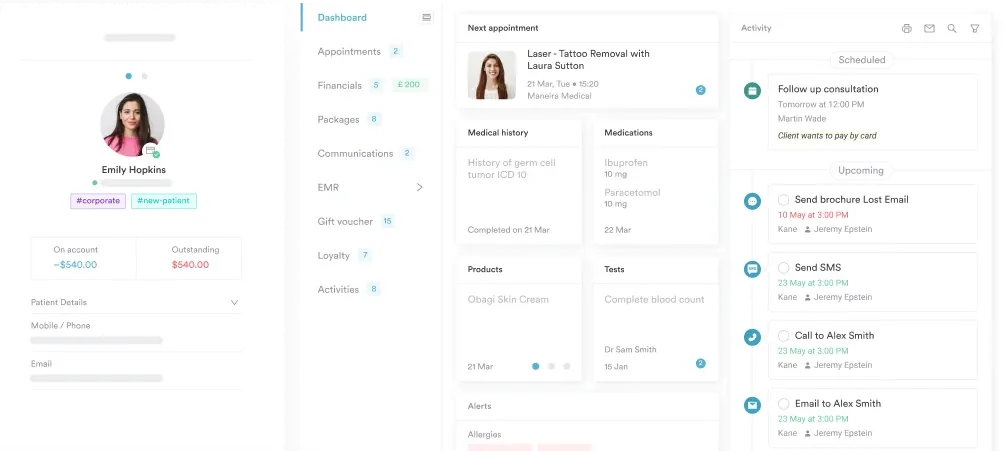
A complete medical record for 23620 should include:
Payers running post-payment audits will ask for all of it. Structured records linked to the submitted code are what keep an audit short, which is the practical side of billing compliance. Software that connects the clinical note to the billing workflow does that linking for you.
CPT code 23620 carries a 90-day global period under Medicare’s global surgical package. Verify the current global period indicator in the CMS fee schedule for the active year. Inside that window, routine follow-up services are bundled into the procedure payment and cannot be billed separately to Medicare.
Knowing what is bundled protects you from underpayment and from compliance risk at the same time. Watch the filing clock too, because a late claim is denied on the timely filing limit no matter how clean the coding is.
Rehab that you refer out is billed by the treating provider, not by you. Practices that run rehab in house bill it under their own codes, usually from a physical therapy EMR rather than the surgical record.
Codes 23600 through 23630 cover closed and open treatment of proximal humerus fractures at different levels of intervention. Choosing between them means separating manipulation from open reduction, and the broad anatomical site from the specific one.
The most common selection error is billing 23600 instead of 23620. Code 23600 covers the proximal humerus broadly, while 23620 is specific to the greater tuberosity. When imaging and the clinical note both place the fracture at the greater tuberosity, 23620 is the precise choice. Auditors can flag 23600 as under-coded against that record.
Injuries further down the humerus leave this range altogether. Percutaneous fixation of a humeral condylar fracture belongs to 24582 in the elbow subheading.
Greater tuberosity fracture claims are denied more often for documentation reasons than for coding errors. The physician writes the encounter in one system, the imaging report sits in another, and the billing team rebuilds the medical necessity case from fragments. Pabau’s claims management software holds those pieces in one workflow.
Claims leave Pabau through our Claim.MD integration, the clearinghouse that submits them electronically to payers. Remittances and rejections land back in the same screen. A missing -LT modifier gets fixed against the record it came from, rather than in a spreadsheet nobody owns.
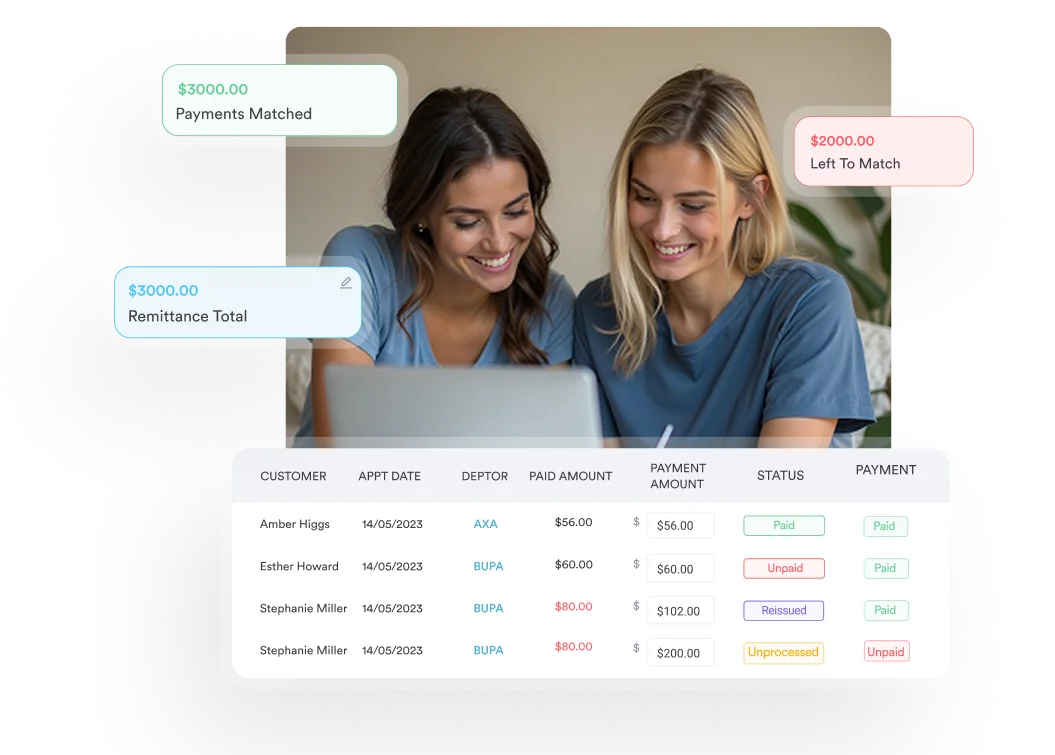
For orthopedic teams and sports medicine software users, Pabau handles three billing challenges that codes like 23620 create:
For practices running a high volume of musculoskeletal codes, keeping practice management workflows in one place cuts admin overhead. Less overhead means less claim lag and fewer denials.
Run a quarterly audit of your 23620 and 23625 claim mix. If your practice rarely bills 23625, check whether the notes capture manipulation decisions at all. Some 23625 encounters may be going out as 23620. The payment difference between the two codes, multiplied across a year of volume, adds up to real money.

Pabau connects clinical notes, imaging references, and CPT codes in one workflow. Billers spend less time chasing records, so orthopedic practices submit cleaner claims the first time.

Precision is what 23620 pays for. The code is narrow by design. The practices that get paid for it are the ones whose records show why conservative management was the right call.
Most denials on this code trace back to something the clinician knew at the visit and nobody wrote down. That is a workflow problem before it is a coding problem, which is good news, because a workflow is something you can change this month.
Fix the record and the claim follows. Pabau’s claims management and digital forms capture that evidence while the patient is still in the room. Book a demo to see how Pabau keeps orthopedic documentation and claims in step.

Coding a shoulder dislocation instead? CPT code 23462 walks through the open treatment pathway, its RVU values, and the modifiers that keep the claim paid.
Excising a mass around the shoulder? CPT code 23073 covers soft tissue tumor removal in the shoulder and the documentation that supports it.
Billing a biceps repair at the elbow? CPT code 24340 explains what the operative note has to show before the claim goes out.
Documenting a sequela rather than a new injury? ICD-10 code S43.312S shows how the 7th character changes the diagnosis you submit.
Billing a glioblastoma diagnostic workup? EGFR vIII mutation test billing guide explains how CCSD code 0019G bills the mutation test used in glioblastoma workups.
CPT code 23620 describes the closed treatment of a greater humeral tuberosity fracture without manipulation. It is used when a physician treats a fracture at the greater tuberosity conservatively, without a surgical incision. The fragments are not repositioned by hand. The code sits in the Musculoskeletal System chapter of the CPT code set.
CPT 23620 is used when a greater tuberosity fracture is treated closed, with no manipulation of the fragments. CPT 23625 covers the same fracture site when the physician actively repositions the bone fragments during the encounter. The clinical record has to state whether manipulation happened, because billing the wrong code is a common audit finding.
Medicare requires a laterality modifier, -RT for right or -LT for left, on all shoulder procedure codes including CPT code 23620. Omitting it is one of the most common reasons these claims are denied. Modifier -59 may be needed when 23620 is billed alongside another procedure that would otherwise be bundled. Modifier -24 applies to unrelated E/M services during the global period.
CPT code 23620 carries a 90-day global period under Medicare. Routine post-treatment follow-up visits related to the fracture are bundled into the procedure payment for those 90 days. Services unrelated to the fracture, treatment of a new injury, and physical therapy billed by a separate provider can still be billed independently. Always verify the current global period indicator via the CMS Medicare Physician Fee Schedule.
CPT code 23620 carries 2.49 work RVUs in the 2026 Medicare physician fee schedule. Total RVUs are 8.13 in a facility setting and 9.27 in a non-facility office setting. The malpractice RVU of 0.50 is the same in both settings. Practice expense comes in at 5.14 in a facility and 6.28 in an office. CMS updates these figures every year, so check the current schedule for your locality.
A claim for CPT 23620 needs imaging that confirms the greater tuberosity fracture, with the displacement measurement recorded. It also needs a clinical note stating that treatment was closed, that manipulation was not performed, and why. A signed physician attestation is required. Document the treatment plan too, including immobilization type and the follow-up schedule.
Medicare reimbursement for CPT 23620 averages roughly $271 in a facility and roughly $310 in a physician office. Those figures apply the 2026 conversion factor of $33.4009 to total RVUs of 8.13 and 9.27. Your own payment moves with your geographic locality, so run your locality code through the CMS Physician Fee Schedule lookup tool for an exact rate.



