

CCSD code G5100: Bypass of duodenum billing guide
CCSD code G5100 bills a bypass that leaves the duodenum in place CCSD code G5100...

Last Updated: Oct 16, 2026
T1005 is the HCPCS Level II code for respite care services, up to 15 minutes.
Let Pabau's smart automation suggest the right codes, reduce claim denials, and keep your practice compliant—effortlessly.
Automate repetitive tasks and focus on what matters most—your patients.
Reduce coding errors and ensure compliance with the latest regulations.
Clean claims, fewer denials, and faster reimbursements.
Powerful insights and reporting to help your practice thrive.
HIPAA compliant SOC 2 certified GDPR-compliant Trusted by 4,000+ clinics worldwide

HCPCS code T1005 describes respite care services billed in 15-minute units, established July 1, 2001 under the T-code range for state Medicaid agencies.
T1005 is primarily a Medicaid and HCBS waiver code – traditional Medicare generally does not cover it, though some Medicare Advantage plans may.
Reimbursement rates vary by state: South Carolina, for example, pays $4.05 per 15-minute unit; always verify with the specific state Medicaid program before billing.
Pabau’s claims management software supports structured visit documentation and billing workflows for home health and Medicaid waiver providers.
HCPCS code T1005 is a Level II Healthcare Common Procedure Coding System code that describes respite care services provided in units of up to 15 minutes. It is not a CPT code, and there is no separate respite care CPT code. Respite is billed with HCPCS Level II codes like T1005, so a search for a “T1005 CPT code” lands on this same code. It falls under the Nursing Services code range T1000-T1005, which the Centers for Medicare and Medicaid Services (CMS) maintains as part of the national T-code set established for state Medicaid agencies.
The long description is: Respite care services, up to 15 minutes. The short description is: Respite care service 15 min. T-codes (T1000-T5999) are national codes established specifically for state Medicaid agency use. They are not standard CPT codes. This distinction matters for payer routing and reimbursement rules. CMS added HCPCS code T1005 to the code set on July 1, 2001, and assigned it an action code of “N,” indicating no maintenance changes since its original creation.
In clinical practice, respite care provides temporary, short-term relief for a primary caregiver, typically a family member or unpaid caregiver supporting a person with a disability, chronic condition, or complex care need. A trained aide or nurse delivers the services in the home or community setting. Providers using claims management software that supports structured HCPCS Level II billing can reduce the documentation errors most commonly tied to T1005 denials.
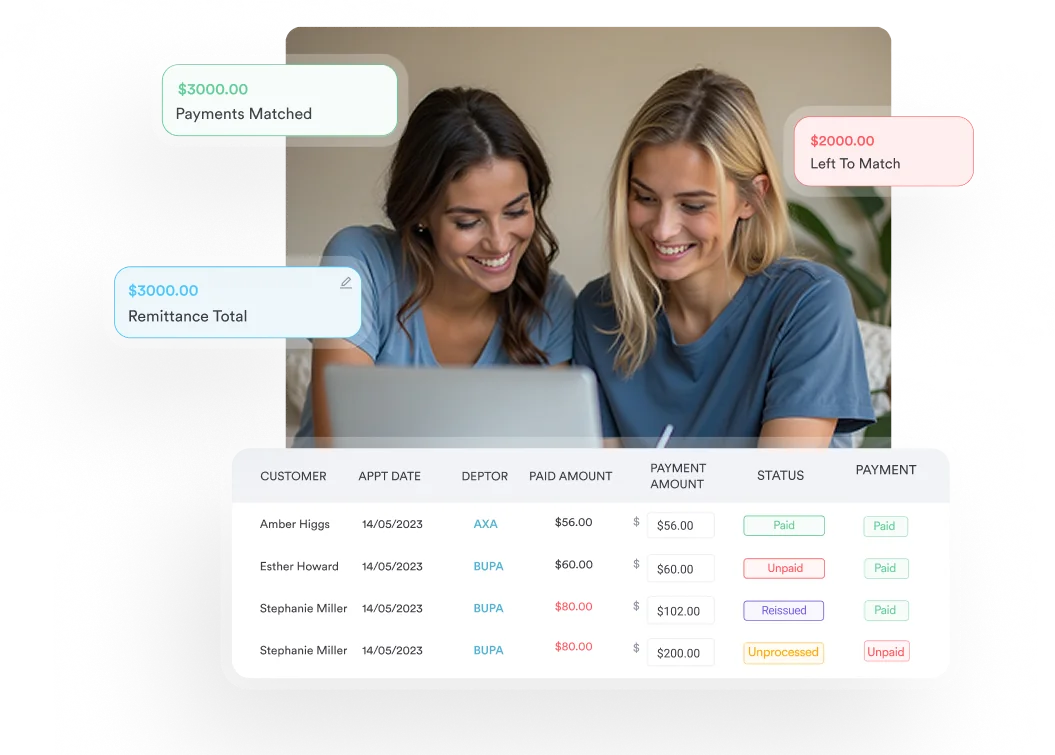
T1005 is billed in 15-minute increments, meaning each unit submitted to the payer represents one 15-minute block of respite care service. A two-hour respite session would translate to eight billable units. This structure differs from per-diem respite codes like S5151 (Respite care in home, per diem) and H0045 (Respite care out-of-home, per diem), which collapse an entire day of care into a single claim line.
| Code | Description | Unit type |
|---|---|---|
| T1005 | Respite care services, up to 15 minutes | 15-minute unit |
| S5150 | Unskilled respite care, not hospice | 15-minute unit |
| S5151 | Unskilled respite care, not hospice, per diem | Per diem |
| H0045 | Respite care out-of-home, per diem | Per diem |
State Medicaid programs and HCBS waiver rules set their own daily unit caps. No universal cap exists across all payers. Some state programs set a limit equivalent to four hours per service episode, but billing teams should always verify the applicable unit limit with the specific Medicaid waiver or managed care plan before submitting claims. Billing beyond the program-authorized daily limit is a common reason for post-payment audits.
According to the AAPC Codify HCPCS reference, CMS classifies HCPCS code T1005 under the Nursing Services grouping (T1000-T1005), which includes codes for private duty nursing, nursing assessment, and administration of medications. This grouping signals that CMS designed T1005 for care that a qualified nursing professional or certified aide delivers or supervises, not purely non-medical companion services.
Where the home visit is skilled nursing rather than caregiver relief, HCPCS code T1030 covers registered nurse care per diem.
T1005 is primarily a Medicaid and Home and Community-Based Services (HCBS) waiver code. Traditional fee-for-service Medicare generally does not reimburse T1005. Some Medicare Advantage plans may cover respite services under supplemental benefits, but coverage rules vary by plan and geography. Do not assume Medicare coverage without confirming the specific plan’s benefit documentation.
State Medicaid reimbursement rates differ substantially. South Carolina Medicaid, for example, increased its T1005 rate to $4.05 per 15-minute unit effective September 1, 2021, according to an official communication from the South Carolina Department of Health and Human Services (SCDHHS). Other states set their own rate schedules based on provider type, setting, and program. Billing teams should retrieve current rates directly from their state Medicaid agency or managed care organization before submitting claims.
The CMS Physician Fee Schedule lookup tool provides national reference data for HCPCS codes, though state Medicaid programs may set rates above or below the CMS reference values. For HCBS waiver programs specifically, each state’s Medicaid agency publishes rate tables on its provider portal.
Multiple states have confirmed T1005 as a covered code within their Medicaid waiver structures.
Providers supporting patient management workflows across multiple Medicaid programs benefit from billing systems that can store state-specific rate tables and flag prior authorization requirements at the time of scheduling.
Before billing T1005, confirm your state Medicaid program’s current rate, unit cap, and prior authorization requirements. Rates and rules change with each state fiscal year. Keep a dated copy of your state’s current fee schedule in your billing reference folder.
Our primer on practice management software explains how systems keep unusual code sets like these organized.
Modifiers adjust the billing context of HCPCS code T1005 without changing the base code description. They communicate additional detail to the payer about the provider type, supervision level, service setting, or program category.
Documented state programs use the following modifiers with T1005. Applicability depends on your state Medicaid or managed care plan rules.
Always verify which modifiers your specific payer requires before appending them to T1005 claims. Modifier misuse, particularly applying a Texas-specific modifier in a California program, is a routine cause of claim rejection. A practice management platform with configurable billing rules can help teams apply the correct modifier set automatically based on program and payer.

Pabau supports structured HCPCS billing workflows, state-specific modifier rules, and digital documentation for home health and Medicaid waiver providers. See how it works.

Incomplete documentation is the most reliable predictor of a T1005 audit finding. Most post-payment reviews result in recoupment when providers cannot produce visit-level records that justify each billed unit. State Medicaid programs and managed care plans typically require the following elements for T1005 claims to hold up under audit scrutiny.
Maintaining HIPAA-compliant documentation practices is a baseline requirement for any provider billing Medicaid. Digital documentation tools that capture timestamped visit records and structured intake data reduce audit exposure significantly. Digital intake forms that collect caregiver information and service authorization numbers at point-of-care support the documentation trail required for T1005 claims.
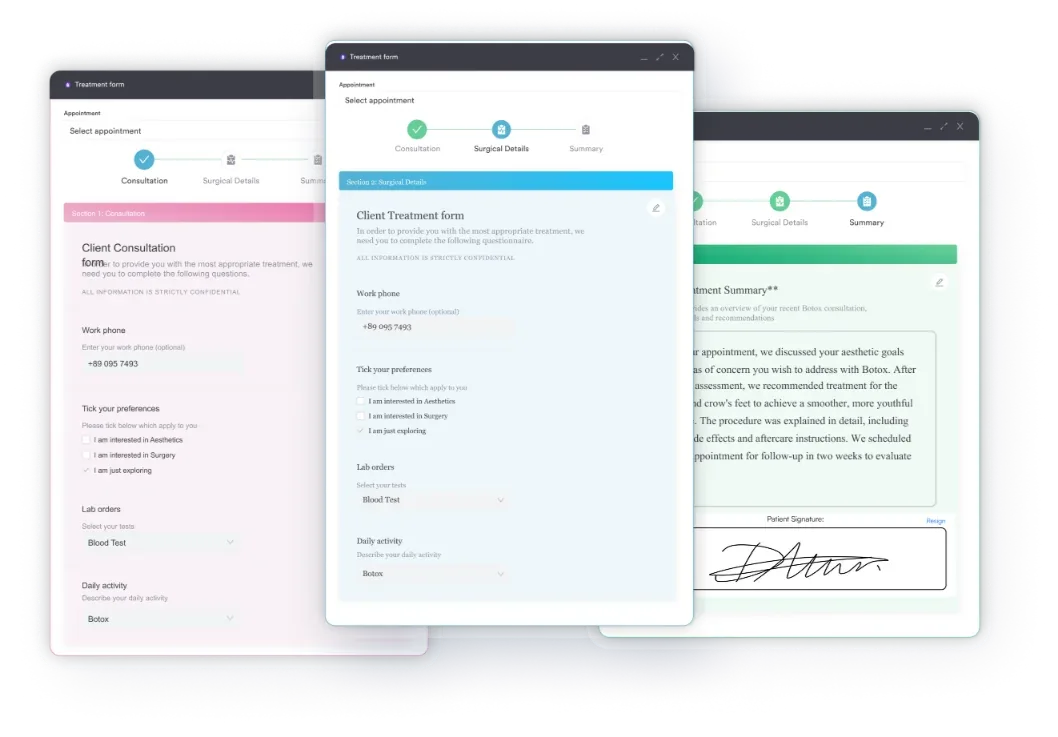
Run an internal audit on a sample of 20 recent T1005 claims before your next Medicaid program review. Check each claim for a matching authorization number, documented start and end times, and a caregiver or aide signature. Any missing element signals a systemic training gap.
The 21st Century Cures Act required states to implement Electronic Visit Verification for Medicaid-funded personal care services and home health services. Many states now require EVV for respite care services billed under T1005, though implementation timelines and scope vary by state.
At each visit, EVV systems capture six data points: the type of service performed, the individual receiving the service, the date of service, the location of service delivery, the individual providing the service, and the time the service begins and ends. For T1005 claims, EVV records serve as contemporaneous documentation that supports the unit count submitted on the claim.
California’s CalEVV program explicitly includes T1005 under its HCBA (Home Care Benefits Administration) EVV requirements. Texas TMHP billing documentation confirms EVV as required for T1005 claims within STAR Health and STAR Kids programs effective January 1, 2024. Iowa and other states have phased in EVV for HCBS waiver services including respite. Providers operating across multiple states should confirm EVV requirements with each state Medicaid agency directly.
Using structured medical forms at your practice that integrate with EVV-compatible systems helps satisfy documentation requirements without adding manual data entry burden to field staff. Teams managing multi-state HCBS programs benefit from automated billing workflows that trigger EVV data submission at the point of visit completion.
Selecting the wrong respite code consistently causes claim rejection. The differences between T1005 and its related codes are primarily about setting, skill level, and billing unit.
| Code | Service type | Provider skill level | Unit structure | Common use |
|---|---|---|---|---|
| T1005 | Respite care, home/community | Trained aide or nurse | 15-minute unit | Medicaid HCBS waivers, skilled or specialized respite |
| S5150 | Respite care by unskilled person | Non-skilled caregiver | 15-minute unit | Basic companion respite, unskilled home care |
| S5151 | Respite care in home | Varies | Per diem | Full-day in-home respite programs |
| H0045 | Respite care out-of-home | Varies | Per diem | Facility-based or out-of-home respite settings |
| T1000 | Private duty/independent nursing | Licensed nurse (RN/LVN) | 15-minute unit | Skilled nursing for complex medical needs |
The most common confusion is between T1005 and S5150. T1005 is the appropriate code when the respite provider is a trained aide working within a Medicaid HCBS waiver that specifically uses T-codes for respite. S5150 applies to unskilled companion respite. Using S5150 when the waiver requires T1005 (or vice versa) results in claim rejection even when the service itself is covered. The Midstate Health Network billing guidance for S5150, S5151, H0045, and T1005 confirms that service setting and skill level determine which code applies — the codes are not interchangeable. Every payer sets its own timely filing window, and a correctly coded claim still fails once that window closes. Common claim denial codes repeat by specialty, so the pattern is worth reading before reworking.
The PGM Billing HCPCS lookup tool allows billing teams to cross-reference code descriptions and verify the correct code selection before claim submission. Using a lookup tool as a pre-submission check takes less than two minutes and can prevent avoidable denials.
HCPCS code T1005 is a precise billing instrument for Medicaid-covered respite care. Billing errors on T1005 claims almost always trace back to three gaps: wrong unit counts, missing EVV or visit documentation, and incorrect modifier selection for the specific state program. Each gap is preventable with the right workflow.
Pabau’s claims management tools support structured HCPCS billing documentation, state-specific modifier rules, and digital visit records that hold up under Medicaid audit. Book a demo to see how Pabau handles home health and Medicaid waiver billing workflows end to end.

Billing for anesthesia during breast reconstruction? Breast reconstruction anesthesia billing covers CPT code 00402, the anesthesia code for reduction or augmentation mammoplasty and flap reconstruction.
Billing for anesthesia during rib resection? Rib resection anesthesia billing covers CPT code 00472, the anesthesia code for partial rib resection with thoracoplasty.
Billing for a radical rib resection? Radical rib resection anesthesia billing covers CPT code 00474, most often reported for pectus excavatum correction surgery.
HCPCS code T1005 is a Level II code describing respite care services billed in 15-minute units, established for state Medicaid agencies under the Nursing Services T1000-T1005 range.
No. T1005 is a HCPCS Level II code maintained by CMS, not a CPT code. People often search for a “T1005 CPT code” or a CPT code for respite care, but respite is billed with HCPCS T-codes and S-codes that state Medicaid programs use, not the CPT codes the American Medical Association maintains.
Each unit equals one 15-minute block of respite service — a two-hour session is eight units. Documented start and end times must support the unit count on the claim.
T1005 is primarily a Medicaid and HCBS waiver code; traditional Medicare generally does not cover it. Some Medicare Advantage plans may include respite benefits, but confirm coverage with the specific plan before billing.
T1005 applies to respite delivered by a trained aide or nurse within a T-code Medicaid waiver program; S5150 covers unskilled companion respite under S-code programs. The codes are not interchangeable — the waiver program rules and provider qualifications determine which applies.
Required documentation includes a prior authorization number, visit start and end times, a caregiver signature, a caregiver-relief notation, and an active individual service plan. States requiring EVV also need electronic verification of provider identity, location, and visit timing.
Modifier requirements vary by state: Texas uses TE, UC, U7, or U1; California uses TT for supervised home care. Always confirm which modifiers your specific Medicaid program requires before submitting claims.



