CCSD code H4430: Examination of rectum under anaesthetic
CCSD code H4430 pays for the examination alone CCSD code H4430 is the UK private...

Last Updated: Oct 20, 2026
L8000 is the HCPCS Level II code for breast prosthesis, mastectomy bra, without integrated breast prosthesis form, any size, any type.
The code sits in the L8000-L8039 range for external breast prostheses, and that range is where most L8000 errors start. L8001 and L8002 separate on unilateral versus bilateral, not on silicone versus foam. L8010 is a lymphedema sleeve, not a breast form at all.
Let Pabau's smart automation suggest the right codes, reduce claim denials, and keep your practice compliant—effortlessly.
Automate repetitive tasks and focus on what matters most—your patients.
Reduce coding errors and ensure compliance with the latest regulations.
Clean claims, fewer denials, and faster reimbursements.
Powerful insights and reporting to help your practice thrive.
HIPAA compliant SOC 2 certified GDPR-compliant Trusted by 4,000+ clinics worldwide

Specifically, HCPCS Code L8000 describes a breast prosthesis, mastectomy bra billed under the Medicare Part B DME benefit.
Coverage requires a physician order, proof of mastectomy, and a linked ICD-10 diagnosis code such as Z90.10-Z90.13.
Medicare sets no fixed quantity limit for L8000, so the treating physician decides how often a replacement is needed.
Reimbursement varies by MAC jurisdiction and is capped by a national limitation amount, so check the CMS fee schedule.
L8001 and L8002 differ by unilateral versus bilateral, and L8010 is a lymphedema sleeve rather than a breast form.
HCPCS Code L8000 is classified as a Level II HCPCS code maintained by the Centers for Medicare and Medicaid Services (CMS). Its official descriptor is: Breast prosthesis, mastectomy bra, without integrated breast prosthesis form, any size, any type. In short, the code covers the brassiere alone, supplied after mastectomy with no breast form built into it.
L8000 falls under Durable Medical Equipment, Prosthetics, Orthotics, and Supplies (DMEPOS). As a prosthetic item, it is billed under the Medicare Part B benefit rather than Part A of the program. The claim routes to the patient’s regional DME MAC, not to the contractor that handles physician services.
For reference, the table below provides the quick-reference billing details billers need before submitting an L8000 claim. Pricing indicator and fee schedule amounts are governed by the DME fee schedule rather than the Physician Fee Schedule.
Medicare Part B covers external breast prostheses, including mastectomy bras billed under HCPCS Code L8000, when medical necessity is established. CMS Policy Article A52478 governs coverage for this category. However, coverage is not automatic. The supplier must confirm that each of the criteria below is met before submitting a claim.
For an L8000 claim to meet Medicare’s medical necessity standard, all of the following must be true at the time of supply.
Coverage is subject to individual MAC policy. For example, Noridian Healthcare Solutions (JA DME MAC) requires that documentation explicitly tie the diagnosis to the mastectomy procedure, not merely to a breast cancer history. Therefore, suppliers should review their applicable MAC’s Local Coverage Determination (LCD) for jurisdiction-specific requirements before billing.
Medicare sets no fixed quantity limit for mastectomy bras. Under LCD L33317 and Policy Article A52478, the treating physician determines how often a replacement is medically necessary. Even so, Medically Unlikely Edits may still cap the units payable on a single claim line. Document the reason for every replacement, such as weight change, wear-related deterioration, or a change in prosthesis type.
Every L8000 claim must carry at least one covered ICD-10-CM diagnosis code that establishes medical necessity. Consequently, claims submitted without a covered diagnosis code will be denied regardless of other documentation. Notably, the table below lists the primary codes accepted under CMS Policy Article A52478. Use the CDC/NCHS ICD-10-CM tool to verify code descriptions for the applicable fiscal year before billing. Our ICD-10-CM code library covers the wider set of diagnosis codes a DMEPOS claim may need.
The Z90.10-Z90.13 codes (acquired absence of breast) are the most straightforward diagnosis pairings because they directly document the post-mastectomy status. In some cases, C50-series codes may be accepted while the patient is in active treatment and has no Z90 status code yet. Either way, verify acceptance with your MAC before submitting one. Do not use codes that describe a family history of breast cancer (Z80 series) or benign breast conditions as primary diagnosis codes for L8000 claims.
L8000 is reimbursed under the DME fee schedule, not the Physician Fee Schedule. Payment rates are subject to a National Limitation Amount (NLA), which represents the ceiling that Medicare will pay regardless of local fee schedule amounts. Nonetheless, actual reimbursement varies by MAC jurisdiction. Use the CMS DMEPOS fee schedule to retrieve current jurisdiction-specific rates for the applicable year.
Always verify L8000 reimbursement rates directly via the CMS DME fee schedule lookup before billing. Notably, rates change annually and vary by MAC jurisdiction. Billing at a rate above the NLA will result in an automatic adjustment; billing below the NLA is permitted but reduces reimbursement. Because of this, flag fee schedule updates in your practice calendar each October when CMS publishes the following year’s DME rates.
Key reimbursement concepts billers must understand for L8000 claims are listed below.
Notably, incomplete documentation is the leading cause of L8000 claim denials. Under Noridian JA DME and CMS Policy Article A52478, suppliers must retain and produce the following records on request. Ultimately, capturing them at the point of supply, rather than reconstructing them during an audit, is what keeps the response short.
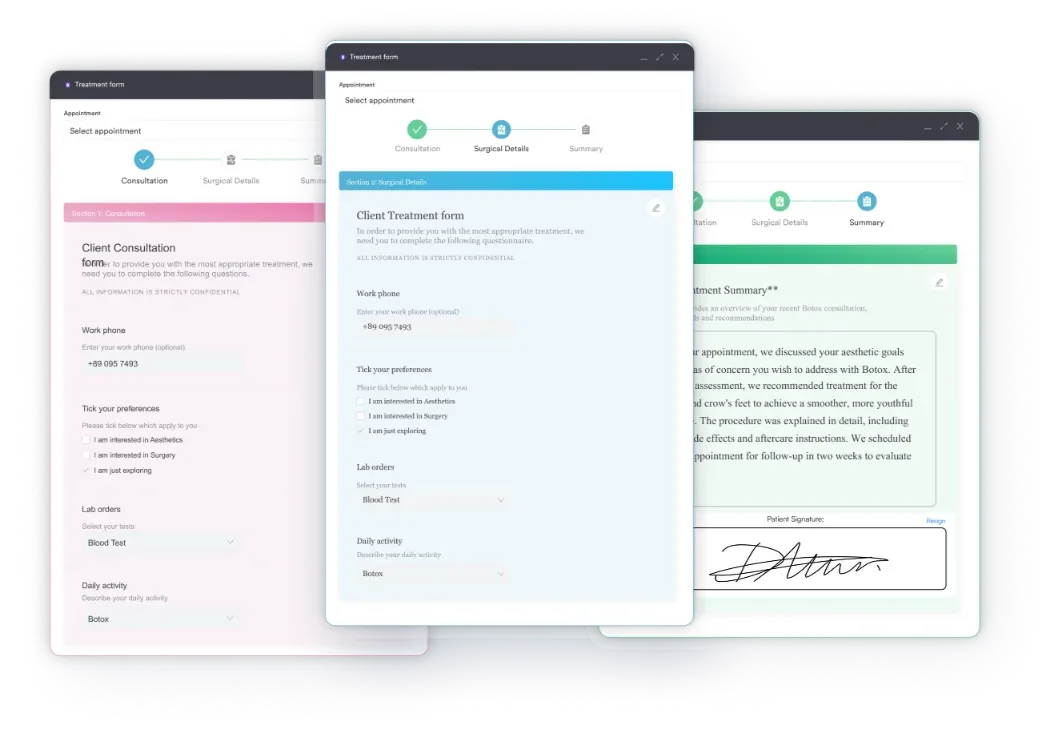
Store all documentation for a minimum of seven years from the date of service. After all, audit contractors may request records years after the original claim date. A medical coding cheat sheet at the billing desk helps staff pair the right HCPCS and ICD-10 codes first time.
L8000 claims are submitted on the CMS-1500 form to the patient’s DME MAC. The billing entity must be the Medicare-enrolled DMEPOS supplier; physician practices and hospitals cannot bill this code unless they are separately enrolled as DMEPOS suppliers. Overall, the steps below follow the order a clean L8000 claim moves through.
Noridian and other MAC contractors cite a consistent pattern of errors in L8000 claims. Understanding these prevents avoidable rework and protects revenue cycle performance. Fortunately, each one is caught by a check the supplier can run before the claim leaves the building.
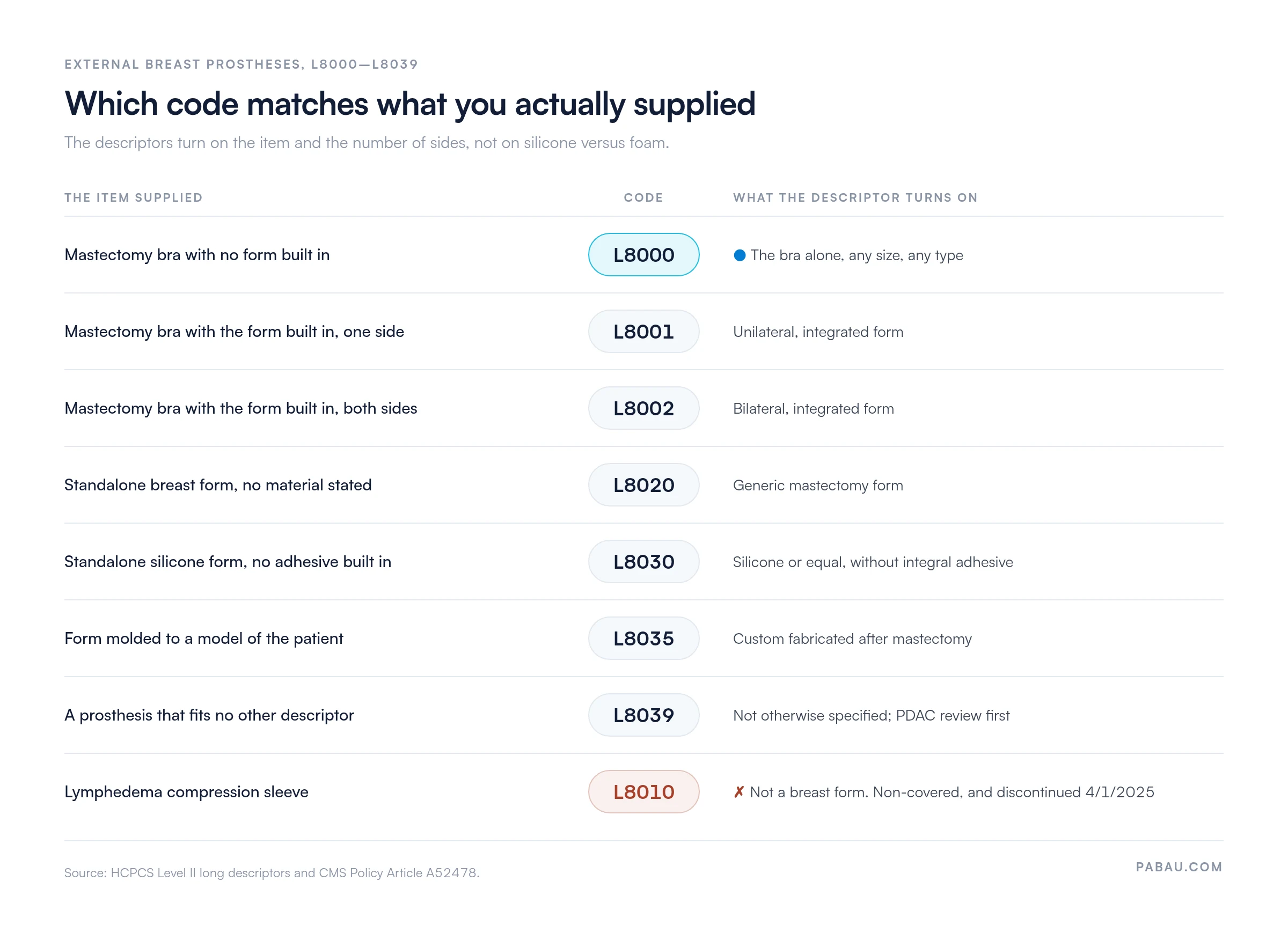
L8000 is one code in a family of external breast prosthesis HCPCS codes. Indeed, selecting the wrong code within the range is a common billing error. L8000 is the bra with no form built in. L8001 and L8002 both cover a bra with the form integrated, one unilateral and one bilateral. The AAPC HCPCS code search offers descriptor-level lookup, so you can confirm the correct code before submission.
When a patient receives a standalone silicone form and a bra with no integrated form, bill the two items separately. Specifically, use L8030 for the silicone form alongside L8000 for the bra. If adhesive secures that form to the chest wall, bill the attachment separately under A4280.
Do not reach for L8010 here, because that code describes a lymphedema sleeve. Do not bill L8001 either, since it applies only when the form is factory-integrated into the bra unit. The chart below maps each item in the range to the code that matches it.
Suppliers billing external breast prostheses have to produce physician orders, operative reports, delivery confirmations, and ABNs on short notice during a MAC audit. In practice, most keep those records across paper files, a scanner folder, and a separate billing platform. Practice management software like Pabau brings them into one patient file, and its claims management software works from that same record.
Smaller suppliers feel this most, because one person often handles intake, supply, and billing. Pabau removes the second data entry step, so the order captured at intake is the order attached to the claim.
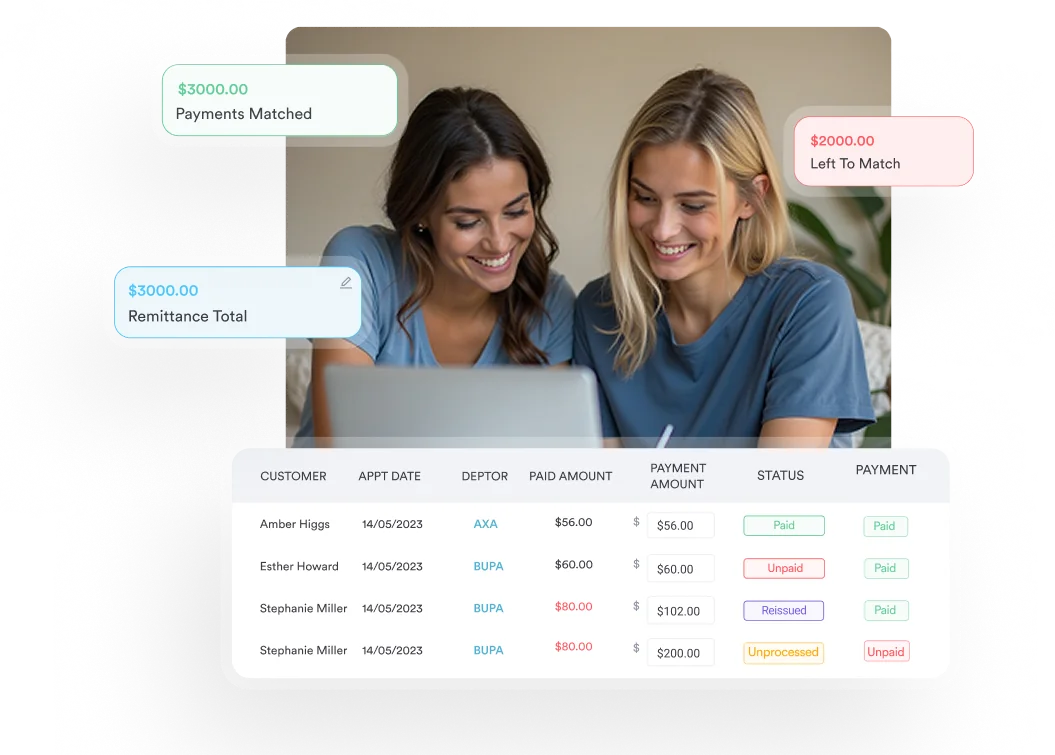
As a result, clinical records sit in one file rather than three. Physician orders and operative reports attach straight to the patient record, so an audit response takes minutes instead of an afternoon.
Reporting surfaces claim trends by code, so you can spot a denial pattern on L8000 before it spreads across a quarter. Meanwhile, the same record flags a missing delivery confirmation while the patient is still in front of you.
Review your L8000 claims by MAC jurisdiction quarterly. In fact, rate variations between jurisdictions are often larger than suppliers expect. As a result, a claim submitted at the wrong jurisdiction’s rate can trigger a payment adjustment. Map each patient’s home ZIP code to their DME MAC before claim submission, particularly for mail-order suppliers serving multiple states.

Practice management software like Pabau stores physician orders, delivery confirmations, and claim records in one patient file. Book a demo to see how it fits your billing workflow.

Getting L8000 claims paid on the first pass comes down to four checks. Specifically, you need the right diagnosis code, a valid physician order, and an enrolled DMEPOS supplier billing the claim. The fourth is the code itself, because L8010 and L8030 are routinely swapped for one another. Each check is straightforward, and errors still slip through because the documentation volume is high.
In short, Pabau’s clinical documentation and compliance tools keep L8000 claim records audit-ready without a separate manual workflow around DMEPOS requirements. To see how that works against your own supply volume, book a demo with the team.

Working a denial on an L8000 claim? Denial codes in medical billing explains what each reason code on the remittance advice is telling you.
Billing other DME items alongside prostheses? E0155 walks through coverage criteria and documentation for another commonly supplied DME code.
Filling in the claim form itself? CMS-1500 form gives you the field-by-field layout every DMEPOS claim is submitted on.
New to Part B supply claims? Medicare billing covers enrollment, assignment, and the payment rules behind the fee schedule.
Pairing HCPCS and ICD-10 at the desk? Medical coding cheat sheet keeps the common code pairings within reach of the biller.
HCPCS Code L8000 is used to bill for a breast prosthesis mastectomy bra (without integrated breast prosthesis form) under Medicare Part B’s DMEPOS benefit. Specifically, it is billed by Medicare-enrolled DMEPOS suppliers on behalf of patients who have undergone mastectomy and require external breast prosthetic support.
Yes, Medicare Part B covers mastectomy bras billed under HCPCS Code L8000 when medical necessity is established. The patient must have undergone a mastectomy, and the claim must carry a covered ICD-10 code such as Z90.10-Z90.13. The supplier must be a Medicare-enrolled DMEPOS entity with a valid physician order on file.
The primary accepted ICD-10-CM codes for L8000 are Z90.10 (acquired absence of breast, unspecified), Z90.11 (right breast), Z90.12 (left breast), and Z90.13 (bilateral breasts). Some C50-series codes for malignant neoplasm of the breast are also accepted, depending on the applicable MAC LCD. Verify with your MAC before submitting one.
Medicare reimbursement for L8000 varies by MAC jurisdiction and is subject to a National Limitation Amount (NLA) that is updated annually. In other words, there is no single national rate. Use the CMS DME fee schedule lookup tool, then filter by your MAC jurisdiction and calendar year to find the current payment amount.
L8000 covers a mastectomy bra with no breast prosthesis form built into it. L8001 covers the same bra with the form integrated on one side, and L8002 is the bilateral version. Notably, neither code turns on silicone versus foam. If a silicone form and a bra are supplied separately, bill L8030 and L8000 as separate line items.
Medicare sets no fixed number of mastectomy bras per year under L8000. The treating physician decides how often a replacement is medically necessary, and the supplier documents that reason. Even so, Medically Unlikely Edits may still limit the units payable on one claim line. Issue an Advance Beneficiary Notice (ABN) when coverage of the quantity is uncertain.