

HCPCS code E0198: Water pressure pad billing guide
HCPCS code E0198 is a water pad for a standard mattress HCPCS code E0198 is the ...

Last Updated: Oct 13, 2026
E0155 is the HCPCS Level II code for wheel attachment, rigid pick-up walker, per pair.
The initial issue of a new walker is where billing teams get caught. CMS policy article A52503 blocks E0155 there, and for a month afterward. Bill the wheels a month too early and the line denies as incorrectly coded, even when the beneficiary plainly needs them.
So one date on the file decides most of what follows, from the coverage criteria down to the modifier on the line.
Let Pabau's smart automation suggest the right codes, reduce claim denials, and keep your practice compliant—effortlessly.
Automate repetitive tasks and focus on what matters most—your patients.
Reduce coding errors and ensure compliance with the latest regulations.
Clean claims, fewer denials, and faster reimbursements.
Powerful insights and reporting to help your practice thrive.
HIPAA compliant SOC 2 certified GDPR-compliant Trusted by 4,000+ clinics worldwide

HCPCS code E0155 covers a wheel attachment for a rigid pick-up walker, billed as one unit for each pair of wheels.
Medicare pays E0155 for replacement wheels on a beneficiary-owned wheeled walker, or for wheels added to a beneficiary-owned non-wheeled walker later.
CMS policy article A52503 bars E0155 for wheels supplied at, or within one month of, the initial issue of a non-wheeled walker.
E0155 is included in the allowance for wheeled walker codes such as E0141 and E0143, so it is not billed separately alongside them.
Practice management software like Pabau keeps orders, clinical notes, and delivery records on one patient file, so missing paperwork shows up before you submit.
HCPCS code E0155 is a Level II code maintained by CMS for a wheel attachment on a rigid pick-up walker. One unit covers a pair of wheels. The code sits in the E0100 to E0159 walking aids range, which holds canes, crutches, walkers, and walker accessories.
Medicare-enrolled DMEPOS suppliers use it in two places. The first is when wheels are added to a walker the beneficiary already owns. The second is when wheels already on that walker are replaced.
What “per pair” means on the claim line: one unit of E0155 buys two wheels. Billing two units for a standard two-wheel set doubles the charge and creates an overpayment to refund later. When those wheels wear out, the replacement pair goes back on E0155 at one unit. No code in the walker range covers a single wheel.
Rigid pick-up walker defined: a pick-up walker has a fixed frame and no wheels. The beneficiary lifts it and sets it down with each step. E0155 converts that frame into a gliding aid. The descriptor names a rigid walker, but A52503 also allows E0155 when wheels are added later to a covered folding pick-up walker, code E0135. Practices outside a payer network hand the claim work to the patient, so a superbill form has to be complete.
Medicare covers E0155 when two things hold at once. The walker it attaches to has to meet the standard walker criteria in LCD L33791. The wheels have to be supplied in one of the two situations A52503 allows. Miss either half and the line denies.
LCD L33791 covers a standard walker, codes E0130, E0135, E0141, and E0143, plus its related accessories. All three criteria below have to be met. Suppliers working alongside physical therapy practices know the coverage argument lives in the treating practitioner’s records rather than the supplier’s invoice.
The LCD defines a mobility limitation three ways. It stops the beneficiary completing the activity. It delays the activity beyond a reasonable time frame. Or it raises their risk of harm while they attempt it.
Much of that wording comes from functional assessment. For a patient recovering from hip surgery.
If the three criteria are not all met, the walker denies as not reasonable and necessary, and its accessories fall with it. Tracking patient compliance through the episode also gives you something to show when a reviewer asks whether the walker was in use.
Individual MACs publish their own billing articles on top of the LCD, so check your jurisdiction’s guidance before a first-time submission.
E0155 is separately payable in two situations, and blocked in one. CMS policy article A52503 sets all three out in two sentences.
Code E0155 can be used for replacements on covered, beneficiary-owned wheeled walkers or when wheels are subsequently added to a covered, beneficiary-owned nonwheeled walker. Code E0155 cannot be used for wheels provided at the time of, or within one month of, the initial issue of a non-wheeled walker.
CMS policy article A52503, Walkers
Two of those situations pay. A replacement pair on a beneficiary-owned wheeled walker is payable, and so are wheels added to a non-wheeled walker later on. Wheels handed over with a new walker are not, nor are wheels supplied in the month that follows.
The reason is that Medicare already has codes for a walker that comes with wheels. If the beneficiary needs wheels from day one, the right code is the wheeled walker itself. That is E0141 for a rigid frame.
Building the same thing out of two lines, E0130 plus E0155, is the error the one-month rule exists to catch.
Two dates, two outcomes. A beneficiary is issued a folding pick-up walker, E0135, on March 3. The therapist asks for wheels on March 20, so an E0155 line dated March 20 denies. The same pair billed on April 6 is payable, provided the March 3 issue date is on file.
A52503 also carries a Column I and Column II table. A Column II code is included in the allowance for its Column I code when both are provided at the same time. It must not be billed separately. E0155 appears in Column II for six walker codes.
The pattern is easy to hold in your head. A walker that already comes with wheels absorbs E0155 on the day it is issued. Where the frame has no wheels, E0155 only becomes available once the month has passed.
Linking clinical records to billing helps here, because the deciding fact is the walker’s issue date rather than anything on the claim line.
With built-in stock tracking, every brace or device billed under these codes is deducted from inventory automatically.
E0155 is paid from the DMEPOS fee schedule in the inexpensive or routinely purchased category, usually shortened to IRP. That category holds items Medicare treats as low cost, plus items that were historically bought outright rather than rented.
Payment can be a lump-sum purchase or a monthly rental. Total rental payments cannot exceed the purchase allowance, which is why most suppliers simply sell the wheels.
Walkers and their accessories were part of the DMEPOS competitive bidding program. So the fee schedule amounts for E0155 are adjusted rates built from bidding data.
CMS pays the fully adjusted amount in most areas, and a blended amount in rural and non-contiguous areas. That is why the same pair of wheels pays differently across state lines.
Download the current file from the CMS DMEPOS fee schedule page, or use your MAC’s fee lookup. Quoting a rate from memory is how a beneficiary ends up with the wrong estimate.
Every E0155 line needs a purchase or rental modifier. The KX modifier that appears all over walker guidance does not belong on it. A52503 limits KX to the two heavy duty walker codes, so reaching for it on an accessory line is a habit worth breaking.
Before you add KX to any walker line, check which code it belongs on. A52503 puts KX on E0148 and E0149 only, and only when your records show the beneficiary weighs more than 300 pounds. On an E0155 line it does nothing for the claim, and it leaves an attestation in the file that your documentation cannot support.
The order requirement for E0155 is a Standard Written Order, or SWO. CMS removed Certificates of Medical Necessity and DME Information Forms for dates of service on or after January 1, 2023. There is no Form 484 to chase on a walker claim.
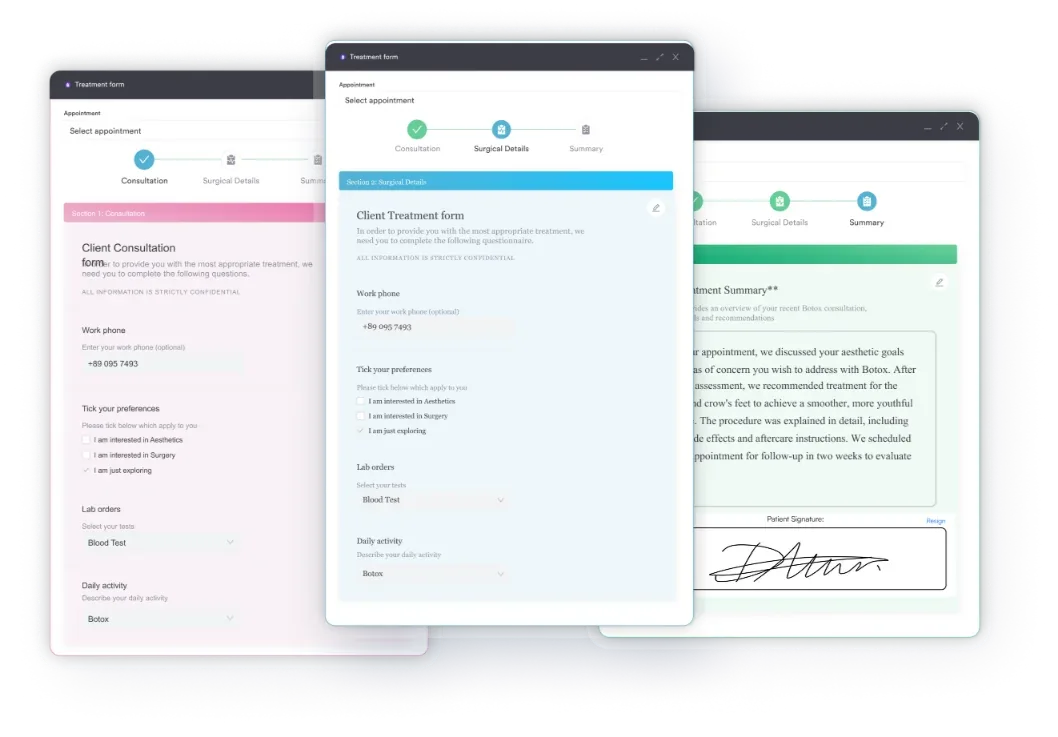
Building the order and the notes into your medical forms workflow keeps the package together from the start.
Your MAC publishes this as a checklist, and CGS keeps a short walkers documentation checklist worth pinning up next to the billing desk.
Collecting the same items on digital intake forms makes them time-stamped and searchable. Paper orders that sit in a fax tray are a common reason a package turns up short. The same discipline pays off on every DME line you bill.
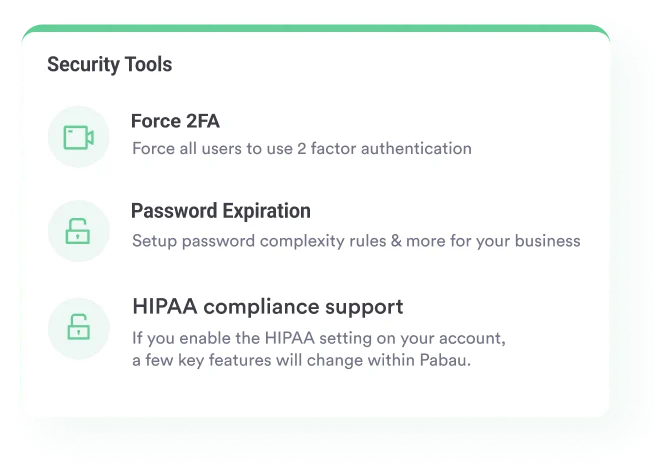
Access controls matter as much as completeness here. A reviewer asking for a DME order is asking for protected health information.
The order of these steps matters, because the first two decide whether the claim exists at all.
Each attachment code in the walker range covers a different part, with its own rule about initial issue versus replacement. None of them is an alternative to E0155. A52503 groups them into three patterns, which the table below sets out.
E0156 is the code most often mistaken for a second wheel code, and it has nothing to do with wheels. Its official descriptor is seat attachment, walker, and our guide to E0156 covers it in full.
No code in the walker range reads walker wheel, replacement, each. That “replacement, each” wording belongs to E0159, which covers brakes. So a worn pair of wheels goes back on E0155, not onto a code that does not exist.
Picking the wrong base walker code is what pushes teams into billing E0155 when they should not. The frame you choose on day one decides whether a wheel line is ever payable.
Keeping a medical coding cheat sheet beside the walker codes saves the lookup when a frame and an accessory land on the same order.
Two of these carry extra requirements worth knowing before you code a wheeled frame.
E0155 denials cluster tightly. Almost all of them come from the list below, and two dates on the file catch most of them before the claim goes out.
Run a three-question check before any E0155 claim leaves your system. Is the walker beneficiary-owned and covered? Is the date of service more than a month past a non-wheeled walker’s initial issue? Is the quantity one unit for the pair? Those three answers settle most E0155 claims before a reviewer ever sees them.
Clinical documentation decides an E0155 claim more than the coding does. The order, the note describing the mobility limitation, the walker’s issue date, and the delivery record all have to line up. In a paper workflow they sit in four different places, and the issue date is usually the one nobody wrote down.
Practice management software like Pabau keeps all four on one patient file. Digital forms capture intake and consent, treatment notes hold the mobility assessment, and every document is time-stamped against the record.
So a reviewer can ask when the walker was issued, and why the wheels came later. The answer sits on one screen instead of in a filing cabinet.
Pabau’s claims management tools cover private insurer billing, validating the fields each payer requires before a claim goes out. A dashboard shows what is pending, paid, or in error.
Medicare DME claims still travel through your MAC or clearinghouse, so Pabau’s job on an E0155 line is the record behind it. Our compliance management features keep that record complete and easy to retrieve.
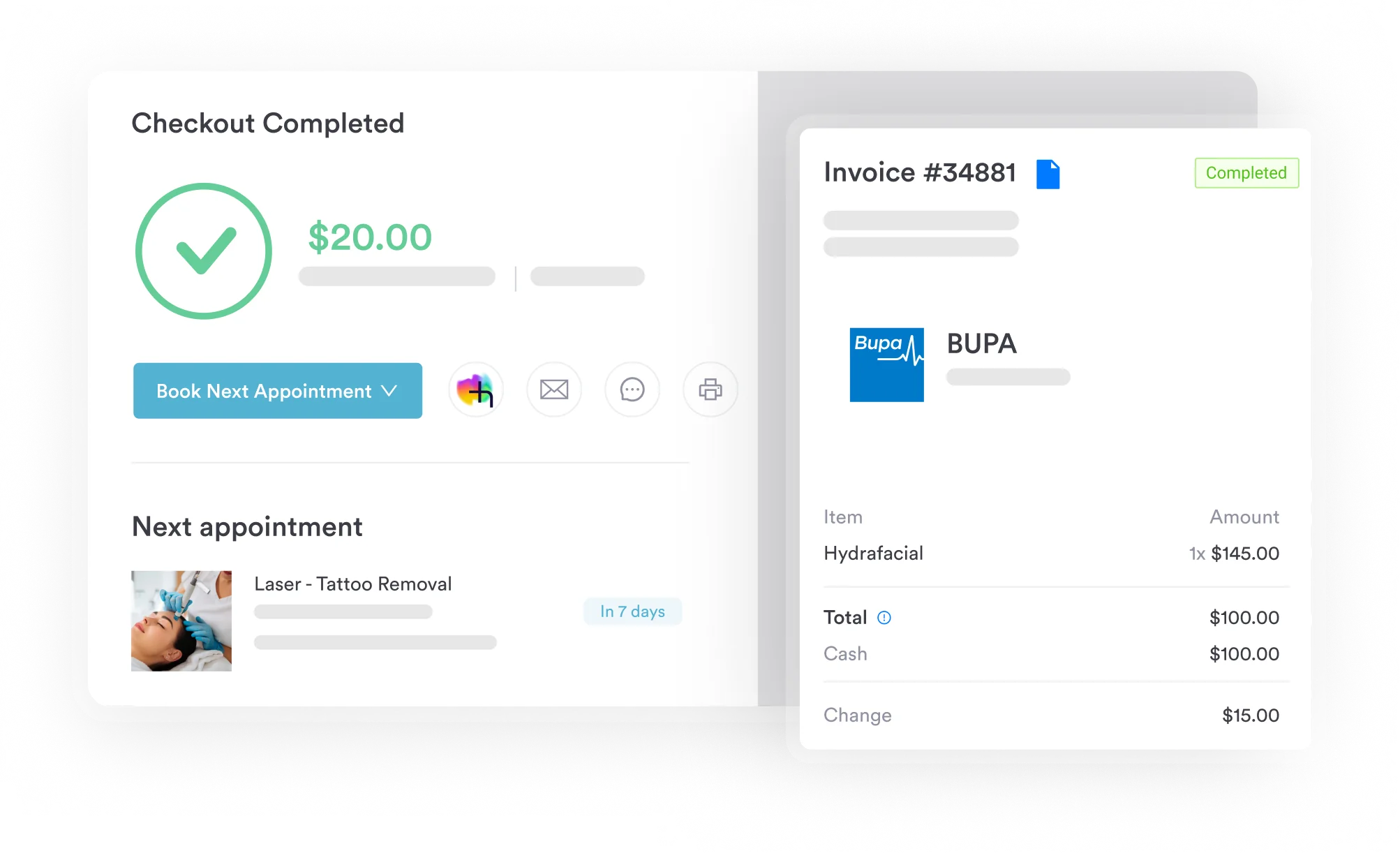

Pabau’s digital forms, treatment notes, and client records hold orders, assessments, and delivery paperwork on a single timeline. Your team can find what a payer asks for without opening four systems.

E0155 rewards a habit more than it rewards code knowledge. Write down the walker’s issue date the day the frame goes out, and the wheel question answers itself a month later.
That single date is the most valuable fact in the file. Keep it where your billers can see it, and the rest of the claim follows the DMEPOS rules you already run. Treat the wheels as an afterthought and you will keep rebilling the same denial.
If your documentation currently lives across paper orders, scanned notes, and a delivery folder, that is the part worth fixing first. Book a demo to see how Pabau keeps the record behind a DME claim complete and ready for the payer asking for it.

Billing a walker seat rather than wheels? HCPCS code E0156 sets out the seat attachment rules that are most often confused with E0155.
Supplying other beneficiary-owned equipment? HCPCS code E0165 walks through commode chair coverage, modifiers, and the documentation a reviewer asks for.
Billing supply lines as well as equipment? HCPCS code A4433 shows how a DMEPOS supply code is counted, ordered, and documented.
Billing a simple wound repair claim? CPT code 12001 covers simple repairs of wounds 2.5 centimeters or less with a zero-day global period.
Billing a layered facial wound repair? CPT code 12054 covers layered facial repairs from 7.6 to 12.5 centimeters and their 2026 Medicare rates.
The Standard Written Order has to come from the treating practitioner. Medicare recognizes physicians, physician assistants, nurse practitioners, and clinical nurse specialists in that role. A therapist can recommend the wheels, but the order needs a qualifying prescriber’s signature.
Only with a signed Advance Beneficiary Notice in hand before delivery. Issue the notice when you expect a medical necessity denial, then add GA to the line. Without a valid notice, the supplier absorbs the cost instead.
No. The DME benefit only covers equipment used in the beneficiary’s home, and a hospital or skilled nursing facility does not count as a home. Equipment supplied during a stay in one of those facilities falls outside the benefit.
The walker policy sets no fixed interval. Replacement is covered when the wheels are worn, broken, or lost, and the record has to say so. Keep the request and the reason on file, since frequent replacements draw review.
Not always. Medicaid fee-for-service programs often mirror the Medicare policy, while Medicare Advantage and commercial plans set their own accessory rules. Check the payer’s own DME policy before you assume the one-month block applies.



