CPT Code 62284: Injection procedure for myelography
CPT Code 62284: official descriptor and procedure overview The American Medical ...

Last Updated: Oct 19, 2026
L4360 is the HCPCS Level II code for walking boot, pneumatic and/or vacuum, with or without joints, with or without interface material, prefabricated item that has been trimmed, bent, molded, assembled, or otherwise customized to fit a specific patient by an individual with expertise.
Let Pabau's smart automation suggest the right codes, reduce claim denials, and keep your practice compliant—effortlessly.
Automate repetitive tasks and focus on what matters most—your patients.
Reduce coding errors and ensure compliance with the latest regulations.
Clean claims, fewer denials, and faster reimbursements.
Powerful insights and reporting to help your practice thrive.
HIPAA compliant SOC 2 certified GDPR-compliant Trusted by 4,000+ clinics worldwide

HCPCS Code L4360 describes a pneumatic and/or vacuum walking boot, prefabricated but customized to fit a specific patient by an individual with expertise.
Medicare covers L4360 under the Brace benefit when the boot provides immobilization for an orthopedic condition or follows orthopedic surgery.
Only PDAC-verified products should be billed under L4360 for Medicare; submitting a non-PDAC-approved device can trigger claim denial or prepayment audit.
Pabau’s claims management software helps DME suppliers and orthopedic practices document L4360 encounters, attach supporting notes, and submit cleaner claims.
According to CMS’s HCPCS Level II classification, L4360 falls under Orthotic Procedures and Services and describes:
Walking boot, pneumatic and/or vacuum, with or without joints, with or without interface material, prefabricated item that has been trimmed, bent, molded, assembled, or otherwise customized to fit a specific patient by an individual with expertise.
The phrase “customized to fit a specific patient by an individual with expertise” is the billing trigger. Without documented customization by a qualified individual, this code does not apply. That distinction separates L4360 from its sibling codes and is the root cause of most coding errors in this category.
HCPCS codes L4360, L4361, L4386, and L4387 all describe ankle-foot orthoses (AFOs) commonly referred to as walking boots. L4360 is the prefabricated-but-customized variant. It covers boots with pneumatic (air bladder) or vacuum mechanisms, with or without joints, and with or without interface material such as padding or liners.
Walking boots used to provide immobilization as treatment for an orthopedic condition or following orthopedic surgery are eligible for coverage under the Medicare Brace benefit (Part B). Coverage is not automatic: the patient’s medical record must establish that the boot is medically necessary.
CMS Policy Article A52457 references L4360 among a group of ankle-foot orthosis codes used when a beneficiary is ambulatory. The key eligibility requirements under current DME MAC guidance include:
When coverage is uncertain, such as when the diagnosis is borderline or the medical necessity documentation is thin, the DME supplier should issue an Advance Beneficiary Notice (ABN) to protect both the practice and the patient. An ABN is not required in all circumstances but is a safeguard worth building into the dispensing workflow.
Pabau’s claims management software lets DME practices attach physician orders, ABN acknowledgments, and PDAC verification documentation directly to the patient record before submitting claims, reducing back-and-forth with payers.

Medicare reimbursement for L4360 is set annually through the CMS Physician Fee Schedule and DME fee schedule. Rates vary by geographic locality and are subject to annual adjustment. Practices should verify the current fee schedule for their jurisdiction before setting patient expectations about out-of-pocket costs.
Commercial payers set their own rates, which may differ substantially from Medicare. Some payers require prior authorization for walking boots; others apply their own coverage criteria that may be stricter than Medicare’s. Checking payer-specific policies before dispensing is the safest approach for practices that see a mixed payer mix.
| Code | Description (short) | Billing status | Customization required? |
|---|---|---|---|
| L4360 | Pneumatic walking boot, prefabricated, customized | Active (2026) | Yes, by individual with expertise |
| L4361 | Pneumatic walking boot, prefabricated, off-the-shelf | Active (2026) | No customization performed |
| L4386 | Walking boot, non-pneumatic, prefabricated, customized | Active (2026) | Yes, by individual with expertise |
| L4387 | Walking boot, non-pneumatic, prefabricated, off-the-shelf | Active (2026) | No customization performed |
Medicare DME claims for L4360 are frequently rejected for missing or conflicting modifiers, so append them correctly on every line. Per CMS Policy Article A52457, the modifiers that apply to L4360 are:
Two coding rules cause many L4360 denials. First, L4360 describes a complete product, so add-on codes billed alongside it are denied as unbundling. Second, a walking boot used solely to prevent or treat a lower-extremity ulcer or to reduce pressure is not billed as L4360 at all; CMS requires code A9283 for that use.
The most consequential coding decision for walking boots is L4360 versus L4361. Both describe prefabricated pneumatic boots. The difference is what happened to the boot before it left the practice.
L4361 applies when the boot is dispensed essentially as manufactured, with no significant modification. L4360 applies only when a qualifying individual trimmed, bent, molded, assembled, or otherwise customized the device to fit the specific patient. Billing L4360 when only L4361 is warranted is upcoding, which exposes practices to audit risk and claim recovery.
A useful question to ask at the time of dispensing: “Did we modify this boot in any way beyond what the manufacturer intended?” If the answer is no, L4361 is the appropriate code. If the answer is yes, and the modification was performed by a qualified individual, L4360 may apply. Document the specific customization in the patient record.
The parallel distinction applies to non-pneumatic boots: L4386 for customized and L4387 for off-the-shelf. Pneumatic mechanism versus non-pneumatic mechanism is the other axis of the coding decision.
For practices managing multiple orthotic billing codes across locations, building documentation checks into the dispensing workflow can prevent systematic coding errors across an entire patient population.

Document the exact customization performed at the time of dispensing, not retrospectively. Note who performed it, their credentials, and what was done (trimmed, molded, adjusted). This contemporaneous record is your primary audit defense if DME MAC requests claim support for HCPCS Code L4360.
Documentation failures are the primary reason L4360 claims enter prepayment review or get denied on audit. DME MAC Jurisdiction A initiated a widespread prepayment probe on L4360 claims, indicating that this code draws scrutiny. The documentation package for a defensible L4360 claim typically includes:
Practices should maintain all documentation for at least seven years, consistent with Medicare record retention expectations. Missing even one element from the above list can convert a clean claim into a denial.
For orthopedic and podiatry practices looking to tighten documentation workflows. For physical therapy and orthopedic practice management, having structured templates for orthotic dispensing documentation is a practical safeguard.
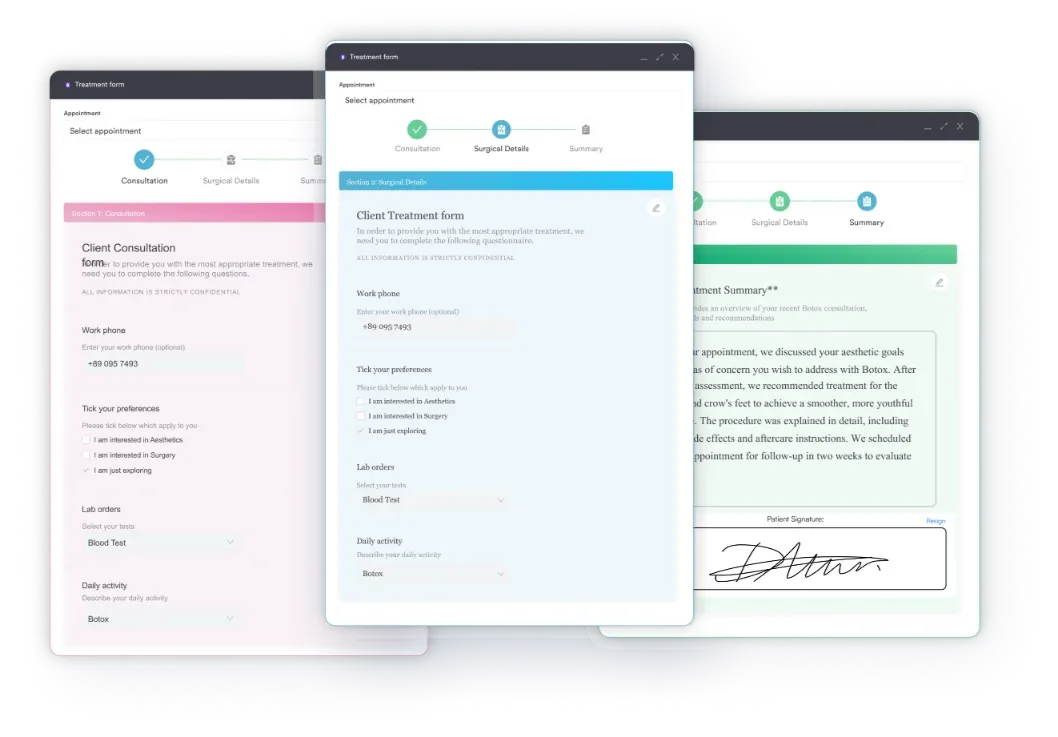

Pabau helps orthopedic and DME practices attach orders, notes, and proof-of-delivery directly to patient records before submitting claims, so nothing slips through the cracks.

The Pricing, Data Analysis and Coding (PDAC) contractor classifies DME products under HCPCS codes on behalf of CMS. For Medicare billing purposes, only devices that PDAC has verified as meeting the descriptor requirements for L4360 should be billed under that code. Using a product that has not gone through PDAC classification or that is classified under a different code is a compliance risk.
PDAC product decisions are published and searchable. Before dispensing any new walking boot model under L4360, practices should verify the device appears on the PDAC product classification list. The CGS Medicare coding verification resource is one reference point for checking PDAC coding verification status for DME products.
The Aircast SP CAM Walker is one commonly referenced example of a walking boot with suggested HCPCS coding of L4360 and L4361 depending on whether customization is performed. Always confirm current PDAC status rather than relying on historical product literature, as classifications can change.
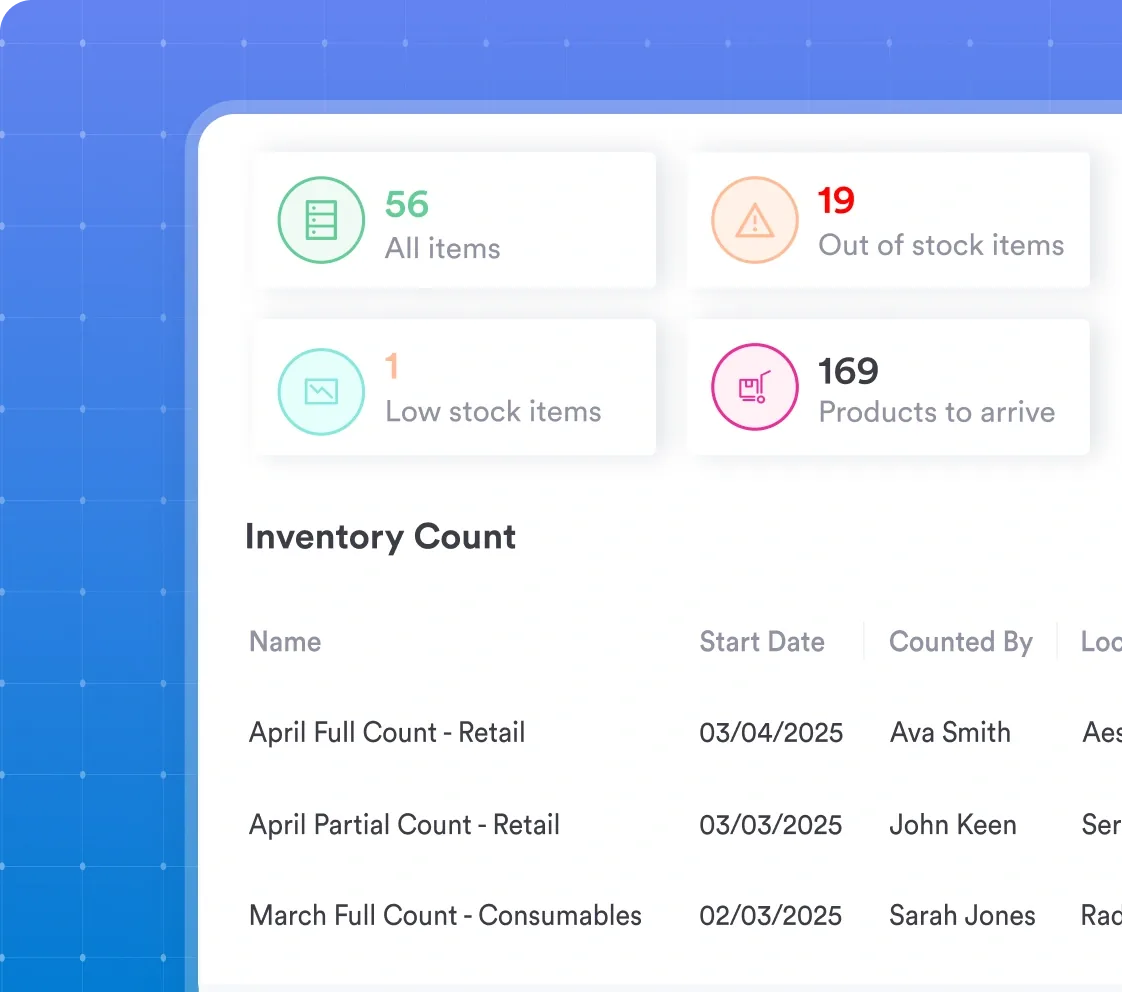
For practices billing HCPCS codes across multiple device categories, a structured approach to tracking PDAC approval status by product SKU is worth building into the supply chain and billing workflow. Some inventory management systems for healthcare practices allow tagging products with coding metadata, which can surface the right code at the point of dispensing.
DME suppliers are the primary billers for L4360 under Medicare. However, the “individual with expertise” who performs the customization does not have to be the same entity that submits the claim. An orthotist employed by a DME supplier may perform the fitting; the supplier bills the claim.
Whether a podiatrist who customizes a prefabricated boot in their own office can bill L4360 directly is a nuanced question. Under current Medicare rules, a podiatrist billing as a physician (not as a DME supplier) may face coverage restrictions, since the Brace benefit is typically administered through the DME benefit, not the physician benefit. Practices should confirm their specific billing authority with their DME MAC before billing L4360 as a physician supplier rather than a registered DME provider.
Non-DME providers who regularly dispense orthotics should consider enrolling as Medicare DME suppliers if they are not already. Failing to do so before billing DME codes including L4360 is a compliance exposure that auditors look for. Resources on HIPAA compliance for medical offices and broader regulatory readiness are a useful starting point for practices building a compliance framework.
If your practice bills L4360 but is not enrolled as a Medicare DME supplier, consult your DME MAC or a healthcare compliance attorney before submitting additional claims. The ‘individual with expertise’ requirement is separate from the question of billing authority, and conflating them is a common compliance mistake.
Understanding the L4360 code family requires familiarity with the surrounding codes. Here is a structured reference for the primary walking boot and AFO codes that coders and DME billers encounter most often:
Code L4631 represents a custom-fabricated device and requires substantially more documentation of the fabrication process. Codes L4360, L4361, L4386, and L4387 all cover prefabricated items. The decision tree across these four prefabricated codes turns on two variables: pneumatic mechanism (yes/no) and customization performed (yes/no). When bracing needs extend above the ankle to stabilize the knee, coders report a separate knee orthosis such as HCPCS code L1843 rather than stretching an ankle-foot boot code to cover it.
Most L4360 claim denials fall into one of four categories. Knowing the pattern helps practices build upstream prevention rather than reactive appeals.
Appeals for L4360 denials should be submitted through the standard Medicare claim appeals process, beginning with a redetermination request. Include the full documentation package and a written explanation of how each coverage criterion was met. Practices with high L4360 denial rates should conduct a root-cause audit across recent claims before appealing individual denials. Accounts receivable aging shows which codes are slow to pay long before anyone calls it a denial problem.
For multi-location practices, tracking denial patterns by code and location can reveal recurring documentation weaknesses. The broader context of managing medical forms at your healthcare practice also applies directly to the documentation requirements discussed here.
L4360 must be paired with an ICD-10 diagnosis code that supports medical necessity for a pneumatic walking boot under the Medicare Brace benefit. The diagnosis code tells the payer why the patient needs the device. The most commonly used ICD-10 codes in this context include fractures of the foot and ankle, post-surgical stabilization diagnoses, and specific orthopedic conditions requiring immobilization.
Fracture codes in the S82 (fracture of lower leg, including ankle) and S92 (fracture of foot) families are among the most frequent pairings. Post-surgical aftercare codes in the Z96 and Z47 families may also apply when a walking boot is dispensed following orthopedic surgery. The diagnosis must be specific enough to demonstrate medical necessity, which means avoiding unspecified codes when a more specific code is available.
Some payers publish coverage determination policies that list accepted diagnosis codes for walking boot coverage. Reviewing the applicable DME MAC local coverage determination (LCD) and associated policy article before submitting claims identifies which ICD-10 codes the payer accepts, and crosswalking L4360 to the chosen diagnosis code before submission confirms the pairing the payer will accept.
HCPCS Code L4360 is not a difficult code to bill correctly when the underlying clinical and documentation work is done at the point of care. The common failure modes, wrong code selection between L4360 and L4361, missing customization documentation, and non-PDAC-approved devices, are all preventable with structured dispensing and documentation workflows.
Practices that dispense pneumatic walking boots regularly should build L4360 documentation requirements into their standard operating procedures: verify PDAC status before dispensing, document customization at the time it occurs, and confirm the ICD-10 diagnosis code supports medical necessity under the Brace benefit. Pabau’s claims management software supports this workflow by keeping orders, notes, and compliance documentation attached to each patient record. To see how it works in practice, book a demo with the team.

Billing a ruptured esophagus repair? CCSD code G0740 billing guide covers billing the surgical repair of a ruptured esophagus, a demanding upper GI procedure.
Billing sclerotherapy for esophageal varices? CCSD code G1440 billing guide covers billing injection sclerotherapy for esophageal varices, where precise coding avoids claim issues.
Billing a hiatus hernia repair? CCSD code G2330 billing guide covers the open surgical repair of a hiatus hernia and how to avoid misclassifying the approach.
HCPCS Code L4360 is a billing code for a prefabricated pneumatic walking boot that has been trimmed, bent, molded, assembled, or otherwise customized to fit a specific patient by an individual with expertise. It falls under the HCPCS Level II Orthotic Procedures and Services category and is used primarily by DME suppliers and orthopedic practices billing Medicare and commercial payers for immobilization devices.
L4360 applies when a prefabricated pneumatic walking boot has been customized by a qualified individual. L4361 applies when the same type of boot is dispensed off-the-shelf without customization. Using L4360 when no customization was performed constitutes upcoding and is an audit risk. Document the specific modification made at the time of dispensing to support L4360 billing.
Yes, Medicare Part B covers L4360 under the Brace benefit when the walking boot is used to immobilize an orthopedic condition or provide post-surgical stabilization. Coverage requires a physician order, a qualifying ICD-10 diagnosis, a PDAC-approved device, and documented customization by an individual with expertise. An Advance Beneficiary Notice may be required when coverage is uncertain.
A podiatrist who performs the customization may qualify as the “individual with expertise” under the code descriptor. However, billing authority depends on whether the provider is enrolled as a Medicare DME supplier, not just on clinical credentials. Practices should verify their DME supplier enrollment status with their DME MAC before billing L4360 as a physician-based provider rather than through a registered DME entity.
PDAC (Pricing, Data Analysis and Coding contractor) classifies DME products under specific HCPCS codes for Medicare billing. Only devices that PDAC has verified as meeting the L4360 descriptor should be billed under this code. Practices should check PDAC classification for each walking boot model before dispensing and retain documentation of the PDAC verification as part of the claim support file.