CPT Code 62284: Injection procedure for myelography
CPT Code 62284: official descriptor and procedure overview The American Medical ...

Last Updated: Oct 19, 2026
L3999 is the HCPCS Level II code for upper limb orthosis, not otherwise specified.
Short description: Upper limb orthosis NOSLong description: UPPER LIMB ORTHOSIS, NOT OTHERWISE SPECIFIEDCode range: L3980-L3999 (Fracture, Addition, and Unspecified Orthotics, Upper Extremities)Effective date: January 1, 1982Status: Active, valid for 2025 billing
According to CMS's HCPCS Level II code set, HCPCS Code L3999 is a "not otherwise classified" (NOC) code within the HCPCS Level II L-series, which covers orthotic and prosthetic devices. It sits at the end of the upper extremity orthosis range, flanked by similar NOC codes: L2999 covers lower extremity orthoses not otherwise specified, and L5999 covers lower extremity prostheses not otherwise specified.
The code is used for claims management when an upper limb brace or orthosis cannot be accurately described by any more specific HCPCS L-code. Common device types historically mapped to L3999 include abduction positioners, certain shoulder braces, and upper extremity stabilizers that span multiple joint categories without a single matching code.
Let Pabau's smart automation suggest the right codes, reduce claim denials, and keep your practice compliant—effortlessly.
Automate repetitive tasks and focus on what matters most—your patients.
Reduce coding errors and ensure compliance with the latest regulations.
Clean claims, fewer denials, and faster reimbursements.
Powerful insights and reporting to help your practice thrive.
HIPAA compliant SOC 2 certified GDPR-compliant Trusted by 4,000+ clinics worldwide

HCPCS Code L3999 describes an upper limb orthosis, not otherwise specified, and covers upper extremity braces that don’t fit any more specific L-code.
L3999 applies when a prefabricated device requires only minimal self-adjustment by the beneficiary, caregiver, or supplier, not custom fabrication or fitting.
Medicare coverage requires a physician order, proof of medical necessity, and PDAC verification before submitting an L3999 claim, or the claim risks denial.
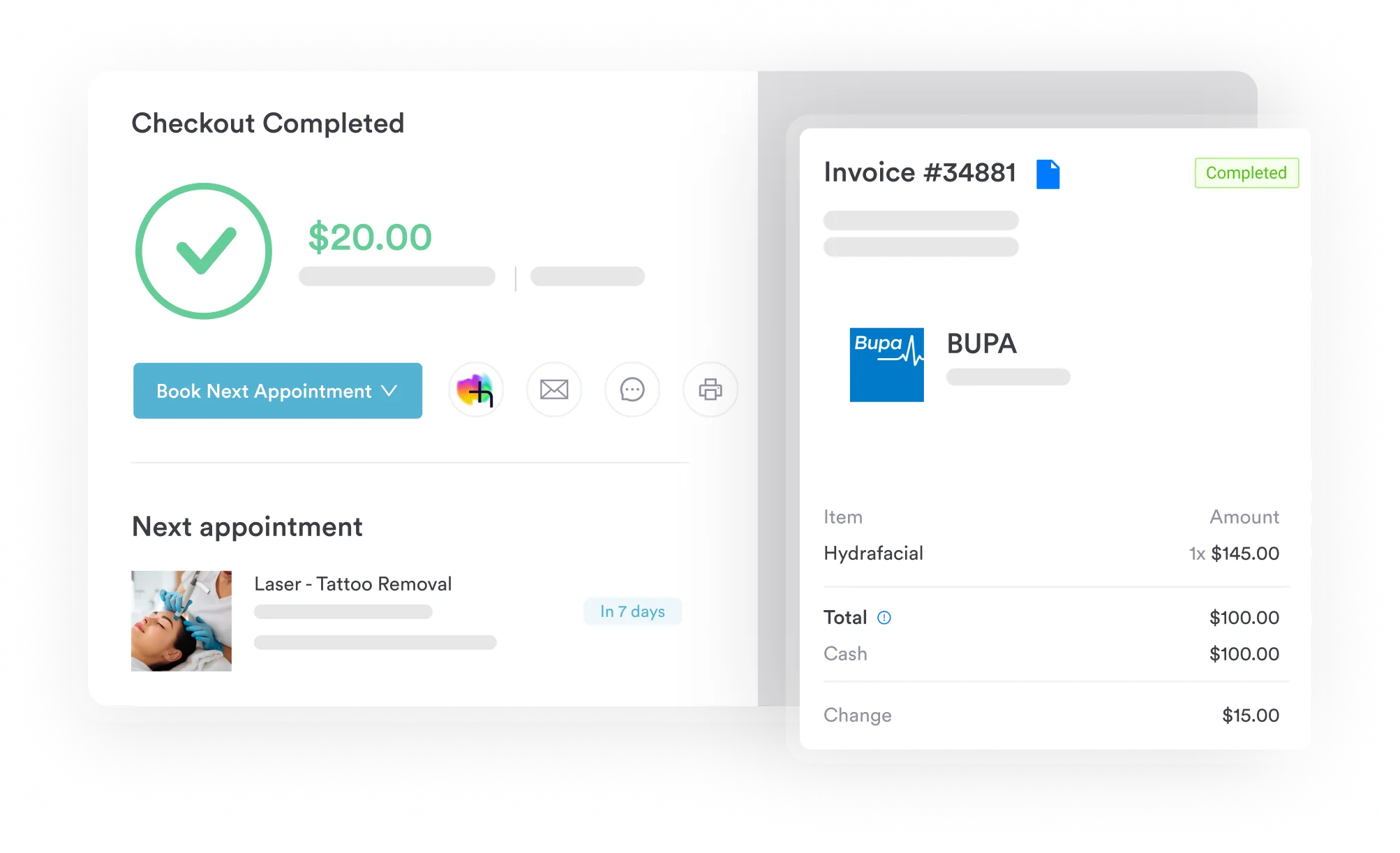
Pabau’s claims management software helps DME suppliers and orthotic practices track documentation, flag missing orders, and reduce L3999 claim rejections.
HCPCS Code L3999 is a payer-of-last-resort code. Before using it, coders and suppliers must confirm that no more specific upper limb orthosis code applies.
The HCPCS upper limb orthosis hierarchy works like this:
If a device fits under any of these ranges, use the more specific code. L3999 only becomes appropriate when the orthosis genuinely cannot be described by an existing specific code or when the PDAC product classification directs the supplier to use it. Coders can verify current product classifications through the AAPC Codify HCPCS code range tool or by submitting a product inquiry to the PDAC directly.
The single most consequential billing decision for HCPCS Code L3999 is whether the device is custom-fitted or off-the-shelf (OTS). This classification determines coverage eligibility, required documentation, and in some cases whether L3999 is even the right code.
Both Noridian Healthcare Solutions (JA DME MAC) and the PDAC have published explicit guidance on this point:
Misclassifying a custom-fabricated device as an OTS or minimally adjusted device under L3999 is a common audit trigger. Review private payer procedure fee schedules alongside Medicare guidance, since commercial payers may have separate criteria for each classification tier.
Before submitting any L3999 claim, confirm the PDAC product classification for the specific device. Submit a PDAC coding verification inquiry when the product listing isn’t clear. An incorrect classification is harder to appeal after a denial than a pre-submission inquiry.
Medicare coverage for HCPCS Code L3999 follows the same framework as other DME orthotic codes, but the NOC status adds an extra layer of scrutiny. The DME MACs (Noridian Healthcare Solutions for Jurisdictions A and D, and CGS Administrators for Jurisdictions B and C) all apply consistent rules for upper limb orthosis NOC claims.
Required conditions for Medicare coverage:
The CMS Physician Fee Schedule lookup tool does not always list a specific national payment amount for NOC codes like L3999. Payment is typically determined at the DME MAC level based on the actual cost of the device, submitted with an invoice. Suppliers should submit claims with the purchase price as the charge and include a detailed invoice. For occupational therapy practices billing L3999 for upper limb orthoses they provide in-house, see also our guide to occupational therapy software that supports integrated DME billing workflows. A resubmission does not restart the clock, so the original filing limit still governs.
Because L3999 is an NOC code, it doesn’t carry a fixed national fee schedule rate like procedure-specific HCPCS codes such as HCPCS code E0181 (powered pressure reducing mattress overlay), which carries a set fee schedule allowance. Reimbursement is priced by individual DME MAC based on the invoice. The PDAC lookup tool (Palmetto GBA DMECS) lists L3999 with a short description of “Upper limb orthosis NOS” but no pre-set fee.
For reference, a free HCPCS code and fee schedule search is available through the PGM Billing HCPCS lookup tool, which uses CMS data. Check this alongside your DME MAC’s local fee schedule updates.

Pabau helps DME suppliers and orthotic practices capture the physician orders, PDAC confirmations, and proof-of-delivery records that Medicare auditors look for. See how it works in a live demo.

Practices fitting orthotics alongside manual therapy often run the whole caseload in osteopathy practice software.
L3999 claims face heightened documentation scrutiny because the code’s NOC status signals that a specific product code doesn’t exist. Auditors look for three things: proof that a more specific code wasn’t available, proof of medical necessity, and a clear clinical record connecting the diagnosis to the device.
A complete L3999 documentation file should include:
Because L3999 is a NOC code, the DME MACs require a written narrative on the claim line itself, not only in the patient chart. Miscellaneous HCPCS codes submitted without this narrative are rejected up front and have to be resubmitted, so treat these fields as mandatory:
On an electronic 837P claim, this narrative belongs in loop 2400, segment NTE02. On a paper CMS-1500, it goes in Item 19. Suppliers who template these five fields into their billing workflow clear the most common front-end rejection for NOC orthosis claims before it ever reaches a reviewer.
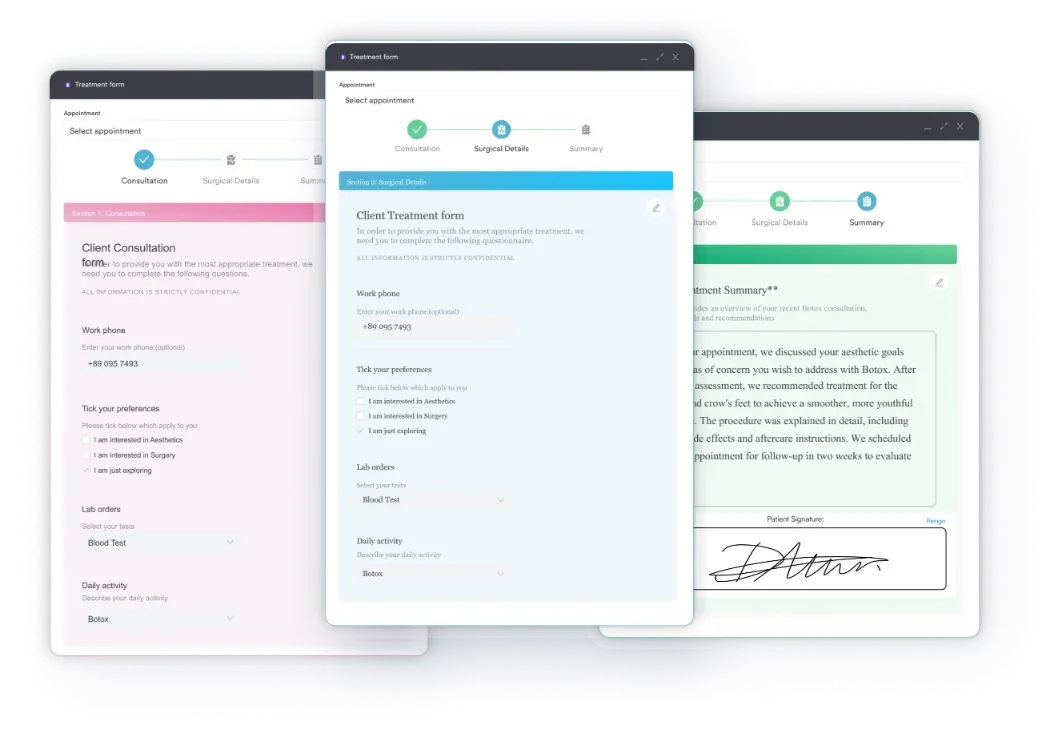
Use digital intake and documentation forms to capture physician order details, patient measurement data, and delivery confirmation signatures electronically. Paper-based workflows create documentation gaps that are difficult to reconstruct during a post-payment audit.
Physical therapy practices that fit upper limb orthoses as part of post-surgical rehabilitation should review related CPT billing references to confirm whether L3999 or an accompanying CPT code for fitting services is the appropriate billing structure for their setting.
Document the PDAC verification step in the patient chart before delivery, not after. If a MAC audit requests records and your PDAC confirmation is dated after the claim date, it raises a red flag even if the code selection was correct.
HCPCS Code L3999 doesn’t bill in isolation. The claim requires an accompanying ICD-10-CM diagnosis code that establishes medical necessity. The most common diagnosis codes paired with upper limb orthosis claims include:
The ICD-10-CM code must link clearly to the upper limb condition requiring the orthosis. A mismatch between the diagnosis and the device description is one of the top reasons L3999 claims are flagged for additional documentation requests.
Before assigning HCPCS Code L3999, verify that none of these related upper limb orthosis codes apply to the device being provided:
L3999 is one of eight “not otherwise specified” L-codes that the DME MACs and PDAC group together as NOC codes. Knowing where L3999 sits in that family prevents the most common misfile: reaching for the upper limb code when the device is actually a spinal, lower limb, or prosthetic item.
Each supplier is ultimately responsible for the HCPCS code selected, so match the device to the narrowest applicable NOS category before defaulting to L3999. A lower limb brace billed under L3999 instead of L2999, for example, is incorrect coding even though both are upper-and-lower orthosis NOC codes in the same series.
Suppliers billing under procedure-level CPT code documentation frameworks in adjacent clinical areas will recognize this hierarchy: the most specific code available is always the correct code, and NOC codes are a last resort.
For practices managing compliance documentation across multiple code categories.
L3999 denials follow predictable patterns. Knowing the most common reasons before submission is far more effective than appealing after a denial.
Appealing an L3999 denial requires submitting the missing documentation with a cover letter that addresses each denial reason specifically. Generic appeals with only the HCPCS code explanation rarely succeed. Practitioners managing upper limb rehabilitation alongside billing should review coding specificity requirements across code types to build consistent documentation habits across all claim categories.
Physical therapy practices billing L3999 for post-surgical upper limb orthoses can benefit from integrated scheduling and documentation workflows.
Modifiers change how a MAC processes an L3999 claim. Using the wrong modifier, or omitting a required one, can result in denial or incorrect payment.
Common modifiers applied to upper limb orthosis claims include:
Confirm modifier requirements with your specific DME MAC before submission. Palmetto GBA and Noridian may have slightly different local policies on which modifiers are required versus optional for NOC orthosis codes. Track modifier requirements alongside prescription and order management records to ensure the right modifier accompanies each device type.
For HIPAA-compliant documentation practices that support modifier attestation across your DME billing workflows.
HCPCS Code L3999 is a legitimate and necessary billing code, but its NOC status means it receives closer scrutiny than procedure-specific orthosis codes. The suppliers and practices that use it successfully are those with strong pre-delivery workflows: PDAC verification in place before the device ships, a complete physician order on file, and clinical documentation that clearly connects the ICD-10 diagnosis to the device provided.
Stop losing L3999 claims to NOC-code scrutiny. Pabau’s claims management and digital-documentation tools capture your PDAC verification, physician order, ICD-10 linkage, and signed proof of delivery in one record — so every upper-limb orthosis claim is audit-ready before it ships. Book a demo to see L3999 billing handled end-to-end.

Billing an impacted tooth removal? impacted tooth removal code CCSD code F0910 covers surgical removal of an impacted or buried tooth in UK private dental and oral surgery practice.
Billing a salivary gland removal? submandibular gland excision code CCSD code F4440 covers surgical removal of the submandibular salivary gland for ENT and oral and maxillofacial surgeons.
Billing another salivary gland removal? sublingual gland excision code CCSD code F4450 covers surgical removal of the sublingual salivary gland within the oral and maxillofacial surgery section.
HCPCS Code L3999 is the “not otherwise specified” (NOC) code for upper limb orthoses, meaning it applies when an upper extremity brace or support device cannot be accurately described by any more specific HCPCS L-code in the L3650-L3995 range. It is maintained by CMS and falls under the Fracture, Addition, and Unspecified Orthotics, Upper Extremities code range. Suppliers must confirm PDAC product classification before billing L3999 to Medicare.
Use HCPCS Code L3999 when an upper limb orthosis cannot be described by any specific code in the L3650-L3995 range and the PDAC has classified the specific product under this code. It applies to devices requiring only minimal self-adjustment by the beneficiary, caregiver, or supplier. Always check whether a more specific shoulder, SEWHO, or fracture orthosis code is available before defaulting to L3999.
Yes, Medicare can cover L3999 claims when medical necessity is documented, a physician order is on file before delivery, the device has PDAC product classification under L3999, and a signed proof of delivery is obtained. Because L3999 is a NOC code, it does not carry a fixed national fee schedule rate. Payment is determined by the individual DME MAC based on the actual invoice cost of the device.
L3978 is a specific code for a custom-fabricated shoulder-elbow-wrist-hand-finger orthosis (SEWHFO) with an abduction-positioning (airplane) design, thoracic component, and support bar — it is not a catch-all. L3999 is the unspecified (NOC) code that covers any upper limb orthosis not described by a specific L-code. There is no separate “SEWHO not otherwise specified” code, so a shoulder-elbow-wrist-hand device that does not match a specific SEWHO code is billed under L3999, not L3978.
Required documentation includes a signed physician order with ICD-10 diagnosis, clinical notes establishing medical necessity, PDAC product classification confirmation for the specific device, a detailed device description and supplier invoice, and a signed proof of delivery. Custom-fitted devices also require patient measurement records and fitting notes. Missing any of these elements is a common cause of L3999 claim denial.
L3999 is a HCPCS Level II code, not a CPT code. You will often see it written as the “L3999 CPT code description,” but that phrasing is a common mix-up. CPT codes are five-digit numeric codes maintained by the AMA, while L3999 is an alphanumeric HCPCS Level II code maintained by CMS for an upper limb orthosis, not otherwise specified. It’s submitted on DME claims to Medicare and commercial payers, paired with a supporting ICD-10 diagnosis.
No single product is the L3999 brace. As a not-otherwise-specified code, it covers any upper limb orthosis, such as an abduction positioner, a specialized shoulder brace, or a multi-joint upper extremity stabilizer, that no more specific L-code in the L3650–L3995 range describes. The PDAC product classification determines whether a particular brace bills under L3999 or under a specific L-code.