



CCSD code G5100: Bypass of duodenum billing guide
CCSD code G5100 bills a bypass that leaves the duodenum in place CCSD code G5100...

Last Updated: Oct 16, 2026

CPT code 20102 reports exploration of a penetrating wound of the abdomen, flank, or back, when that exploration is the definitive surgery.
The separate procedure designation means 20102 bundles into a laparotomy or visceral repair performed in the same region and session.
Modifier 59 can unbundle the code, but only when the note shows the exploration was distinct in site, time, or intent.
Under the CY2026 fee schedule, 20102 carries 3.88 work RVUs, with total RVUs of 19.82 non-facility and 7.34 facility.
Practice management software like Pabau builds the claim from the treatment record, so codes and insurer details are not retyped by hand.
CPT code 20102 covers exploration of a penetrating wound of the abdomen, flank, or back. It is the code a surgeon reports after following a stab or gunshot tract to see how deep the damage runs.
The coding looks simple until the claim comes back denied. Two words in the descriptor, separate procedure, decide whether 20102 gets paid at all. Miss what they mean and the exploration disappears into whatever larger surgery followed it.
Most of the trouble sits in the operative note rather than the code choice. Payers want the wound tract, the fascia finding, and whatever came out of the wound named in plain terms. Vague notes are what turn a valid procedure into a denial.
The descriptor reads exploration of a penetrating wound, separate procedure, of the abdomen, flank, or back.
That wording comes from the American Medical Association, which publishes and maintains the code set. It applies when a surgeon opens and follows a traumatic wound tract. The goal is to judge depth, find foreign bodies, and clean up damaged tissue.
Four codes sit in the 20100 to 20103 wound exploration family, split by anatomical region. The parenthetical in the descriptor is the billing signal. It warns the coder that this service can be absorbed when a bigger procedure happens in the same field.
Exploration means a deliberate, documented walk down the wound tract. Penetrating trauma to the abdomen, flank, or back runs from a shallow stab to a gunshot. Before committing to a full laparotomy, the surgeon checks whether the peritoneum has been breached.
That focused check is the service 20102 captures. Inspecting the skin surface does not qualify. The operative note has to show a systematic evaluation, and these steps are the ones that usually appear in it.
This one code absorbs more work than its short descriptor suggests, which is why extra lines on the claim get stripped. The wound exploration family already includes each of the following.
Closure is the easiest one to overlook. Because repair sits inside the service, reporting a simple repair code such as CPT code 12001 for the same wound duplicates it. Save the repair codes for wounds that were closed without any exploration.
These four codes differ only by region, so the region named in the note picks the code. Injuries near a boundary cause most of the errors in this family, and the flank is the usual culprit.
When a wound straddles two regions, code the region where the primary surgical work happened. Do not report 20101 and 20102 together for one wound crossing the thoracoabdominal junction. That pairing needs modifier 59 plus documentation of distinct exploration in each region.
The National Correct Coding Initiative, known as NCCI, sets the bundling rules, and the Centers for Medicare and Medicaid Services (CMS) maintain the edits.
When 20102 happens as part of a bigger procedure in the same region and session, it folds into the primary code.
Report 20102 by itself when the exploration is the only significant surgery performed. No laparotomy, no visceral repair, and no vascular repair leaves nothing for it to bundle into. A flank stab wound with an intact peritoneum and no further surgery is the textbook case.
Thin operative notes cause most denials on this code. Payers look for each of the following.
Specificity beats generality every time. A note reading wound explored, no injury found is not billable. Spell out tract depth, the fascial assessment method, and the closure plan, and the claim stands up. Standardized medical forms help here, because one shared template keeps every surgeon’s note on the same structure.
Keep the note reachable afterwards as well. Audits often land years later, and retention rules vary from state to state.
Audit your trauma operative note templates against the seven points above before your next submission. The peritoneal integrity finding is the detail most often left out, and its absence is what triggers denials and downcoding on this code.
Modifier choice changes both the payment and the audit exposure on this code.
The table below covers the ones that come up most often on a 20102 claim. Check the current NCCI edits for the specific pair you are billing, because those edits change quarterly.
Modifier 59 in practice: reach for it when 20102 sits beside a procedure NCCI would bundle it into. The clinical picture has to justify separate payment on its own. Attaching it without documentation is a known audit trigger.
CMS also publishes the X modifiers, XE, XS, XP, and XU, as sharper alternatives. XS, for a separate structure, is the one that usually fits a second wound at a different site. Confirm which set your payer accepts first, since adoption still varies.
It helps to know where these edits fire. Most run at the claims clearinghouse before the payer ever opens the file, so a rejection can land within minutes of submission.
Medical necessity rests on an ICD-10-CM code that names three things: the region, the wound type, and whether the peritoneum was penetrated. Every code below sits in the injury chapter. Each one needs a 7th character for the encounter, so A is initial, D is subsequent, and S is sequela.
ICD-10-CM updates every October, so confirm the fiscal year before you submit. The CMS NCCI edit files are worth a look at the same time, since the pairings shift with them.
Pick the most specific code the record supports. If the note gives the quadrant and the penetration status, use the code carrying both. Payers deny a specific procedure paired with a vague diagnosis when a precise option exists.
The sibling codes get very narrow, and S31.653A shows how far the detail goes. Puncture wounds split the same way, which is where S31.33XA comes in.
Payment follows the Medicare Physician Fee Schedule, and CMS republishes the relative value units every year.
Geographic Practice Cost Indices then adjust the amount for your locality, so Manhattan and rural Montana never match. The figures below are the CY2026 national values.
The non-facility rate applies in an office or ambulatory setting, where the practice carries the supply and staffing cost. Hospitals that bill their own overhead separately trigger the facility rate instead.
Most penetrating abdominal trauma reaches an emergency department or an operating room, so the facility column is usually the one in play.
Commercial contracts vary from there. Many express payment as a percentage of the Medicare rate, and others run a schedule of their own.
Either way, Medicare billing rules set the benchmark those contracts get measured against. Verify the current year in the CMS fee schedule lookup before quoting a number to anyone.
Denials on this code cluster into four patterns. Each one disappears once a coder reads the operative note instead of the charge slip.
This is the most frequent error by a wide margin. Reporting 20102 with an exploratory laparotomy, or with a repair such as splenorrhaphy, in the same session and region trips an NCCI edit.
Modifier 59 overrides that edit only when the note shows the exploration was distinct in time, site, or intent. Without that sentence in the record, the modifier becomes a compliance problem rather than a billing tactic.
Flank injuries near the thoracoabdominal junction get shuffled between 20101 and 20102. Code the region where the primary exploration happened. The anatomical description in the note governs the choice, not the entry point on the skin.
Payers auto-deny claims when the diagnosis is vaguer than the record allows. Choosing S31.100A while the note supports S31.122A invites a downcode or a technical denial. Coders need the operative note in front of them, because the encounter form rarely carries that detail.
Injury codes need a 7th character for the encounter type. A is correct for the first active treatment visit. Submit without it and the code is invalid, so an automated edit rejects the claim before a human reads it.
Five questions catch nearly every avoidable denial on this code. Work through them while the note is still open, because fixing the record afterwards is much harder.
Answer no to any of them and correct the record before the claim leaves. Rework costs your team far more than the two minutes this check takes.
Run a quarterly audit of your 20102 claims against the current NCCI edits. Pull every claim where 20102 went out with a laparotomy or visceral repair in the same session. Then read the modifier 59 documentation on each one. A single cycle usually reveals the pattern behind your denials.
Trauma centers are not the only place this code appears. Practices running a plastic surgery EMR or primary care software see penetrating wounds too. They rarely reach an operating room, but they still bill from the same note.
Wherever the claim starts, the same information gets typed twice. The code goes into the chart, then someone copies it onto the claim form with the diagnosis, the membership number, and the authorization. Every hop is a chance to drop a character.
Practice management software like Pabau removes that hop. Pabau’s claims management builds the claim from the record. The CPT code attached to the service lands on the charge line, and the recorded diagnoses seed the ICD-10 slots. Full CPT and ICD-10-CM lookup libraries sit behind a search icon, refreshed with each official release. Claim scrubbing catches the mismatches that would otherwise come back as a denial two weeks later. The denial code on the remittance names the reason, and grouping by that reason turns rework into prevention.
Required insurer fields get checked before anything sends. If a membership number or authorization code is missing, the send button stays locked. Claim status and remittances then come back into the same screen, so denials surface where the patient record already lives.
None of that picks your modifier for you, and a coder still reads the note to make that call. What goes away is the retyping and the half-finished claim. Your team spends its hours on the judgment calls instead of the data entry.
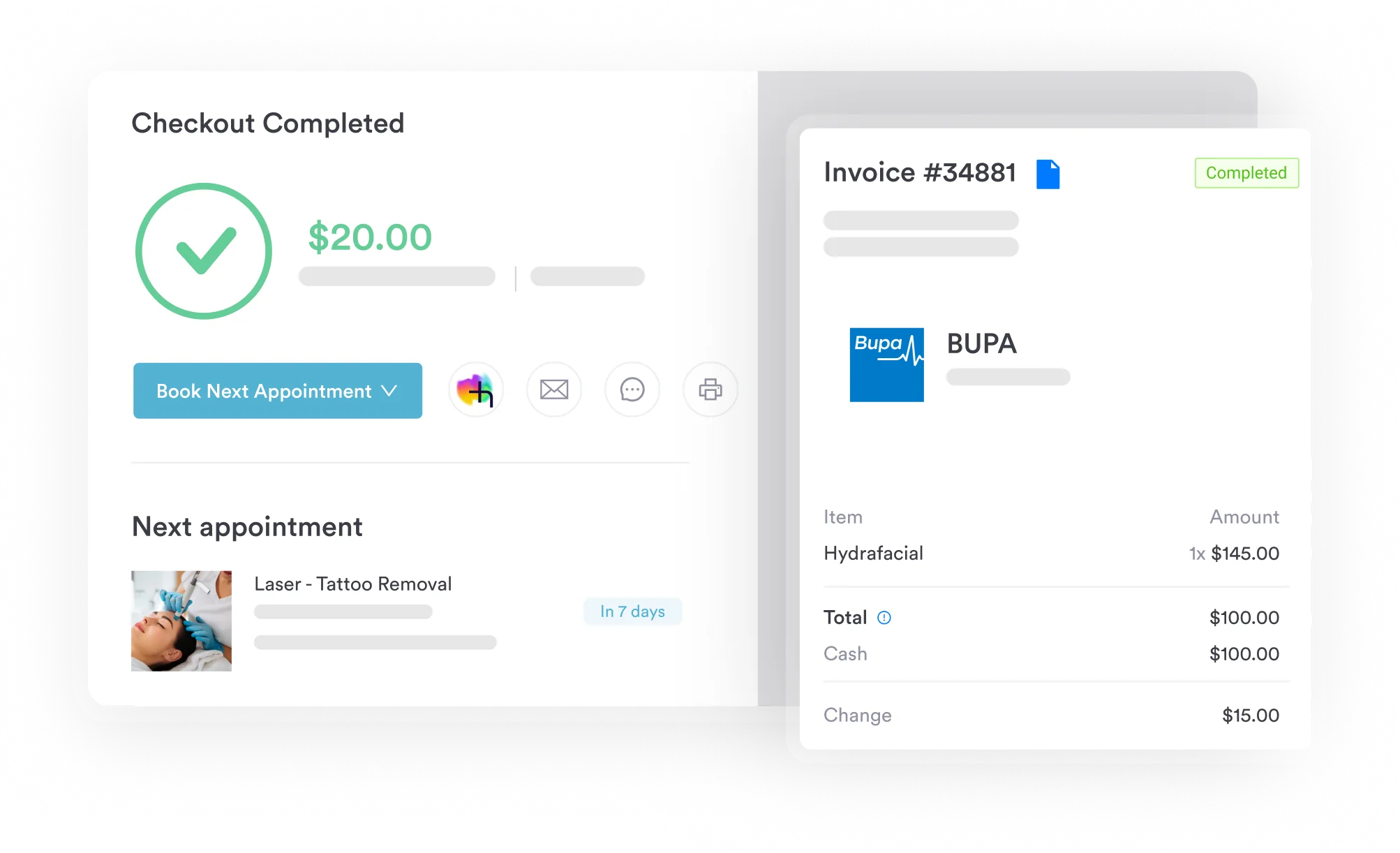

Pabau builds the claim from the treatment record, so the CPT code, the diagnoses, and the insurer details carry over without retyping. Required fields are checked before the claim can send.

The code choice on a penetrating wound exploration is rarely the hard part. Everything rests on the note behind it. When the record names the tract, the fascia, the debridement, and the closure, 20102 holds up under review.
So treat the operative note template as a billing asset rather than paperwork. Fix it once and the same seven details land on every claim, which quietly removes most of the rework your team does today.
Getting that record onto the claim without retyping it is the other half of the job. Book a demo to see how Pabau builds trauma claims straight from the treatment note.

Weighing up claims tools? Pabau vs Waystar compares how each one handles submission, tracking, and denials.
Coding an unspecified autoinflammatory syndrome? autoinflammatory syndrome diagnosis code is the terminal, catch-all code within the M04 category.
Billing wound care outside a trauma unit? HCPCS code G0247 walks through routine foot care coding for diabetic patients.
Coding ankylosing spondylitis in a minor? juvenile ankylosing spondylitis code is the billable diagnosis code for juvenile ankylosing spondylitis, valid for the 2026 fiscal year.
Coding osteoarthritis across multiple joints? generalized osteoarthritis diagnosis code applies when documentation names the affected joints and rules out a secondary cause.
Yes. The wound exploration family already covers enlarging the wound, extending the dissection, debridement, foreign body removal, minor vessel ligation, and repair. Reporting a separate simple repair code for the same wound duplicates work that 20102 already pays for.
Only for genuinely separate wounds. Two distinct tracts at different sites can support two lines, with modifier XS or 59 on the second. The note must describe each tract on its own, including depth, direction, and findings.
The facility rate. A hospital bills its own overhead separately, so the physician claim uses the facility column, worth 7.34 total RVUs in CY2026. The non-facility total of 19.82 applies only when the practice carries the supply and staffing cost itself.
A negative finding is still billable. The code pays for the exploration, not for what turns up. Document the tract you followed, the method used to check the fascia, and the conclusion that the peritoneum stayed intact.
XS, for a separate structure, fits most 20102 situations, because the second service involves a different site. XE covers a separate encounter and XP a separate practitioner. Check your payer policy first, since acceptance of X modifiers still varies.



