CPT Code 62284: Injection procedure for myelography
CPT Code 62284: official descriptor and procedure overview The American Medical ...

Last Updated: Oct 19, 2026
C1764 is the HCPCS Level II code for event recorder, cardiac (implantable).
The code is a Level II HCPCS C-code maintained by the Centers for Medicare and Medicaid Services (CMS). It applies only in hospital outpatient departments and ambulatory surgical centers (ASCs).
One detail decides most C1764 claims, and it is easy to miss. The device cost is packaged into the procedure payment rather than paid on its own. Pass-through payment for this code expired on December 31, 2002.
Let Pabau's smart automation suggest the right codes, reduce claim denials, and keep your practice compliant—effortlessly.
Automate repetitive tasks and focus on what matters most—your patients.
Reduce coding errors and ensure compliance with the latest regulations.
Clean claims, fewer denials, and faster reimbursements.
Powerful insights and reporting to help your practice thrive.
HIPAA compliant SOC 2 certified GDPR-compliant Trusted by 4,000+ clinics worldwide

HCPCS Code C1764 is the device supply code for an implantable loop recorder, billed by the facility.
C1764 covers the device cost only, and the insertion procedure is billed separately under CPT 33285.
Pass-through payment for C1764 expired on December 31, 2002, so the device cost is packaged into the procedure payment.
Missing medical necessity documentation and filing the code in the wrong setting are the two most common denial triggers.
Practice management software like Pabau keeps the device details, procedure note, and diagnosis codes in one patient record.
HCPCS Code C1764 carries the official descriptor: Event recorder, cardiac (implantable). It is a Level II HCPCS C-code, maintained by CMS, and it represents the supply cost of the implantable cardiac event recorder. The code does not cover the physician’s work or the insertion procedure, which companion CPT codes capture instead.
C-codes exist for OPPS and ASC payment contexts. They are not reported in physician office settings, which use standard CPT and HCPCS Level II codes under the Medicare Physician Fee Schedule. C1764 belongs on the facility’s claim, so putting it on the physician’s CMS-1500 form is a reliable way to earn a denial.
C1764 covers the implantable cardiac event recorder, also called an implantable loop recorder (ILR) or insertable cardiac monitor (ICM). It is a small device placed under the skin of the chest wall. It records cardiac electrical activity continuously for two to three years.
The point of that long recording window is capture. A wearable Holter monitor rarely stays on long enough to catch an arrhythmia that happens once a month.
The device is not a pacemaker and it delivers no therapy. Its sole function is recording. Patients return for outpatient interrogation visits, where stored data is downloaded and reviewed. Structured medical forms at every visit support both the implant claim and the later monitoring claims.
Primary clinical indications for the device include:
Most of these patients arrive on referral, which matters for billing. The prior workup that a payer will ask for usually sits with the referring practice, inside its general practice software rather than the facility’s records.
Medtronic, Abbott, and Boston Scientific all market insertable cardiac monitors. The device model, serial number, and manufacturer must appear in the claim documentation for C1764.
C1764 is reported by the facility, never by the physician. Two settings apply, and they do not use the same claim format:
C1764 is never reported on a physician office visit, an inpatient hospital claim, or a skilled nursing facility claim. Incorrect setting is a denial trigger. Facilities that tie patient scheduling workflows to claim preparation can flag the setting rule at booking, before the claim is ever built.
C1764 represents the device supply. The physician’s insertion procedure and the later monitoring visits are billed separately, using the CPT code set maintained by the American Medical Association. The companion codes for implantable loop recorders are:
The in-person and remote split is where coders slip. CPT CPT 33285 is the primary insertion is the primary insertion companion, and the physician reports it on a professional claim while the facility reports C1764 on the facility claim. Both go out for the same date of service.
Several other HCPCS C-codes cover cardiac rhythm devices. Knowing which code fits each device prevents unbundling errors and duplicate billing. The table below covers the codes most often confused with C1764:
C1764 is the only code in this group for a purely diagnostic implant. Any cardiac implant that delivers therapy takes a different C-code. Choosing the wrong one triggers National Correct Coding Initiative (NCCI) edits.
C1764 carries no separate payment of its own. Under OPPS the device cost is packaged into the Ambulatory Payment Classification assigned to the insertion procedure. Device pass-through for this code expired on December 31, 2002, and it has been packaged ever since.
Rates therefore live with the procedure, not the device. Confirm the current figures in CMS OPPS Addendum B, which lists the payment indicator and APC assignment for every code each year.
Third-party rate databases are estimates. Confirm payment against the current CMS OPPS final rule or your Medicare Administrative Contractor (MAC) fee schedule. The Medicare Physician Fee Schedule lookup tool will not help here, because it prices professional services rather than facility payments.
Do not build a separate device payment into your C1764 revenue projection. Pass-through ended in 2002, so the device cost now sits inside the procedure APC. Hospitals should still report the code on the claim, because CMS uses those reported charges for outlier payments and future rate setting.
Medicare covers C1764 when it is billed in an eligible facility setting with documented medical necessity. Coverage follows OPPS rules for hospital outpatient departments and the ASC payment system for ambulatory surgical centers.
C1764 is not covered under Medicare Part B physician office billing. The code is facility-billed only.
Denials for C1764 usually trace back to incomplete documentation rather than a coding mistake. HIPAA-compliant record keeping across the facility’s files also means the supporting materials survive a payer audit. The required elements are:
That prior workup line is the one that catches teams out. Exertional syncope referrals often come from a sports medicine practice that already holds the ambulatory monitoring results. The facility has to request them rather than recreate them.
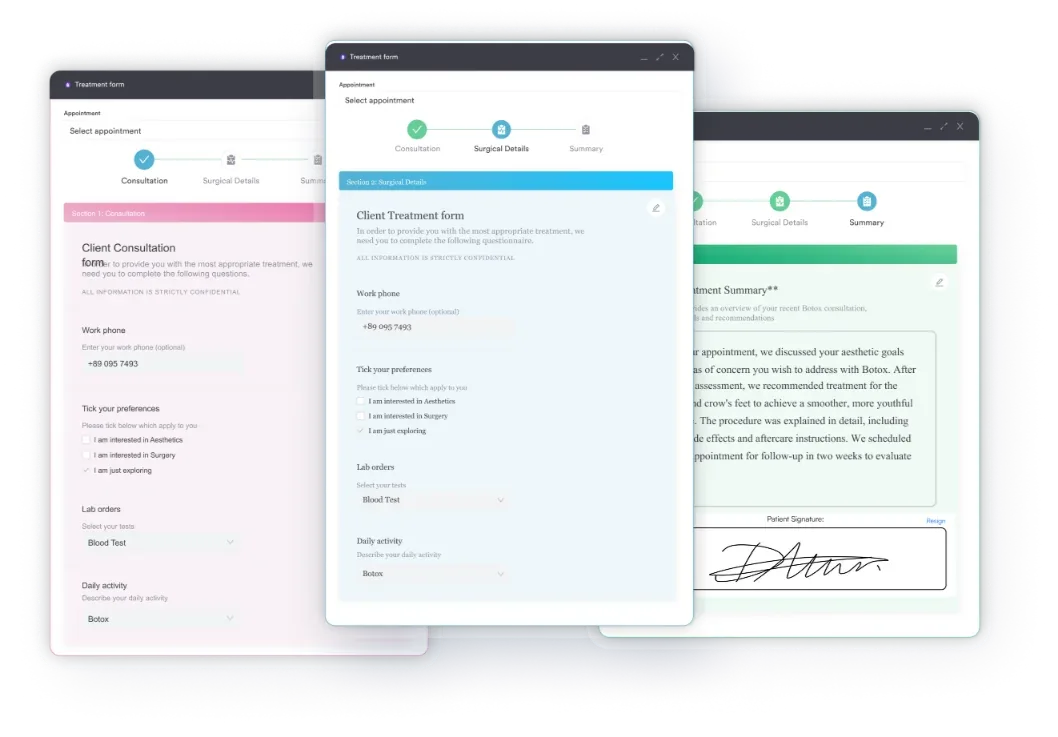
Practices using digital intake forms can build device fields straight into the procedure workflow. Serial numbers and manufacturer details get captured at the point of care, instead of being reconstructed from memory a week later.
Diagnosis codes are what establish medical necessity for a C1764 claim. The implantable cardiac event recorder suits patients with recurring unexplained symptoms that shorter monitoring has failed to capture. These codes are the ones most often reported alongside C1764:
The diagnosis code has to match the documented indication in the physician’s order and procedure note. Mismatches between the claim and the record are a top audit finding on ILR implant claims. Most MAC LCDs also want proof of prior non-invasive monitoring.
ASC billing for implantable devices runs on different rules from HOPD billing. CMS labels a procedure device-intensive when the device makes up a large share of the total procedure cost. For those procedures, the ASC rate is set with the device cost already built in.
ASCs that run automated billing workflows can set device-specific flags once, so the right code combination lands on every claim. That saves a coder from reviewing each one by hand.
The errors below account for most C1764 denials, and every one of them is avoidable with the right documentation and workflow setup. They are also the same handful that good denial management catches before a claim goes out.
A pre-claim checklist built specifically for C1764 catches nearly all of this. Cover the setting, the companion CPT code, the device data, and the diagnosis match. Reading the relevant denial codes alongside it turns a rejection into a fix you can apply to the next claim.
A single ILR implant generates a facility claim, a companion physician claim, device documentation, and a diagnosis code that has to match the record. Cardiology facilities and ASCs handling that volume on paper see higher denial rates for exactly that reason. Understanding how practice management software works across multi-code billing is the first step to fixing it.
Practice management software like Pabau gives your team one patient record that holds the procedure note, the device details, and the diagnosis codes together. Nothing has to be chased from a paper log after the fact. Capture the device information through EHR integration workflows and it is already sitting there when the claim is built.
From there, Pabau’s claims management software submits electronically through our Claim.MD integration, then tracks each claim’s status back into the same record. Then a payer asks you to validate a C1764 claim. The order, the operative note, the device data, and the diagnosis codes are all attached to one encounter.
That is the difference between a two-day audit response and a two-week one. Nothing has to be pulled from three separate systems and reconciled by hand.
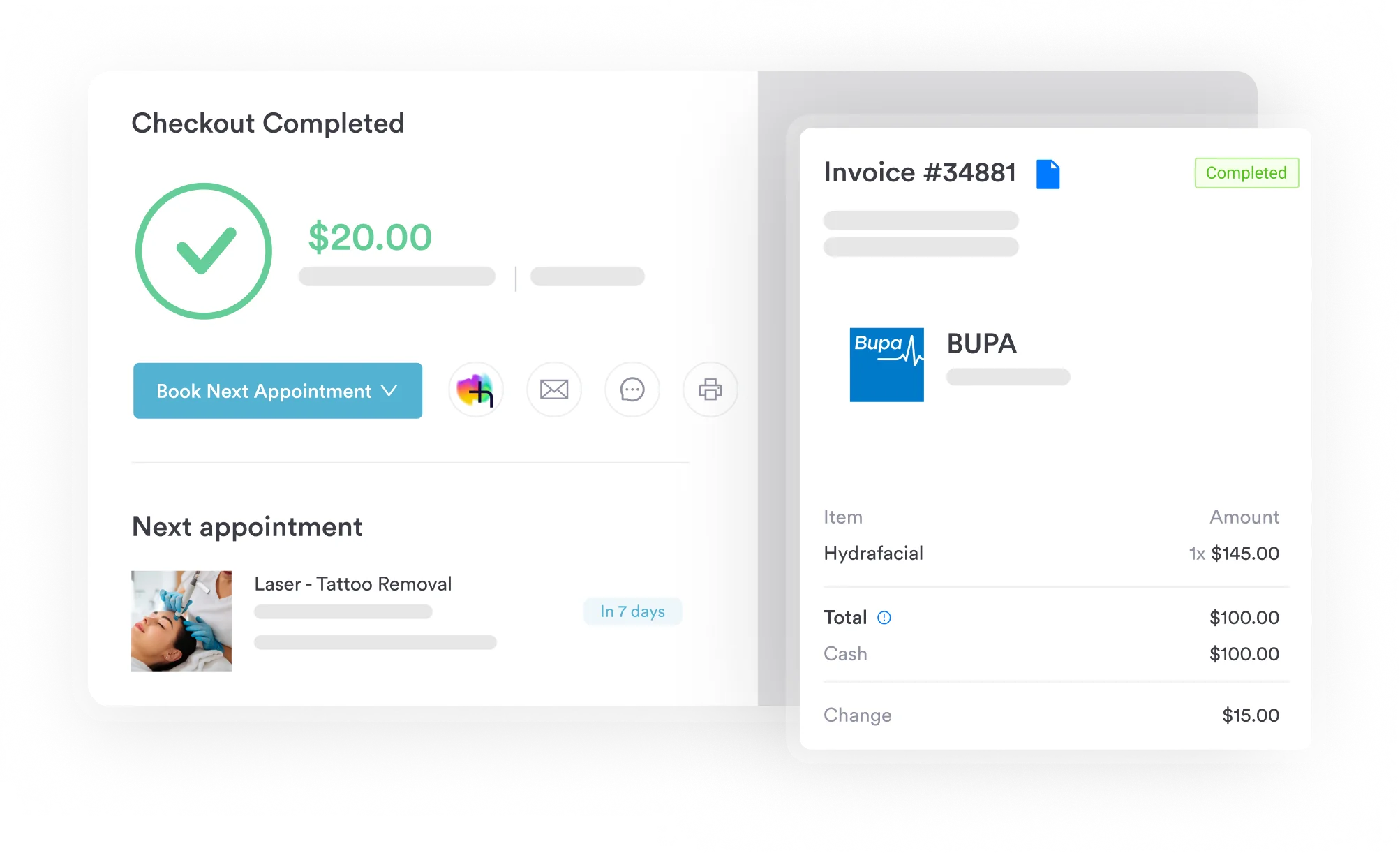

Pabau holds the operative note, device serial number, and diagnosis codes in one patient record, then submits the claim through our Claim.MD integration. Your team stops rebuilding documentation after the fact.

Treat C1764 as a reporting obligation rather than a revenue line and most of the confusion around it disappears. The code has been packaged for over two decades, so it earns nothing on its own. It still has to be on the claim, coded correctly, with the device data behind it.
The trade-off worth remembering is where the effort pays off. Chasing the fee schedule every January gains you very little on this code. Getting the serial number, the order, and the diagnosis into the record on the day of the implant is what keeps the money.
If your team is still reconstructing device documentation after the claim goes out, that is the workflow to change first. Book a demo to see how Pabau keeps implant documentation and claim submission in one place for cardiology and ASC teams.

Billing a rare maternity-related cancer case? Choriocarcinoma diagnosis code covers ICD-10 code C58 for malignant neoplasm of the placenta in gestational choriocarcinoma.
Coding a cervical carcinoma in situ case? Exocervix carcinoma in situ code explains ICD-10 code D06.1 for squamous cell changes confined to the outer cervix.
Billing another OPPS device supply code? C1813 walks through the same facility-claim mechanics for a different implant category.
Working through a spine device claim? C1821 covers the device-intensive designation and how it shapes the ASC rate.
Coding a benign brain tumor diagnosis? Benign meningioma diagnosis code covers ICD-10 code D32.9 for a benign meninges tumor without a specified location.
HCPCS Code C1764 is a Level II HCPCS C-code for the event recorder, cardiac (implantable). It is the device supply code for an implantable loop recorder (ILR), also called an insertable cardiac monitor (ICM). Hospital outpatient departments and ambulatory surgical centers report it to identify the cost of the device itself, separately from the insertion procedure.
C1764 has no separate payment rate. Device pass-through for the code expired on December 31, 2002, so the device cost is packaged into the Ambulatory Payment Classification for the insertion procedure. Look up the procedure APC and its payment indicator in CMS OPPS Addendum B, which CMS republishes with every annual OPPS final rule.
Yes. Medicare covers C1764 when it is billed in an eligible hospital outpatient department or ASC setting with documented medical necessity. Coverage sits under your MAC Local Coverage Determination for implantable cardiac monitors. Most LCDs want evidence of prior non-invasive monitoring plus a qualifying diagnosis, such as unexplained syncope (ICD-10 R55). Read the LCD on your MAC website for the current criteria.
An ASC can perform the ILR insertion when the procedure sits on the CMS-approved ASC covered surgical procedures list. The device itself is not separately payable there, because C1764 is packaged and the device cost is already built into the device-intensive procedure rate. ASCs also submit facility claims to Medicare in the 837P professional format rather than on the UB-04.