



CCSD code G5100: Bypass of duodenum billing guide
CCSD code G5100 bills a bypass that leaves the duodenum in place CCSD code G5100...

Last Updated: Oct 16, 2026

CPT Code 95913 covers nerve conduction studies involving 13 or more distinct studies performed during a single encounter
Each named nerve counts once regardless of recording sites; motor and sensory testing of the same nerve count as two separate studies
When NCS and EMG are performed the same day, use add-on codes 95885, 95886, or 95887 for EMG instead of standalone EMG codes 95860-95870
CPT codes 95907-95913 cannot be used to bill automated nerve conduction testing devices under CMS and major payer policies
Pabau’s claims management software helps electrodiagnostic practices document study counts and submit clean claims for the 95907-95913 code family
CPT Code 95913 is a nerve conduction study (NCS) code for encounters where 13 or more distinct studies are performed in a single visit. It is the highest tier of the 95907-95913 series, where each named nerve counts once and motor and sensory testing of the same nerve count as two separate studies.
CPT Code 95913 is the highest-tier code in the nerve conduction study (NCS) series, covering encounters where 13 or more distinct studies are performed. Getting the study count right before submission is the difference between clean reimbursement and an audit flag.
The American Medical Association (AMA) maintains 95913 within the Neurology and Neuromuscular Procedures section. It is used to assess peripheral nerve function in patients presenting with neuropathy, radiculopathy, carpal tunnel syndrome, and related conditions.
Practices billing this code include neurology, physiatry, and physical medicine groups. Accurate use depends on understanding how studies are counted, how same-day EMG rules apply, and what documentation is required to support medical necessity. This guide covers each of those areas, along with the 95907-95913 range and Medicare reimbursement context. Electrodiagnostic practices using claims management software can reduce these errors before claims leave the practice.
CPT Code 95913 sits at the top of a seven-code series structured entirely by study count. Selecting the wrong code in this range is one of the most common audit triggers in electrodiagnostic billing. The full range is as follows:
| CPT Code | Study count | Clinical context |
|---|---|---|
| 95907 | 1-2 studies | Focused single-nerve evaluation (e.g., carpal tunnel screen) |
| 95908 | 3-4 studies | Limited bilateral or multi-nerve evaluation |
| 95909 | 5-6 studies | Moderate upper or lower extremity evaluation |
| 95910 | 7-8 studies | Extended multi-nerve evaluation |
| 95911 | 9-10 studies | Comprehensive bilateral upper or lower extremity |
| 95912 | 11-12 studies | Near-complete electrodiagnostic evaluation |
| 95913 | 13 or more studies | Full comprehensive evaluation, bilateral or multi-limb |
Only one code from this series is billable per encounter. The total study count across the entire visit determines which code applies. Reporting 95912 and 95913 together for the same encounter is incorrect, and NCCI edits will likely deny one of them. Physical therapy and physiatry practices can reference additional context on electrodiagnostic billing through physical therapy EMR workflows.
Counting errors are the primary reason electrodiagnostic claims are downcoded or denied. The rules below are drawn from CMS guidance and AANEM recommended policy.
Each named nerve, or named branch of a nerve, counts as one study regardless of how many recording sites are tested. Testing the ulnar nerve at the wrist, forearm, below the elbow, above the elbow, axilla, and supraclavicular region still equals one study. Multiple recording sites on the same nerve do not increase the count.
Motor and sensory testing of the same nerve count as two distinct studies. If the median nerve is tested for both motor conduction (measuring latency, amplitude, and conduction velocity) and sensory conduction, that equals two studies, not one. F-wave testing of a motor nerve counts as part of that motor study, not as a separate study. H-reflex testing, by contrast, counts as a separate study per the AMA CPT guidelines.
A comprehensive bilateral upper and lower extremity evaluation will typically generate 13 or more studies. For example: bilateral median motor + sensory (4 studies), bilateral ulnar motor + sensory (4 studies), bilateral peroneal motor (2 studies), bilateral sural sensory (2 studies), and bilateral tibial motor (2 studies) equals 14 studies, placing the encounter squarely within 95913 territory. Each combination must be documented individually in the operative or procedure report.
Practices that bill other specialty-specific codes frequently face parallel counting questions. The same principle of per-named-procedure counting applies across CPT families. A structured nerve examination checklist helps document each study consistently so the count stays auditable.
Counting works differently on drug lines, where HCPCS code S0179 is billed in 20 mg units rather than tablets. Billing a 40 mg tablet as a single unit understates the dose and invites a post-payment audit.
Practices on membership models handle many of these services with direct primary care software instead of per-claim billing.
Medicare reimburses CPT Code 95913 under the Medicare Physician Fee Schedule (MPFS). Rates vary by geographic locality and whether the professional component only (modifier -26), technical component only (modifier -TC), or global service (no modifier) is billed. The rates below reflect 2025 national non-facility amounts; use the CMS Physician Fee Schedule lookup tool to verify your locality-adjusted rate before billing.
| Billing component | 2025 national non-facility rate (approx.) | Notes |
|---|---|---|
| Global (no modifier) | ~$275 | Physician performs and interprets in own office/lab |
| Professional only (-26) | ~$177 | Physician interprets only; hospital or outpatient department owns equipment |
| Technical only (-TC) | ~$98 | Facility bills for equipment and technician only |
Rates are subject to annual MPFS updates. The figures above are approximate national reference points; actual reimbursement depends on geographic practice cost index adjustments. The professional component carries the larger share of the global payment, since interpretation drives the work RVUs for this code.
Commercial payer rates vary substantially from Medicare rates, and some payers impose frequency limitations or require prior authorization for encounters reaching the 13-study threshold. Always confirm coverage with the specific payer before scheduling a comprehensive electrodiagnostic evaluation.
Before billing CPT Code 95913, run the total study count against the documented procedure log. If the count is 12 and could reasonably include one more clinically indicated study, confirm with the physician whether an additional study was performed but undocumented. Correcting the count before claim submission prevents downcoding and avoids amendment requests post-payment.
When needle electromyography (EMG) and nerve conduction studies are performed on the same day, the billing rules change. Per CMS Medicare Coverage Database Article A54992, standalone EMG codes 95860-95870 cannot be used when NCS codes 95907-95913 are also billed for the same encounter. Instead, use the following add-on codes:
These add-on codes are reported in addition to the primary NCS code (95913 in a comprehensive encounter). They cannot be billed without a primary NCS code from the 95907-95913 series. Each extremity evaluated with needle EMG is reported separately, so a bilateral upper extremity evaluation where both arms receive needle EMG testing would generate two units of 95886 (or 95885, depending on muscle count).
Incorrect use of the standalone EMG codes on the same day as NCS codes is a payer-specific denial trigger and a common NCCI edit. Practices new to this pairing can review how the two services fit together under the EMG and nerve conduction studies code before submitting.

Pabau helps neurology and physiatry practices document study counts, manage claims, and reduce the administrative overhead that drives coding mistakes. See how clean billing workflows protect your NCS revenue.

Automated nerve conduction testing devices measure nerve function using pre-programmed stimulation protocols rather than physician-directed manual testing. These devices are explicitly excluded from CPT codes 95907-95913, including 95913, under CMS policy and major commercial payer medical policies.
The distinction matters because automated devices are sometimes used in primary care or urgent care settings as screening tools. Billing 95913 for an automated device study when manual NCS was not performed constitutes upcoding and is subject to recoupment and audit. When an automated device is used, practices should code the encounter using the appropriate evaluation and management (E/M) code for the clinical visit rather than attempting to bill the NCS series.
Maintaining complete documentation of the method used (manual vs. automated) is essential. Digital intake and procedure documentation tools.
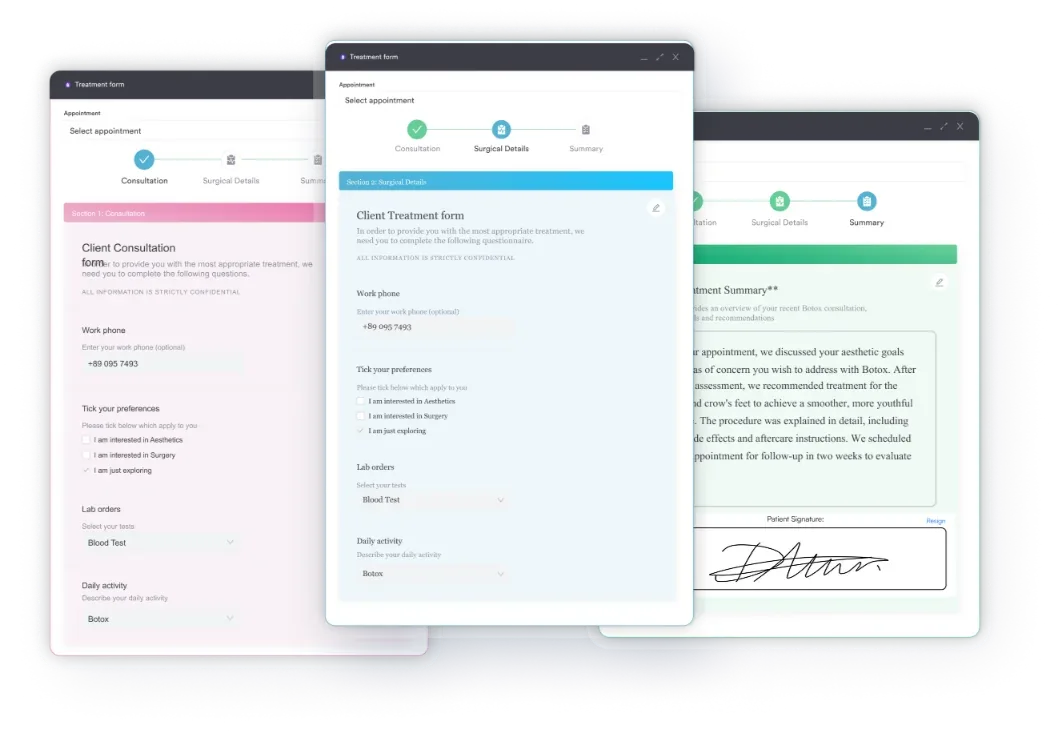
Medical necessity documentation for CPT Code 95913 must support both the clinical indication and the study count. Payers routinely audit high-volume NCS encounters because 13-or-more-study evaluations represent the maximum reimbursement tier. Weak documentation is the most common reason for post-payment recoupment in this code family.
Medicare’s local coverage determinations (LCDs) vary by MAC (Medicare Administrative Contractor) jurisdiction. Some MACs require a signed physician order before the NCS study is performed; others require a referring diagnosis on the order. Commercial payers such as Anthem use their own medical policies (for example, CG-MED-24) with specific coverage criteria for outpatient electrodiagnostic evaluations.
Reviewing the applicable LCD or medical policy before the encounter prevents denial on procedural grounds. Practices managing HIPAA compliance for medical offices should also ensure that electrodiagnostic reports shared with referring physicians meet the minimum necessary standard. Documentation practices that support coding also support automated billing workflows that catch missing fields before claim submission. Practices that use a superbill form capture the same procedure and diagnosis data before submitting the claim.
Create a standard NCS report template that lists every nerve tested in a tabular format with study type, side, and measured values. When the procedure note is structured consistently, the coder can verify the study count directly from the table without interpreting freeform narrative text. This reduces count errors and speeds up claim preparation.
Every NCS claim requires at least one supporting ICD-10 diagnosis code that establishes medical necessity. The following codes are among those most commonly linked to electrodiagnostic evaluations that reach the 13-study threshold. Diagnosis pointers on the claim form link each service line to the diagnosis that justifies it.
| ICD-10 code | Description | Clinical context for NCS |
|---|---|---|
| G60.0 | Hereditary motor and sensory neuropathy | Charcot-Marie-Tooth; comprehensive bilateral evaluation often warranted |
| G61.0 | Guillain-Barre syndrome | Acute demyelinating polyradiculoneuropathy; full four-limb NCS typical |
| G62.9 | Polyneuropathy, unspecified | Symmetric length-dependent neuropathy evaluation |
| G62.0 | Drug-induced polyneuropathy | Chemotherapy-induced peripheral neuropathy (CIPN) assessment |
| E11.40 | Type 2 diabetes with diabetic neuropathy, unspecified | Diabetic peripheral neuropathy; bilateral lower extremity focus |
| G54.2 | Cervical root disorders, NEC | Multi-level cervical radiculopathy requiring bilateral upper extremity NCS |
| G54.4 | Lumbosacral root disorders, NEC | Bilateral lower extremity radiculopathy evaluation |
| G56.00 | Carpal tunnel syndrome, unspecified upper limb | Bilateral carpal tunnel screening with additional nerve studies |
Practices billing 95913 for diabetic neuropathy evaluations should use the most specific E11 code available. Generic codes like G62.9 are adequate when a more specific etiology has not been established, but payers may request additional clinical justification.
Radiculopathy indications are common drivers of comprehensive four-limb studies. For the lumbar presentations behind G54.4, see the lumbar radiculopathy ICD-10 codes; for cervical presentations behind G54.2.
The AANEM’s recommended policy for electrodiagnostic medicine identifies several recurring billing problems in the 95907-95913 series. The five errors below account for the majority of denials and audits.
Practices using coaching CPT codes or other specialty billing frameworks often apply similar pre-submission audit checklists. If you are still mapping out your revenue cycle, this primer on what medical billing involves covers the same pre-claim review discipline that reduces avoidable denials across all CPT families.
Electrodiagnostic billing hinges on three things: an accurate study count, the right same-day EMG add-on code, and documentation that ties the study count to a supported clinical indication. CPT Code 95913 is straightforward once those fundamentals are in place, but the margin for error is narrow when 13 or more studies are involved and payers are watching for over-utilization.
Pabau’s practice management software helps neurology and physiatry practices structure their documentation workflows so study counts are captured at the point of care, claims are reviewed before submission, and compliance requirements are met consistently. To see how Pabau supports electrodiagnostic and specialty billing workflows, book a demo.

List Item #1
List Item #2
CPT Code 95913 is a nerve conduction study (NCS) code covering encounters where 13 or more distinct studies are performed during a single visit. It is the highest-tier code in the 95907-95913 series, used when a comprehensive bilateral or multi-limb electrodiagnostic evaluation is performed to assess peripheral nerve function.
CPT 95913 covers 13 or more studies. Motor and sensory testing of the same nerve count as two separate studies, while multiple recording sites on a single nerve count as only one study. F-wave testing is part of the motor study; H-reflex testing counts separately.
Yes, but not with standalone EMG codes 95860-95870. When nerve conduction studies and needle EMG are performed on the same day, use add-on codes 95885 (limited EMG per extremity), 95886 (complete EMG per extremity), or 95887 (non-extremity EMG) alongside the primary NCS code. CMS Article A54992 governs this requirement.
The 2025 national non-facility global rate for CPT 95913 is approximately $275, depending on geographic locality. The professional component alone (-26 modifier) is approximately $177, and the technical component (-TC) is approximately $98. Rates change annually with MPFS updates; verify current rates using the CMS Physician Fee Schedule lookup tool.
No. CPT codes 95907-95913, including 95913, cannot be used to bill automated nerve conduction testing. CMS and major commercial payers explicitly exclude automated device studies from this code series. Billing 95913 for automated testing constitutes upcoding and is subject to recoupment.
CPT 95912 covers encounters with 11-12 nerve conduction studies, while 95913 covers encounters with 13 or more studies. The distinction is purely quantitative. If the study count reaches 13, use 95913; if it is 11 or 12, use 95912. Only one code from the series is reportable per encounter.



