



CCSD code G5100: Bypass of duodenum billing guide
CCSD code G5100 bills a bypass that leaves the duodenum in place CCSD code G5100...

Last Updated: Oct 16, 2026

CPT Code 90785 is an add-on code for interactive complexity, always billed alongside a primary psychiatric or psychotherapy service, never standalone.
Four qualifying factors apply: maladaptive communication, interfering caregiver behaviors, disclosed sentinel events requiring reporting, and use of physical devices to overcome communication barriers.
90785 cannot be billed with family psychotherapy codes 90846 and 90847, or crisis psychotherapy codes 90839 and 90840.
Pabau’s claims management software and digital intake forms help mental health practices document interactive complexity and reduce billing errors.
CPT Code 90785 is the add-on code for interactive complexity, a designation mental health EMR billing applies when communication factors materially complicate the delivery of psychiatric or psychotherapy services. The American Medical Association (AMA) introduced it in 2013 to reflect the increased clinical intensity of managing those factors, not additional session time.
The code sits within the Psychiatry Services and Procedures section of the CPT code set. Because it is an add-on code (the AMA codebook marks it with a + prefix), it must always accompany a qualifying primary service. Billing it alone triggers an automatic claim denial. On the Medicare Physician Fee Schedule, 90785 appears under the short descriptor “PSYTX COMPLEX INTERACTIVE.”
The key distinction to understand: 90785 captures the intensity of the communication challenge, not the length of the encounter. Submitting it because a session ran long, or because a patient was simply difficult to engage, does not satisfy the qualifying criteria.
Under the 2022 APA reporting guidelines (which we verified against the APA’s interactive complexity guidance), you must document at least one of four specific factors during the session to justify using CPT Code 90785. The threshold sets a documentation requirement, not a clinical judgment call.
One factor is enough. There is no requirement to document all four, and there is no hierarchy between them for reimbursement purposes. Document the specific factor observed and how it affected the service in your clinical note.
Document the qualifying factor in real time, not after the session ends. Write a single sentence naming which of the four criteria was met and describing the specific behavior or event that triggered it. Payers audit 90785 closely, and after-the-fact documentation without session-specific detail is the leading cause of denied claims.
CPT Code 90785 must be paired with an approved primary psychiatric or psychotherapy code. The psychiatry EMR software you use should flag incompatible code pairings automatically, but knowing the approved list prevents submission errors at the point of care. Per CMS LCD L34616, the following primary codes may be combined with +90785:
| Primary CPT code | Service description | Notes |
|---|---|---|
| 90791 | Psychiatric diagnostic evaluation | No medical services |
| 90792 | Psychiatric diagnostic evaluation with medical services | Includes prescribing clinician |
| 90832 | Psychotherapy, 30 minutes | Individual therapy |
| 90834 | Psychotherapy, 45 minutes | Individual therapy |
| 90837 | Psychotherapy, 60 minutes | Most commonly billed with 90785 |
| 90853 | Group psychotherapy | When medically indicated per LCD L34616 |
The pairing with 90837 (60-minute individual psychotherapy) is by far the most frequent combination in practice. Payers allow group therapy via 90853 when a specific group participant meets medical necessity criteria for interactive complexity, but this requires particularly careful documentation to distinguish the individual-level complexity from the group dynamic.
Practices on membership models handle many of these services with direct primary care software instead of per-claim billing.
The 2022 CPT guideline revision made the exclusions explicit. Using 90785 alongside any of these codes triggers a claim denial. Your claims management software should carry these exclusion rules as built-in edit checks.
Two more limits catch billers out. CPT Code 90785 is not billable with an evaluation and management (E/M) service on its own. Even when you perform an E/M alongside psychotherapy, interactive complexity attaches to the psychotherapy code, not the E/M. You cannot bill 90785 with an office visit code like 99214 unless a qualifying psychotherapy service is billed in the same session.
The 2022 guidelines also exclude psychological and neuropsychological testing codes and adaptive behavior assessment codes. And no matter how many qualifying factors occur in one session, you bill 90785 only once.
A common misconception worth flagging: translation services alone do not qualify a session for 90785. Using an interpreter does not constitute interactive complexity under the current APA guidelines and, per guidance citing Section 1557 of the Affordable Care Act, billing the code solely for interpreter use may conflict with federal anti-discrimination statutes. Interactive complexity requires a clinical communication challenge, not a language barrier that standard interpreter services address.
Poor documentation is the primary driver of 90785 claim denials and post-payment audits. The clinical note must do three things clearly to support the code. Using digital intake forms and structured session templates makes this significantly easier to standardize across a practice.
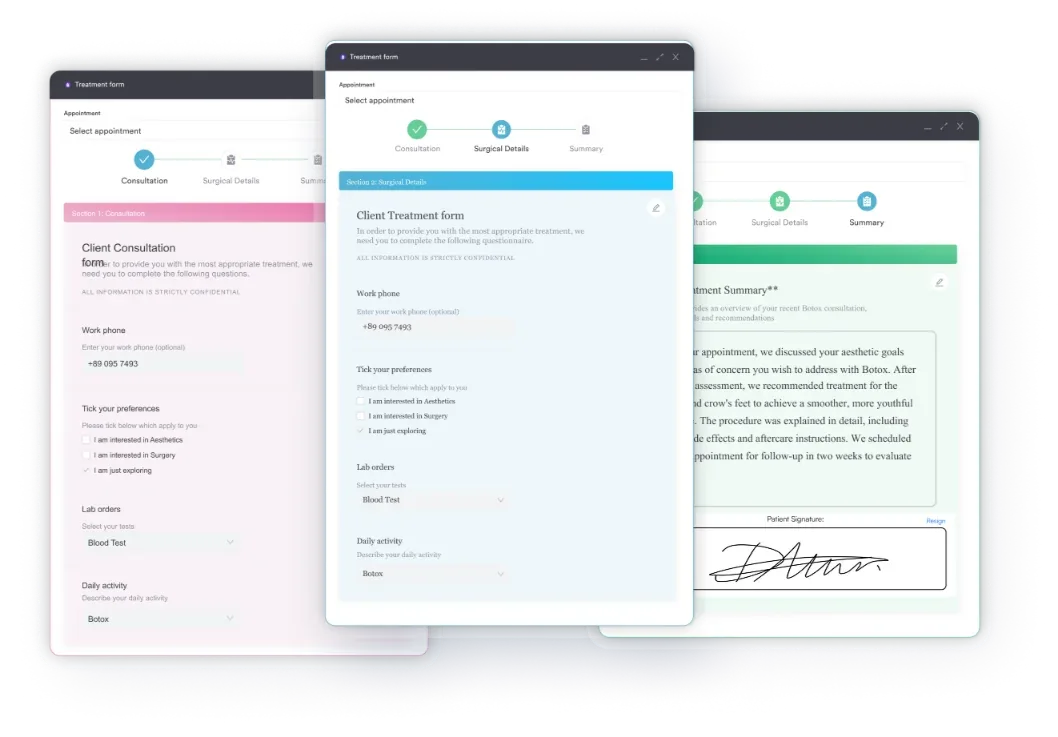
Good clinical record-keeping practices suggest keeping a short, specific sentence template for each qualifying factor. For example: “Caregiver [relationship] actively redirected patient responses during psychoeducation segment, requiring clinician to intervene and re-establish therapeutic focus on three occasions.” That level of specificity holds up under audit review.
For HIPAA-compliant documentation, you must store all session notes — including the interactive complexity justification — securely with appropriate access controls. Behavioral health records carry additional sensitivity protections under state laws in many states.
These interactive complexity examples show what a payer-ready note looks like across three common scenarios. Each pairs the qualifying factor with a documentation sentence you can adapt, so the interactive complexity code is supported the moment you submit the claim.
Note the pattern in each example: name one of the four qualifying factors, then show the extra clinical work in a single sentence. That specificity is what separates an approved claim from a denied one under audit.
CPT Code 90785 carries its own Relative Value Unit (RVU) weight under the Medicare Physician Fee Schedule (MPFS). Because it is an add-on code, the reimbursement adds to whatever the primary service pays rather than replacing it. Use the CMS Physician Fee Schedule lookup tool to confirm current-year rates for your geographic locality, as figures vary by Medicare Administrative Contractor (MAC) region.
As a general benchmark, 90785 typically reimburses in the range of $18 to $28 per unit under Medicare, depending on locality. These figures are indicative only. Always verify against the current MPFS before submitting claims, as CMS updates rates each January 1 and may further adjust them through Medicare Economic Index changes.
Commercial insurers generally follow CMS guidance but are not required to. Coverage and reimbursement for 90785 vary meaningfully by plan. Some payers require pre-authorization for the add-on; others apply their own interpretation of interactive complexity criteria. Before billing, check the payer’s Local Coverage Determination (LCD) or behavioral health billing manual. When in doubt, call the provider line and document the date, time, and name of the representative who confirmed coverage.
Medicaid coverage also varies by state. Several state Medicaid programs recognize 90785, but some apply session frequency limits or restrict which provider types can bill it. Confirm with your state’s Medicaid fee schedule directly.

Pabau’s claims management tools help mental health and psychiatry practices catch code pairings errors before submission, document interactive complexity efficiently, and track reimbursement by code across payers.

You can use CPT Code 90785 with telehealth sessions delivered via eligible platforms, provided the underlying primary psychotherapy code also qualifies for telehealth. When billing telehealth, append the appropriate modifier to the primary code. Modifier 95 (live real-time interactive audio and video) is the standard for most commercial payers. Medicare Part B historically used Modifier GT, but this may vary by MAC jurisdiction.
The interactive complexity qualifier still applies: a telehealth session involving a disruptive caregiver on the video call, or a patient disclosing a reportable event remotely, meets the same documentation standard as an in-person session. The medium does not change the clinical threshold. Confirm telehealth coverage for 90785 with each payer before billing, since policies changed frequently following the COVID-19 public health emergency period. Pabau’s telehealth software integrates session notes directly into the patient record, supporting the documentation trail needed for these claims. Payment posting from a remittance file is faster than manual entry and keeps the adjustment reasons attached.
These are the errors most likely to trigger a denial or audit. Review them against your current workflow for therapy practice management.
Run a quarterly audit of all 90785 claims in your practice. Filter by provider, payer, and primary code pairing. Denial rates above 15% on this add-on typically signal a documentation gap rather than a coverage issue. Review a sample of denied notes side by side with approved ones to identify the missing element.
Mental health and psychiatry practices billing CPT Code 90785 regularly face the same operational pressure: the qualifying factor occurs in the session, the clinician is focused on the patient, and the documentation window is narrow. Structured workflows reduce the risk that the complexity event goes undocumented before the next appointment begins.
Pabau’s platform supports this through integrated clinical documentation. Pabau structures session notes with qualifying factor fields built in, so clinicians get a direct prompt to document the specific criterion at the point of care rather than reconstruct it later. For practices exploring how to build compliant documentation into daily workflows.
CPT Code 90785 is a legitimate and frequently underused revenue tool for mental health and psychiatry practices. Most practitioners who qualify for it fail to bill it consistently because documentation workflows do not capture the qualifying factor in real time.
The fix is straightforward: standardize your session note template to prompt for the specific 90785 criterion when present, train all clinical staff on the four qualifying factors, and build the excluded code pairings into your billing system as hard-stop edits. Pabau’s claims management and digital forms tools are built to support exactly this kind of structured workflow. Book a demo to see how mental health practices are using Pabau to reduce claim denials and document complex encounters more efficiently.

Billing a presumptive drug test? Presumptive drug test billing covers the qualitative screen billed once per date of service on an analyzer.
Also billing hemoglobin A1c tests? Hemoglobin A1c billing guide covers CPT code 83036 denials from ICD-10 mismatches, modifier errors, and mixing it up with 83037.
Coding pathology specimens too? Surgical pathology billing guide explains CPT Code 88300 for Level I surgical pathology and the documentation gaps that cause denials.
CPT Code 90785 is an add-on code that reports interactive complexity during psychiatric evaluations and psychotherapy sessions. It applies when communication factors — maladaptive behavior, caregiver interference, a disclosed sentinel event, or use of assistive devices — materially complicate service delivery.
Yes. CPT Code 90837 (60-minute individual psychotherapy) is the most commonly approved primary code paired with 90785, provided at least one qualifying factor was documented during the session.
The 2022 APA reporting guidelines prohibit billing 90785 with family psychotherapy codes 90846 and 90847, or crisis psychotherapy codes 90839 and 90840, as those codes already incorporate the elevated complexity 90785 captures.
Yes, provided the primary service code is telehealth-eligible and you append modifier 95 to the primary code. The same documentation requirements apply whether the session was in-person or remote.
Medicare reimbursement for 90785 generally falls in the $18 to $28 range per unit, depending on geographic locality. Use the CMS fee schedule lookup tool to confirm the current-year rate, as CMS updates rates annually.
CPT Code 90785 is specific to interactive complexity — communication challenges that complicate a psychiatric or psychotherapy service. Other psychiatric add-on codes cover dimensions such as extended evaluation time or crisis intervention. The qualifying factor for 90785 must be one of four defined communication-related criteria, not general clinical complexity.
Interactive complexity describes four specific communication factors — maladaptive communication, interfering caregiver behavior, a disclosed sentinel event, or use of assistive devices — that complicate a psychiatric or psychotherapy service. It is reported with the add-on code 90785 and reflects added clinical intensity, not extra session time.
Not on their own. 90785 attaches to a psychotherapy service, so it cannot be billed with an evaluation and management code like 99214 unless a qualifying psychotherapy service is also performed and billed in the same session.
The add-on itself does not require a modifier. For telehealth, you append the modifier (such as 95) to the primary psychotherapy code rather than to 90785, and you still document a qualifying complexity factor.



