HCPCS code E0198: Water pressure pad billing guide
HCPCS code E0198 is a water pad for a standard mattress HCPCS code E0198 is the ...

Last Updated: Oct 13, 2026

CPT code 51580 describes a complete cystectomy with ureterosigmoidostomy or ureterocutaneous transplantations, where urine drains into an external appliance bag.
This code carries a 90-day global period, and multiple payers including Medica and Medi-Cal classify it as a once-in-a-lifetime procedure.
Do not confuse CPT 51580 with CPT 51596: 51596 is the correct code when a neobladder is created that allows voiding through the urethra.
Pabau’s claims management software helps urology billing teams track documentation, manage claim submissions, and reduce denial rates for complex surgical codes.
Urology billing teams encounter CPT code 51580 in one of the most documentation-intensive surgical categories in the CPT codebook. A missed modifier or the wrong diversion code can delay reimbursement by weeks, or trigger a denial that requires peer-to-peer review.
The American Medical Association (AMA) maintains CPT code 51580 under Excision Procedures on the Bladder (range 51500-51597). Its full descriptor reads: Cystectomy, complete, with ureterosigmoidostomy or ureterocutaneous transplantations. This means the entire bladder is removed and the ureters are redirected, either into the sigmoid colon (ureterosigmoidostomy) or brought out through the abdominal wall as a cutaneous stoma (ureterocutaneous transplantation). In both cases, urine collects in an external appliance bag rather than being stored internally. A clearinghouse submission report arrives before the payer remittance, and it is the first place a format problem shows.
This reference covers the code definition, correct diversion distinctions, related cystectomy codes, modifier usage, documentation requirements, global period rules.
The procedure coded under CPT 51580 involves two surgical components performed together: complete removal of the bladder (cystectomy) and creation of a urinary diversion that routes urine externally. Two diversion types fall under this single code.
Both approaches involve complete bladder excision. The distinguishing factor from CPT 51570 (simple complete cystectomy) is the concurrent urinary diversion procedure, which is bundled into the 51580 code rather than billed separately. Documentation must specify which diversion type was performed.
The ACGME categorizes CPT 51580 under pelvic/bladder oncology procedures in institutional volume tracking for urology training programs, indicating its primary clinical context: bladder malignancy requiring curative-intent surgery. The most common ICD-10-CM codes linked to this procedure fall under C67.x (malignant neoplasm of bladder), with specific subcategory depending on anatomical location within the bladder.
Selecting the correct cystectomy CPT code is one of the highest-risk decisions in urology surgical coding. The codes from 51570 through 51597 each represent a distinct combination of surgical scope and diversion method. Choosing the wrong code, particularly between 51580 and 51596, is one of the most common errors flagged in AAPC coding reviews.
The critical distinction between CPT 51580 and CPT 51596 comes down to one anatomical fact: in 51580, an ostomy is created and urine drains into an appliance bag. In 51596, the surgeon constructs a neobladder from intestinal tissue that connects to the urethra, allowing the patient to void voluntarily. Misidentifying a neobladder as a ureterocutaneous diversion is a common audit trigger. For practices managing a range of complex surgical CPT codes, having structured code selection protocols is essential.
If the surgeon performs bilateral pelvic lymphadenectomy (external iliac, hypogastric, and obturator nodes) alongside the cystectomy and ureterosigmoidostomy or ureterocutaneous diversion, CPT 51585 replaces 51580. The lymphadenectomy is bundled into 51585 and cannot be billed separately using an add-on code. Confirm the operative report explicitly documents which nodal groups were dissected.

Pabau helps surgical practices manage documentation, automate claim submissions, and track reimbursement for high-complexity CPT codes like 51580. See how it works for your team.

Clinics running IVF and urology workups track procedures and payments with software designed for fertility clinics.
According to the American Urological Association’s Global Periods for Urological Procedures reference, CPT 51580 carries a 90-day global period. This means all routine post-operative care related to the surgery is included in the surgical fee for 90 days following the procedure date.
Practices managing post-operative care for complex bladder procedures should establish documentation workflows that clearly distinguish global-period visits from separately billable encounters. Well-structured operative notes and post-op visit records reduce the risk of payer recoupment during audits. Strong HIPAA compliance for medical offices includes retaining these records per applicable state and federal retention requirements.
Document the specific diversion type (ureterosigmoidostomy vs. ureterocutaneous transplantation) in the operative report title, procedure description, and post-op note. Payers may request all three documents when reviewing 51580 claims. Consistent terminology across documents reduces the chance of a technical denial requiring an appeal.
Modifier selection for CPT 51580 depends on the surgical team configuration and any circumstances altering the standard performance of the procedure. Confirm modifier applicability with your specific payers before submission, as policies vary.
For assistant surgeon claims using modifier -80 or -81, check the payer’s assistant-surgery policy list before submission. Blue Cross Blue Shield Kansas, for example, maintains a published list of codes where assistant surgery is classified as not medically necessary by default, and 51580 may appear on similar lists from other commercial carriers. Confirm authorization when the team anticipates the clinical need for an assistant.
Medical necessity for CPT 51580 rests almost entirely on the operative report and the clinical history supporting it. Payers reviewing complex cystectomy claims will examine documentation across multiple sources. Gaps in any one area can trigger denials or requests for additional information. Strong patient care management systems help surgical teams maintain consistent documentation trails from pre-authorization through post-operative follow-up.
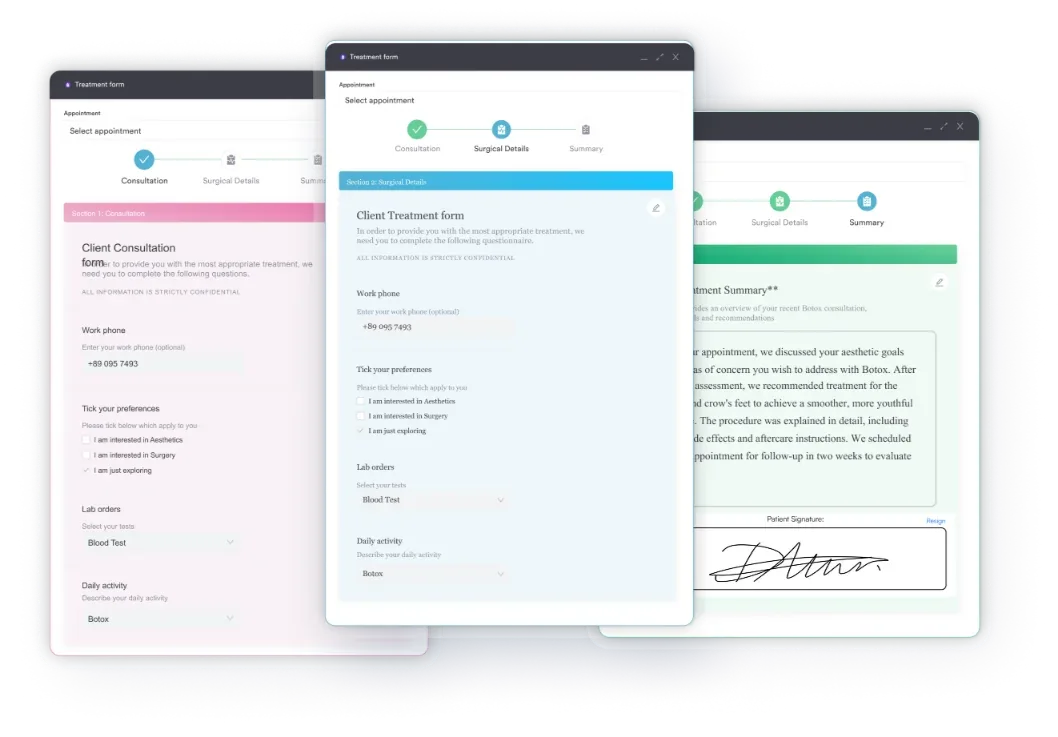
Using digital intake forms configured for surgical pre-assessment captures structured history data, imaging references, and consent documentation in a format that can be readily accessed during claim review. Practices relying on paper workflows for complex oncology procedures face significant retrieval challenges during audits.
When billing CPT 51580 with modifier -22 for increased complexity, attach a cover letter to the claim summarizing the specific factors that required additional surgeon time or effort. Reference the operative report page numbers. Payers need to see the connection between the documentation and the modifier before approving an upward adjustment.
Several major payers classify CPT 51580 as a once-in-a-lifetime procedure code. This reflects the clinical reality: a complete cystectomy is irreversible. Payers use this classification to deny repeat billing of the same code for the same patient, and to flag claims that appear to duplicate a prior surgical event. Medica and Medi-Cal (California Medicaid) both include CPT 51580 on their published once-in-a-lifetime procedure code lists.
What this means in practice for billing teams:
Reimbursement amounts vary by payer and year. For current Medicare reimbursement, use the CMS Physician Fee Schedule lookup tool to retrieve the current year’s payment rates by Geographic Practice Cost Index (GPCI) locality. CPT 51580 is a high-RVU surgical code; actual payment reflects both the physician work component and facility/anesthesia components billed separately. For precise RVU values, the FastRVU 2026 lookup tool provides current work, practice expense, and malpractice RVU breakdowns.
Surgical urology practices handling high-complexity cases benefit from a structured review process before claim submission. Comparing documentation requirements, modifier rules.
Linking CPT 51580 to an appropriate ICD-10-CM diagnosis code is essential for establishing medical necessity. The clinical record must document the diagnosis, and the operative indication must support it. The table below lists common ICD-10-CM codes used with CPT 51580, though the selection must always reflect the specific patient’s confirmed diagnosis.
When the indication is carcinoma in situ (D09.0), document the prior treatment history, including BCG therapy cycles and any recurrence, to establish why radical surgery rather than continued intravesical treatment was clinically appropriate. This documentation supports the medical necessity argument during payer review. Practices that integrate structured medical practice planning into their urology workflows are better positioned to manage the documentation demands of high-complexity oncology cases.
Those BCG cycles were billed as 51720, so the claim history already carries the dates and instillation counts a payer wants to see. Pull that record before you build the medical necessity argument.
Billing CPT code 51580 correctly requires precision at every step: the right diversion code, accurate modifier selection, linked ICD-10-CM diagnosis, and documentation that holds up to payer scrutiny across a 90-day global period.
Pabau’s automated billing workflows help urology and surgical practices reduce manual errors, track documentation completeness for complex surgical claims, and centralize the audit trail from pre-authorization through post-operative follow-up. To see how Pabau handles high-complexity claim submissions for practices like yours, book a demo.

Coding a diagnostic wrist arthroscopy claim? Diagnostic wrist arthroscopy billing guide clarifies why CCSD code W8830 is a sole-procedure designation, not a general arthroscopy code.
Why do frozen shoulder claims get denied? Frozen shoulder manipulation billing guide covers the two most common denial causes for CCSD code W9112 claims.
Want to streamline claim submission for the AAPC code range? AAPC’s CPT code lookup tool provides descriptor-level detail for the full 51500-51597 excision procedures range.
CPT 51580 describes a complete cystectomy with ureterosigmoidostomy or ureterocutaneous transplantations. The entire bladder is removed and urine is diverted either into the sigmoid colon or through an abdominal wall stoma into an external collection bag. Maintained by the AMA under Excision Procedures on the Bladder (51500–51597).
51580 creates an external ostomy; the patient cannot void naturally. 51596 is used when a neobladder is constructed from intestinal tissue, allowing urethral voiding. The key differentiator: external bag = 51580, urethral voiding = 51596.
A 90-day global period applies. All routine post-operative care is bundled into the surgical fee for 90 days after the procedure. You may bill services for unrelated conditions separately with appropriate modifiers.
For several payers, yes. Medica and Medi-Cal both list 51580 as once-in-a-lifetime. Payers will typically deny duplicate claims for the same patient automatically. Verify with the patient’s specific plan before the procedure.
Common codes include C67.0–C67.9 (malignant neoplasm of bladder by location) and D09.0 (carcinoma in situ) when cystectomy follows failed intravesical therapy. Always select the most specific code that imaging and pathology support.
There is no single cystectomy CPT code. Complete cystectomy is reported across the 51570–51597 range by diversion type: 51570 (no diversion), 51590 (ileal conduit), 51595 (continent pouch), and 51596 (neobladder), with 51580 covering ureterosigmoidostomy or ureterocutaneous diversion. Match the code to the diversion documented in the operative report.