HCPCS Code G0160: OT maintenance program billing guide
What is HCPCS code G0160? HCPCS code G0160 reports skilled occupational therapy ...

Last Updated: Oct 19, 2026

CPT Code 38241 describes autologous hematopoietic progenitor cell (HPC) transplantation, where a patient’s own cells are harvested and reinfused.
38241 differs from CPT 38240 (allogeneic transplantation per donor): 38241 is always the autologous code, billed per infusion event.
Prior authorization is mandatory for virtually all payers; missing it is the single most common denial reason for transplant billing.
Pabau’s claims management software helps transplant center billers track prior auth status, modifier requirements, and claim submission timelines across payers.
CPT Code 38241 is the code for autologous hematopoietic progenitor cell (HPC) transplantation — reinfusion of a patient’s own previously collected stem cells after a myeloablative or reduced-intensity conditioning regimen. It covers the infusion phase only; cell collection is billed separately, and it is reported per infusion event, not per donor.
According to the American Medical Association (AMA), CPT Code 38241 falls under the Surgery section, Hemic and Lymphatic Systems, within the Transplantation and Post-Transplantation Cellular Infusion Procedures range (38240-38243). The full descriptor reads: Hematopoietic progenitor cell (HPC); autologous transplantation.
In clinical terms, 38241 covers the infusion phase of an autologous transplant. The patient’s own hematopoietic stem or progenitor cells are collected beforehand (a separate billable service) and later reinfused following myeloablative or reduced-intensity conditioning. Because the donor and recipient are the same person, there is no per-donor distinction, which is why the code is billed per infusion event rather than per donor as with allogeneic procedures.
38241 applies whenever the transplanted cells are autologous, regardless of the collection source (bone marrow, peripheral blood, or umbilical cord blood from the same patient). It does not apply to donor-derived cells. Use Pabau’s claims management software to set up payer-specific claim rules that flag autologous vs. allogeneic code assignments before submission.
The code is also distinct from post-transplantation cellular infusion procedures. If a patient receives a boost infusion after the initial transplant to support hematopoietic recovery, that event may warrant a separate CPT from the 38240-38243 range depending on cell type and source. Document the clinical scenario clearly so the coder can distinguish an initial transplant from a subsequent supportive infusion.
The most common miscoding in this code family is swapping 38240 and 38241. The difference is clinically fundamental and payer-audited.
A key operational detail: 38240 specifies “per donor,” which matters when a single patient receives cells from multiple donors in the same encounter. CPT Code 38241 has no such per-donor qualifier because the source is always the patient. Bill one unit of 38241 per infusion event. If cells are infused on multiple calendar days, each infusion date supports a separate claim line.
Billers at transplant centers using IVF procedure coding workflows will recognize a similar structural logic: distinct collection and infusion phases, each with its own CPT, each requiring clear date-of-service documentation.
CPT Code 38241 covers only the transplantation (infusion) step. The collection of autologous cells is billed separately using one of two companion codes, depending on the harvest method.
Both 38206 and 38241 appear on the same patient account, but they are not billed on the same date of service. The collection occurs days to weeks before conditioning begins. Confirm the claim submission reflects the correct date for each service. Bundling errors where collection and infusion dates are transposed trigger automatic edits at the payer level.
HCPCS Level II codes S2140 and S2142 describe related HPC services for certain non-Medicare payers. However, per Blue Cross Blue Shield of Mississippi medical policy, both S2140 and S2142 appear in the non-covered table for some hematopoietic cell transplantation indications. Check each commercial payer’s coverage policy before submitting these codes, and do not assume they substitute for CPT 38241 with Medicare.
When coding for practices that also handle complex procedural documentation across multiple specialties, coaching CPT code billing workflows offer a useful parallel for understanding how payer-specific coverage tables affect code selection.
Document the infusion start and stop times in the clinical record for every CPT 38241 encounter. Several MACs and commercial payers use infusion duration as an audit trigger; records that lack time documentation are flagged for medical review and frequently result in post-payment recovery demands.
Family practices run these tests weekly, and GP clinic software keeps the results, referrals, and recalls connected.
Medical necessity for CPT Code 38241 must be supported by a covered ICD-10-CM diagnosis. Payers use diagnosis codes to determine whether the transplant indication falls within covered benefit criteria. Submitting 38241 with an unrecognized or insufficiently specific ICD-10 code is among the top reasons for initial claim denial.
The CMS Medicare Coverage Database Article A52879 explicitly lists CPT 38241 as a Group 1 code for autologous progenitor cell transplantation in recurrent or refractory neuroblastoma. Additional covered diagnoses appear across several ICD-10 chapters.
Always code to the highest specificity available. C90.00 (multiple myeloma not having achieved remission) will be treated differently by payers than C90.01 (in remission) for autologous transplant indications. The clinical staging documentation in the medical record must match the specificity level of the submitted code. A bone marrow biopsy, billed under CPT 38221, is one of the encounters that documents staging and remission status.
Diagnosis choice only carries that weight where the code has a Medicare benefit category behind it. Medicare treats HCPCS code A4490 as statutorily non-covered, so no diagnosis on the claim makes it payable.
For inpatient facility billing, CMS confirms the following ICD-10-PCS procedure codes crosswalk to CPT/HCPCS 38241: 30230C0 (Transfusion of Autologous Hematopoietic Stem/Progenitor Cells, Genetically Modified into Peripheral Vein, Open Approach), 30230G0 (Transfusion of Autologous Bone Marrow into Peripheral Vein, Open Approach), and 30230Y0 (Transfusion of Autologous Other Therapeutic Substance into Peripheral Vein, Open Approach). For practices managing complex ICD-10 diagnosis code references workflows across settings, confirming the outpatient vs. inpatient code distinction is critical before submission.

Pabau’s claims management tools help transplant center teams track prior authorization status, flag missing documentation, and submit clean claims the first time. See how it works for high-complexity oncology billing.

CPT Code 38241 is a surgical procedure code, which means modifier rules differ from E/M or infusion codes. Not all modifiers are appropriate, and using the wrong one can delay payment or trigger a medical review.
Place of service matters for modifier interpretation. CPT 38241 is performed in a facility (inpatient hospital, BMT unit, or authorized outpatient infusion center). Professional and technical component distinctions do not apply to this global surgery code, but the billing entity (hospital vs. transplant program physician) determines whether the professional component is billed separately.
For transplant centers that also manage outpatient hematology workflows.
Medicare reimbursement for CPT Code 38241 is set annually through the Physician Fee Schedule (PFS). Because this is a high-complexity surgical procedure performed in a facility setting, the payment reflects the professional component of physician work; the facility fee is billed separately by the hospital or transplant center.
Per the CMS Physician Fee Schedule lookup tool, you can query current work RVU (wRVU), practice expense RVU, and malpractice RVU values for 38241 by locality. Reimbursement rates vary by geographic adjustment factor (GAF), and the 2026 fee schedule values reflect CMS’s annual updates. Always use the current-year PFS data when projecting revenue for transplant program planning.
The CMS Carriers Manual confirms that HCPCS code 38241 is entered in block 24D of Form CMS-1500 for professional billing, which remains the standard submission format for physician services associated with the transplant encounter.
Commercial payer rates for 38241 vary significantly and are almost universally negotiated through transplant center contracts rather than set by a fee schedule. Blue Cross Blue Shield entities maintain individual medical policies for hematopoietic cell transplantation.
BCBS Florida’s medical policy reflects the AMA’s 2026 annual CPT coding updates for the hematopoietic cell transplantation code family. Transplant centers billing BCBS FL should confirm the updated descriptor language is reflected in their charge capture documentation to avoid claim edits triggered by descriptor mismatches in payer adjudication systems.
For practices managing billing across functional medicine and oncology-adjacent specialties, the payer policy variability for transplant codes underscores why specialty-specific billing protocols should be maintained separately from general practice billing workflows.
Run a payer matrix for CPT 38241 before the transplant episode begins. Confirm prior authorization approval numbers, covered ICD-10 diagnosis codes, and any step-therapy or failure-of-prior-treatment requirements. Transplant denials are difficult to overturn on appeal because payers require prospective authorization, not retrospective justification.
Insufficient documentation is the second most common reason for 38241 claim denials, after missing prior authorization. Payers conducting post-payment audits look for specific clinical elements that were present on the date of service.
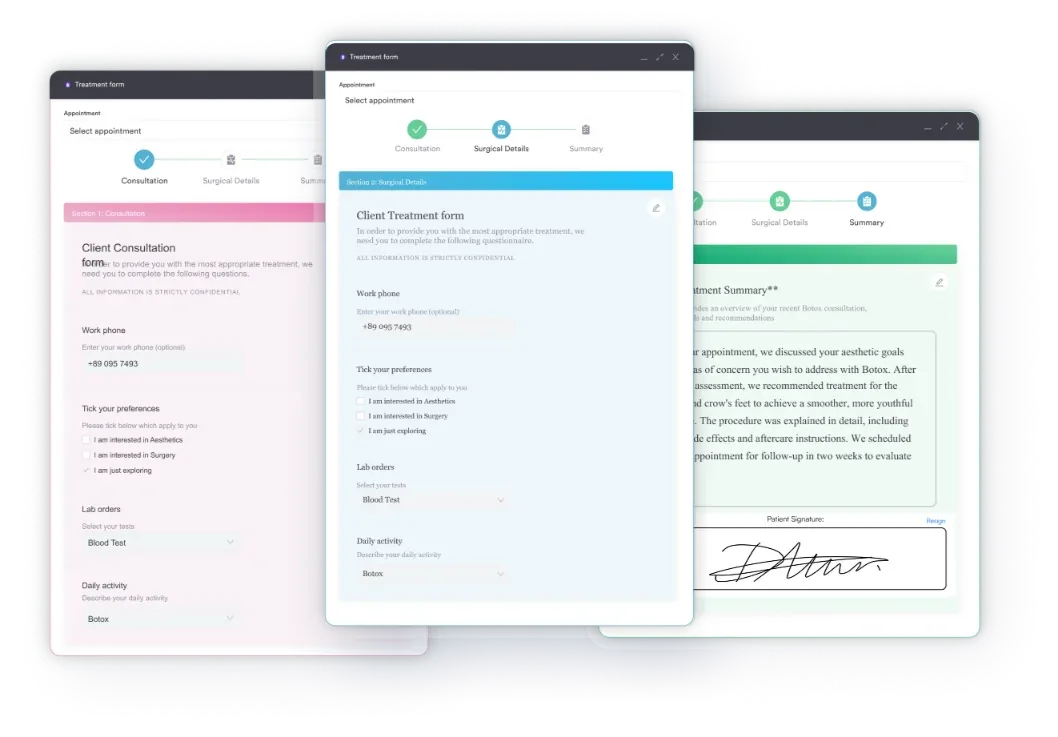
Using digital forms for structured consent and pre-procedure documentation reduces the risk of incomplete records at audit time. Structured templates capture the required clinical data points consistently across providers within a transplant team.
For practices where HIPAA compliance requirements govern documentation retention, transplant records have extended retention obligations under some state laws beyond the standard HIPAA floor because they involve high-cost, auditable procedures.
Transplant billing has a higher administrative burden than most surgical services because of the multi-day clinical episode, multiple companion codes, and mandatory prior authorization requirements. A structured pre-submission workflow reduces first-pass denial rates substantially.
Transplant programs that use prescription management tools integrated with their clinical documentation systems benefit from tighter links between the conditioning protocol orders and the billing claim, reducing discrepancies that auditors flag.

For teams building denial management workflows across multiple code families, reviewing how ICD-10 diagnostic coding specificity requirements affect coverage determinations provides useful conceptual grounding for the same issues that appear in transplant billing.
Because 38241 covers only the infusion, a clean claim depends on sequencing it correctly against the collection code and the covered diagnosis. Here is how a typical autologous transplant episode maps to codes and dates of service, using only the structural rules covered above (confirm every figure against your own payer policy and the current CMS Physician Fee Schedule):
Autologous HPC transplantation is among the most documentation-intensive and financially significant procedures a transplant center bills. CPT Code 38241 covers only the infusion event. Getting the companion codes right, securing prior authorization prospectively, matching ICD-10 specificity to payer coverage tables, and maintaining audit-ready records are the four levers that determine whether a claim pays or triggers a denial cycle.
Practices looking to reduce administrative burden across their oncology and high-complexity billing workflows can explore how oncology-capable EMR software structured around clean claims submission reduces rework and accelerates reimbursement. To see how Pabau supports billing documentation and claims workflows for complex clinical settings, book a demo.

Billing a gynecological surgery instead? CCSD code Q0880 guide covers billing a complex hysterectomy for ovarian tumor cases in UK private practice.
Billing an outpatient gynecology procedure? CCSD code Q2020 guide covers billing endometrial biopsy and aspiration procedures, including the pipelle technique.
Billing a dermatology procedure instead? CCSD code S0606 guide covers billing photodynamic therapy for malignant skin lesions across up to three sessions.
CPT Code 38241 is the procedural code for autologous hematopoietic progenitor cell (HPC) transplantation, where a patient’s own previously collected stem or progenitor cells are reinfused following a conditioning regimen. It covers the infusion phase only; cell collection is billed separately under CPT 38206 or 38232.
CPT 38240 is for allogeneic transplantation (donor-derived cells) and is billed per donor, while CPT 38241 is for autologous transplantation (patient’s own cells) and is billed per infusion event. Swapping these codes is a frequent audit finding because allogeneic and autologous procedures have different payer coverage criteria and reimbursement rates.
Modifier 52 applies for reduced services, Modifier 53 for a discontinued procedure, and Modifier 22 for significantly increased procedural work (such as a prolonged infusion due to a reaction). Modifier 76 is used for a repeat autologous transplant procedure. Modifiers must be supported by documentation in the clinical record.
Required documentation includes the transplant indication and underlying diagnosis, cell collection records linked to the companion code, the conditioning regimen protocol, infusion start and stop times, supervising physician identity, and a signed informed consent form. Most payers also require evidence of prior authorization obtained before the infusion date.
Commonly covered diagnoses include C90.00 (multiple myeloma), C83.30 (diffuse large B-cell lymphoma), C81.90 (Hodgkin lymphoma), C91.00 (acute lymphoblastic leukemia), and C92.00 (acute myeloblastic leukemia). CMS Article A52879 specifically lists neuroblastoma codes as Group 1 covered diagnoses. Always verify payer-specific coverage lists before submitting.
Yes. Prior authorization is required by virtually all Medicare Advantage plans and commercial payers for CPT 38241. Authorization must be obtained before conditioning begins; retroactive authorization requests after the infusion has occurred are rarely approved, and appeals for missing prior auth have a low success rate across most payer types.