



HCPCS code E0198: Water pressure pad billing guide
HCPCS code E0198 is a water pad for a standard mattress HCPCS code E0198 is the ...

Last Updated: Oct 13, 2026

CPT code 31579 describes laryngoscopy, flexible or rigid telescopic, with stroboscopy – used to evaluate voice disorders by examining the vocal folds under strobe light.
CPT 31575 and CPT 31579 cannot be billed together on the same encounter. When stroboscopy is performed, 31579 alone captures the complete service.
Medicare briefly required in-room physician supervision for SLP-furnished CPT 31579 starting January 1, 2011, then reversed that rule the same year. Diagnostic use today has no blanket CMS presence requirement, though state licensure and MAC LCDs may still apply.
Practice management software like Pabau helps ENT and speech therapy practices track modifier requirements, document medical necessity, and reduce denials on procedure codes like 31579.
CPT code 31579 describes laryngoscopy, flexible or rigid telescopic, with stroboscopy: an endoscopic exam of the larynx that uses a stroboscopic light source to capture how the vocal folds vibrate. Otolaryngologists and speech-language pathologists bill it to diagnose voice disorders, evaluate vocal fold lesions, and document treatment outcomes.
This guide covers how CPT 31579 differs from related laryngoscopy codes, the modifiers and ICD-10 pairings payers expect, and what Medicare requires for reimbursement.
Getting the code right the first time avoids denied claims and unnecessary rework. Practices using claims management software can flag modifier and bundling errors on CPT 31579 before a claim goes out.
According to the American Medical Association (AMA), CPT code 31579 describes: Laryngoscopy, flexible or rigid telescopic, with stroboscopy. It falls within the Endoscopy Procedures on the Larynx range (CPT 31505-31579) and was revised as part of the 2017 CPT restructuring that also introduced codes 31572-31574. The procedure covers both flexible and rigid telescopic approaches, as long as stroboscopic light is used during the examination.
Stroboscopy is not a synonym for flexible laryngoscopy. The distinction matters for billing. A standard diagnostic flexible laryngoscopy without strobe light is CPT 31575. Once a stroboscope is attached and the clinician uses it to assess vocal fold mucosal wave patterns, the correct code becomes CPT code 31579. Reporting both on the same encounter is a bundling violation.
CPT 31579 is used when a clinician needs dynamic assessment of vocal fold vibration, not just structural visualization. The stroboscopic light creates a slow-motion effect that reveals mucosal wave patterns invisible under continuous light. This makes it the standard diagnostic tool for voice disorders in both otolaryngology and speech-language pathology settings.
Common clinical indications documented in the literature and recognized by payers include:
For speech therapy software practices billing under Medicare Part B, medical necessity documentation must align with the indications listed in Local Coverage Determination L33580. A diagnosis code alone is not sufficient. The note must explain why stroboscopic assessment was specifically required.
The 31575 vs. 31579 distinction is where most ENT and SLP billing errors originate. The AAPC’s Otolaryngology Coding Alert is explicit: do not report CPT code 31575 with CPT code 31579 on the same encounter. When stroboscopy is performed, 31579 is the comprehensive code. It includes everything 31575 covers plus the stroboscopic evaluation.
One practical note on instrument choice: CPT code 31579 is intentionally broader than 31575. It covers both flexible fiberoptic and rigid telescopic approaches as long as stroboscopy is used. A clinician using a rigid telescope with a strobe attachment bills 31579, not 31575 with a modifier.
Cardiopulmonary testing produces results that need a home — medical lab software attaches them straight to the patient record.
Medicare Part B’s supervision rule for CPT 31579 has changed since it first appeared. CMS assigned in-room, or personal, supervision to SLP-furnished 31579 and 92511 effective January 1, 2011, then reversed that decision effective October 1, 2011 after objections from ASHA and the American Academy of Otolaryngology-Head and Neck Surgery (AAO-HNS).
A 2012 CMS clarification set supervision for diagnostic use of these codes by SLPs to “concept does not apply.” Direct, or incident-to, supervision, meaning a physician in the office suite rather than the exam room, applies only when an SLP furnishes 31579 or 92511 for therapeutic purposes. The American Speech-Language-Hearing Association (ASHA) covers the current SLP coding rules in more detail.
State licensure boards and individual Medicare Administrative Contractor (MAC) Local Coverage Determinations can still set their own supervision or ordering requirements for CPT 31579, so confirm the current LCD and state rules before an SLP performs the exam independently. A standardized medical referral form that captures the ordering physician’s details up front makes this easier to document consistently.
For private payers, the rule varies. Most commercial insurers follow their own policies, and in-room presence is not universally required. The Aetna Clinical Policy Bulletin on Videostroboscopy (CPB 0305) outlines Aetna’s specific coverage criteria, which differ from Medicare’s. Always verify with the individual payer before scheduling a session.
When an SLP furnishes CPT 31579, document the ordering or supervising arrangement required by the applicable Medicare Administrative Contractor and confirm it against the current LCD, plus the medical necessity for the exam. A single line covering both is often enough: ‘Ordered by Dr. [Name] under the practice’s SLP plan of care, with medical necessity documented per LCD L33580.’
Modifier selection depends on clinical circumstances and payer requirements. The following modifiers are commonly used with CPT code 31579:
The -26 and -TC split is particularly relevant for hospital outpatient departments and ambulatory surgical centers where the facility owns the stroboscopy tower. In a private ENT or voice practice where the physician owns the equipment and provides the professional service, bill the global code (no modifier) for the full reimbursement. Good patient record management that captures the setting accurately before claim submission prevents modifier errors at the source.
This logic extends beyond CPT: an incorrect modifier or unit count causes denials whether the underlying code is a CPT code like 31579 or an HCPCS code such as J2327.
Reimbursement for CPT code 31579 varies by payer, geographic location, and whether the global, professional, or technical component is billed. Medicare reimbursement is calculated using the Resource-Based Relative Value Scale (RBRVS). The CMS Physician Fee Schedule lookup tool provides the current year’s allowable amounts by locality and setting.
The Bastian Voice Institute, a recognized specialist voice center, lists a common new-patient billing combination of CPT 99204 + CPT code 31579. This pairing reflects a typical first visit where both an E&M service and the stroboscopic examination occur on the same day.
When billing an E&M code alongside 31579, ensure the E&M is separately documented and medically necessary beyond the procedure alone. A -25 modifier on the E&M code signals to the payer that it represents a significant, separately identifiable service. The same logic underpins what is medical billing as a discipline: pairing the right codes and modifiers so the claim reflects the actual encounter.
Private payer rates typically exceed Medicare allowables, but some payers follow Medicare fee schedules as their benchmark. Verify your payer contracts to confirm the applicable rate before assuming a standard allowable.
Practices without contracted rates may face significant variation. Using accurate HIPAA-compliant billing workflows that capture payer-specific rules prevents delayed payments on these higher-value procedure codes. Sound revenue cycle management ties this fee-schedule tracking to the rest of the claim lifecycle.

Pabau’s claims management tools help otolaryngology and speech therapy practices track modifier requirements, attach supporting documentation, and submit cleaner claims for codes like CPT 31579 – so you spend less time on rework and more time with patients.

Every claim for CPT code 31579 requires at least one ICD-10-CM diagnosis code that supports medical necessity. The diagnosis must match the clinical reason for ordering the examination, not just a symptom. Specificity matters across all specialty billing.
LCD L33580, which covers speech-language pathology services under Medicare, specifies which diagnoses support medical necessity for instrumental assessments like videostroboscopy. Coders should cross-reference the active version of this LCD before claim submission. Practices that standardize on speech therapy SOAP notes make it easier for clinicians to select a specific diagnosis code at the point of service rather than relying on retrospective abstraction.
Clean documentation for CPT code 31579 does four things: it establishes medical necessity, describes the procedure performed, records the findings, and (when applicable) confirms the ordering or supervising physician’s involvement. Missing any of these elements creates a denial or an audit vulnerability.
A compliant videostroboscopy note for CPT 31579 should include:
Video recordings and detailed procedure notes count as protected health information, so store them in the same secure, audited record system as the rest of the chart. A HIPAA privacy policy template gives practices a starting point for the data-handling policy this requires.
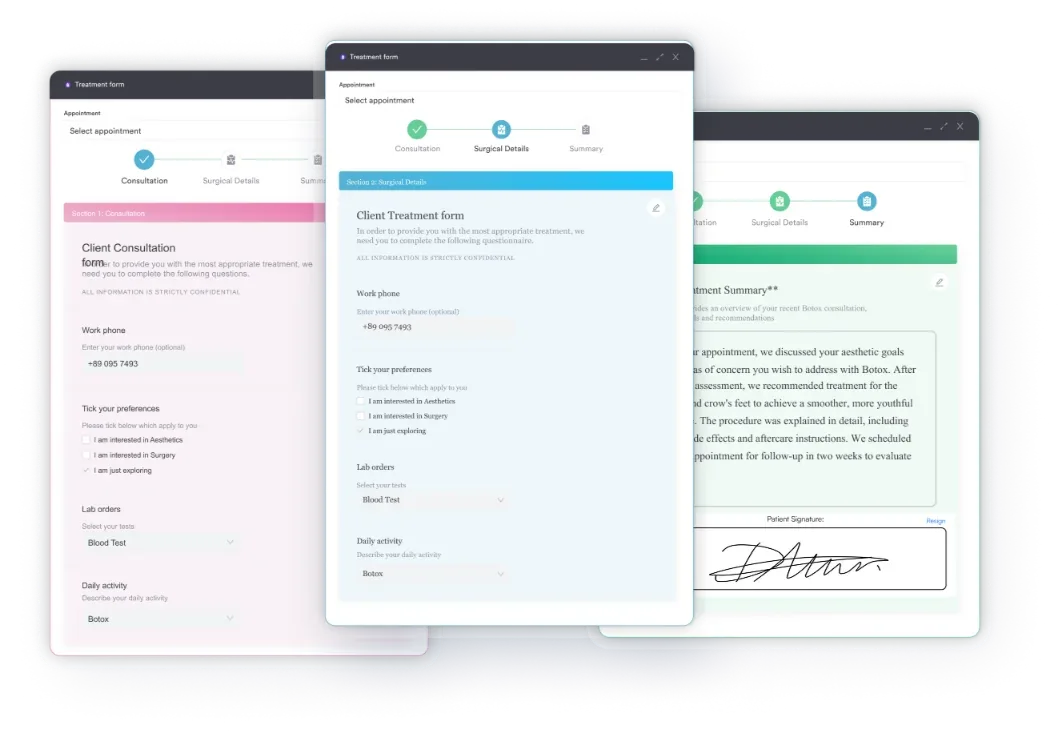
Using structured digital intake forms and templated procedure notes reduces missing documentation. When clinicians work from a consistent stroboscopy note template, every required element gets captured at the point of care rather than reconstructed later from memory, whether the visit is billed under CPT 31579 or a diagnosis like N29.
Bill CPT 31579 only when the stroboscopic examination was clinically indicated and performed, and the findings are documented in detail. A note that says ‘laryngoscopy performed, normal findings’ without describing mucosal wave characteristics does not support the medical necessity of the stroboscopic component and will not withstand a payer audit.
ENT and voice practice billing rarely involves CPT 31579 in isolation. Each related laryngoscopy CPT code below appears in these encounters and carries its own bundling rules and sequencing. For practices billing across multiple specialties, the AAPC Codify CPT lookup provides bundling edits alongside code descriptors. Same-date-of-service bundling logic shows up well beyond otolaryngology.
The relationship between CPT 92507 (speech therapy treatment) and CPT code 31579 deserves particular attention for SLP practices. Billing both on the same day is generally acceptable when the assessment and the therapy session are conducted as separate, distinct encounters with independent documentation. A single note covering both is a bundling flag.
An SLP who also evaluates speech sound production reports CPT code 92522, and Medicare Part B expects the GN therapy modifier there too. When language comprehension and expression were formally evaluated at the same visit, bill 92523 instead, because NCCI edits bundle the pair.
CPT 31579 is a high-specificity code with billing complexity: a hard bundling prohibition with CPT 31575, SLP supervision rules that depend on whether the use is diagnostic or therapeutic, payer-specific coverage policies that diverge from Medicare, and documentation standards that go beyond a simple “procedure performed” note. Getting this right requires accurate intake, templated procedure documentation, and claim scrubbing that catches modifier errors before submission. Two practices can bill the same encounter at a different visit level, and the note settles which was right. A retroactive authorization is rarely granted, so the check belongs before the appointment.
Pabau helps ENT and voice practice teams build procedure-specific documentation workflows, attach supporting notes to claims, and track denial patterns by code. To see how Pabau handles billing workflows for specialty procedure codes, book a demo with the team.

Billing a different endoscopic procedure? CCSD code H2503 guide covers the ancillary codes and insurer authorization rules for therapeutic sigmoidoscopy claims.
Coding a colorectal surgery instead? CCSD code H3390 guide covers billing for the reversal of Hartmann’s procedure, a demanding colorectal operation.
Managing a speech therapy practice? Speech therapy software from Pabau helps SLP practices handle scheduling, documentation, and claims workflows in one platform.
CPT code 31579 covers laryngoscopy, flexible or rigid telescopic, with stroboscopy – an endoscopic examination of the larynx using a stroboscopic light source to assess vocal fold mucosal wave patterns. It is billed by otolaryngologists and speech-language pathologists for voice disorder diagnosis, vocal fold lesion evaluation, and pre/post-treatment documentation.
CPT 31575 covers standard flexible diagnostic laryngoscopy without stroboscopy, while CPT 31579 covers flexible or rigid telescopic laryngoscopy with stroboscopy. The two codes cannot be billed together on the same encounter. When stroboscopy is performed, CPT 31579 is the correct and comprehensive code.
Yes, Medicare Part B covers CPT 31579 when medical necessity is documented and the claim includes a supporting ICD-10 diagnosis code. CMS does not require a physician to be physically present for diagnostic use by an SLP, since that in-room rule applied only briefly in 2011 before being reversed. State licensure rules and the applicable MAC LCD may still set their own supervision requirements.
Common modifiers include -26 (professional component, used when the physician bills separately from the facility), -TC (technical component, used by the facility), -52 (reduced services, when the procedure was partially completed), and -59 or -XS (distinct procedural service, when billing alongside another procedure that would otherwise appear bundled).
No. CPT 31575 and CPT 31579 cannot be billed on the same encounter. CPT 31579 is the comprehensive code when stroboscopy is used, and it includes all components of the flexible laryngoscopy. Reporting both codes is a bundling violation flagged by AAPC’s Otolaryngology Coding Alert.
Common ICD-10 pairings include R49.0 (dysphonia), J38.1 (polyp of vocal cord and larynx), J38.2 (nodules of vocal cords), J38.00 (paralysis of vocal cords, unspecified), J38.3 (other diseases of vocal cords), and C32.0 (malignant neoplasm of glottis). The diagnosis must reflect the specific clinical indication for the stroboscopic examination.
CPT code 31579 is the code for videostroboscopy – laryngoscopy, flexible or rigid telescopic, with stroboscopy. Use it whenever a stroboscopic light source assesses vocal fold mucosal wave patterns, whether the scope is flexible or rigid.



