

CPT code 48152: Whipple procedure without pancreatojejunostomy
CPT code 48152: Official description and procedure overview CPT code 48152 descr...

Last Updated: Nov 13, 2026
29240 is the CPT code for strapping of the shoulder, written in the AMA descriptor as "Strapping; shoulder (eg, Velpeau)". It reports adhesive or elastic strapping that a clinician applies to support the glenohumeral or acromioclavicular joint. It does not cover a cast, a splint, or a prefabricated orthosis.
The code carries a 000 global period under the Medicare Physician Fee Schedule. On the same date as an evaluation and management visit, modifier 25 goes on the E/M when that visit is significant and separately identifiable.
Let Pabau's smart automation suggest the right codes, reduce claim denials, and keep your practice compliant—effortlessly.
Automate repetitive tasks and focus on what matters most—your patients.
Reduce coding errors and ensure compliance with the latest regulations.
Clean claims, fewer denials, and faster reimbursements.
Powerful insights and reporting to help your practice thrive.
HIPAA compliant SOC 2 certified GDPR-compliant Trusted by 4,000+ clinics worldwide

CPT Code 29240 reports strapping of the shoulder (eg, Velpeau), not casting, splinting, or the supply of a prefabricated orthosis.
When 29240 shares a date with a significant, separately identifiable E/M visit, modifier 25 goes on the E/M code, not modifier 59 on 29240.
29240 carries a 000 global period, so a later reapplication is billed as a new 29240 line with no postoperative period to check.
The note needs a diagnosis linked to the claim line, the clinical indication, the technique, and the materials applied.
Pabau’s claims management submits 29240 claims electronically through the Claim.MD clearinghouse and tracks each claim’s status after it leaves the practice.
CPT Code 29240 is the CPT code for strapping of the shoulder, written in the AMA descriptor as Strapping; shoulder (eg, Velpeau). It sits in the Musculoskeletal System section of the AMA’s CPT code set, under Application of Casts and Strapping (codes 29000-29799).
The code covers one site (the shoulder) and one application type (strapping). It does not extend to casting, rigid splinting, or the supply of a prefabricated orthosis. Under the Medicare Physician Fee Schedule it carries a 000 global period, the indicator for a minor procedure with no postoperative days.
Shoulder strapping under 29240 means a clinician applies adhesive elastic tape, moleskin, or non-elastic strapping. It supports the glenohumeral joint, the acromioclavicular joint, or the surrounding soft tissue. It is a non-surgical, non-casting intervention performed at the visit. Strapping is conservative care. An AC joint dislocation that the surgeon opens and fixes is billed under 23550 instead.
Common clinical indications include the following conditions.
Strapping is distinct from a sling, a prefabricated orthosis, and rigid casting. It goes directly on the skin to limit range of motion or reduce mechanical stress on injured structures.
Several neighboring interventions fall outside 29240. Knowing the boundaries keeps the claim on the right code.
29240 sits within a family of strapping and casting codes. Picking the wrong one by anatomical site or application type is a frequent musculoskeletal coding error.
Other body sites have strapping codes of their own, such as 29530 for the knee. When the shoulder gets a supplied device instead of strapping, the device bills under its own HCPCS code, such as L3670.
Documentation failures drive many 29240 denials. Submitting a clean claim for this code means the clinical note holds each of these elements before the claim leaves the practice.
A note that says only “strapping applied to shoulder” falls short for most commercial payers and Medicare Administrative Contractors. The note has to show a clinician’s decision to strap, not just that a supply was used.
Payers expect a diagnosis code that justifies strapping as medically necessary. A chronic diagnosis with no acute component raises denial risk. The codes below are common pairings for 29240 claims.
When M75.100, a rotator cuff tear not specified as traumatic, is the only diagnosis, payers may deny 29240 as not medically necessary. Pair it with an acute injury code where the record supports one. A shoulder contusion with no documented side, for example, is S40.019A.
Medicare covers 29240 when medical necessity is established and the documentation holds up. Check with your Medicare Administrative Contractor (MAC) whether a Local Coverage Determination (LCD) applies in your jurisdiction. The CMS Physician Fee Schedule lookup tool gives current payment amounts by locality.
The main coverage points for 29240 under Medicare and commercial payers are below.
Practices that submit through the Claim.MD clearinghouse can track each 29240 claim’s status after submission. A rejected claim then surfaces while the visit details are still easy to confirm.
Billing 29240 on the same date as an evaluation and management (E/M) service triggers National Correct Coding Initiative (NCCI) edits. Because 29240 carries a 000 global, the evaluation that leads to the strapping is part of the procedure’s payment. A separate E/M is payable only when it is significant and separately identifiable.
Append modifier 25 to the E/M when it is significant and separately identifiable, documented separately from the strapping. Modifier 59 and the X-modifiers (XE, XS, XP, XU) are for procedure-to-procedure edits, so they do not unbundle an E/M from 29240. The strapping line itself needs no modifier for this pairing.
The four common same-day scenarios sort out as shown in the chart and table below.

The documentation must show why both services were performed and billed on the same date. A note that describes only the examination, with strapping mentioned in the plan, will not support modifier 25 on audit.
Before billing 29240 with a same-day E/M, check the note for two separate clinical paragraphs. One documents the evaluation findings and medical decision-making. The other documents the strapping technique, materials, and clinical rationale. If the note cannot be split cleanly, the E/M likely does not support modifier 25.
29240 carries a modest RVU total under the Medicare Physician Fee Schedule. Payment is low against the cost of quality athletic tape and elastic bandages. That makes modifier and bundling decisions financially meaningful for high-volume orthopedic and urgent care practices.
Pull the current-year work, practice expense, and malpractice RVUs for 29240 from the CMS Physician Fee Schedule lookup. The Medicare allowable equals the GPCI-adjusted total RVU multiplied by the annual conversion factor. The conversion factor changes every calendar year, so always use the current MPFS figure.
Non-facility payment (office or urgent care) is higher than facility payment (hospital or ASC). Practices billing from an office should use the non-facility practice expense RVU when they estimate expected payment.
29240 denials follow predictable patterns. Mapping each root cause to the matching medical billing denial codes helps billing teams fix and prevent them.
Effective denial management workflows for strapping codes include a pre-submission check. Confirm the diagnosis pointer, the modifier on any same-day E/M, and the place of service code. Claims that pass this check rarely come back as denials.
Most 29240 errors start at the point of coding: a missing modifier 25, an unlinked diagnosis, or a thin note. Your coders make those calls, so they need a complete record and a clear view of what happened to each claim.
Pabau, the practice management platform we build, keeps the clinical note, the diagnosis, and the claim on one patient record. Its claims management software submits the claim electronically through the Claim.MD clearinghouse, which scrubs it against payer rules on the way to the payer.
Pabau then tracks each claim’s status, so your team sees a rejection or denial as soon as it comes back. For orthopedic and sports medicine practices that strap shoulders every week, that cuts the time spent chasing and resubmitting low-value claims.
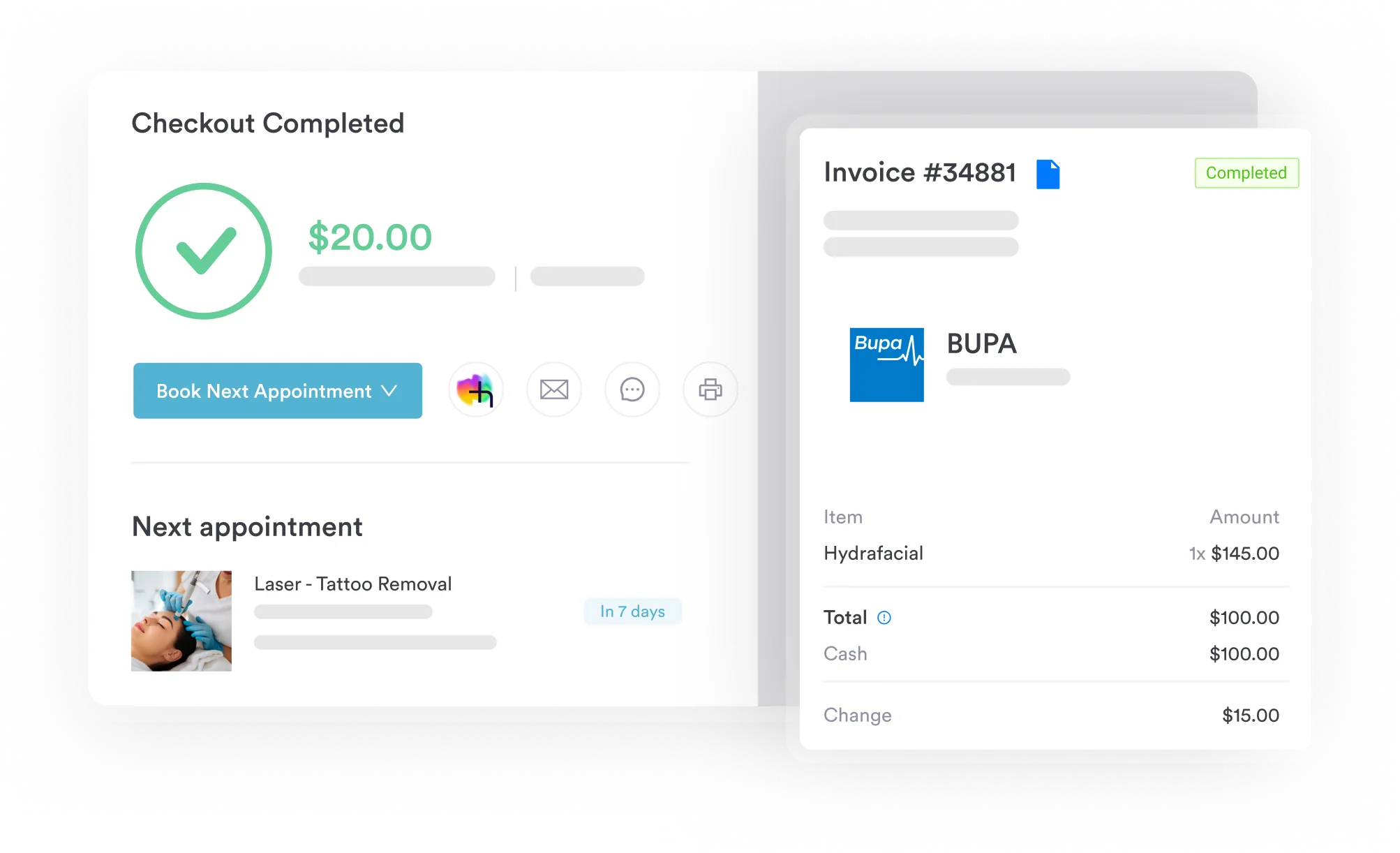

Pabau keeps the note, the diagnosis, and the claim on one patient record. Claims go out electronically through Claim.MD, and your team tracks each status in one place.

Shoulder strapping is a small-dollar code, so the claim has to be right the first time. Code the descriptor exactly, keep the strapping note separate from the evaluation, and put modifier 25 on the E/M only when the visit earns it.
The trade-off is a minute of documentation against rework. Two clear paragraphs in the note take little time at the visit, while a denied 29240 sends a low-value claim back through the queue.
Book a demo to see how Pabau submits and tracks strapping claims for orthopedic and urgent care practices.

Need a billing compliance framework for musculoskeletal procedures? Medical billing compliance guide covers documentation standards, payer audits, and best practices for procedure code accuracy.
Submitting 837P claims electronically for the first time? 837 file overview explains the transaction format, loop structures, and how clearinghouse submission works for CPT codes.
Looking for revenue cycle management guidance for your practice? Revenue cycle management explained outlines the end-to-end process from eligibility verification through payment posting.
CPT Code 29240 reports strapping of the shoulder (eg, Velpeau). It covers adhesive or elastic strapping that stabilizes the glenohumeral or acromioclavicular joint after an acute sprain, subluxation, or contusion. It does not cover rigid casting, splinting, or the supply of a prefabricated shoulder orthosis.
Yes. Append modifier 25 to the E/M when it is significant and separately identifiable, documented separately from the strapping. Modifier 59 and the X-modifiers are for procedure-to-procedure edits, so they do not apply to this pairing. Without modifier 25, the payer treats the E/M as part of the strapping and does not pay it separately.
Medicare covers CPT 29240 when medical necessity is documented and the clinical note meets payer standards. Coverage may be subject to Local Coverage Determinations from your Medicare Administrative Contractor. Verify current coverage rules and payment amounts using the CMS Physician Fee Schedule lookup tool for your locality before billing.
Under Medicare, strapping supplies (tape, bandage, padding) are generally included in the CPT 29240 procedure fee and cannot be billed separately. Commercial payer rules vary, and some plans permit separate supply billing under HCPCS A-codes. Confirm your payer’s supply billing policy before adding a supply line to a 29240 claim.



