HCPCS code P2031: Hair analysis (excluding arsenic)
HCPCS code P2031 covers hair analysis, minus arsenic HCPCS code P2031 is the Lev...

Last Updated: Oct 22, 2026

CPT Code 11400 covers excision of a benign lesion on the trunk, arms, or legs measuring 0.5 cm or less, including margins. Simple closure is bundled into the code.
Medicare reimburses CPT 11400 at different rates for facility and non-facility settings. Always verify current rates using the CMS fee schedule lookup tool.
Medicare coverage requires medical necessity. Cosmetic lesion removal without a qualifying ICD-10-CM diagnosis isn’t covered under CMS Billing and Coding Article A57482.
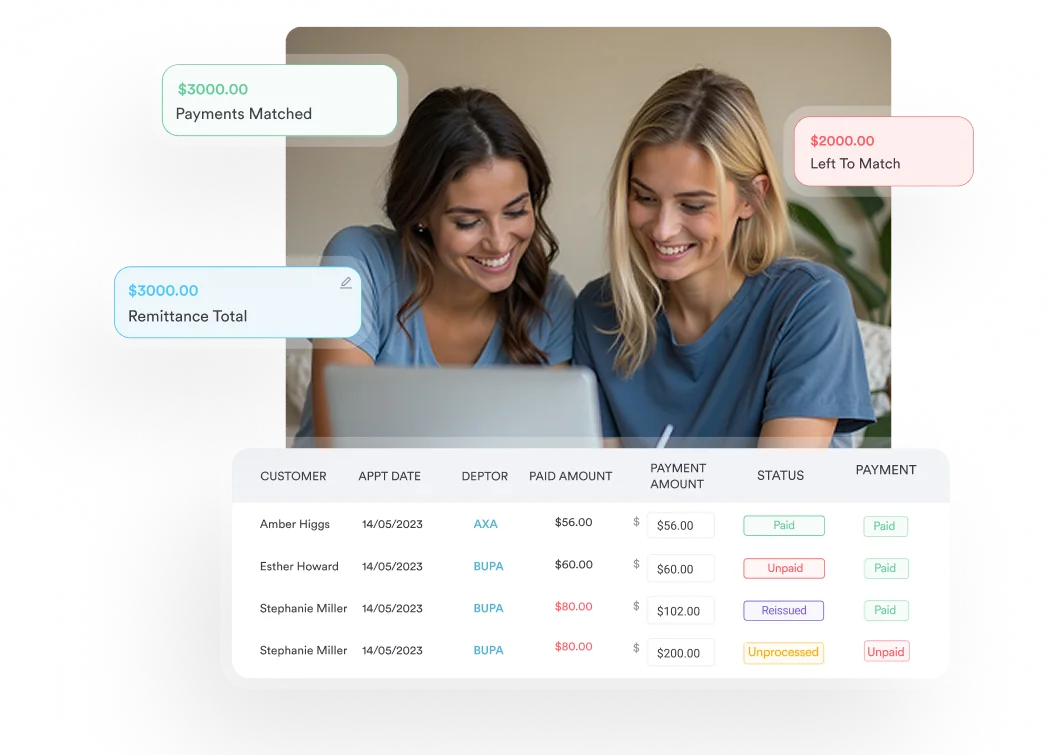
Pabau’s claims management software checks that CPT 11400 claims carry every required field before submission. A status dashboard then shows where each claim stands.
CPT code 11400 covers surgical excision of a benign lesion on the trunk, arms, or legs. The excised diameter, including margins, must measure 0.5 cm or less. Simple closure is bundled into the code, so it can’t be billed separately.
It’s also one of the most audited codes in dermatology billing. A missed modifier, an undocumented margin measurement, or a cosmetic removal billed as medically necessary can trigger a denial or a repayment demand.
CPT 11400 sits at the entry point of a six-tier code series across three anatomic families. Picking the right tier and backing it with solid documentation matters on every claim.
Dermatology and skin care practices using dermatology EMR software can automate several of these checks at the point of documentation. That closes the distance between the clinical encounter and a clean claim submission.
CPT code 11400 is defined by the American Medical Association (AMA). It covers excision of a benign lesion on the trunk, arms, or legs. The excised diameter, including margins, must measure 0.5 cm or less. Simple closure is bundled into this code and must not be billed separately.
Three criteria determine whether 11400 is the right code to use:
Simple closure means primary closure using sutures, staples, or adhesive strips. If the wound needs an intermediate or complex repair after excision, that repair code is separately billable. This distinction is a frequent source of bundling errors.
CPT 11400 is the smallest-lesion code in a six-code series for benign excisions on the trunk, arms, and legs. Each code maps to a specific lesion diameter range measured including margins. Selecting the wrong tier based on lesion size is one of the most common billing errors in this code family.
Note that the 11400 series does not include a code for 11405. The sequence jumps from 11404 to 11406. For lesions on the scalp, neck, hands, feet, or genitalia, the correct series is 11420 to 11426.
Face, ears, eyelids, nose, and lips use the 11440 to 11446 series. Lesions inside the mouth fall outside the skin excision series entirely. Excision of a mucosal lesion from the oral vestibule with simple repair is code 40812. Skin care practices seeing patients across multiple body sites should make sure their skin clinic software routes documentation to the correct code family by site.
Medicare reimburses CPT 11400 using the Resource-Based Relative Value Scale, or RBRVS. Total payment comes from three RVU components, multiplied by the annual conversion factor and adjusted for locality. The adjustment uses the Geographic Practice Cost Index, or GPCI.
The CMS fee schedule lookup tool provides the current, verified national rates for each locality. The figures below reflect 2026 national averages, and you should confirm them against your specific MAC locality before billing.
Use the FastRVU lookup tool to verify exact locality-adjusted totals for your MAC region before quoting or submitting claims.
The difference between facility and non-facility rates comes entirely from the Practice Expense RVU component.
In a non-facility setting (physician office, freestanding practice), the practice bears the overhead cost of supplies and equipment, so the PE RVU is higher. In a facility setting (hospital outpatient department or ambulatory surgical center), the facility bills separately for those costs, so the physician’s PE RVU is lower. The denial code on the remittance names the reason, and grouping by that reason turns rework into prevention. Under current evaluation and management rules, the counted elements changed but the need to show reasoning did not. The denial code on the remittance names the reason, and grouping by that reason turns rework into prevention. Under current evaluation and management rules, the counted elements changed but the need to show reasoning did not.
For CPT 11400, the payment drops by roughly $50 when the same procedure moves from a private office to an ASC or hospital outpatient department. The corrected 2026 national averages are about $127 in the office and $76 in a facility.
The place of service code on the claim, POS 11 for office or POS 22 for hospital outpatient, determines which rate applies. A POS code that doesn’t match where the procedure happened is an audit trigger.
Skin and reconstructive procedures generate detailed claims, so comparing the best plastic surgery software is worth the time.
A CMS Billing and Coding Article A57482 governs coverage for benign skin lesion removal under Medicare. It’s tied to LCD L35498, which sets the coverage indications and limitations.
A claim for CPT 11400 must be paired with an ICD-10-CM diagnosis code that establishes medical necessity. Cosmetic removal of a benign lesion without a qualifying diagnosis is explicitly excluded from Medicare coverage.
The most commonly paired ICD-10-CM codes for CPT 11400 claims include the following categories. Verify the specific codes against the current version of Article A57482, since covered diagnosis lists update annually.
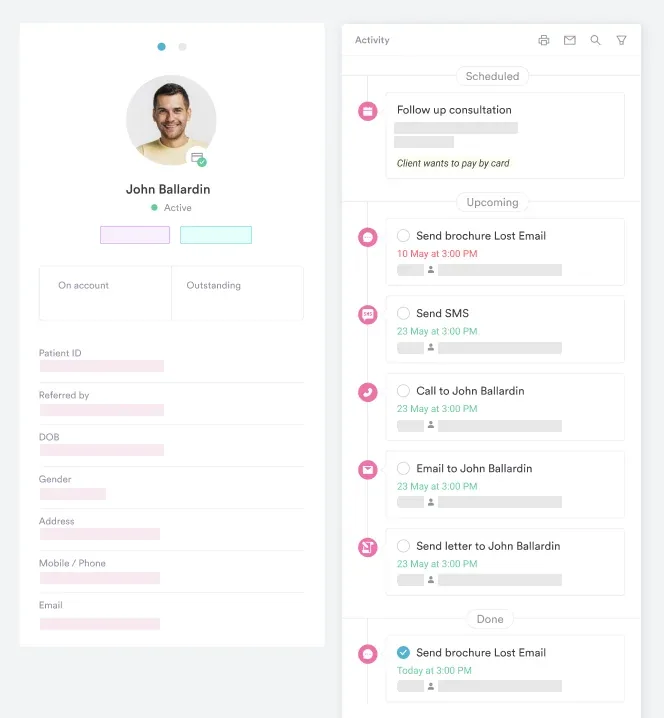
Storing and tracking patient diagnoses accurately is easier with a client records system. It ties diagnosis codes directly to the procedure documentation at the point of care.
Maintaining secure.
Modifier use for CPT 11400 depends on the clinical circumstances at the time of service. Incorrect modifier selection is one of the top reasons 11400 claims are returned for additional information or denied outright.
For example, a physician excises a 0.4 cm lesion on the forearm and a 1.5 cm lesion on the same arm during one visit. The claim reports 11400 for the smaller lesion and 11402 for the larger one. Modifier -59 goes on the second line to flag it as a distinct lesion.
Modifier -51 is often exempt for certain payers. Always check the payer’s modifier -51 exempt list before applying it. For Medicare, modifier -59 has been partially replaced by the X-modifiers, XE, XS, XP, and XU, for greater specificity when documenting distinct services.
Incomplete documentation is the top reason CPT 11400 claims get denied on a post-payment audit. Before you submit a claim, make sure the medical record covers each item below the way CMS expects.
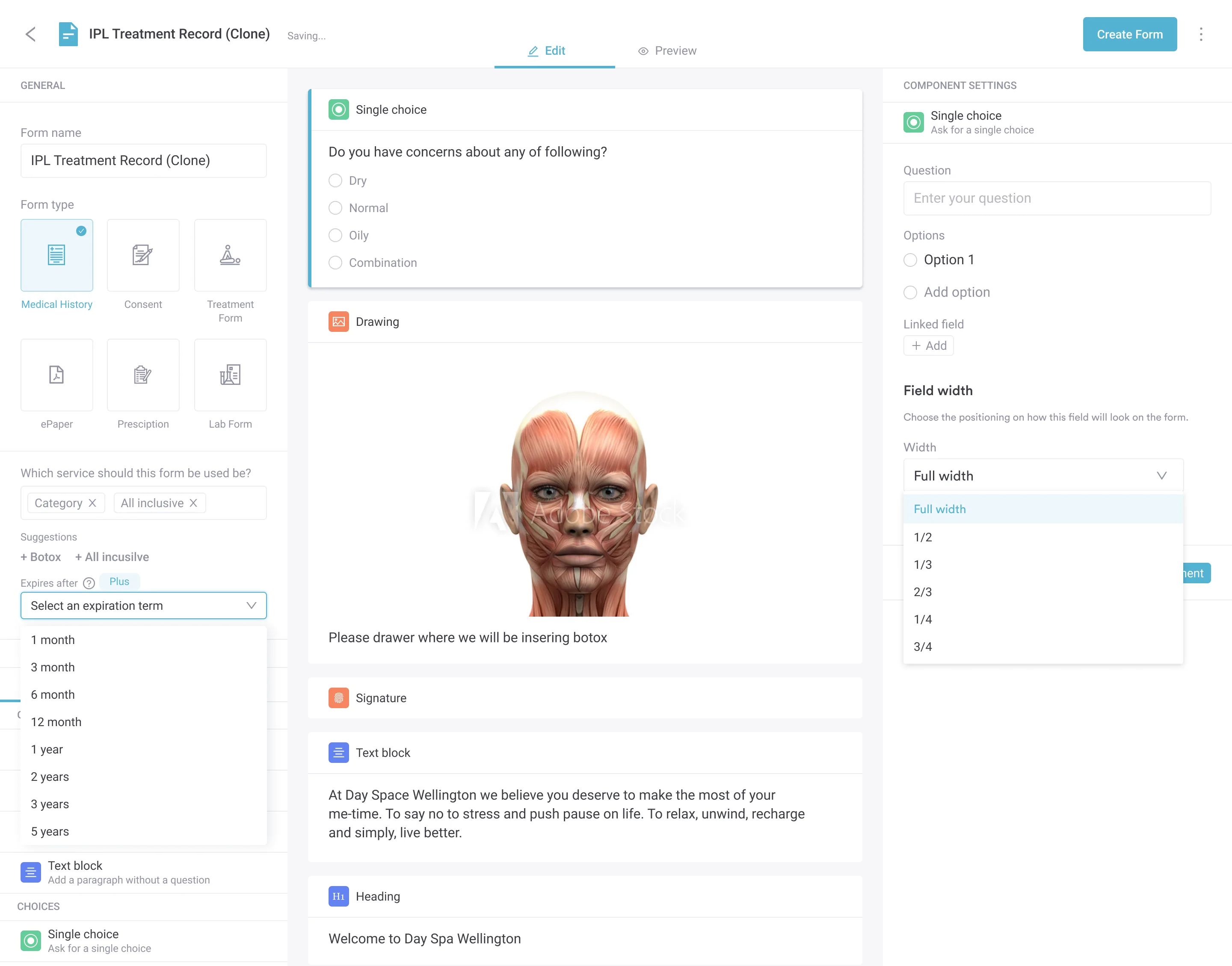
Using digital forms for procedure documentation captures these fields in a structured, retrievable format. That format holds up better than free-text notes, which can omit details in a rush.
Clear patient communication about expected scarring and recovery time also makes the consent conversation easier to document, and it cuts down on disputes later.
Documentation standards change once the encounter happens on video rather than in the treatment room. ICD-10 code L42 requires the note to record lesion morphology and distribution assessed over secure video, matched to a telehealth-specific E/M level.
Practices that also need to meet HIPAA compliance requirements can pair digital documentation with access controls to satisfy billing and privacy obligations at once.
If the excision leads to an unexpected complication, log it in an incident report form as well as the operative note. An auditor may ask for both records if a claim is reviewed. Practices that want to strengthen patient communication before the consent conversation can build a short script into the intake process.
Audit your operative note template for CPT 11400 against this checklist quarterly. A 10-minute review of 20 recent 11400 claims often reveals systematic omissions, such as consistently missing margin measurements. Left unaddressed, an omission like that would trigger a payer audit.
Most 11400 denials trace back to a small set of recurring mistakes. The table below maps each error to its root cause and the fix, so billing staff can use it as a pre-submission checklist.
Run a monthly CPT 11400 denial report filtered by denial reason code. CO-4 (incorrect modifier) and CO-197 (missing prior authorization) together account for a large share of excision denials. Addressing these two reason codes in your pre-submission workflow typically brings the fastest improvement in clean claim rates.
The most frequent code-selection error across all benign skin lesion billing is choosing between the 11400 series and CPT 17110. CPT 17110 covers destruction of benign lesions, up to 14 lesions.
These are fundamentally different procedures with different indications, documentation requirements, and reimbursement rates. Using the wrong code type is a common audit trigger.
Never bill CPT 11400 for a procedure that used cryotherapy or laser without a formal incision and specimen removal. Doing so misrepresents the procedure and constitutes upcoding, which carries significant Medicare audit liability.
Quick check before you code: did the physician remove the lesion intact for pathology, or destroy it in place? A specimen sent to pathology means excision, coded under the 11400 series. No specimen, because the tissue was frozen, burned, or lasered away, means destruction, coded under 17110 or 17111.
Reference pages like this one tell coders what CPT 11400 requires. What they don’t do is enforce those requirements at the moment of claim creation, and that’s where most 11400 denials start.
Practices using integrated practice management software like Pabau can close that risk in three practical ways. Pabau’s claims management feature is built for dermatology and aesthetics workflows, where excision procedures are high-volume and documentation requirements are specific.
Practices offering virtual follow-up visits for wound checks can route those through telemedicine software, so the encounter still ties back to the same billing record.
Dermatology teams also benefit from the right EMR software that ties clinical documentation directly to the billing workflow. That removes the need for manual re-entry into a separate system. When the operative note and the claim draw from the same data, transcription errors become far less likely.

Pabau’s billing tools help dermatology and skin care practices confirm every field the insurer needs is complete before a claim ships. Then they track its status until it’s paid.

CPT Code 11400 is simple to define but easy to bill incorrectly. Getting the lesion size, the medical necessity diagnosis, the closure rule, and the modifier right on every claim comes down to one thing. Good documentation captures those details at the point of care, not guesswork at the billing desk.
Pabau’s integrated clinical documentation and billing tools help skin care and dermatology practices connect the clinical encounter directly to a clean claim submission. To see how the platform handles excision procedure workflows end to end, book a demo with the team.

Billing a related dermatologic excision procedure? CPT Code 15781 covers segmental dermabrasion billing, with its own modifier and documentation rules.
Need the code for a related medical supply? HCPCS Code A4726 covers dialysis supply billing, including its own coverage and modifier rules.
Yes, if a patient has more than one separate lesion that each qualifies for 11400. Report one unit per lesion. Append modifier -59, or the matching X-modifier, to every unit after the first so the payer sees them as distinct sites.
In most states, yes. A physician assistant or nurse practitioner within their scope of practice can perform the excision. They can bill it under their own NPI, usually at 85% of the physician fee schedule rate. Billing “incident to” a supervising physician instead can recover the full rate, but only when Medicare’s incident-to conditions are met.
Medicare won’t pay for a removal that isn’t medically necessary. Have the patient sign an Advance Beneficiary Notice before the procedure. Then bill the claim with modifier -GA attached, and collect payment directly from the patient once Medicare denies it.
No. A shave biopsy that removes only part of a lesion for diagnosis falls under the biopsy codes (11102-11107), not excision. CPT 11400 applies only when the entire lesion is removed with margins.
You generally have 120 days from the remittance advice date to file a first-level redetermination request with your Medicare Administrative Contractor. The MAC then has 60 days to issue its decision.