CPT code 93503: Swan-Ganz catheter billing and modifiers
CPT code 93503: Official descriptor and procedure overview In the AMA CPT code s...

Last Updated: Oct 23, 2026
CPT Code 11404 covers excision of a benign skin lesion, including margins, on the trunk, arms, or legs. The excised diameter must measure 3.1 to 4.0 cm. That figure is the lesion plus the narrowest margin of normal tissue taken on each side. It decides which of the six 11400-series tiers applies.
Below you’ll find the official descriptor, 2026 Medicare rates, the RVU breakdown, modifiers, ICD-10-CM pairings, documentation requirements, and CCI bundling rules.
In the code book the descriptor reads: excision, benign lesion including margins, except skin tag unless listed elsewhere, trunk, arms or legs. The size qualifier that makes it 11404 is an excised diameter of 3.1 to 4.0 cm.
The code sits in the Surgery section of the AMA’s CPT code set, under procedures on the integumentary system. Practices running skin clinic software with CPT workflows built in are less likely to pick the wrong tier at submission.
The physician removes the lesion together with a surrounding margin of normal tissue. Excision means a full-thickness removal through the dermis. A shave removal that stops short of that belongs in the 11300 series.
The 11400 series covers benign lesion excisions on the trunk, arms, and legs, with one code per diameter tier. Choosing the wrong tier is the leading cause of downcoding and upcoding denials in this family. It usually happens when the note records the lesion size and leaves the margin out.
Approximate rates only. Verify current figures using the CMS Physician Fee Schedule lookup tool, which reflects your locality’s GPCI adjustment.
The tiers either side of 11404 account for most misfiles. 11402 stops at 2.0 cm and 11406 starts above 4.0 cm, so a few millimeters of unrecorded margin can move the money.
Pathology can also move the claim into a different family. If the report comes back malignant, the excision belongs in the 11600 series instead.
CPT codes 11400 through 11406 apply only to the trunk, arms, and legs. Lesions on the face, ears, eyelids, nose, lips, or mucous membranes go to the 11440 series. Getting the site wrong is a straightforward denial. The payer reads the operative note, sees a facial site, and rejects the claim.
Excised diameter is not the lesion size alone. It equals the greatest dimension of the lesion plus the narrowest margin of normal tissue removed on each side. Closure size has no bearing on the code. Record the measured excised diameter in the operative note, not just “lesion excised” or “wound closed.”
Medicare pays differently by setting. Non-facility rates apply in a physician office, and facility rates apply in hospital outpatient departments and ambulatory surgical centers.
Both run through the Geographic Practice Cost Index, or GPCI, so a Manhattan practice sees different figures than one in rural Mississippi. Check your locality in the FastRVU 2026 RVU lookup, which uses current CMS fee schedule data.
Relative Value Units, or RVUs, drive the payment calculation. The total RVU for 11404 is multiplied by the annual CMS conversion factor and the applicable GPCI to produce your locality’s rate.
For CY2026, the conversion factor is $33.40 for clinicians outside a qualifying alternative payment model, and $33.57 for those inside one. Both figures come from the CY2026 Medicare Physician Fee Schedule final rule.
Source note: RVU figures are indicative, based on CMS fee schedule data. Confirm current values in the CMS Physician Fee Schedule lookup or the AAPC CPT code reference. RVUs change every year, so check them before your billing cycle turns over.
With plastic surgery practice software, graft and flap procedures carry their full documentation trail from consult to closure.
Modifiers tell the payer that the circumstances justify a deviation from the standard payment rule. For 11404, the wrong modifier or a missing one is the second most common denial reason after tier selection.
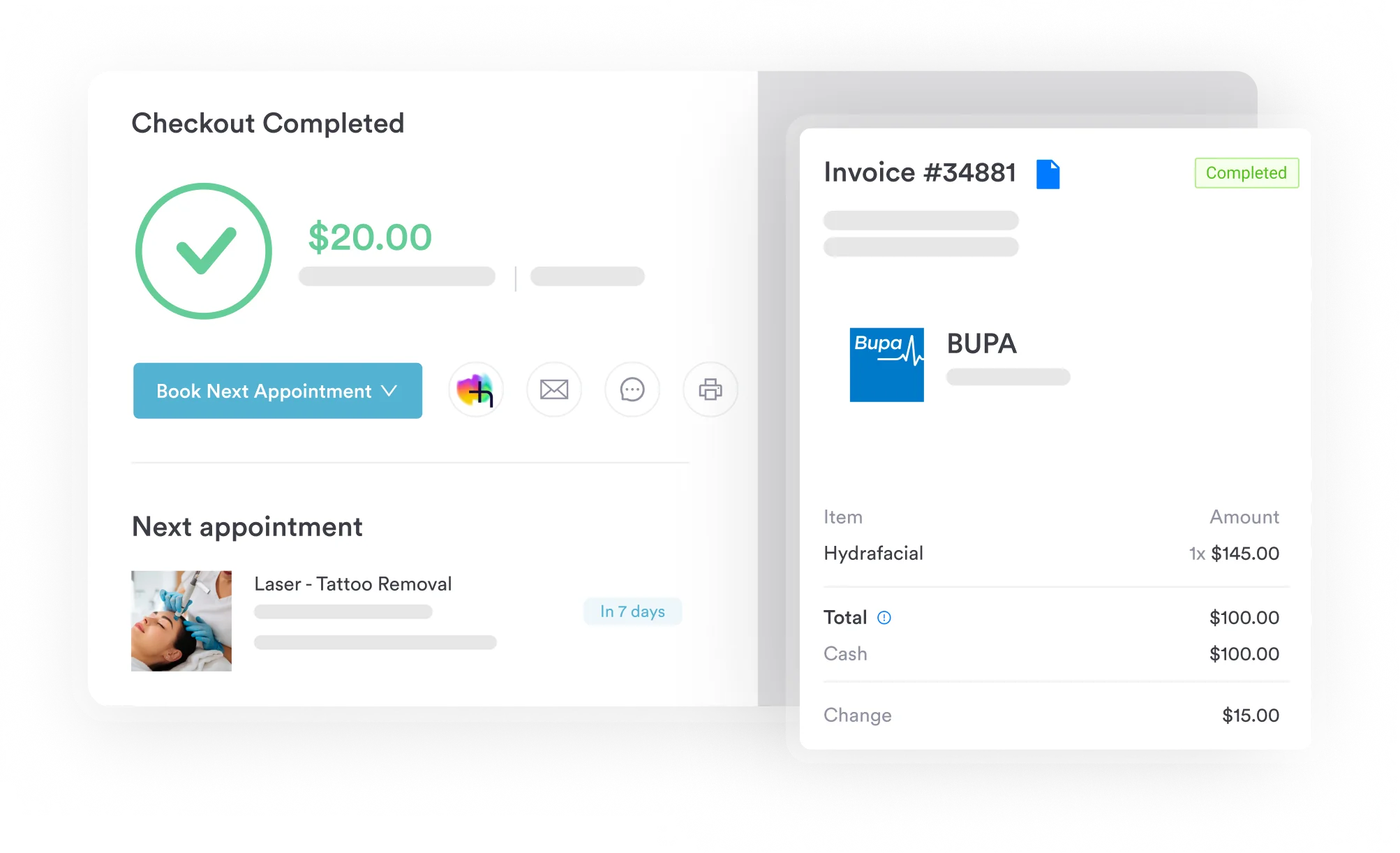
Practice management software like Pabau lets billers attach modifiers at the point of claim creation, so nothing goes out missing one. The table below shows which modifiers come up with 11404 and when each applies.
Correct Coding Initiative edits, known as CCI edits, bundle certain codes together. The payer will not reimburse both separately unless a modifier justifies distinct billing. For 11404, the usual flashpoint is simple repair.
When the closure is integral to the excision, the repair is bundled and cannot be billed on its own. A more complex, separately identifiable closure is different. Modifier 59, or the more specific XS modifier for a separate site, can override the edit. The operative note has to support that distinction.
Check the edit pairs quarterly, because CMS updates the tables four times a year.
The diagnosis code is what establishes medical necessity for the excision. Medicare and most commercial payers will not authorize payment without a supported ICD-10-CM code, and a cosmetic diagnosis does not qualify.
Always reach for the most specific code available. L98.9 is a last resort and attracts payer scrutiny. The D23 series, with its site-specific subcodes, is the most defensible pairing once pathology confirms a benign neoplasm.
Missing or incomplete documentation is the main reason 11404 claims fail on audit. CMS and most Medicare Administrative Contractors, known as MACs, expect specific elements in the operative note.

Practices using digital forms can build those elements into a structured operative note template.
Working to HIPAA-compliant documentation standards keeps operative notes and pathology reports stored securely and retrievable during a payer audit. Check your MAC’s Local Coverage Determination, or LCD, for extra requirements specific to your region.
Medicare covers benign lesion excision under 11404 once medical necessity is established. CMS article A57113 in the Medicare Coverage Database is the reference for covered and non-covered indications. The patient’s own report of pain, bleeding, or functional interference strengthens the necessity case, so record it in the clinical note.
MAC policies vary. Some publish LCDs for benign lesion removal that name the covered ICD-10-CM codes outright. Check your MAC’s policy before you submit, and confirm the diagnosis code you plan to use appears on the covered list.
Most 11404 denials trace back to a small set of repeating mistakes. Knowing them in advance saves the rework. Coverage verification also surfaces the deductible position, which changes what the practice collects at the desk. Risk of complications carries more weight than volume of notes when the visit level is questioned. Coverage verification also surfaces the deductible position, which changes what the practice collects at the desk. Risk of complications carries more weight than volume of notes when the visit level is questioned.
The errors above share one root cause. Clinical documentation lives in one system and CPT selection happens in another, so a measurement gets retyped and the tier stops matching the note. Practices running dermatology EMR software with billing built into the same record avoid that hand-off entirely.
In Pabau, the practitioner documents the excision once, including the site and the measured excised diameter. The system then surfaces the applicable CPT code from those inputs, and the ICD-10-CM diagnosis is attached at the same moment. No separate biller works from a printout, so you see fewer tier errors and fewer claims submitted without a required modifier.
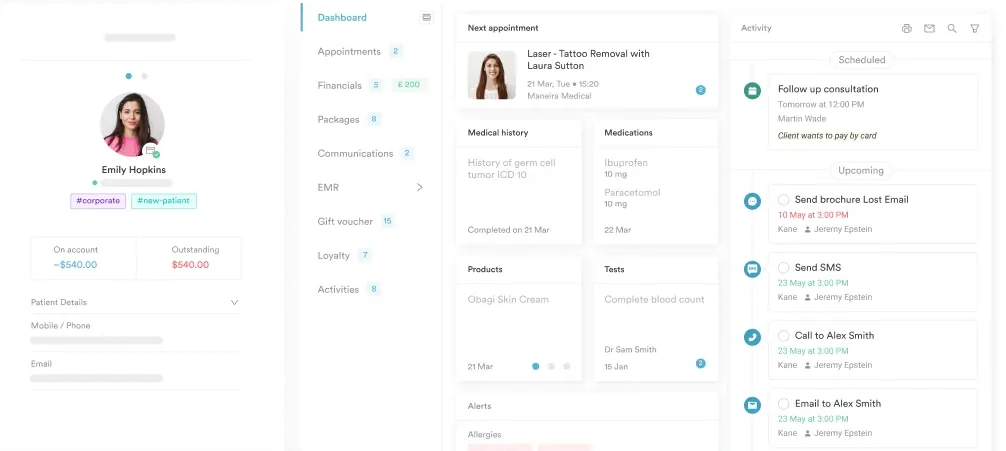
Beyond individual claims. That matters most when a payer asks for supporting records months later. Because everything is timestamped and searchable, a medical chart audit takes hours rather than days.
11404 rewards precision in one measurement and punishes vagueness everywhere else. If the operative note carries the total excised diameter in centimeters, the tier argues itself and the claim survives review. If it carries “lesion excised,” you are relying on a coder’s best guess.
So make the measurement a required field rather than a habit, and attach the pathology report before the claim goes out. The trade-off worth remembering is that a few seconds at the point of care buys you the audit defense you cannot build retrospectively.
Book a demo to see how Pabau turns your excision notes into clean 11404 claims for a dermatology or skin practice.
CPT Code 11404 describes excision of a benign skin lesion, including margins, on the trunk, arms, or legs. The excised diameter must measure 3.1 to 4.0 cm. Skin tags are excluded. The American Medical Association maintains the code, and both Medicare and commercial payers accept it.
The 2026 Medicare non-facility rate runs about $167 to $185. The facility rate runs about $95 to $115. Both figures shift with your locality’s GPCI adjustment, so check the exact amount in the CMS Physician Fee Schedule lookup tool.
Modifier 51 covers multiple procedures on the same day, and modifier 59 marks a distinct procedural service. LT and RT indicate the side treated. Modifier 25 goes on a separate E/M service, not on 11404. Modifier 22 signals increased work, and 58 covers a staged procedure inside the global period. The operative note has to support whichever one you use.
Both codes cover benign lesion excision on the trunk, arms, or legs. CPT 11402 applies to an excised diameter of 1.1 to 2.0 cm. CPT 11404 applies to 3.1 to 4.0 cm. Choosing correctly means documenting the total excised diameter, lesion plus margin, before the claim goes out.
No. Medicare does not cover benign lesion removal performed for cosmetic reasons. Coverage needs a diagnosis code that establishes medical necessity, such as a symptomatic, recurring, or clinically concerning lesion. A cosmetic diagnosis returns a non-covered denial.
D23.5 covers a benign neoplasm of the skin of the trunk. D23.6x covers the upper limb and D23.7x covers the lower limb. L72.0, L72.11, and L72.3 cover epidermal, pilar, and sebaceous cysts. Use the most specific code available, because L98.9 carries a higher denial risk.